What's in this teardown
- The cost of an electric car: the full price picture
- Why electric car costs run higher upfront than gas
- How much do electric cars cost: prices by tier
- What the average EV price actually means
- The cheapest new EVs: the entry tier
- The used-EV market: the depreciation opportunity
- Used EV prices by age
- What a used EV price is really telling you
- Federal EV tax credits: what changed
- Price by vehicle type
- Electric vehicle costs: what you actually pay for
- Battery size versus price: range costs money
- Leasing an EV: why it is so popular
- Sticker price versus total cost
- What drives EV prices down over time
- Options, trims, and the price ladder
- The price-versus-range decision
- Insurance and repair cost notes
- The upfront cash versus the monthly payment
- Fees, taxes, and the drive-away price
- Destination and documentation fees
- Registration, weight, and EV road-use fees
- A worked drive-away example
- New versus used versus lease: a worked example
- Where to shop for a used EV
- Common EV price mistakes
- A buyer’s price checklist
- The bottom line
Short answer: New electric cars span a wide price band: an illustrative budget tier near $30,000, a mainstream band of roughly $40,000 to $50,000, and premium to luxury models from about $65,000 past $90,000. The drive-away total runs roughly a tenth above the sticker once delivery, fees and sales tax are added, and there is no federal credit to subtract now. A three-year-old example of an illustrative $45,000 EV can ask around $21,600.
How much do electric cars cost? Electric car costs have two honest answers, and people usually only hear the first one. The first is the sticker: the number on the window, which for a new EV can look intimidating next to a comparable gas car. The second is what you actually pay once you account for the tier you buy into, whether you go new or used, the taxes and fees that ride on top of the advertised price, and whether you lease instead of buy. This teardown is about the purchase side of the story, which is a different question from whether an EV saves you money to run.
That distinction matters, because the running-cost case is a separate calculation covered in our EV ownership teardown and our charging-cost teardown. This page stays on the purchase: what the tiers cost, what an average EV price is really measuring, why EVs carry an upfront premium, where the cheapest cars live, how the used market rewrites the math, what taxes and fees add between the sticker and the driveway, and what leasing does to the number. Every figure here is illustrative and moves with the model and the market, but the structure of EV pricing is stable enough to learn once. You can price your own case in about a minute with the companion calculator beside this teardown.
Key takeaways
- New EV prices span a wide band: an illustrative budget tier near $30,000, mainstream around $40,000 to $50,000, and premium to luxury from roughly $65,000 past $90,000.
- The battery is why EVs cost more upfront than comparable gas cars, and it is why range costs money, though battery prices have been falling and narrowing the gap.
- The used market is the biggest price lever: EVs depreciate fast early, so a three-year-old example of an illustrative $45,000 EV can ask around $21,600 with most of the car left.
- The drive-away number runs roughly a tenth above the sticker once delivery, documentation, title, registration and sales tax are added, which is the gap that breaks budgets.
- There is no federal credit to subtract on a purchase now, so every price in this teardown, and in the calculator beside it, is the full price of the car.
The cost of an electric car: the full price picture
Ask what the cost of an electric car is and the only truthful short answer is “which one,” because the range is enormous. A small entry EV and a large luxury one are both electric cars, but they can be separated by the price of a second entire vehicle. So the useful way to hold EV pricing in your head is not a single number but a set of tiers, each defined roughly by battery size, segment, and how much technology is packed in.
Illustratively, those tiers run about like this: a budget entry EV near $30,000, a mainstream model in the low-to-mid $40,000s, a premium EV around $65,000, and a luxury EV from roughly $90,000 upward. These are round, illustrative figures, not quotes, and the market moves them constantly. But the shape is what matters: EV prices ladder up with size, range, and features in a way that is easy to reason about once you know which rung you are standing on. Pick your tier in the companion calculator beside this teardown and the rest of this page fills in around your number.
There is a second layer to the full price picture, and it is the one most buyers discover late. The tier sets the sticker, but the sticker is not the check you write. Delivery, documentation, title, registration and sales tax all ride on top, and on a mainstream car they commonly add something on the order of a tenth of the price. A third layer sits underneath both: how you pay. Cash, a five-year loan and a lease turn the same sticker into three completely different cash-flow stories. This page walks all three layers in order, tier first, then the additions, then the payment structure.

Why electric car costs run higher upfront than gas
The reason a new EV usually costs more than a comparable gas car comes down to one component: the battery. A large lithium-ion battery pack is the single most expensive part of an electric car, and it has no counterpart in a gas vehicle, which spends its money on an engine and transmission that are, by now, mature and cheap to build. The battery is a newer, denser, more materials-intensive piece of hardware, and it sets the floor under an EV’s price.
That is also why the premium is not fixed. Battery costs have fallen substantially over the years as manufacturing has scaled and chemistry has improved, and each drop narrows the gap between an EV and its gas equivalent. The direction of travel has been toward parity, even if the exact gap on any given pair of cars depends on segment and timing. The practical point for a buyer is that the upfront premium is real but shrinking, and it is the cost the lower running costs in our ownership teardown then work to repay. You pay more at the counter to spend less at the plug.
It is worth being precise about what the premium is not. It is not a tax, it is not a surcharge, and it is not a penalty for choosing electric. It is the price of a component that does a job no part of a gas car does, storing several days of driving energy on board. Once you see the premium as the price of the pack rather than as a markup, two things follow. The size of the pack becomes the number you negotiate with yourself about, and the falling cost of packs becomes the reason the gap has been closing rather than a marketing claim. Our EV versus gas comparison runs the arithmetic of how long the running savings take to repay that gap.
How much do electric cars cost: prices by tier
Seeing the tiers as bars makes the ladder obvious, and it makes clear how far apart the ends sit. Every bar below is an illustrative base price, and each bar’s width is drawn directly from its dollar figure against the luxury tier at the top of the scale, so the picture is proportional rather than decorative.
Illustrative new EV base price, by tier
Round illustrative figures. Actual prices vary by model, trim, and market.
The ladder is set mostly by battery size and segment. Moving up a rung buys range, space, and technology, and the biggest single price jumps track the biggest jumps in battery capacity.
The chart is worth reading as a menu rather than a scale of quality. A budget EV is not a worse car so much as a smaller, shorter-range, more lightly equipped one, and for many drivers it covers every real need at the lowest price. Moving up the ladder buys range, size, and features, each of which adds cost, and the steepest climbs come where battery capacity jumps. Deciding how far up the ladder you actually need to go, rather than how far up you could, is the first and largest price decision you make.
Notice the spacing too. The step from budget to mainstream is about $15,000 and buys a meaningful jump in range, space and equipment. The step from premium to luxury is about $25,000 and buys progressively less that a daily driver will notice, because past a certain point the money goes into materials, badge and performance rather than into capability. Diminishing returns set in higher up the ladder, which is why the mainstream rung is where most buyers find the best ratio of car to money.
What the average EV price actually means
The phrase “average EV price” gets quoted constantly and answers almost nobody’s actual question, so it is worth taking apart. An average is a mix-weighted number: it tells you what the cars that happened to sell cost, not what a car costs. When a wave of expensive models launches, or a cheap model runs out of stock, the average moves without a single sticker changing. That makes it a decent gauge of what the market is selling and a poor guide to what you will pay.
Run it on the four tiers above to see how slippery it is. Average $30,000, $45,000, $65,000 and $90,000 flat and you get $57,500, a figure that sits between the mainstream and premium rungs and matches no actual car on the ladder. Now weight the same four numbers by a plausible sales mix instead, say 30 percent of sales budget, 45 percent mainstream, 15 percent premium and 10 percent luxury: that gives $9,000 plus $20,250 plus $9,750 plus $9,000, which is $48,000. Identical cars, two defensible averages, $9,500 apart. Neither is wrong. Both are useless for a buyer.
There is a second distortion worth knowing about. Averages usually quote new transactions only, which ignores the used market entirely, and the used market is where a large share of buyers actually shop. A number that leaves out the cheapest half of the available cars will always look higher than the price most people pay. So when a headline average lands, read it as a snapshot of the sales mix, then go back to the tier you are actually shopping. Set your tier in the companion calculator beside this teardown and you get a number that describes your purchase rather than the market’s.
The cheapest new EVs: the entry tier
For buyers whose top priority is the lowest possible new price, the entry tier is where to look, and it has become a real category rather than a token one. Illustratively, the cheapest new EVs start in the low $30,000s at full price, and they earn that price by making sensible compromises: a smaller battery with modest range, a more basic interior, and fewer of the premium technology features that pad the higher tiers. For a driver with a short commute and home charging, none of those compromises may matter.
The entry tier rewards a specific kind of buyer and punishes another. If your daily driving fits comfortably inside a smaller pack and you can charge at home overnight, the compromises are invisible most days and the saving is real every day. If you regularly drive further than the pack covers, or you cannot charge where you park, the same car turns into a chore, because you will spend time and money on public charging that a longer-range car would have avoided. The honest caveat is therefore range: the cheapest EVs give up distance to hit their price, so match your actual weekly mileage against the pack before the price tempts you.
There is one more thing to check on an entry EV, and it is easy to miss in a price comparison. Some of the cheapest cars charge more slowly on a DC fast charger, which matters little for daily driving but a great deal on a long trip. A cheap car that adds range slowly is still the right buy for a short-commute driver and the wrong one for someone who drives across a state twice a month. Price and charging speed are separate specifications, and the sticker only tells you about one of them.
The used-EV market: the depreciation opportunity
The biggest single lever on what you pay for an electric car is not the tier or the trim: it is the choice between new and used. Electric cars have tended to depreciate quickly in their first few years, faster than many comparable gas models, driven by rapid technology improvement, shifting policy, and buyer caution about older batteries. That fast depreciation is a genuine cost for the first owner, and it is exactly why buying used can be such a strong value.
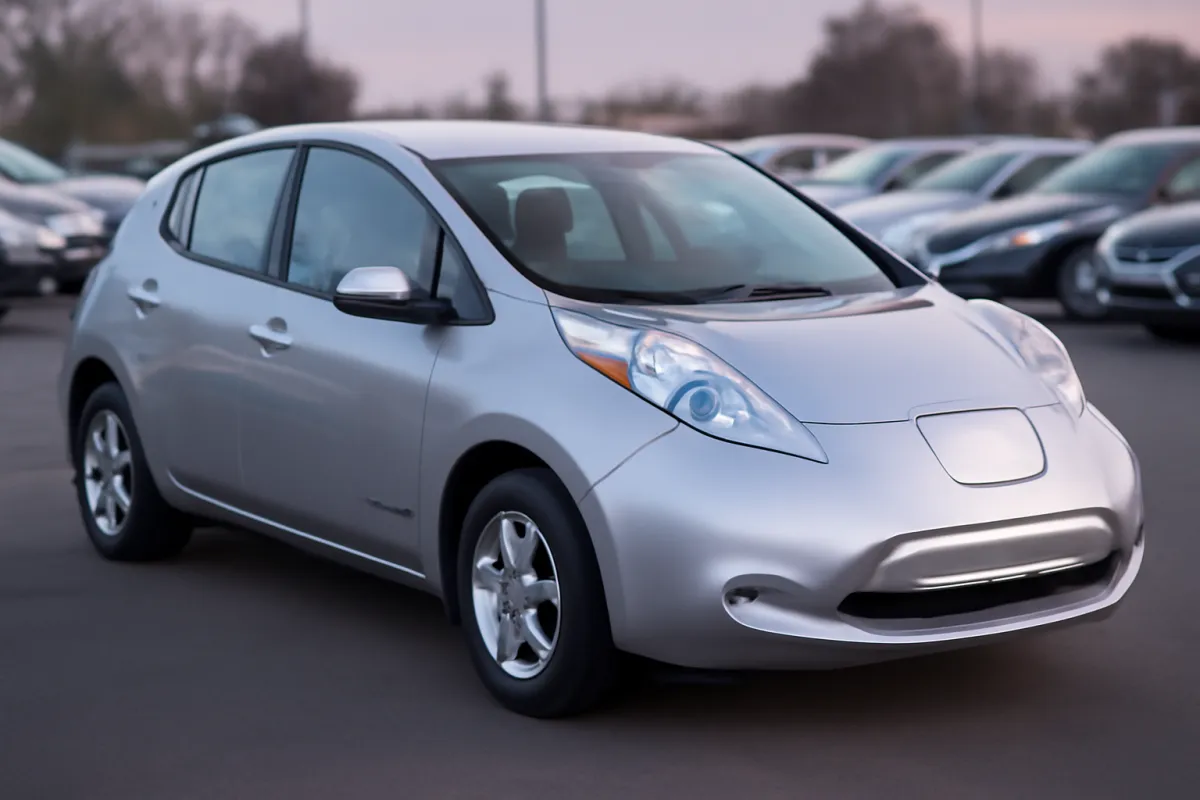
Illustratively, a mainstream EV that cost around $45,000 new might sell for around $21,600 after roughly three years, handing the second owner most of the car’s useful life for a large discount. The catch, and the one check that matters most, is the battery: its remaining capacity and any warranty left are what preserve both the car’s range and its resale value, so a used EV with a verified healthy pack is a bargain while one with a tired pack is a risk. Our battery health check walks through how to test that before you buy, and our depreciation teardown explains why the curve falls as steeply as it does.
Used EV prices by age
The used discount is not a single number, it is a curve, and seeing its shape is what turns “used is cheaper” into a decision. The bars below track one illustrative mainstream EV that cost $45,000 new, priced at several ages. Each bar’s width is that age’s price as a share of the $45,000 new price, so the bar lengths are the depreciation curve itself rather than a decoration.
Illustrative used price of one $45,000 EV, by age
One mainstream EV, priced at five ages. Illustrative only; real curves vary by model, mileage, and battery health.
The steepest fall is in the first three years, which costs the first owner about $23,400 of the price and hands the second owner the same car for 48 percent of what it cost new.
Read the curve rather than any single bar. The first year alone takes about $15,750 off the illustrative price, better than a third of the car, for what is often a nearly indistinguishable vehicle. Years two and three take another $7,650 between them. After that the curve flattens: the step from five years to eight years is about $6,300 spread over three years, less than half what the first year cost on its own. That flattening is why the sweet spot for a used buyer usually sits somewhere between the two-year and four-year marks, where the harshest depreciation is already behind the car but a useful slice of the battery warranty and the modern technology is still ahead of it.
The curve also explains why the cheapest tier of used EV is not automatically the best buy. An eight-year-old example at around $9,900 is a genuinely low price, but it is a car whose original battery warranty has probably expired, whose range has faded somewhat, and whose remaining life is harder to predict. You are not just buying an older car, you are buying a car with less certainty attached, and the discount is partly the market pricing that uncertainty. Whether that trade is good depends entirely on how the specific pack has held up, which is why capacity testing matters more on an old EV than mileage does.
What a used EV price is really telling you
Two used EVs of the same model and year can ask very different prices, and the gap is rarely random. Four things move it. Battery state of health is the first and largest: a pack that has held most of its original capacity supports the car’s range and its next resale, and a pack that has faded is a permanent, unfixable reduction in what the car can do. The second is remaining warranty, because a car still inside its battery coverage carries a floor under the buyer’s worst case that an out-of-warranty car does not. Our battery warranty reference sets out what those terms typically protect.
The third is charging hardware and speed, which sounds like a specification but behaves like a price. A used EV that fast-charges slowly, or that uses an older connector standard, is a less useful car on trips, and the market discounts it accordingly. The fourth is the ordinary stuff: mileage, condition, trim, service history, and whether the car comes with a home charging cable. None of these is exotic, but together they explain most of the spread you will see across listings of the same car.
The practical consequence is that a used EV price is a piece of information, not just a cost. A car priced well below its peers is telling you something, and your job is to find out what. Sometimes it is a motivated seller or a color nobody wants, which is a genuine bargain. Sometimes it is a degraded pack, an expired warranty, or accident history, which is the market pricing a real problem correctly. Our used EV buying guide sets out the checks in order, and our used EV shortlist covers what to look for by category.
Federal EV tax credits: what changed
This is the part of EV pricing that changed most recently and the part most likely to be quoted to you out of date. The federal clean vehicle credits, for new cars, for used cars, and for the commercial route that made lease pass-throughs work, are not available for vehicles acquired after September 30, 2025, as the IRS states on its pages for the new clean vehicle credit, the used clean vehicle credit and the commercial clean vehicle credit. Acquired means a written binding contract plus a payment, and a nominal deposit or a trade-in counts as that payment. There is therefore no federal figure to confirm and no federal amount that comes off at the point of sale on a car you buy today, which is why this teardown prices every car at its full price. Our EV tax credit explainer covers the cutoff and what it means for buyers in more detail.
What can still exist is non-federal: a state program, a utility rebate, or a dealer or manufacturer discount. Those are set locally, vary enormously, and are not a federal credit, so the only way to find out what applies to you is to ask your own utility and your state energy office or revenue agency directly, and to take any tax question to a qualified tax professional. Whatever you are offered, treat it as real only when it is in writing on the deal you are signing, not when it is mentioned across a desk.
The practical consequence for budgeting is simple and worth stating plainly. Build your budget on the full price of the car, and treat any non-federal offer you subsequently confirm in writing as a bonus rather than a plan. If a dealer quote, a comparison site, or an online estimator still shows a federal credit netted off the price of a purchase now, it is working from superseded rules and the price it is showing you is not the price you will pay. The companion calculator beside this teardown prices the car at the full number for exactly that reason.
Price by vehicle type
Just as with gas cars, the body style you choose sets your starting price band before you pick a single option, and in EVs the effect is amplified. A bigger, heavier vehicle needs a bigger battery to reach usable range, and the battery is the most expensive part, so size compounds: an electric SUV does not just cost more because it is larger, it costs more because it needs more battery to move that size a reasonable distance.
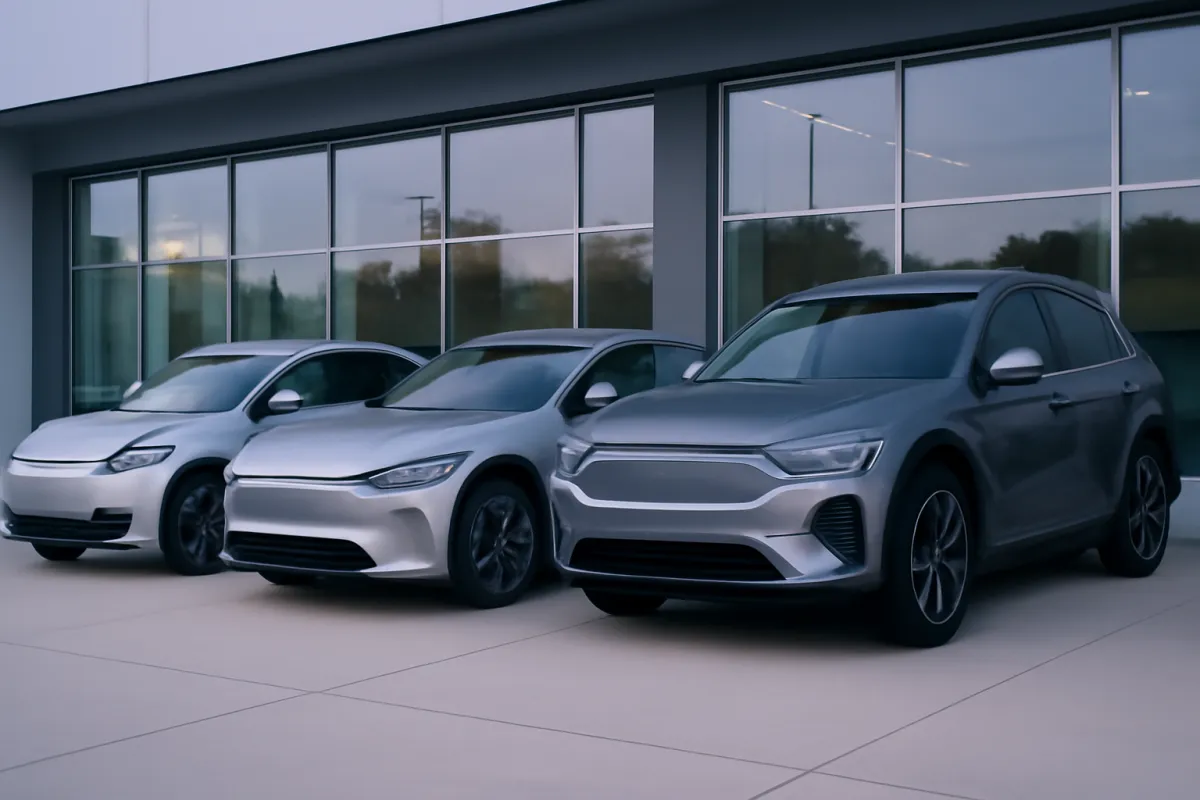
Illustratively, the ladder by type runs from a compact electric car at the low end, through electric sedans and small SUVs in the middle, up to large electric SUVs and pickup trucks near the top, which can sit well above a comparable car. This is why an honest price conversation starts with what body style you actually need rather than which one you want, because that single choice moves your price more than most option packages combined. A driver who genuinely needs three rows of seats has a floor set by that need, while a driver who defaults to an SUV out of habit may be buying a large battery, and a large price, they never use. Our electric SUV and electric truck comparisons cover what the larger body styles buy you in exchange.
Electric vehicle costs: what you actually pay for
It helps to see where an EV’s price actually goes, because the split explains why the levers in this teardown work the way they do. The single largest share is the battery and electric drivetrain, the parts that have no cheap, mature equivalent in a gas car, followed by the rest of the vehicle itself, then the technology, and finally the dealer and delivery. The bar below is an illustrative breakdown, and its segments sum to 100 percent.
What you pay for in an illustrative EV price
Illustrative share of a new EV's price. Actual splits vary by model and maker.
The battery and drivetrain lead the price, which is exactly why battery size is the biggest cost lever and why falling battery costs pull the whole number down over time.
The split makes the rest of the page click into place. Because the battery and drivetrain lead the price, the size of the battery you choose is the biggest cost lever you control, and falling battery costs pull the entire number down over time. Because the vehicle and technology shares are meaningful too, trims and feature packages move the price in familiar ways. And because the dealer share is the smallest slice, it is not where the real money in an EV purchase is won or lost, which is a useful thing to remember when the negotiation starts. The price is mostly physics and chemistry, and only a little sales.
Put the shares on the illustrative mainstream number to make them concrete. On a $45,000 car, the 40 percent battery and drivetrain share is about $18,000, the 35 percent vehicle share is about $15,750, the 15 percent technology share is about $6,750 and the 10 percent dealer and delivery share is about $4,500. That last figure is the one people negotiate hardest over, and it is a quarter the size of the pack. Spending an hour arguing over the smallest slice while accepting a battery two sizes larger than you need is the classic way to lose money on an EV purchase.
Battery size versus price: range costs money
If there is one relationship to internalize about EV pricing, it is that range costs money, and it costs money because range is battery, and battery is the priciest part. Within a single model, the longer-range trim is more expensive largely because it carries a bigger pack, and the same logic scales across the whole ladder: the tiers with the most range tend to be the ones with the most battery and therefore the highest price.
This makes the range decision a price decision in disguise, and one of the easiest places to overspend. It is tempting to buy the longest range on offer for peace of mind, but if your actual driving sits well within a smaller pack for all but a few days a year, you may be paying a large premium for range you rarely touch. The disciplined move is to size the battery to your real driving, with a sensible buffer, rather than to the worst trip you can imagine, and to lean on public fast charging for the rare long haul, which our charging-cost teardown prices out and our EV charging cost calculator puts a yearly figure on. Right-sizing range is often the difference between two tiers of price.
There is a resale angle too, and it cuts both ways. A larger pack costs more upfront and typically holds a little more of its value in absolute terms, because range is what used buyers shop for. But it rarely holds enough extra value to repay the whole premium, so buying range purely as an investment does not usually work. Our long-range comparison covers what the top of the range ladder actually delivers, and our depreciation teardown covers how much of any of it comes back.
Leasing an EV: why it is so popular
Leasing is unusually common with EVs, and the reasons are specific to how electric cars are priced and how fast they change. When you lease, you pay for the depreciation you actually use during the lease term plus a finance charge, rather than paying for the whole car, so the monthly payment is usually lower than financing the same vehicle. That lower monthly is the headline attraction, but it is not the only one.

The deeper reason leasing fits EVs is that it hands the two biggest EV uncertainties back to someone else at the end of the term. Fast depreciation, which stings an owner who buys and later sells, is the leasing company’s problem rather than yours, since you simply return the car. And battery-technology improvement, which can make this year’s range and features look dated in a few years, matters less when you are handing the car back anyway. Leasing also used to open a federal path a retail buyer could not reach, through the commercial credit the leasing company claimed, but that route closed on the same September 30, 2025 acquisition cutoff, so it is history rather than a reason to lease now. The trade is real: you own nothing at the end, you face mileage limits, and over many years of back-to-back leases you may pay more than buying and keeping a car would have cost. Our EV leasing walkthrough covers the mechanics, and the companion calculator beside this teardown puts the lease monthly beside the finance monthly.
Sticker price versus total cost
The most important reframing in this whole teardown is that the sticker price is only half of the money question, and on its own it makes an EV look more expensive than it is. The purchase price is the number this page is about, but the reason people buy EVs despite a higher sticker is that the running costs are far lower, and those savings offset part of the price over the years you own the car. Judging an EV on sticker alone is like judging a house on its deposit.
The fuller picture is total cost of ownership: the purchase price you actually pay, plus energy, plus maintenance, plus insurance, minus resale value at the end. Our ownership teardown runs that full calculation, and our home charging cost read prices the energy piece specifically. To put one number on the scale of it: on the rates our siblings use, an illustrative 12,000 miles a year costs about $860 less in energy in a home-charged EV than in a 30 mpg gas car, which is the kind of annual stream that works against a higher sticker year after year. Our cost-per-mile teardown shows where that gap comes from, and our EV charging cost calculator runs it on your own miles and rates.
This purchase-price teardown is deliberately narrower, but it is worth holding the wider frame in mind: a higher price you partly earn back is a very different thing from a higher price you simply pay, and confusing the two is the most common EV pricing mistake. It runs the other way too. A cheap EV bought by someone who cannot charge at home and must fast charge by default gives most of that annual stream back, so the purchase price and the running cost are not independent decisions. They are two halves of the same question.
What drives EV prices down over time
EV prices have a downward pressure built into them that gas car prices do not share to the same degree, and understanding it helps you time a purchase and read the market. The core driver is battery cost, which has fallen substantially over the years as production has scaled, chemistry has improved, and competition has intensified. Because the battery is the largest slice of the price, every reduction in battery cost pushes on the whole number, and the trend has been toward EVs and gas cars converging on price.
There are second-order forces too. More models arriving means more competition, which pressures prices across tiers, and a growing used market gives buyers more alternatives to a new purchase, which disciplines new pricing from below. None of this makes waiting automatically smart, because a car you do not own saves you nothing and prices do not fall in a straight line, but it does mean the entry point into EV ownership has generally been getting more affordable rather than less. For a buyer, the takeaway is that the premium you see today is likely nearer the top of its historical range than the bottom, which is a reassuring backdrop to a large purchase.
The forces do not all point one way, and an honest read acknowledges the ones that push prices up. Raw material costs move, tariffs and trade policy move, and the end of the federal purchase credit removes a source of demand that manufacturers had been pricing against. Any of those can arrest or reverse the downward drift for a while. The structural direction has been downward because the technology keeps getting cheaper to build, but a structural trend is not a promise about the next twelve months, and no one should treat it as one when planning a specific purchase.
Options, trims, and the price ladder
Within any single EV model, the price you see advertised is usually the floor, and the ladder from there works much as it does for gas cars, with an electric twist. The base trim buys you into the model at its lowest price, and each step up adds some mix of range, power, features, and finish. The electric twist is that the range upgrades, which often come as a larger battery or a dual-motor setup, tend to be among the pricier steps, because they touch the most expensive parts of the car.
The practical discipline is to separate the options you will use daily from the ones that simply sound good in the configurator. A better sound system or a nicer interior trim is a straightforward taste-and-budget call. A bigger battery, by contrast, is the one upgrade most worth scrutinizing against your real driving, because it is expensive and easy to over-buy, as the range section already argued. Working up from the base trim and adding only what you will genuinely use, rather than starting from the top trim and talking yourself down, tends to land you at a lower and more honest price, which is the same logic that governs the tier ladder one level up.
Two options deserve a specific mention because buyers routinely misjudge them. A faster onboard charger, where it is optional, changes how quickly the car refills on a home Level 2 connection, which matters if you drive a lot between charges and matters little if you plug in nightly on a short commute. A heat pump, where it is optional, protects winter range and therefore protects the value of the pack you already paid for. Our heat pump explainer covers what it does. Both are examples of options that interact with running cost rather than just with comfort, which is a different calculation from a sunroof.
The price-versus-range decision
Almost every EV purchase eventually narrows to a single trade: how much range do you need, and how much are you willing to pay for it. This is worth treating as an explicit decision rather than a default, because range is the most expensive dimension of an EV and the one buyers most reliably over-purchase out of anxiety rather than need. The question to answer honestly is not “what is the most range I can get” but “what range covers my real driving with a comfortable buffer.”
For most drivers, daily mileage is modest and well within even a mid-range EV, and the rare long trip can be handled with a planned fast-charging stop rather than by carrying a giant battery every day of the year. Buying range you use twice a year means paying for a large battery on the other three hundred and sixty-three days, which is a poor trade for many people. The opposite mistake exists too: a driver who genuinely covers long distances daily, or who cannot rely on charging access, is right to buy more range and should not skimp. The point is to make the call deliberately, matching range to your actual life, because it is the single decision that most moves your price within the tier you have chosen.
A useful way to force the decision is to write down your longest regular trip, not your longest imaginable one, and add a buffer for winter and for the habit of not running a pack to empty. If that total sits inside a smaller pack, the larger pack is buying you convenience on a handful of days rather than capability. Price that convenience explicitly, as a dollar figure per rare trip, and the answer usually becomes obvious in one direction or the other.
Insurance and repair cost notes
Purchase price is not the only cost that arrives with an EV, and two related ones deserve a mention because they can differ from a gas car in ways that affect the total. Insurance for an EV can run higher than for a comparable gas model, influenced by the vehicle’s value and by repair costs, so it is worth getting a quote on the specific cars you are comparing rather than assuming parity. This is a running cost rather than a purchase cost, but it belongs in the wider money picture our EV insurance teardown builds.
Repair costs are the other note. On routine maintenance, EVs are generally cheaper, with no oil changes, fewer moving parts, and less brake wear from regenerative braking. But certain repairs, particularly those involving the battery or specialized components, can be expensive and require specialist attention, which is part of why insurance can price higher. Our battery replacement teardown puts that worst case in proportion, and the short version is that it is a tail risk rather than a routine line item. For a buyer, none of this changes the sticker, but it is a reason to keep the battery warranty in mind on a used purchase and to price insurance before you commit, so the number you plan around is the real one rather than the purchase price alone. A cheap car to buy that is dear to insure is not always the bargain it looks.
The upfront cash versus the monthly payment
How you pay changes what “how much does it cost” even means, so it is worth separating the sticker from the cash you actually front and the monthly you actually carry. A cash buyer faces the whole illustrative price at once, with no federal credit coming off at the point of sale, and owns the car free of payments afterward. A financed buyer fronts a deposit and then carries a monthly payment set by the price, the loan term, and the interest rate, which means two people buying the identical car can experience very different monthly costs depending on how much they put down and how long they borrow.
The practical point is that a lower monthly payment is not the same as a cheaper car. Stretching a loan over more years shrinks the monthly figure while adding interest to the total, so the car costs more overall even as it feels cheaper each month. A larger deposit does the reverse. This is the same distinction that separates leasing from buying: the lease monthly can undercut the finance monthly while leaving you owning nothing at the end. When you compare cars, compare like for like, the same term and deposit, or better still the total you will pay over the years you keep the car, rather than letting a low monthly stand in for a low price.
Put numbers on the interest to make it concrete. Financing an illustrative $45,000 mainstream EV over five years at an illustrative 6.5 percent gives a payment near $880 a month, and sixty of those payments come to about $52,800, roughly $7,800 more than the car’s price. The same loan on a $21,600 used example runs about $423 a month, or about $25,380 over the term, roughly $3,780 in interest. The interest scales with the amount borrowed, which is one more reason the new-versus-used choice moves more money than any other decision on this page. Model the deposit, term, and monthly side by side in the companion calculator beside this teardown before you anchor on any single number, and see our monthly cost teardown for the full all-in monthly stack.
Fees, taxes, and the drive-away price
The advertised price is rarely the number that leaves your account, and the gap is bigger than most buyers plan for. Between the sticker and the driveway sit four things: a delivery or destination charge, a documentation fee, title and registration, and sales tax. None of them is unique to electric cars, but forgetting them is a common way that a budget set at the sticker comes up several thousand dollars short at signing. On a mainstream car the additions commonly land somewhere around a tenth of the price, which is enough to push a carefully chosen tier out of reach.

The reason the gap matters more on an EV than it might seem is that EV stickers are higher on average, and most of the additions scale with the price. Sales tax is a percentage, so a pricier tier carries a proportionally larger tax bill in absolute dollars. Delivery charges tend to be flat per model and therefore matter relatively more on a cheap car. Registration in some places scales with vehicle weight or value, and EVs are heavy for their size because of the pack. The net effect is that the drive-away premium over the sticker is broadly similar in percentage terms across tiers but much larger in dollars at the top. Put the realistic on-the-road total into the companion calculator beside this teardown so the number you plan around is the one you will actually pay.
Destination and documentation fees
The destination or delivery charge is the cost of moving the car from the factory to the dealer, and it is generally a fixed, published, non-negotiable figure that applies per model rather than per deal. It is worth knowing two things about it. First, it is normally excluded from the headline price a manufacturer advertises, which is why a car quoted at a round number never actually costs that round number new. Second, because it is flat, it is a larger proportional bite on a cheap car than an expensive one, which quietly narrows the gap between an entry EV and the rung above it.
The documentation fee is a different animal. It is charged by the dealer for preparing the paperwork, it varies widely from one dealer to the next, and in some places it is capped by state rule while in others it is not. Unlike destination, it is a dealer charge rather than a manufacturer one, which means its size tells you something about the dealer. It is also the line most worth reading carefully on a quote, because it is where extras with impressive names sometimes appear alongside it: paint protection, fabric treatment, nitrogen in the tires, or an appearance package added after the car arrived. Those are optional in a way that destination and tax are not.
The practical approach is to ask for an itemized out-the-door quote in writing before you agree to anything, and to compare quotes on that total rather than on the sticker. Two dealers advertising an identical price can be several hundred dollars apart once documentation and add-ons are counted, and the only way to see it is to make both of them write the full number down. A dealer who will not itemize is telling you something useful.
Registration, weight, and EV road-use fees
Title and registration are state charges rather than dealer ones, and they are usually the smallest of the additions, but two EV-specific wrinkles are worth confirming for your own location rather than assuming. The first is weight. Some jurisdictions set registration fees partly by vehicle weight, and an electric car is typically heavier than a gas car of the same size because a usable battery pack weighs a great deal. Where weight-based fees apply, an EV can therefore register for more than the gas car it replaced, which is a small annual cost rather than a large one but a surprise if you did not expect it.
The second wrinkle is the road-use fee. Road funding has traditionally leaned on fuel taxes, which an EV does not pay, so a number of places have introduced an annual surcharge on electric vehicle registration to recover some of that. Where one exists it is a recurring annual cost rather than a one-off purchase cost, so it belongs in your running-cost budget alongside insurance rather than in the drive-away total. Some other places still run reduced fees or non-financial perks in the opposite direction. These vary by location and have been changing, so treat any figure you read as illustrative until you confirm the current one with your own state agency.
The honest posture on all of this is the same one this teardown takes on local offers generally. Fee schedules, tax rates and surcharge rules are set locally and change, so mechanism is what is worth learning and the specific number is worth looking up. What you can plan on is the shape: a percentage-based sales tax, a flat-ish delivery charge on a new car, a variable dealer documentation fee, and a modest annual registration cost that may carry an EV surcharge. Get those four confirmed for your location and your drive-away budget will be close.
A worked drive-away example
Numbers make this concrete, so here is the illustrative mainstream EV taken from the window to the driveway. The car stickers at $45,000. Delivery adds an illustrative $1,100, the dealer’s documentation fee adds an illustrative $300, and title and registration add an illustrative $100, so the additions before tax come to $1,500. Sales tax at an illustrative 8 percent on the $45,000 price adds $3,600. Total out the door: $50,100, which is $5,100 above the sticker, or about 11 percent more than the number in the window.
Now run the same exercise on the used route, using the three-year price from the depreciation curve above. The car is priced at $21,600. There is no delivery charge on a used car, since it was delivered years ago, so the fixed additions fall to the $300 documentation fee plus $100 of title and registration, or $400. Sales tax at the same illustrative 8 percent on $21,600 is $1,728. Total out the door: $23,728, which is $2,128 above the asking price, or about 10 percent more. Notice that the used route saves not only the $23,400 of purchase price but about $2,972 of tax and fees along with it, because most of the additions are proportional to the price.
Two lessons come out of the comparison. The first is that the drive-away premium is not a fixed dollar amount you can memorize, it is mostly a percentage, so it grows with the car you choose and shrinks with the car you choose. The second is that the additions compound the new-versus-used decision rather than sitting outside it: a cheaper car is cheaper to tax, cheaper to register and cheaper to finance, all at once. Run your own tax rate through the companion calculator beside this teardown to see the drive-away figure move, because the tax rate is the input that varies most between buyers.
New versus used versus lease: a worked example
Numbers land harder as a story, so here is one buyer weighing the same mainstream EV three ways, using the figures already established above. The car stickers at $45,000 new. Financed over five years at an illustrative 6.5 percent, at the full price with no federal credit to net off it, it lands at about $880 a month, and at the end she owns the car outright with years of use ahead of it. Add the $5,100 of tax and fees and the new route asks about $50,100 up front in total value, with roughly $52,800 flowing out in payments over the five years. That is the highest total commitment, but it buys ownership, the full battery warranty, and the newest range and technology.
Now run the same car used. A roughly three-year-old example asks around $21,600, a $23,400 discount for skipping the steep early depreciation, and with a verified healthy battery she inherits most of the car’s useful life for far less money. Financed on the same terms it costs about $423 a month, or roughly $25,380 over five years, and the drive-away total is about $23,728. Finally, the lease: about $630 a month on the same $45,000 car, no exposure to depreciation or battery-technology risk, but nothing owned at the end and a mileage cap to respect.
Line the three up and the ranking is not what most people expect. The used purchase has both the lowest monthly, at about $423, and the lowest total outlay. The lease sits in the middle on monthly, at about $630, and last on what you own. The new purchase costs the most every month, at about $880, and is the only one that leaves her with a car at the end. There is no single right answer: the used route wins on money, the new-purchase route on warranty and technology, and the lease on risk transferred rather than on price. Which one fits depends on how long she keeps cars and how much certainty she wants, which is exactly the decision the companion calculator beside this teardown is built to help you run for your own numbers.
Where to shop for a used EV
If the depreciation curve has persuaded you that used is the value play, the next question is where the good cars are, and the answer differs a little from the gas market. Manufacturer certified pre-owned programs are the most expensive used route and the most protected, typically adding an inspection and some warranty coverage on top of whatever remains of the original battery warranty. On an EV that protection is worth more than it would be on a gas car, because the expensive failure mode is the one the battery warranty addresses.
Ordinary franchise and independent dealers sit in the middle: cheaper than certified, with the usual variation in how carefully the car was prepared. Private sales are the cheapest and carry the most risk, and they are also where you can most easily see the car’s real history and speak to the person who actually drove it. Off-lease cars deserve a specific mention: because leasing is so common on EVs, a steady supply of two and three-year-old cars comes back with known service histories and mileage caps that were contractually enforced, which is a genuinely useful thing to know about a used car.
Whichever route you take, the checks are the same and they are worth doing in order. Verify battery state of health rather than trusting the range display on a full charge, confirm what battery warranty remains and whether it transfers, check the car’s fast-charging capability against how you will use it, and confirm what charging equipment comes with the car. Our used EV buying guide sets the sequence out step by step, and our used EV shortlist covers what to look for by category and price band.
Common EV price mistakes
A handful of recurring errors distort what people think an EV costs, in both directions.
- Judging an EV on sticker alone. The purchase premium looks damning until you add the lower running costs that partly earn it back over years of driving.
- Budgeting on the sticker rather than the drive-away number. Delivery, documentation, title, registration and sales tax commonly add around a tenth to the price, which is enough to move you down a tier at signing.
- Over-buying range. Paying for a large battery to cover trips you take twice a year is one of the most common ways to overspend, since range is the priciest dimension of the car.
- Assuming a federal credit applies. It does not on a purchase now, since the federal clean vehicle credits ended for vehicles acquired after September 30, 2025. Any non-federal offer is local, varies, and counts only once it is in writing.
- Treating an average EV price as your price. An average is a mix-weighted snapshot of what sold, not a quote, and it usually excludes the used market entirely.
- Ignoring the used market. Fast early depreciation makes a healthy-battery used EV one of the best values in motoring, and skipping it out of habit leaves money on the table.
- Forgetting insurance and battery checks. A car that is cheap to buy but dear to insure, or a used one with a tired battery, is not the bargain the sticker suggests.
Each mistake pushes the decision toward a wrong conclusion, which is why pricing your own case honestly beats trusting a single headline number.
A buyer’s price checklist
Before you commit to a number, work through these questions.
- Pick your tier honestly, matching battery size and segment to what you actually need rather than the most you could buy.
- Decide new versus used, weighing the lower used price and skipped depreciation against the new car’s warranty, range, and latest technology.
- Get an itemized out-the-door quote in writing, so delivery, documentation, title, registration and sales tax are visible before you agree to anything.
- Ask your utility and state agency directly about any non-federal offer, and price the car at its full price until one is in writing, since there is no federal credit to add in.
- Compare lease against finance on monthly cost, ownership, and the risk you are willing to carry.
- Price insurance and check the battery before committing, so the number you plan around is the real total, not the sticker alone.
Run your tier, your new-or-used choice, your local tax rate and lease-versus-buy through the companion calculator beside this teardown to see the illustrative purchase price, the drive-away total and the monthly payment side by side, all at the full price of the car.
The bottom line
How much do electric cars cost? On the sticker, an illustrative $30,000 for a budget entry EV up past $90,000 for a luxury one, with mainstream models clustered around $40,000 to $50,000, and the number set mostly by battery size, segment, and technology. On the driveway, roughly a tenth more than that once delivery, documentation, title, registration and sales tax are counted, which on the illustrative $45,000 mainstream car means about $50,100 rather than $45,000. And the biggest lever on both figures is the used market, where the same car at three years old asks around $21,600 and carries about $2,972 less tax and fees with it.
Hold the wider frame, though, because the purchase price is half of the money story, not all of it. A higher sticker that lower running costs partly earn back, as our ownership and charging-cost teardowns show, is a different thing from a price you simply pay. Pick your tier, weigh new against used against lease, get the out-the-door number in writing, and run your own figures rather than a headline average. Do that, and the cost of an electric car stops being an intimidating unknown and becomes a specific, manageable number you chose on purpose.
This teardown is educational and independent, written by people who genuinely enjoy pricing this stuff out, not by a dealer or a lender. Every price, tier, fee, tax rate, depreciation, lease, interest rate and monthly-payment figure above is illustrative and will move with the specific model you choose, its trim and battery size, the year and the market, the rate on any financing, and where you live. Federal clean vehicle credits are not available for vehicles acquired after September 30, 2025, so nothing here nets one off a price. Tax rates, fee schedules, registration surcharges and used-EV values vary by location and vehicle and change over time, so confirm current prices, quotes, insurance costs and battery health for the exact cars you are comparing before you put any money down.
Frequently asked questions
How much do electric cars cost?
Illustratively, new electric cars span a wide band: a budget entry-tier EV commonly starts near $30,000, a mainstream model lands around $40,000 to $50,000, and premium and luxury EVs run from roughly $65,000 well past $90,000. Where any specific car falls depends mostly on its battery size, which sets range, and its trim and technology. Used EVs sit far below those numbers because electric cars have tended to depreciate quickly in their early years. The honest way to price your own case is to pick a tier, decide new or used, and price it at the full number, since there is no federal credit to subtract on a purchase now.
What is the average price of an electric car?
An average EV price is a real number that answers almost nobody's question, because it is a mix-weighted figure that moves with which cars happened to sell rather than with what any car costs. Take the illustrative tiers in this teardown, roughly $30,000, $45,000, $65,000 and $90,000. Averaged flat they give $57,500, a price no tier actually charges. Weight them by a plausible sales mix instead, say 30 percent budget, 45 percent mainstream, 15 percent premium and 10 percent luxury, and the same four numbers average $48,000. Same cars, two averages $9,500 apart. The tier you are actually shopping is the number worth knowing.
What is the cheapest electric car?
The cheapest new EVs live in the entry tier, commonly starting in the low $30,000s at full price, and they trade range and features for that lower price. If you are willing to buy used, the floor drops much further, because a three-year-old EV often sells for a large fraction below its original sticker. For a buyer whose priority is the lowest possible price rather than maximum range, a used entry or mainstream EV with a healthy battery is usually the cheapest realistic way into electric driving. Every figure here is illustrative and moves with the model and the market.
Why do electric cars cost more than gas cars?
The single biggest reason is the battery, which is the most expensive component in an EV and has no equivalent in a gas car. A larger battery buys more range and adds directly to the price, which is why long-range trims cost more. Battery costs have been falling over time, narrowing the gap with comparable gas models, but at similar size and segment an EV has generally still carried a purchase premium. That premium is the upfront cost the lower running costs then work to repay over the years you own the car.
How much does it cost to lease an electric car?
Leasing spreads the cost of the depreciation you use rather than the whole car, so the monthly payment is usually lower than financing the same vehicle, which is one reason leasing is popular for EVs. On the illustrative numbers in this teardown, a mainstream EV around $45,000 leases near $630 a month against roughly $880 a month to finance the same car over five years. Leasing also sidesteps the uncertainty of fast EV depreciation and battery-technology changes, since you hand the car back at the end. The trade is that you own nothing at the end and face mileage limits, so the right choice depends on how long you keep cars.
Do tax credits lower the price of an electric car?
Not federally, not any more. The federal clean vehicle credits for new, used, and commercial electric cars are not available for vehicles acquired after September 30, 2025, where acquired means a written binding contract plus a payment, and a nominal deposit or a trade-in counts as that payment. So there is no federal amount to look up and no point-of-sale federal discount for a car you buy now. State, utility, and dealer offers are a separate matter and some still exist, but they are not a federal credit: ask your state energy office or agency and your own utility what they run, and take the tax side to a qualified tax professional. Any quote or online estimator that still nets a federal credit off the price of a purchase today is working from superseded rules.
How much does a used electric car cost?
Used EVs commonly sell for a large fraction below their original sticker, because electric cars have tended to depreciate quickly in their first few years, which is a cost for the first owner and an opportunity for the second. Illustratively, on a mainstream EV that cost $45,000 new, a one-year-old example might ask around $29,250, a three-year-old around $21,600, a five-year-old around $16,200 and an eight-year-old around $9,900. The exact figure swings with model, mileage, and battery health, and the most important check is the pack's remaining capacity and any warranty left, since that is what preserves both range and resale value.
How much more than the sticker will an electric car actually cost?
Expect the drive-away number to land roughly a tenth above the advertised price, though the exact figure depends entirely on where you live. On an illustrative $45,000 mainstream EV, a $1,100 delivery charge, a $300 documentation fee and $100 of title and registration add $1,500, and sales tax at an illustrative 8 percent adds $3,600, for about $50,100 out the door, some $5,100 above the sticker. Buy the same car used at $21,600 and there is no delivery charge to pay, so the additions fall to about $2,128 and the drive-away lands near $23,728. Tax rates and fee caps vary by location, so confirm yours before you set a budget.
How much does an electric SUV or truck cost compared to a car?
As with gas vehicles, larger EV body styles generally cost more, and the effect is amplified in electric cars because bigger, heavier vehicles need bigger batteries to reach usable range, and the battery is the priciest part. Illustratively, a compact electric car sits at the low end, an electric sedan or small SUV in the middle, and a large electric SUV or pickup truck toward the top, often well above a comparable car. So the vehicle type you choose sets your starting price band before you pick a single option, which is why matching the body style to what you actually need is one of the biggest price levers you control.
Is it cheaper to buy new or used when it comes to EVs?
On sticker price alone, used is almost always cheaper, because it skips the steep early depreciation that hits EVs hard, letting a second owner inherit most of the car's useful life at a fraction of the new price. A new EV costs more upfront but comes with a full battery warranty and the latest range and technology. The best value for most price-focused buyers is a used EV with a verified healthy battery, while buyers who want maximum range, warranty coverage, or a specific new model pay more for those. Run both against your own budget rather than assume.
What does an electric car cost per month?
Two different monthlies get called the same thing. The payment alone, on an illustrative $45,000 mainstream EV financed over five years at an illustrative 6.5 percent, is about $880 a month, falling to about $423 on a $21,600 used example of the same car and about $630 on a lease. The all-in monthly is the payment plus charging, insurance, and upkeep, and our monthly-cost teardown builds that stack line by line. Charging is usually the smallest line of the three, which is why the payment, not the plug, decides what an EV costs you each month.