What's in this teardown
- The short answer: are electric cars cheaper to maintain
- How much does it cost to maintain an electric car
- What maintenance do electric cars need
- Why EVs have no oil changes to schedule
- The service list an EV deletes
- Regenerative braking and longer brake life
- How much do EV brakes and tires cost
- The tire caveat: EVs can wear tires faster
- Illustrative annual maintenance: EV vs gas
- Battery health and the rare service
- Are EV repairs more expensive when they happen
- Warranty coverage and what it protects
- Where an EV’s maintenance savings come from
- How much do you save on EV maintenance vs gas
- The five-year maintenance total
- DIY versus the shop
- A worked example: five years, one EV and one gas car
- Common mistakes when comparing maintenance
- A maintenance-cost checklist
- The bottom line
Short answer: Yes, electric cars are usually cheaper to maintain than gas cars. An EV has no oil changes, spark plugs, timing belt, exhaust or transmission service, and regenerative braking makes pads and rotors last far longer. The honest offset is tires, which a heavy, torquey EV can wear faster. Illustratively the routine bill still favors the EV by a few hundred dollars a year, compounding into a four-figure five-year gap.
Ask whether an electric car is cheaper to maintain and you will usually get a slogan rather than a number, either “EVs never need servicing” or “EV repairs cost a fortune,” and both are half-truths that miss the shape of the answer. Are electric cars cheaper to maintain than gas cars? Yes: on almost every routine service line an EV costs meaningfully less, because it has no oil to change, far fewer moving parts, and regenerative braking that spares its brakes. The honest offset is tires, which an EV can wear faster, but the net still favors electric by a clear annual margin. Maintenance is one of the more reliable savings in EV ownership, and unlike fuel it does not depend on where you plug in.
This teardown prices that maintenance question specifically, separate from the running-cost math our electric car vs gas cost teardown and monthly cost teardown handle. It lists what an EV never needs, what it still does need, why regenerative braking is a real saving and tires are the real offset, whether repairs cost more when they happen, and how warranty coverage sits over the expensive parts. Then it stacks an illustrative annual maintenance figure for an EV against a gas car, projects a five-year total, and works a plain example. Every dollar here is illustrative and moves with your car and mileage, and you can price your own routine list in a minute with our cost calculator.
Key takeaways
- Yes, EVs are usually cheaper to maintain: no oil changes, no spark plugs, no timing belt, no exhaust, no transmission service, and far fewer moving parts to fail on a schedule.
- Regenerative braking does most of the slowing, so friction brakes wear slowly and pads and rotors last far longer than on a gas car, a genuine recurring saving.
- Tires are the honest offset: an EV's weight and instant torque can wear tires faster, and EV-specific tires cost more, so that line often runs higher than on a gas car.
- Repairs can be pricier when they happen, thanks to specialized labor and some parts, but they are far rarer than the routine engine work an EV skips, and long warranties cover the costly bits.
- Illustratively the routine bill favors the EV by a few hundred dollars a year, on the order of half the per-mile maintenance of a gas car, which compounds into a four-figure five-year gap.
The short answer: are electric cars cheaper to maintain
The honest short answer is yes, an electric car is generally cheaper to maintain than a comparable gas car, and the reason is structural rather than a matter of opinion. A gas car’s maintenance calendar is built around a combustion engine and a multi-speed transmission, two complex systems with hundreds of moving parts that wear, need lubrication, and fail on a schedule. An EV replaces both with an electric motor and a single-speed reduction gear, a drivetrain with a fraction of the parts and almost nothing that wears in the same way. Fewer parts that move, heat, and combust means fewer parts to service and replace.
That structural gap shows up as a shorter, cheaper service list, not a magic zero. The EV deletes a whole category of engine-related work, keeps a smaller set of items every car needs, and adds one line, tires, that can run higher than on a gas car. Net those together and the routine bill still lands clearly in the EV’s favor for most drivers most years. The nuance that keeps this honest is the tail: when a non-routine repair does land, an EV’s specialized parts and labor can cost more, so the full picture is lower routine cost with a rarer, pricier repair risk. The rest of this teardown prices each piece so you can see where the saving really comes from.
How much does it cost to maintain an electric car
Put a rough number on it. Illustratively, routine maintenance on an electric car commonly lands in the low hundreds of dollars a year, against a higher figure for a comparable gas car, with tires the largest recurring line for both. A widely cited rule of thumb from several ownership-cost studies is that an EV costs on the order of half as much per mile in maintenance as an equivalent combustion car over the vehicle’s life. That is a per-mile figure, so it scales with how far you drive, and it folds in both the cheap years and the occasional bigger bill.
The reason a single number is slippery is that maintenance is really two different things wearing at once. There is the fixed-ish routine list, cabin filters, brake fluid, coolant service, inspections, wiper blades, that costs roughly the same each year regardless of miles, and there is the mileage-driven wear, dominated by tires, that grows the more you drive. A low-mileage EV owner pays mostly the fixed list and sees a small annual number; a high-mileage owner adds real tire cost on top and sees a larger one, though the gap to the equivalent gas car usually holds. Our cost calculator lets you set your own mileage and tire cost and watch both the EV and gas figures move, which is far more useful than any single headline average.
What maintenance do electric cars need
It is worth being concrete about what an EV genuinely needs, because “low maintenance” gets mistaken for “no maintenance” and that leads to neglect. The recurring items are tires, rotated on a schedule and eventually replaced; cabin air filters that keep the climate system clean; brake fluid, which absorbs moisture over time and needs changing on an interval even though the brakes themselves wear slowly; coolant service on the many EVs that liquid-cool their battery and power electronics; and wiper blades and washer fluid like any car. Periodic inspections of brakes, suspension, steering, and tires round out the list, along with battery-health checks that most service centers can read from the car.
Two quieter items round out the picture. The 12-volt accessory battery, the small conventional battery that runs the car’s electronics and wakes the main pack, still exists in most EVs and still fails every handful of years, and a dead one can leave the car unable to start even with a full traction battery. Software updates, often delivered over the air, increasingly handle what used to require a shop visit, tuning everything from charging behavior to how the brakes blend regeneration. So the EV list is shorter and shifts toward fluids, tires, and electronics, but it is a real list, and following the manufacturer’s schedule is still how you keep the car healthy and the warranty intact.
Why EVs have no oil changes to schedule
No engine means no oil change, and this is the single clearest maintenance saving an EV offers. An electric car has no internal combustion engine, so there is no crankcase full of oil to lubricate pistons and no oil filter to trap combustion byproducts, which means there is no oil change to schedule, ever. On a gas car the oil change is the metronome of the whole service calendar, the appointment that comes around every several thousand miles and drags along inspections and upsells with it. Delete the engine and you delete that entire recurring event, and with it the most frequent line on the maintenance bill.
The common follow-up is whether EVs have any oil at all, and the honest answer is a little, but not the kind you change. Many EVs use a small amount of lubricant in the single-speed reduction gearbox that steps the motor’s speed down to the wheels, and that fluid is typically checked rarely or sealed for the life of the unit rather than changed on a short interval. That is a world away from the every-few-months engine oil service a combustion car needs. So when someone asks whether EVs need oil changes, the precise answer is that they have no engine oil to change and only a sealed or long-life gear lubricant to think about, which is why this line disappears from the calendar almost entirely.
The service list an EV deletes
The fastest way to see the saving is to list what an EV never does. There is no oil and no oil filter, as above. There are no spark plugs or ignition components, because there is no fuel to ignite. There is no timing belt or chain to replace at high mileage, a job that can be expensive on a gas car and catastrophic if it fails. There is no exhaust system, no catalytic converter, no muffler, and no emissions equipment to corrode, clog, or trip a warning light. There is no traditional multi-speed transmission with fluid to service or a clutch to wear. And there is no fuel system, no pump, injectors, or fuel filter, to maintain.
Each of those is a scheduled or eventual cost that a gas owner budgets for and an EV owner simply never sees. Some are small and frequent, like plugs and filters; some are large and occasional, like a timing belt or a catalytic converter; a few, like a transmission rebuild, are the kind of bill that pushes people to scrap an older car. Removing the entire combustion and transmission apparatus removes all of them at once. That is why the EV’s maintenance advantage is not a rounding difference but a category difference: it is not doing the same jobs more cheaply, it is not doing whole classes of jobs at all. Our electric car vs gas cost teardown folds this deleted list into the wider ownership comparison.
Regenerative braking and longer brake life
Brakes are the EV’s quietest saving and one of its most reliable. In a conventional car, every stop scrubs speed by clamping friction pads against rotors, wearing both down until they need replacement. An EV slows differently: lifting off the accelerator turns the motor into a generator that resists the wheels, converting motion back into electricity and recharging the battery a little, a process called regenerative braking. Because that regeneration does most of the routine slowing, the friction brakes are called on far less, often only for hard or low-speed stops, so pads and rotors wear slowly and can last much longer than on a gas car.
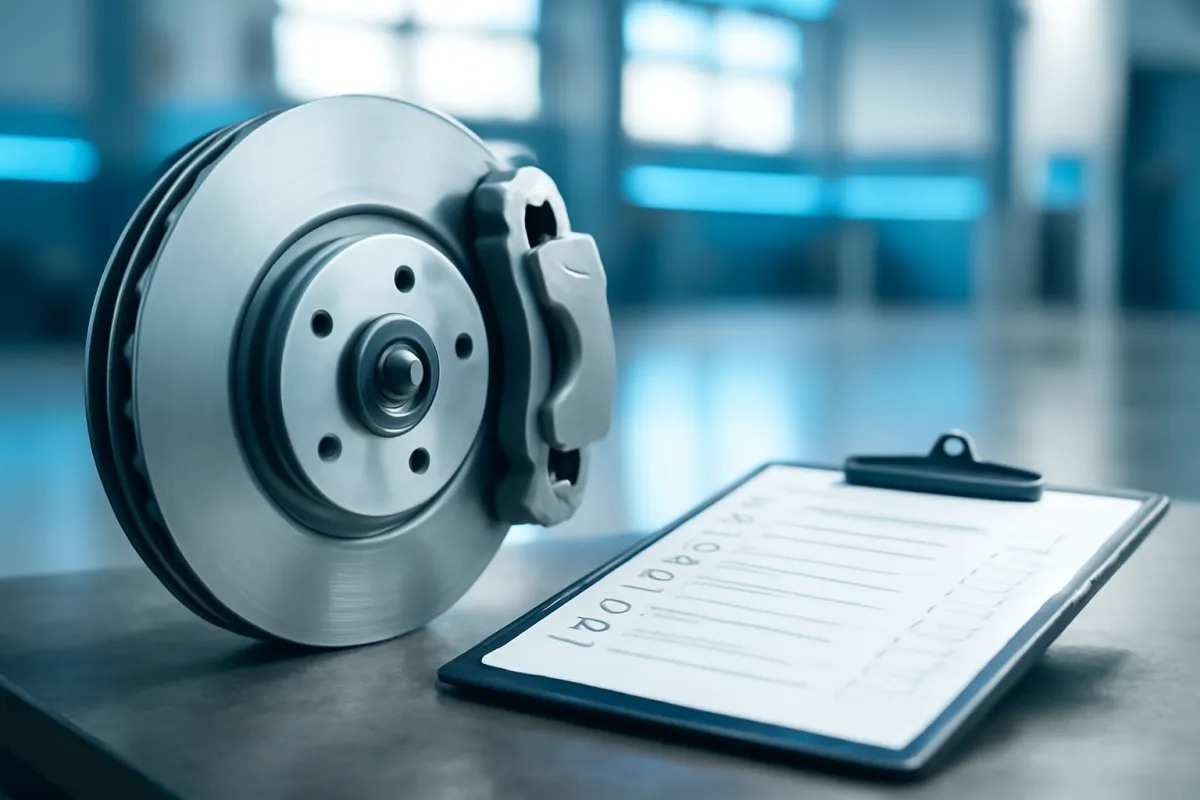
There are two honest footnotes. First, brakes that are used lightly can suffer their own problem, surface rust and sticking calipers from disuse, especially in wet or salted climates, so many owners are advised to occasionally brake firmly to clean the rotors, and inspections still matter. Second, long-lasting pads do not mean the brake system is maintenance-free: brake fluid still absorbs moisture over time and needs changing on the manufacturer’s interval regardless of how little the pads have worn. Netted out, though, regenerative braking turns one of a gas car’s regular wear items into a rare one, and over years of ownership the brake-replacement cost an EV avoids is a real contributor to the overall maintenance gap.
How much do EV brakes and tires cost
Brakes and tires pull in opposite directions on an EV, and understanding both is the key to the honest number. Brakes, as above, are cheap over time because regeneration spares them; you may go far longer between pad and rotor jobs than on a gas car, so that line shrinks. Tires do the opposite. An EV carries the extra weight of its battery pack and delivers instant torque from a standstill, and both accelerate tire wear, so replacement can come sooner than the mileage a gas driver expects. On top of that, EVs frequently wear specific tires, load-rated for the weight, often with foam liners or special compounds for low noise and low rolling resistance, and those tires can cost more per set than ordinary ones.
Put illustrative numbers on it. A set of tires might run several hundred dollars on a modest car and well over a thousand on a heavier or performance EV, and because they can wear faster, that cost recurs more often. For many EV owners, tires are the single largest maintenance line, larger than any fluid or filter, and the one that most influences whether the car’s routine bill beats a gas equivalent. The cheapest defenses are the boring ones: rotate tires on schedule to even out wear, keep them properly inflated, since underinflation both wears tires and costs range, and drive smoothly rather than launching from every light. Set your own tire replacement cost in our cost calculator to see how much it moves your annual figure.
The tire caveat: EVs can wear tires faster
Because tires are the one line that can run against the EV, they deserve their own honest treatment rather than a footnote. The physics is simple: a heavier vehicle puts more load on each tire’s contact patch, and an electric motor’s ability to deliver full torque instantly makes it easy to spin and scrub the tires in ordinary driving without noticing. Combine weight and torque and an identical tire will often reach its wear bars sooner on an EV than on a lighter, gentler gas car. Owners who came from a combustion car sometimes get a nasty surprise at the first tire change, expecting the mileage their old car managed and getting noticeably less.
This is the caveat that keeps the maintenance answer honest, and it does two things to the comparison. It narrows the EV’s routine-cost advantage, because tires are the biggest recurring line and the EV’s version of it is larger, and it means a high-mileage or heavy-footed EV driver sees a smaller maintenance gap than a gentle, low-mileage one. It does not reverse the answer for most drivers, because the tire premium is one line while the deleted engine and transmission work is many, but it is the reason blanket claims that EVs cost nothing to maintain are wrong. The takeaway is not to avoid the EV, it is to budget realistically for tires, rotate them faithfully, and treat that line as the price of the weight and torque you are enjoying everywhere else.
Illustrative annual maintenance: EV vs gas
With the pieces on the table, here is the comparison in one picture. The bars below show an illustrative annual routine-maintenance figure for four cases, drawn directly from each value against the most expensive case at full width, so the widths are proportional rather than decorative. These are general illustrative figures, not a quote for any specific car, and every one moves with mileage, tire cost, and local labor rates.
Illustrative annual maintenance: EV vs gas
General routine-maintenance figures at typical mileage, tires included. Actual costs vary widely by model, mileage, and labor rate.
The EV sits lowest even with its higher tire line, because it skips the engine and transmission work the gas cars still need. The gap widens as a gas car ages out of warranty and its bigger repairs begin.
The chart makes the structure visible. The EV bar is not zero, tires and fluids keep it off the floor, but it sits clearly below the gas bars because the entire engine-and-transmission block of cost is missing. The hybrid lands in the middle, a useful reminder that it still carries a combustion engine to service on top of some electric complexity. And the widening gap between the typical gas car and the older, out-of-warranty one captures the part people forget: gas maintenance is cheap while new and grows as the engine, transmission, and exhaust age, while an EV’s routine cost stays flatter because it has fewer of those aging systems. Match the bars to your own mileage and tire cost in our cost calculator and the abstract picture becomes your number.
Battery health and the rare service
The battery is the part EV owners worry about most, so it belongs in any maintenance discussion, but its role is different from an oil change or a tire. The traction pack is not a routine-service item in the ordinary sense: you do not top it up or swap parts on a schedule. What it needs is health monitoring, which most service visits and the car itself handle, and sensible habits, avoiding constant fast charging and extreme states of charge, that our battery-life teardown covers in depth. Modern packs degrade gradually, losing a small percentage of capacity a year, rather than failing suddenly, so for most owners the battery is a slow-fading asset rather than a maintenance line.
The rare event that does exist, a battery replacement, is expensive enough to frighten people out of proportion to how often it happens. It is a tail risk, not a routine cost, and it seldom enters a normal ownership window at all, especially given the long warranties described below. When a pack does need attention, the fix is often a module or cell repair rather than a full replacement, which costs far less than the headline figure, a distinction our battery replacement cost teardown prices out in detail. The right way to treat the battery in a maintenance budget is to weight it by how likely it actually is, which for most owners rounds to a small number, rather than to book the full replacement as a certainty, which would be like pricing a gas car assuming the engine will blow.
Are EV repairs more expensive when they happen
Here is the honest counterweight to everything above. An EV’s routine maintenance is cheaper, but when a non-routine repair is needed, it can cost more than the equivalent job on a gas car, and pretending otherwise would misrepresent the picture. The reasons are specific. EV repairs often require technicians trained and certified to work safely around high-voltage systems, and that specialized labor commands a premium and is not available at every corner garage. Some parts are model-specific and produced in lower volumes than the vast, cheap aftermarket that supplies common gas cars. And anything involving the battery pack, its cooling, or the power electronics can be costly simply because those components are expensive.
Body repairs deserve a special mention, because they surprise people. A modern EV’s structure is often built around the battery pack, and the car is packed with sensors and cameras for driver-assistance features, so even a moderate collision can involve expensive recalibration or structural work near the pack, and insurers price that in. This is the maintenance-adjacent cost that most offsets the routine savings, which is why our monthly cost teardown treats insurance as its own line. The balanced conclusion is that an EV trades frequent, cheap routine service for rare, potentially pricey repairs. For most owners the frequent savings arrive every year while the rare repair may never come, but a buyer should hold both facts at once rather than only the flattering one.
Warranty coverage and what it protects
Warranty coverage is what turns the scariest EV repair costs from a live worry into a covered one for the early years of ownership, and it reshapes the maintenance-risk picture more than any single habit. The most expensive components, the battery pack and the drivetrain, are typically protected by long, separate warranties that run well beyond the bumper-to-bumper coverage, commonly around eight years or a high mileage figure for the battery, and often a similar term for the electric powertrain. Many of these battery warranties also guarantee a minimum capacity, promising to act if the pack degrades below a set percentage within the term, which directly addresses the degradation worry.
The practical effect is that during the years most people own a car, the components that could produce a five-figure repair bill are largely someone else’s financial problem, not yours. That does not make the car maintenance-free, because warranties cover defects and defined failures, not wear items like tires, brake pads, wiper blades, or fluids, and not damage from neglect or abuse, which is exactly why following the service schedule matters for keeping coverage valid. But it does mean the routine, out-of-pocket maintenance you actually budget for is the short, cheap list this teardown has described, while the expensive tail sits under warranty for years. When comparing cars, it is worth reading the specific battery and powertrain terms, since they are a real and quantifiable part of the ownership-cost picture.
Where an EV’s maintenance savings come from
It helps to see which parts of the deleted service list do the heavy lifting, because that split explains the whole comparison. The EV’s maintenance advantage is not spread evenly; it is concentrated in the engine work it skips entirely. The bar below is an illustrative breakdown of where an EV’s routine-maintenance saving over a gas car comes from, and its segments sum to 100 percent.
Where an EV's maintenance savings come from
Illustrative split of the routine-maintenance saving versus a comparable gas car. Actual shares vary by model and mileage.
Nearly half the saving is the missing engine service, with the deleted drivetrain and slower brake wear close behind. Note tires are absent here because they are an added cost, not a saving, which is why the net gap is narrower than the deleted list alone suggests.
The split makes the honest story clear. Almost half the saving is the engine service an EV never performs, oil, plugs, and fuel-system work, with the deleted drivetrain items and the slower brake wear filling most of the rest. The one thing deliberately not on this chart is tires, and that is the point: tires are a cost the EV adds, not a saving, so the net advantage is the deleted list minus the higher tire line. Read the chart as the gross saving, then subtract your tire premium to reach the real number. That framing is why the EV wins comfortably for a low-mileage, gentle driver and only modestly for a high-mileage one who churns through expensive tires.
How much do you save on EV maintenance vs gas
Bringing the pieces together, how much do you actually save? Illustratively, many owners save on the order of a few hundred dollars a year in routine maintenance by choosing electric, and the widely cited studies land near half the per-mile maintenance cost of a comparable gas car over the vehicle’s life. On the figures behind the chart above, an EV around $450 a year against a typical gas car near $750 is a saving in the neighborhood of $300 a year, before the gas car ages into its more expensive out-of-warranty years and widens the gap further. That is routine maintenance only, sitting on top of the usually larger fuel saving from home charging that our electric car vs gas cost teardown prices.
Two things move that number for you specifically. Mileage scales the tire-driven part of both cars’ costs, so a high-mileage driver spends more in absolute dollars on each car but usually keeps a similar gap; the saving grows in dollar terms even as the percentage holds. And tire wear is the swing factor: an EV that eats tires quickly, from weight, torque, or a heavy foot, closes some of the gap, while one that is gentle on tires opens it. The reliable way to find your own figure is to price your actual routine list rather than lean on an average, which is exactly what the companion beside this teardown and our cost calculator are built to do.
The five-year maintenance total
A single year understates the saving because maintenance compounds and gas cars get more expensive as they age. Stretch the comparison over a typical five-year ownership window and the picture sharpens. At an illustrative $300-a-year routine advantage, five years is $1,500 kept, and that is the conservative version, because it assumes the gas car stays in its cheap early-maintenance phase the whole time. In reality a gas car crossing into higher mileage starts needing the bigger items, brakes, belts, sometimes exhaust or transmission work, while the EV’s routine list stays flat, so the real five-year gap often runs wider than a flat annual figure implies.
Set that alongside the rest of the running-cost picture and it stops being a rounding error. Five years of maintenance saving stacks with five years of fuel saving from cheaper home charging, and together they are the stream that repays an EV’s higher purchase price, the break-even math our electric car vs gas cost teardown works through. On a per-mile basis, that five-year maintenance saving is a small but steady slice of the total cost to run the car, which our cost-per-mile teardown prices out mile by mile. Use our cost calculator to set your mileage and years owned and watch the five-year maintenance total build, then compare it against the fuel and purchase numbers to see the whole ownership case at once.
DIY versus the shop
Where you get the work done changes the number as much as which car you own, and the EV’s short list is unusually friendly to doing simple jobs yourself. Because there is no oil to change and no engine to fear, the routine tasks that remain are approachable: cabin filters are often a five-minute swap behind the glovebox, wiper blades and washer fluid are trivial, tire rotations need only a jack and patience, and topping up washer fluid or checking tire pressure costs nothing but time. An owner who handles those simple items keeps the EV’s annual maintenance figure near its floor, paying a shop only for the occasional brake fluid change, coolant service, or tire replacement that wants proper equipment.
The firm boundary is anything high-voltage. The traction battery, its cooling system, and the power electronics operate at voltages that can injure or kill, and that work belongs to trained technicians with the right tools and safety procedures, never a driveway. So the DIY-versus-shop split on an EV is unusually clean: the low-voltage routine items are genuinely doable at home and save labor, while the high-voltage repairs are strictly professional and are also, conveniently, the ones most likely to be under warranty for years. A gas car offers more DIY opportunities in raw count, oil, plugs, belts, but they are messier and more frequent, so the EV’s smaller list is easier to own end to end even if you outsource everything.
A worked example: five years, one EV and one gas car
Numbers land harder as a story, so here is one driver comparing two comparable cars over five years, with every figure illustrative. Both cover 12,000 miles a year. The gas car needs oil changes twice a year, filters, a set of brakes somewhere in the window, and the usual inspections, landing near $750 a year in routine maintenance, and its costs tick upward in years four and five as it ages. The EV skips all the engine work, keeps its original brakes thanks to regeneration, and spends mainly on tires, a cabin filter or two, a brake-fluid change, and coolant service, landing near $450 a year, with tires the biggest single line because its weight and torque wear them faster.
Run the five years. The gas car spends roughly $3,750 to $4,200 once its later years creep up; the EV spends roughly $2,250 to $2,400, most of it tires. The routine maintenance saving is on the order of $1,500 to $1,800 across the window, a clear win for the EV, and that is before the fuel saving from home charging that dwarfs it. Now flex the inputs. Give the EV heavy tire wear, a performance model driven hard, and its figure climbs toward the gas car’s, narrowing the gap; give the gas car a major repair, a transmission service or a timing belt, and the gap blows wide open in the EV’s favor. Change any input, the mileage, the tire cost, the years owned, and the total moves, which is precisely the calculation the companion beside this teardown and our cost calculator run on your own numbers.
Common mistakes when comparing maintenance
A handful of recurring errors push people to confident wrong conclusions about EV maintenance in both directions.
- Treating “low maintenance” as “no maintenance.” EVs still need tires, brake fluid, coolant, filters, and inspections, and skipping them causes real problems, so the saving is a shorter list, not an empty one.
- Ignoring the tire premium. Tires are often an EV’s largest maintenance line and can wear faster than on a gas car, so leaving them out flatters the EV and produces a number you will not actually see.
- Booking a battery replacement as a certainty. It is a rare tail event usually covered by warranty for years, and pricing it as guaranteed distorts the comparison the way assuming a blown engine would distort a gas car’s.
- Forgetting that gas maintenance grows with age. A gas car is cheap to maintain when new and expensive when old, so a flat annual figure understates the gap over a full ownership window.
- Confusing routine cost with repair cost. EVs win clearly on routine service but can lose on a rare non-routine repair, so judging the whole question on either one alone gives the wrong answer.
Each mistake isolates one fact and treats it as the whole story, which is exactly the habit a full maintenance comparison is meant to break.
A maintenance-cost checklist
Before you conclude how much an EV will save you on maintenance, work through these questions.
- Estimate your annual mileage honestly, because it drives the tire-wear part of the bill on both cars and scales the dollar size of the saving even when the percentage holds steady.
- Price a set of tires for the specific EV, since tires are usually the largest recurring line and EV-specific tires cost more, and that number moves your annual figure more than any fluid or filter.
- Read the battery and powertrain warranty terms, because they determine how many years the expensive repairs stay off your ledger and how much tail risk you actually carry.
- Decide how much you will do yourself, as the EV’s short list of low-voltage jobs is genuinely DIY-friendly and keeps the annual figure near its floor if you handle the simple items.
- Compare over your real holding period, not one year, since a gas car’s costs climb as it ages while an EV’s routine list stays flatter, widening the gap the longer you keep the cars.
Run your mileage, your tire cost, and your years owned through our cost calculator to see an illustrative EV annual maintenance figure, the gas equivalent, the annual saving between them, and how it compounds over the years you plan to keep the car.
The bottom line
Are electric cars cheaper to maintain than gas cars? Yes, for most drivers most years, and the reason is that an EV simply does not perform whole categories of work a gas car needs: no oil changes, no spark plugs, no timing belt, no exhaust, no transmission service, and slow-wearing brakes thanks to regeneration. The honest offset is tires, which an EV can wear faster and which cost more per set, so the net saving is the long deleted list minus that one added line, and it still lands clearly in the EV’s favor, illustratively a few hundred dollars a year that compounds into a four-figure five-year gap.
The nuance worth carrying is the difference between routine and repair. An EV’s routine service is cheaper and arrives every year; its rare non-routine repairs can be pricier and are largely covered by long battery and powertrain warranties in the early years. Weigh those separately and the picture is honest rather than a slogan. For a low-mileage, gentle driver the maintenance saving is large; for a high-mileage owner who churns expensive tires it is smaller but still real. Price your own routine list with the pieces in this teardown, lean on our electric car vs gas cost and cost-per-mile teardowns for the wider ownership picture, and let your own numbers, not an average, make the call.
This teardown is educational and independent, written by people who would rather itemize a service schedule than sell you either kind of car. Every maintenance, tire, brake, fluid, repair, warranty, and saving figure above is illustrative and general, and will move with the specific vehicles you compare, their real-world tire and brake wear, your annual mileage, your driving style, your local labor and parts rates, and the age and warranty status of each car. Tire prices, repair labor rates, and warranty terms in particular vary by model and region and change over time, so confirm the manufacturer’s service schedule, current parts and labor quotes, and the exact warranty coverage for the specific cars you are weighing before relying on any number here. Nothing in this article is financial advice.
Frequently asked questions
Are electric cars cheaper to maintain than gas cars?
Yes, and it is one of the more dependable savings in EV ownership. An electric car has no oil changes, no spark plugs, no timing belt, no exhaust system, and a drivetrain with far fewer moving parts, and regenerative braking means the friction brakes wear slowly. That removes a whole schedule of routine service that gas cars need. The one line that can run higher is tires, which an EV's weight and torque can wear faster, but netted out the routine-service bill still commonly favors the EV by a meaningful sum each year. It is lower maintenance rather than no maintenance.
How much does it cost to maintain an electric car per year?
Illustratively, routine EV maintenance commonly lands in the low hundreds of dollars a year, against a higher figure for a comparable gas car, with tires being the largest recurring line for both. A frequently cited rule of thumb is that an EV costs roughly half as much per mile in maintenance as a gas car over its life. The exact number depends on your mileage, how hard tires wear on your car, your local labor rates, and whether you do simple jobs yourself. Because tires scale with miles, a high-mileage driver spends more in absolute terms but usually keeps a similar EV-versus-gas gap.
Do electric cars need oil changes?
No. An electric car has no internal combustion engine, so there is no engine oil to change and no oil filter to replace, which removes the single most frequent scheduled service a gas car needs. EVs do use other fluids, including brake fluid, coolant for the battery and power electronics in many models, and windshield washer fluid, and some have gearbox or reduction-gear oil that is checked rarely or sealed for life. So an EV is not fluid-free, but the recurring oil-change appointment that anchors a gas car's service calendar simply does not exist. That absence is a real and repeating saving.
What maintenance do electric cars actually need?
EVs still need real upkeep, just a shorter list. The recurring items are tires, including rotation and eventual replacement, cabin air filters, brake fluid changes on a schedule, coolant service on models that liquid-cool the pack, wiper blades and washer fluid, and periodic inspections of brakes, suspension, and the battery's health. Software updates and 12-volt accessory battery replacement also appear over time. What is gone is the combustion-related list: oil and filters, spark plugs, timing belts, exhaust and emissions parts, and transmission fluid on a traditional gearbox. So the work shifts from the engine to tires and fluids, and there is simply less of it.
How much do EV brakes and tires cost to maintain?
Brakes on an EV tend to last unusually long because regenerative braking does most of the slowing, so pads and rotors can go far longer between replacements than on a gas car, which is a genuine saving. Tires are the offset: an EV's extra battery weight and instant torque can wear tires faster, so replacement may come sooner and, because EVs often wear specific load-rated or low-noise tires, each set can cost more. Illustratively, a set of tires can run several hundred to over a thousand dollars depending on the car, and that line is frequently the largest single maintenance cost an EV owner faces. Rotating tires on schedule is the cheapest way to stretch their life.
Are EV repairs more expensive than gas car repairs when they happen?
Sometimes, yes, and it is the honest counterweight to the low routine-service bill. When an EV does need a non-routine repair, specialized labor, high-voltage safety procedures, and some model-specific parts can make the bill higher than an equivalent gas repair, and anything involving the battery pack or power electronics can be expensive. Body repairs can also run high because of sensors and structural battery packaging. The reassurance is that these events are far less frequent than the routine engine and transmission work an EV avoids entirely, and long powertrain and battery warranties cover the most expensive parts for years. So repairs are rarer but can be pricier, which is why the routine savings and the tail risk should be weighed separately.
How much do you save on maintenance with an EV versus gas?
Illustratively, many owners save on the order of a few hundred dollars a year in routine maintenance by going electric, and studies frequently cite roughly half the per-mile maintenance cost of a comparable gas car over the vehicle's life. Across a five-year ownership window that can add up to a four-figure sum, on top of the usually larger fuel saving from charging at home. The gap is smaller for low-mileage drivers and for EVs that wear tires quickly, and it can shrink further if an out-of-warranty repair lands. Because so much depends on your car and mileage, the reliable move is to price your own routine list rather than lean on an average.
Which electric cars are the cheapest to maintain?
Rather than a single best list, the pattern is what to look for, since routine EV maintenance is dominated by tires and a short fluid list. The cheapest EVs to maintain tend to be the lighter, lower-powered ones that are gentle on tires, because tires are usually the largest recurring line, so a modest commuter EV often costs less to keep than a heavy, high-torque performance model that wears tires and can carry pricier parts. Long battery and powertrain warranties also matter, since they fence off the expensive repairs for years, and a widely available model with a strong independent-repair network keeps out-of-warranty costs lower than a rare one. So the lowest-maintenance EV for you is less about the badge than about right-sizing weight and power to your needs and checking the warranty terms. Price a specific car's tires and read its warranty before assuming it is cheap to run.
Does an EV still need servicing if it has no engine?
Yes. No engine means no oil, plugs, or exhaust to service, but an EV still needs regular attention to tires, brakes and brake fluid, cabin filters, coolant on many models, suspension, and the 12-volt battery, plus software updates and battery-health checks. Skipping this shorter list still causes problems: neglected tires wear unevenly and cost range and safety, old brake fluid absorbs moisture, and a failing 12-volt battery can leave the car unable to start even with a full traction pack. So an EV trades a long engine-centered service calendar for a shorter one centered on tires and fluids, but it is not maintenance-free, and the manufacturer's schedule is still worth following.