What's in this teardown
- Yes, with the right generator and the right setup
- What actually happens when a generator powers an EV
- Conventional generator versus inverter generator
- How many watts a Level 1 charge actually needs
- Can a generator deliver Level 2 speeds
- Why some EVs reject power from the wrong generator
- Matching the car’s charge rate to the generator
- Fuel cost per mile versus home electricity
- Noise, exhaust and why this stays outdoors
- Never backfeed a generator into your house panel
- A safe setup, step by step
- Generator charging on a road trip
- Generator charging during a power outage
- Can a generator damage the battery or charging system
- Propane and dual fuel generators
- How this differs from using the car as the generator
- A worked example with one generator and one battery target
- When a generator is the wrong tool
- Common mistakes
- The bottom line
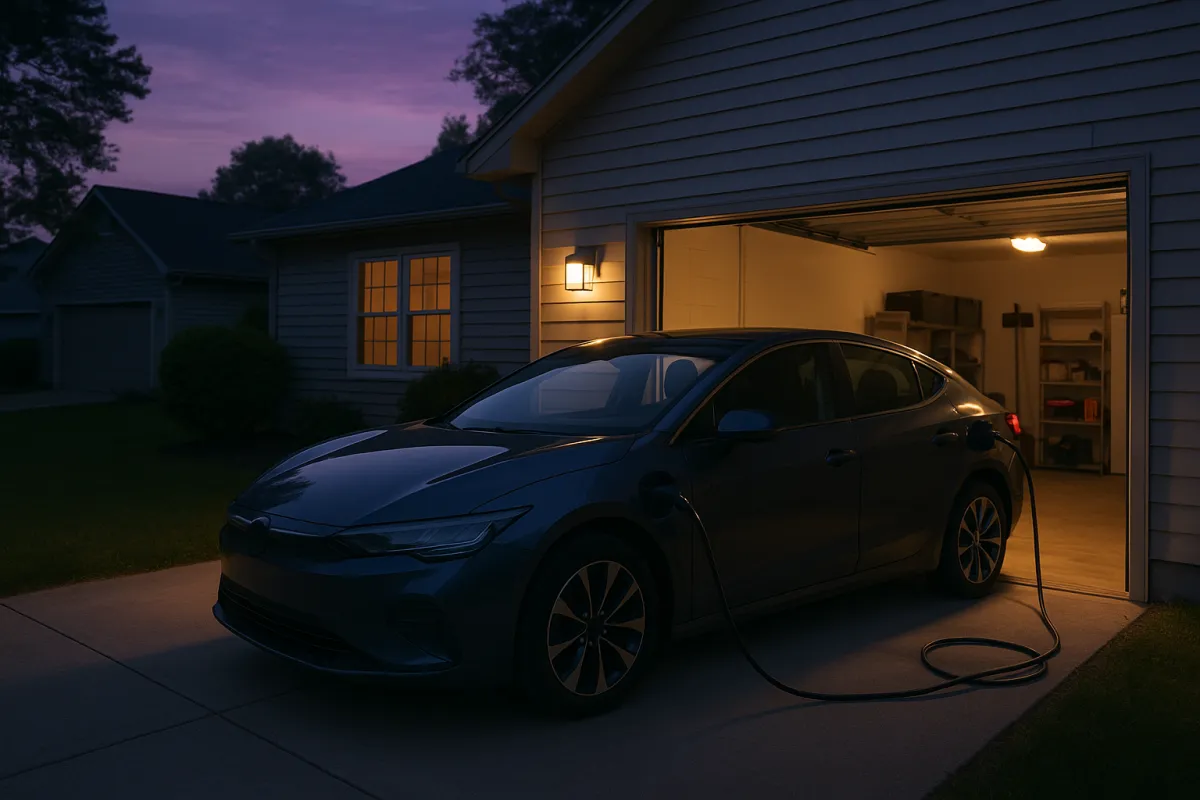
Short answer: Can you charge an EV with a generator? Yes. Plug a standard Level 1 or Level 2 charging cord into a generator's outlet exactly as you would a wall outlet, as long as the generator supplies enough continuous wattage and clean enough power for the car's onboard charger to accept. A small to mid-size inverter generator comfortably handles ordinary Level 1 charging. Level 2 speeds need a much larger generator than most people own. Run it outdoors, never backfeed it into your house panel without a transfer switch, and treat it as a backup tool rather than a way to save money on electricity.
An electric car’s onboard charger is simple about where its AC power comes from. It does not know or care whether the electrons arrived from the grid through a wall outlet or from a portable generator sitting in the driveway, as long as the voltage, the current and the quality of the power fall inside what the charger expects. That single fact is the whole answer to whether generator charging works, and the rest of this teardown is about doing it well: picking a generator with enough continuous wattage, understanding why the type of generator matters more than its peak wattage number, keeping the setup safe, and knowing honestly what this approach costs compared to simply charging at home.
This is not a replacement for home charging and it was never meant to be one. It is a tool for three specific situations: a power outage that takes grid charging offline, a campsite or job site with no charging infrastructure at all, and a genuine emergency where a stranded car needs just enough energy to reach a real charger. Our running out of charge teardown covers that last scenario in more depth, including the roadside assistance options that exist alongside a generator as one possible answer.
Key takeaways
- A generator can charge an EV through the car's ordinary Level 1 or Level 2 charging cord, plugged into the generator's outlet exactly as it would plug into a wall. The car does not distinguish the power source.
- Sizing is the whole game: an ordinary Level 1 charge at 12 amps on 120 volts draws roughly 1,400 watts, comfortably inside what a 2,000 to 3,500 watt portable inverter generator supplies. Level 2 draws several times that and usually needs a much larger generator.
- Power quality matters as much as wattage. A clean inverter generator is the safer, more reliable choice for a modern car's sensitive onboard charger than a cheap conventional generator with loose voltage regulation.
- Never backfeed a generator into your house's electrical panel to power a home charger without a licensed electrician installed transfer switch or interlock kit. Plugging the EVSE cord directly into the generator avoids that hazard entirely.
- Generator charging almost always costs more per mile than home electricity, so treat it as a backup and convenience tool, not a way to save money.
Yes, with the right generator and the right setup
The direct answer deserves to be stated plainly before anything else, because a lot of material on this subject hedges unnecessarily. An electric vehicle can be charged from a portable generator, and the method is not exotic: the same Level 1 or Level 2 charging cord that plugs into a wall outlet or a home charging unit plugs into the generator’s AC outlet instead, and the car charges exactly as it would from any other AC source, because that is precisely what a generator is.
What makes this work reliably rather than unreliably comes down to two things this teardown spends most of its length on. The first is sizing the generator’s continuous wattage to the charging load you are asking it to carry, since a generator that cannot sustain the draw will trip, stall, or shut down rather than charge the car. The second is power quality, since a generator that produces rough, poorly regulated AC can trigger the car’s own protective electronics to refuse the charge, which is the vehicle protecting itself rather than a fault in the plan.
Get both of those right and generator charging is a genuinely useful, low drama tool to have in your back pocket. Get either wrong and the result ranges from a charge that simply will not start to a generator that bogs down or trips its own breaker under load, neither of which is dangerous so much as frustrating. The sections ahead work through both variables so you can size and choose correctly before you ever plug in.
What actually happens when a generator powers an EV
Inside the car, nothing changes about how charging works regardless of the source. The onboard charger takes in AC electricity, converts it to DC, and feeds that DC into the battery, the same process our how electric cars work teardown describes in full. The charger is designed to accept power from the grid, which is itself not a perfectly pristine signal, so it already tolerates a reasonable range of voltage and frequency variation. A generator simply has to fall inside that same tolerance.
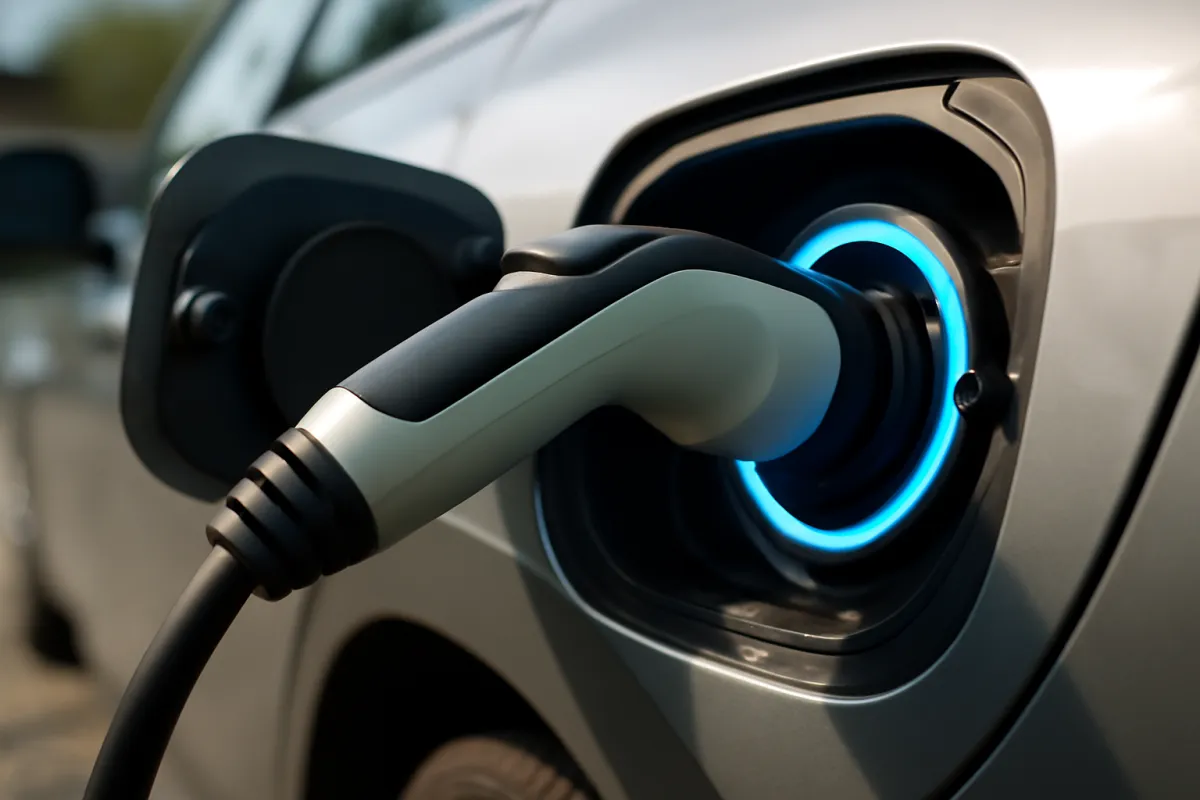
What the generator sees from the car’s side is a fairly steady, predictable load once charging begins, which is actually an easier job for a generator than many household appliances that cycle on and off or draw large surges at startup, like a compressor or a well pump. An EV charging through its onboard charger pulls close to a constant wattage for the duration of the session, which a properly sized generator handles smoothly without the load swings that stress smaller units running mixed household loads.
The practical shape of a generator charging session, then, looks almost exactly like a Level 1 home charge: plug the EVSE cord into the generator’s outlet, start charging through the car’s normal interface, and let it run for however many hours the situation calls for. The generator’s fuel tank becomes the limiting factor on duration rather than the car or the charging equipment, which is the trade this whole approach makes: slower charging and a fuel budget, in exchange for charging capability anywhere a generator can run.
Conventional generator versus inverter generator
Not all generators produce the same quality of electricity, and this distinction matters more for an EV than for most of the things people commonly run off a generator. A conventional generator spins its engine at a fixed speed to produce AC power directly, and the resulting waveform can be comparatively rough, with voltage that drifts more under changing load and a frequency that is not tightly controlled.
An inverter generator takes a different approach: it generates raw AC, converts it to DC internally, then uses electronics to synthesize a clean, stable AC waveform at the output, closely resembling the steady sine wave the grid itself supplies. That extra step is the reason inverter generators tend to cost more for the same wattage rating, and it is also the reason they are the safer default choice for charging sensitive modern electronics, an EV’s onboard charger very much included.
The practical consequence is straightforward. A quality inverter generator, run within its rated continuous output, reliably charges an EV without drama. A lower quality conventional generator can work too, particularly a larger, well maintained unit, but it carries a higher chance that the car’s onboard charger detects power quality outside its tolerance and simply declines to charge, treating the irregular signal as something to protect itself from rather than accept. If you are buying a generator specifically with EV charging in mind, an inverter model is worth the premium.
How many watts a Level 1 charge actually needs
Sizing starts with a simple piece of electrical arithmetic: watts equal volts multiplied by amps. An ordinary Level 1 charging cord drawing 12 amps from a 120 volt circuit draws about 1,440 watts, a number you can treat as a reliable baseline for the most common portable charging setup. A somewhat faster 16 amp 120 volt cord draws closer to 1,920 watts, which is still a modest load by generator standards but leaves less headroom on a small unit.
Illustrative watts drawn by common charging setups
Watts equal volts times amps. Bars show a few commonly sized pairings, not every possible configuration.
A common portable inverter generator comfortably covers Level 1 charging with real headroom to spare. Level 2 at a typical home rate is a different category of load entirely. Figures illustrative of common pairings, not specifications for any specific unit.
Against that baseline, a 2,000 to 3,500 watt continuous rated portable inverter generator, a size class widely sold for camping and home backup, comfortably covers a 12 amp Level 1 charge with meaningful headroom left for the generator to run coolly and efficiently rather than at its ragged edge. Headroom matters because running a generator continuously near its maximum rating for hours stresses the engine and shortens its service life compared to running at a moderate load. Leave yourself real margin rather than matching the generator’s rating to the charging load exactly.
Can a generator deliver Level 2 speeds
Technically yes, but realistically only with equipment far larger than what most people own. Our Level 2 charger reference covers the 240 volt, higher amperage charging most home installations use, and a typical home Level 2 setup draws several thousand watts continuously, commonly landing somewhere between about 3,800 and 7,700 watts depending on the circuit’s amperage. That is multiples of what a small portable inverter generator provides.
Reaching those numbers from a generator generally means stepping up to a much larger towable or standby unit built for sustained heavy loads, the kind more often found supporting a whole house or a job site than tucked in the back of a trunk for occasional use. That is a different category of equipment, a different price point, and a different use case than the compact portable generator most readers considering this question actually have or are shopping for.
The honest framing is that Level 1 is the realistic target for the overwhelming majority of generator charging setups, and it is genuinely useful despite being slow, which the worked example further down demonstrates with real hours and real miles. Chasing Level 2 speeds from a generator is possible in principle but rarely the practical answer for a backup or portable charging scenario, and it is worth not shopping for a bigger, more expensive generator than the actual use case calls for.
Why some EVs reject power from the wrong generator
An EV’s onboard charger is not a passive device that accepts whatever electricity arrives at the plug. It actively monitors the incoming power and can refuse to begin or continue charging if the voltage, frequency or waveform quality falls outside what it is designed to tolerate, treating an irregular signal as a problem to avoid rather than something to work around silently. This is a protective behavior, not a flaw, and it is the mechanism behind most of the frustrating generator charging stories you may have heard.
A cheap or poorly maintained conventional generator is the most common source of power dirty enough to trigger this refusal, particularly one running a load close to its maximum rating, where voltage sag and waveform distortion both tend to get worse. A generator that is otherwise running fine for lights, tools and a refrigerator can still produce power an EV’s charger declines, because those devices are far less sensitive to waveform quality than a modern onboard charger’s electronics.
The fix is almost always the same: use a quality inverter generator run comfortably within its rated continuous output, with the EV as close to the only significant load on the generator as practical. If a charge refuses to start or drops partway through on a conventional generator, that is useful diagnostic information rather than a sign something is broken, and it usually points toward power quality rather than toward insufficient wattage.
Matching the car’s charge rate to the generator
Most EVs let you set or limit the charging current through the car’s own interface or a companion app, and this control is worth using deliberately when charging from a generator rather than letting the car default to whatever its maximum Level 1 setting happens to be. Setting the car to draw a current comfortably within the generator’s continuous rating, rather than right at its edge, is the single easiest way to keep a generator charging session trouble free.
Practically, this means checking the generator’s continuous wattage rating, working backward to a current that leaves meaningful headroom, often 70 to 80 percent of the generator’s rated output as a comfortable working ceiling, and dialing the car’s charge current to match through its settings rather than assuming the default rate is the right one. A car charging at a conservative, well matched rate off a generator running well under its limit is the version of this setup least likely to produce any drama at all.
This is also the point to remember other loads sharing the same generator. If anything else is plugged into the same unit, lights, a refrigerator, a tool, its wattage comes out of the same pool the car is drawing from, and the generator’s total load is the sum of everything running, not just the car. Dedicate the generator to the car alone when the goal is a reliable, uninterrupted charge over several hours.
Fuel cost per mile versus home electricity
It is worth being honest about the economics here before anyone treats this as a money saving strategy, because it is not one. A generator converts gasoline or propane into electricity at a real fuel cost, and that conversion is considerably less efficient, dollar for dollar, than simply buying electricity from the grid at a typical home rate, before even accounting for the generator’s own purchase price, maintenance and the engine hours it accumulates.
Our home charging cost teardown prices home electricity against your own rate, and our cost per mile teardown extends that into a per-mile figure you can compare against a gas car. Generator charging will reliably land well above either of those home-charging figures on a cost per mile basis, because you are paying for fuel, combustion inefficiency and the generator’s own wear, all to produce the same kilowatt-hours the grid would have delivered far more cheaply through the wall.
None of that makes generator charging a bad tool. It makes it the right tool for a specific job: situations where grid charging is simply unavailable, not situations where you are trying to minimize cost. Treat the fuel spent running a generator to charge a car the same way you would treat fuel spent running it for lights and a refrigerator during an outage, a cost of the situation rather than a cost you chose for its own sake.
Noise, exhaust and why this stays outdoors
A portable generator burns fuel to run an engine, and that engine produces both noise and exhaust, two facts that shape where and how you can responsibly run one. Exhaust contains carbon monoxide, an odorless gas that is genuinely lethal in an enclosed or poorly ventilated space, which is why every generator’s manual is emphatic about running it outdoors, away from windows, doors and vents, and never in a garage even with the door open.
This is not a theoretical caution. Carbon monoxide incidents involving generators are a well documented, recurring cause of injury and death, precisely because the gas is undetectable without a dedicated alarm and the symptoms of exposure can resemble ordinary fatigue before becoming serious. The rule here has no exceptions worth making: outdoors, in the open air, positioned so exhaust cannot drift back toward a home, a tent, or anywhere people are.
Noise is a lesser concern but a real one, particularly for a charging session that might run for many hours. Inverter generators tend to run quieter than conventional units at comparable output, which is one more point in their favor for this use case, and positioning the generator as far as reasonably practical from where people are sleeping or working makes a multi hour charge far less disruptive to neighbors and to your own household.
Never backfeed a generator into your house panel
This section exists because the most dangerous mistake associated with generator use in general, not specific to EVs, is also one some EV owners are tempted toward during an outage: running a cord with plugs on both ends from the generator into a wall outlet inside the house, intending to let the house’s own wiring carry power to a home EV charger or anything else. It should never be attempted.
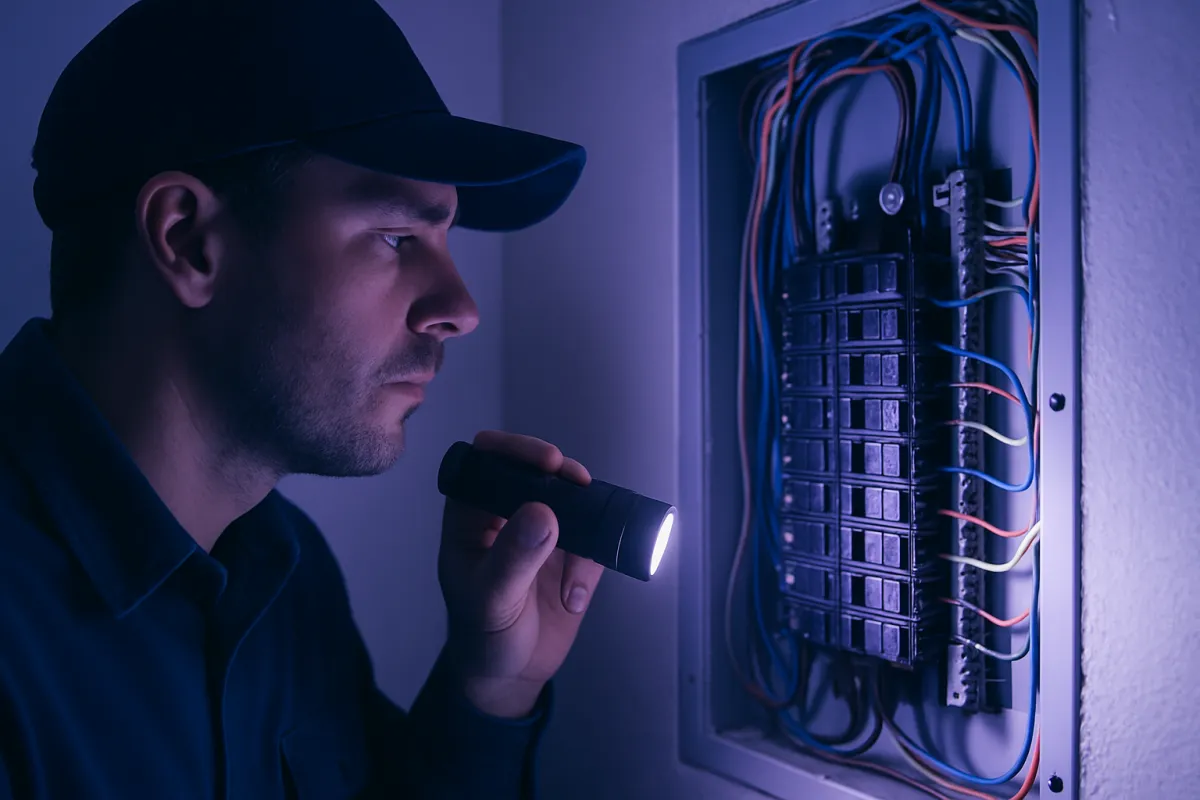
Done this way, the generator’s power can travel backward through the house wiring and out onto the utility’s lines through the meter, a real hazard to any utility worker who may be working on what they believe is a de-energized line during the very outage that prompted the generator in the first place. It also risks damaging your own home’s electrical equipment and the generator itself, since nothing in that improvised path is designed to isolate the two power sources from each other.
The legitimate way to power a home charger, or any fixed home wiring, from a generator during an outage is a manual transfer switch feeding a dedicated subpanel, a breaker interlock kit that makes it mechanically impossible to connect the generator and the utility feed at the same time, or an automatic transfer switch that handles the isolation without manual intervention, all installed by a licensed electrician. Our panel upgrade teardown covers the electrical service side of a home charging setup more broadly. The simplest alternative, and the one this teardown is actually about, is skipping the house panel entirely and plugging the EVSE cord straight into the generator’s own outlet.
A safe setup, step by step
Running a generator charging session safely follows a short, repeatable sequence rather than anything complicated. First, position the generator outdoors on a dry, level, stable surface, well clear of windows, doors and vents, and far enough from the car and any people that exhaust cannot drift toward either. Second, let the generator start and stabilize before connecting any load, since starting under load stresses the engine unnecessarily.
Third, plug the EVSE cord’s standard plug into the generator’s rated outlet, the same outlet you would use for any other appliance, rather than attempting any kind of adapter into the generator’s twist lock or other specialized outlets unless the cord is specifically rated for that connector. Fourth, set the car’s charge current through its own interface to a rate comfortably within the generator’s continuous output, leaving real headroom rather than pushing the generator near its limit. Fifth, begin charging and monitor the first several minutes to confirm the car accepted the power and is charging steadily rather than refusing or cycling.
Finally, check the generator periodically through a multi hour session: fuel level, that it is still running smoothly, and that nothing else has been added to its load without your intention. Refuel only with the generator shut off and cooled, never while it is running, which is standard practice for any gasoline powered equipment and worth stating plainly here because it is easy to forget mid-session.
Generator charging on a road trip
A portable generator is not standard road trip equipment for most EV owners, and it should not replace the planning our road trip teardown walks through for routing around real charging infrastructure. Where a generator earns its place on a trip is as a contingency rather than a primary plan: camping somewhere with no charging access at all, or an extended stay at a location genuinely off any charging network, where adding meaningful range over a day or two via Level 1 generator charging beats having no option.
In that context, the math from earlier in this teardown applies directly. A generator comfortably sized for Level 1 charging, run for several hours at a campsite or a remote stop, adds a real and useful amount of range without needing to find a charger at all, at the cost of carrying the generator, its fuel, and the patience for a slow charge. It is a backup tool for a specific kind of trip, not a substitute for charging network planning on an ordinary long drive.
Treat a generator brought along for this purpose the same way you would treat any other emergency equipment in the car: present for the scenario where it matters, not something you expect to use on every trip, and sized and tested at home before you depend on it somewhere remote for the first time.
Generator charging during a power outage
This is the scenario most readers researching this topic are actually thinking about: the grid goes down, home charging stops working, and the car’s battery is the only energy reserve left in the house. A generator sized and set up as this teardown describes is a straightforward answer to exactly that situation, charging the car at Level 1 speeds for as long as fuel and patience allow, entirely independent of whatever is happening with the house’s own power.
Our vehicle to load teardown covers the related but opposite scenario, where the car itself exports power to run household items during an outage rather than the generator charging the car. Both tools solve outage problems, and a household with both an EV capable of vehicle to load and a portable generator actually has two independent backup power paths available, which is worth knowing even if you only ever use one of them in practice.
The practical sequencing during a real outage is simple: if the car’s battery still has meaningful charge, prioritize conserving it for mobility, since a car that can still drive is often more valuable during an outage than one sitting fully charged in the driveway. Bring the generator into play specifically to top the battery back up once it runs low, rather than running it continuously from the start of the outage out of habit.
Can a generator damage the battery or charging system
The honest answer is that a well matched setup, a quality generator delivering clean power within its rated continuous output, poses essentially no special risk to the battery or the onboard charging system beyond ordinary use. The failure mode with a poorly matched setup is not damage, it is refusal: the car’s own protective electronics decline to charge from power that falls outside their tolerance, which is the system working as intended rather than something going wrong.
Where real risk enters the picture is almost always on the electrical safety side rather than the battery side, the backfeeding hazard covered earlier being the clearest example, along with running a generator in conditions it is not rated for, overloading it well beyond its continuous rating, or using damaged cords and connectors. None of those are specific to EVs, they are generator safety basics that happen to apply here as much as anywhere else a generator is used.
If a charge consistently fails or interrupts itself on a specific generator, the more likely explanation is power quality rather than anything happening inside the battery, and the fix is usually a better generator, a lower charge current, or removing other loads from the same unit rather than any concern about the car itself being harmed.
Propane and dual fuel generators
Gasoline is the most common fuel for portable generators, but propane and dual fuel units, capable of running on either gasoline or propane, are a real and often underrated alternative worth knowing about for this use case specifically. Propane has a meaningfully longer shelf life than gasoline, which does degrade over months in storage, making a propane or dual fuel generator a more forgiving choice for a unit that mostly sits unused waiting for an outage or a trip.
From the car’s perspective, the fuel source makes no difference at all. The generator still produces AC electricity the same way regardless of what it burns to spin its engine, so everything this teardown covers about sizing, power quality and safe setup applies identically whether the unit is running on gasoline or propane. The choice between fuel types is really about storage, convenience and what you already have on hand rather than anything specific to EV charging.
One practical note worth flagging: a generator’s rated output can differ slightly between its gasoline and propane modes on a dual fuel unit, propane typically yielding somewhat less power for the same engine, so check the manufacturer’s propane specific continuous rating rather than assuming the gasoline number applies, particularly if your sizing leaves only modest headroom to begin with.
How this differs from using the car as the generator
It is worth drawing a clear line between generator charging, the subject of this entire teardown, and the opposite capability some EVs offer: vehicle to load, where the car itself acts as the power source for external devices. Our vehicle to load teardown covers that feature in depth, including a direct comparison against a portable generator for outage and camping use, and it is a genuinely useful comparison because the two capabilities solve related problems from opposite directions.
Generator charging answers the question of how to put energy into a car when the grid is unavailable. Vehicle to load answers the question of how to get energy out of a car to run something else, a lamp, a tool, a small appliance, without plugging that device into the grid or a generator at all. A household with both an EV capable of exporting power and a portable generator effectively has two separate backup energy systems, one that charges the car and one the car itself provides.
Confusing the two, or assuming a car with vehicle to load does not also need a generator, is a common source of mixed up expectations. They are complementary tools rather than substitutes for each other, and understanding the direction each one moves energy, into the car versus out of it, is the quickest way to keep them straight.
A worked example with one generator and one battery target
Consider a reader running a 3,500 watt continuous rated portable inverter generator, charging through a standard 12 amp, 120 volt Level 1 cord, with a goal of adding 20 kilowatt-hours to the battery during an overnight outage. The charging load itself works out to roughly 1,440 watts, leaving the generator with about 2,060 watts of headroom, or a bit under 60 percent of its rated output still unused while the car charges.
Where a 3,500 W generator's output goes on this Level 1 charge
Illustrative only: a 12A, 120V Level 1 charging load against a 3,500 W continuous rated generator.
A comfortable margin like this is the difference between a generator that runs steadily for hours and one straining near its rated ceiling. Figures illustrative.
At an illustrative charging efficiency of about 88 percent, accounting for the usual AC to DC conversion losses inside the car, reaching 20 kilowatt-hours delivered to the battery takes roughly 15 to 16 hours of generator runtime at this rate, which at an illustrative 3 miles per kilowatt-hour adds somewhere in the neighborhood of 60 miles of range. That is not a fast process, and it is not meant to be. It is enough range, over a realistic overnight or daytime session, to matter during an outage or a remote stay without needing any charger at all. Run your own generator’s rating, your own cord’s amperage and your own target kilowatt-hours through the companion estimator to see your own hours and your own illustrative range added.
When a generator is the wrong tool
A portable generator is the right tool for a specific, fairly narrow set of situations, and it is worth being honest about when it is not the answer. If you have reliable home charging and are simply trying to save money, a generator is the wrong direction entirely, since it costs more per mile than grid electricity in almost every realistic comparison. If you need Level 2 speeds and only own a small portable generator, it is the wrong tool for that specific need, and either accepting Level 1 speeds or looking into a much larger unit is the honest alternative.
If your actual goal is backup power for your whole home rather than specifically charging the car, a transfer switch and generator setup sized for the house, installed by a licensed electrician, solves a broader problem than an EVSE cord plugged directly into a portable unit. And if an EV capable of vehicle to load is already part of your household, that may cover short outages and camping trips on its own, making a dedicated generator purchase less urgent than it would otherwise be, a comparison our vehicle to load teardown walks through directly.
Generator charging earns its place as one tool among several for outages, remote charging gaps and genuine emergencies. It is not the default plan, and treating it as a routine charging method rather than a backup one is the surest way to be disappointed by its cost and its speed.
Common mistakes
A handful of errors show up repeatedly around generator EV charging, and each one is avoidable once you know to look for it.
- Undersizing the generator with no headroom. Matching a generator’s rating exactly to the charging load leaves no margin and stresses the unit running near its limit for hours at a time.
- Choosing a cheap conventional generator for a sensitive car. Rough power quality is the most common reason a charge refuses to start or drops mid-session, and a quality inverter generator largely avoids it.
- Running the generator indoors or in an enclosed space. Carbon monoxide from generator exhaust is a genuine, documented killer, with no safe shortcut around running it outdoors in the open air.
- Backfeeding the house panel without a transfer switch. This is a real electrocution hazard to utility workers and a risk to your own equipment, with a simple, safe alternative available.
- Assuming it will be cheap. Generator charging almost always costs more per mile than home electricity once fuel is accounted for honestly.
- Expecting Level 2 speeds from a small portable unit. Most consumer generators are sized for Level 1 charging, and that is still genuinely useful over several hours.
The common thread across all of them is treating a generator as a plug and forget solution rather than a piece of equipment with a rated capacity, a power quality profile and a real safety procedure, each of which this teardown has covered in turn.
The bottom line
Yes, an EV can be charged from a portable generator, using the car’s own Level 1 or Level 2 cord plugged into the generator’s outlet the same way it would plug into a wall. The whole practical question is sizing and setup: match the generator’s continuous wattage to the charging load with real headroom to spare, prefer a quality inverter generator for its cleaner power, run it outdoors away from windows and doors, and never attempt to backfeed it into your house’s electrical panel without a licensed electrician installed transfer switch.
Treat it as a backup and convenience tool for outages, remote locations and genuine emergencies, not as a way to save money, since the fuel cost per mile runs well above home electricity in almost every realistic case. Size your own setup, your own generator’s rating against your own cord’s amperage, in the companion estimator before you need it for real, and pair that plan with the broader outage and road trip reading linked throughout this teardown so a generator is one well understood tool among several rather than an improvised last resort.
A note on scope: this teardown is educational and independent, not an electrical, safety or repair manual, and every wattage, hour and mileage figure above is an illustrative, internally consistent placeholder for this article alone, not a specification for any particular generator or vehicle. Generator ratings, charging efficiency and real-world range added vary by equipment, temperature and driving conditions. Follow your own generator’s and vehicle’s manufacturer instructions, have any transfer switch or interlock kit installed by a licensed electrician, and never run a generator indoors or in an enclosed space because of the carbon monoxide hazard.
Frequently asked questions
Can you actually charge an electric car with a generator?
Yes. An EV's onboard charger does not care whether the AC electricity flowing into it came from the grid or from a generator, as long as the generator supplies clean enough power at a voltage and current the car accepts. In practice this means plugging a standard Level 1 or Level 2 cord into a generator's outlet the same way you would plug it into a wall outlet, sized to a generator with enough continuous wattage for the load. It will not be fast, and it is not meant to replace home charging, but it works as a backup and a convenience.
What size generator do you need to charge an EV?
For an ordinary Level 1 charge at 12 amps on a 120 volt circuit, the car draws roughly 1,400 watts, which a small to mid-size portable inverter generator with 2,000 to 3,500 watts of continuous output can comfortably supply with headroom to spare. A 16 amp 120 volt Level 1 cord draws closer to 1,900 watts and needs a bit more headroom. Level 2 charging at typical home rates draws several times that, commonly in the 3,800 to 7,700 watt range, which calls for a considerably larger generator than most portable consumer units provide.
Can a generator deliver Level 2 charging speeds?
It can, but only with a generator sized for it, and most portable consumer generators are not. A Level 2 charge at a typical home rate draws several thousand watts continuously, well beyond what small inverter generators supply, and reaching it usually means a larger towable or standby generator built for sustained high loads rather than the compact unit most people keep for camping or occasional backup. For most portable generator setups, Level 1 is the realistic target, and it is enough to matter over several hours.
Is it safe to charge an EV from a generator?
It is safe when the generator is run outdoors in the open air, away from windows and doors, on a dry and stable surface, using the EVSE cord's normal plug into the generator's outlet exactly as you would a wall outlet. It stops being safe the moment someone tries to shortcut it by running the generator indoors or in an enclosed space, or by trying to feed the generator's power backward into a house's electrical panel without the transfer equipment built for that job. Follow the generator's own manual and never run it in or near an enclosed space because of carbon monoxide.
Does charging from a generator harm an EV's battery or charging system?
Not when the generator delivers clean, stable power within the voltage and frequency the car's onboard charger expects, which is what a quality inverter generator is specifically designed to do. A cheap conventional generator with poor voltage regulation can produce rougher power that a sensitive onboard charger may reject outright as a protective measure, stopping the charge rather than damaging anything. The common failure mode is a refused or interrupted charge, not battery damage, and it is solved by using a generator built for sensitive electronics.
Can I run my house's EV charger off a generator during a power outage by backfeeding the panel?
Not safely, not without a transfer switch or interlock kit installed by a licensed electrician. Backfeeding a generator into a house panel through an ordinary outlet, sometimes attempted with a cord wired with plugs on both ends, can send electricity back out onto what linemen believe is a dead line during an outage, which is a genuine electrocution risk to utility workers and can also damage your own equipment. The safe way to power a home charger from a generator during an outage is a properly installed transfer switch, interlock kit, or automatic transfer switch, or simply plugging the EVSE cord directly into the generator's own outlet instead of through the house panel at all.
Is a conventional generator or an inverter generator better for charging an EV?
An inverter generator is generally the better choice for an EV, because it produces cleaner, more stable AC power with tighter voltage and frequency regulation, which is exactly what a modern onboard charger's sensitive electronics prefer. A conventional generator can work too, particularly a larger, well maintained one, but its power quality varies more, and a car that refuses the power outright is more likely with a lower quality conventional unit. If you are buying a generator with EV charging in mind, an inverter model is the safer default.
Is charging from a generator cheaper or more expensive than charging at home?
Almost always more expensive, often considerably so, because a generator converts gasoline or propane into electricity at a real fuel cost per kilowatt-hour that typically runs well above a home electricity rate, before counting the generator's own purchase and maintenance cost. Generator charging is best understood as a convenience and backup tool for situations where grid charging is not available, not as a way to save money. The home charging cost teardown on this site prices the home electricity side of that comparison in full.