What's in this teardown
- How to use this reference
- The three charging levels at a glance
- Level 1: the 120-volt trickle
- Level 2: the 240-volt home and workplace standard
- DC fast charging: Level 3 and the bypass of the onboard charger
- The charge-time rule of thumb: kWh divided by kW
- Charging speed by level
- The connector types, explained
- J1772: the universal Level 2 AC connector
- CCS1: J1772 plus DC fast
- NACS: the Tesla connector and the 2026 transition
- CHAdeMO: the legacy connector being phased out
- AC versus DC: why the onboard charger matters
- Reading a charger’s kW rating versus your car’s accept rate
- How long to add 150 miles, by level
- Where your charging happens in a typical week
- Adapters and cross-compatibility
- Charging networks and the NACS shift
- A worked example: planning charges for one car
- The bottom line
Ask what it takes to charge an electric car and the answer is a small set of standards that fit together cleanly once you see the map: three power levels, a handful of connector shapes, and one arithmetic rule that turns any charger and any battery into an estimated time. The trouble is that the terms arrive jumbled, Level 2 and CCS and NACS and kilowatts all at once, so this reference lays them out in order and keeps them in one place you can return to. It is built for lookup, not for reading front to back, though it holds together either way.
Use this reference as the cheat sheet that sits beside our task-focused charging teardowns. Where our charge-time breakdown works the timing formula in depth and our home charging teardown walks the practical setup, this page is the map of the standards themselves: what each level delivers, what each connector does, and how to read a charger’s rating against your own car. The connector and level framing follows SAE and industry standards, and every speed here varies by vehicle and onboard charger. The companion on this page runs the charge-time math for your own battery and charger, and you can price the energy in our cost calculator.
Key takeaways
- Three levels, by power: Level 1 (120V AC, ~1.4 kW, ~3 to 5 miles per hour), Level 2 (240V AC, ~7 to 19.2 kW, ~25 to 40 miles per hour), and DC fast charging (~50 to 350 kW, roughly 150-plus miles in ~20 minutes at 150 kW).
- Four connectors: J1772 (universal Level 2 AC), CCS1 (J1772 plus two DC pins for fast charging), NACS (the Tesla connector, one port for AC and DC), and CHAdeMO (legacy, being phased out).
- NACS is becoming the 2026 US standard: adopted by Ford, GM, Rivian, Honda, Nissan and others for 2024 to 2026 models, up to about 250 kW on Tesla V3 Superchargers.
- The time rule: hours to add energy is roughly the kWh you need divided by the charger's kW, with AC limited by the car's onboard charger.
- A faster charger only helps up to your car's maximum accept rate: the practical speed is the lower of the charger's rating and the car's onboard or peak DC limit.
How to use this reference
This page is organized as a lookup, so jump to what you need. The first block covers the three charging levels and their real speeds. The second covers the connector types, the plug shapes and what each can do. The third gives you the timing rule and a couple of worked examples so any charger and battery resolve to an estimate. The tables are the quick-glance versions; the sections around them add the caveats that keep the numbers honest.
Two framing points make everything else fall into place. First, charging is grouped by power, measured in kilowatts, and more kilowatts means faster charging, which is the entire reason the levels exist. Second, the connector is just the plug shape and the protocol; it is related to but separate from the level, since one connector like CCS1 or NACS can carry both slow AC and fast DC. Keep power and plug shape as two different axes in your head and the jumble sorts itself out. Everything below hangs on those two ideas, plus the single time formula in the timing section. For the cost side of any charge, our home charging cost teardown prices the energy per mile.
The three charging levels at a glance
The cleanest way to hold the levels in mind is a single table. The figures below follow SAE and industry conventions and are illustrative, since actual speeds depend on your vehicle, its onboard charger, and conditions.
| Level | Power source | Typical power | Range added per hour | Where you use it |
|---|---|---|---|---|
| Level 1 | 120V AC household outlet | ~1.4 kW | ~3 to 5 miles | Home overnight, modest daily miles |
| Level 2 | 240V AC circuit (wallbox) | ~7 to 19.2 kW | ~25 to 40 miles | Home and workplace, the standard |
| DC fast (Level 3) | High-power DC station | ~50 to 350 kW | ~150-plus miles in ~20 min at 150 kW | Road trips, quick top-ups |
The jump between levels is not gentle, it is exponential, and that is the intuition to carry forward. Level 2 is several times faster than Level 1, and DC fast charging is another order of magnitude beyond Level 2, which is why the same car can take a day or twenty minutes depending only on which level you plug into. Each level exists for a different job, and no single one is best for everything: Level 1 for topping up small daily deficits, Level 2 for refilling overnight at home, and DC fast charging for adding range in the time of a rest stop. Our charge-time breakdown times each in detail.
Level 1: the 120-volt trickle
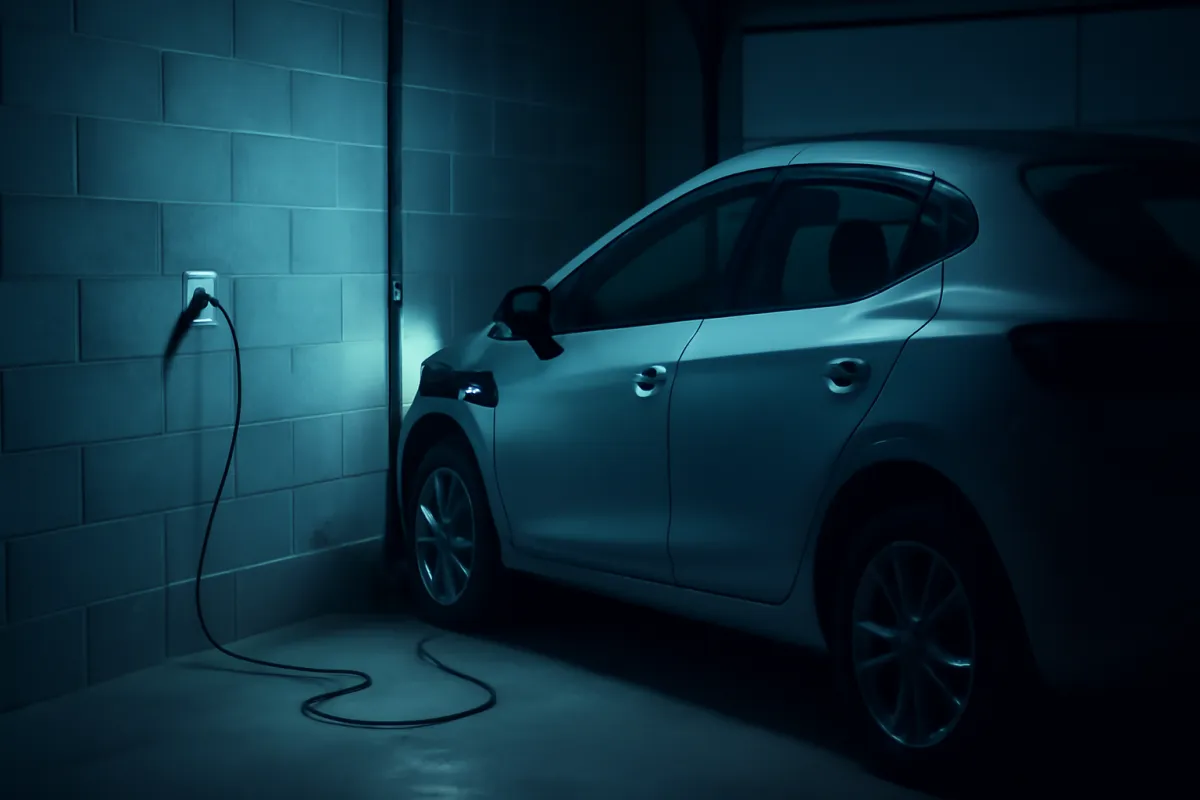
Level 1 is the simplest charging there is: the cord that comes with the car plugged into an ordinary 120-volt household outlet, drawing roughly 1.4 kilowatts. It needs no installation and no special equipment, which is its whole appeal, and it adds an illustrative 3 to 5 miles of range per hour. That sounds hopeless until you multiply it out over the many hours a car sits parked at home, where an overnight plug-in can restore something like 40 to 50 miles, enough to cover a modest daily commute without ever visiting a faster charger.
Where Level 1 struggles is recovery from a low battery. Filling a large drained pack at 1.4 kilowatts takes well over a day, because the power is simply too small to move many kilowatt-hours quickly. So Level 1 works beautifully for the driver who plugs in nightly having used a little, and poorly for the driver who runs the battery low and needs it back fast. It is a matter of matching the trickle to the deficit. Many owners test EV life on Level 1 first and only add a Level 2 unit once their driving clearly outgrows it, a sequence our home charging teardown recommends before spending on hardware.
Level 2: the 240-volt home and workplace standard
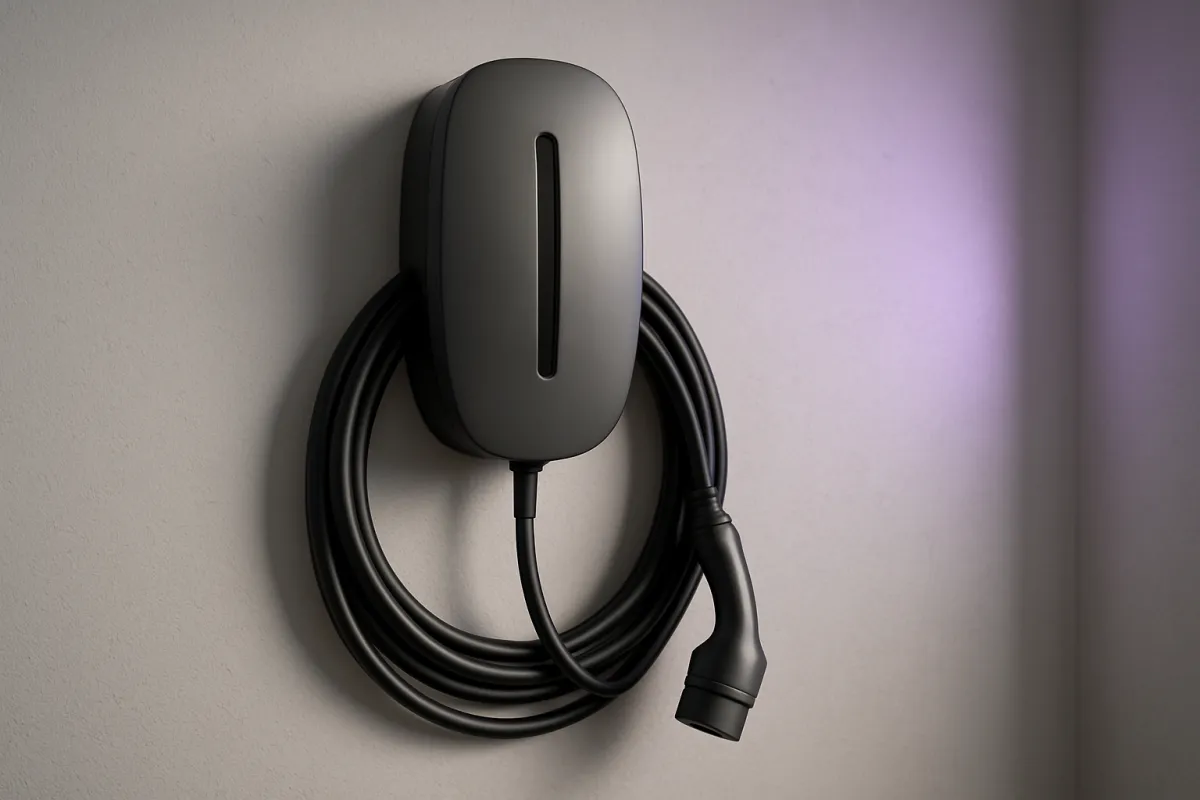
Level 2 is where most home and workplace charging happens, and for good reason: it runs on a 240-volt circuit, the same voltage as an electric dryer or oven, and delivers anywhere from about 7 to 19.2 kilowatts depending on the circuit and the unit. That translates to an illustrative 25 to 40 miles of range per hour, which refills essentially any daily driving overnight with room to spare, and even a heavy day’s driving is back by morning. It is the level owners install at home and the level workplaces and destinations offer.
The one number to check before buying a Level 2 unit is your car’s onboard charger rating, because that, not the wall unit, often sets the ceiling. Many cars accept AC charging somewhere between about 7.4 and 11.5 kilowatts, so a 19.2 kilowatt station charges such a car only at its onboard limit, not the station’s full rating. That makes matching the unit to the car, and to your daily miles, more useful than buying the biggest unit sold. Our Level 2 charger teardown takes this whole tier apart, speeds, amperage tiers, costs, and the do-you-need-it test, our charger-install teardown covers sizing the circuit and the unit, and our home charging teardown covers the wider practice of charging at home, including the off-peak scheduling that makes it cheap.
DC fast charging: Level 3 and the bypass of the onboard charger
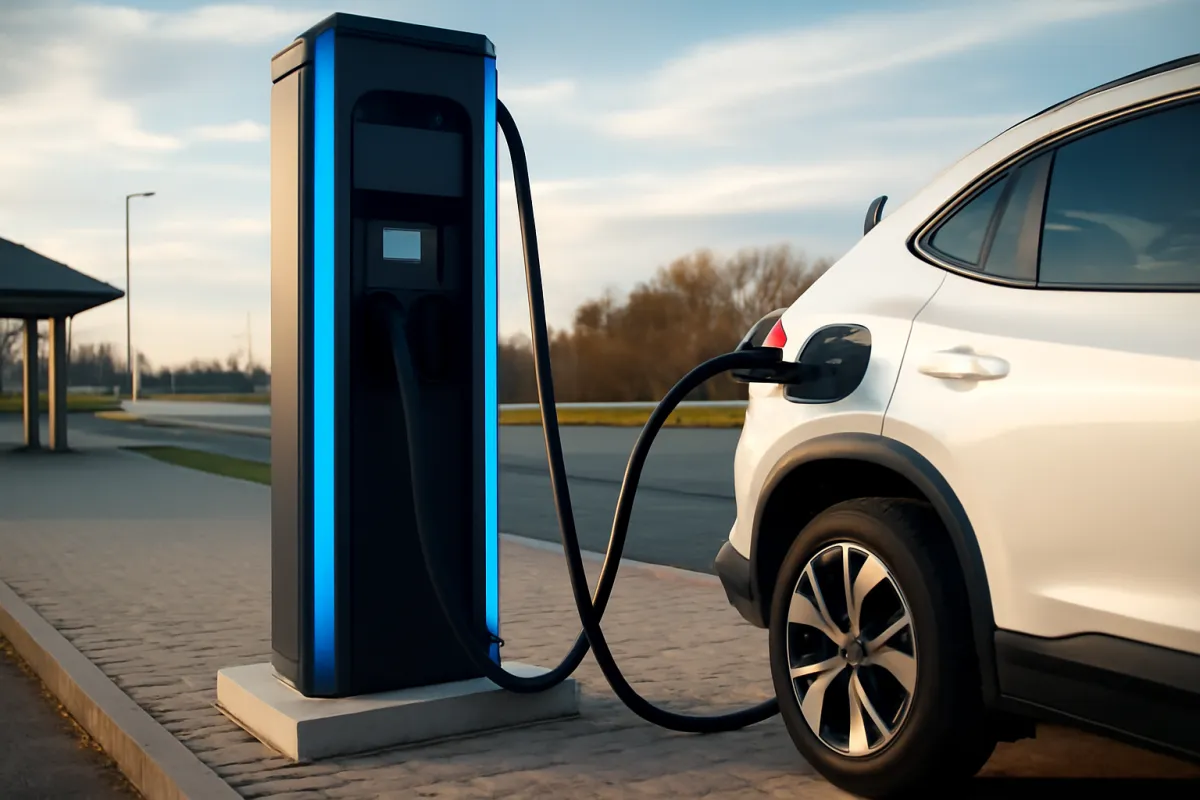
DC fast charging, universally called Level 3, is different hardware and a different job. These are large, high-power stations delivering roughly 50 to 350 kilowatts, and their trick is to push direct current straight into the battery, bypassing the car’s onboard charger entirely. Because they sidestep that onboard bottleneck, they can add an illustrative 150 or more miles of range in about 20 minutes at 150 kilowatts, which is what makes long-distance EV travel practical. This is the charging you use on a road trip, priced for convenience rather than daily fuel.
The figure attached to DC fast charging is usually given to 80 percent, not 100, for a reason. Charging speed tapers as the battery fills, gently at first and then sharply above 80 percent, so the last stretch to full can take as long as everything before it. On a trip the efficient habit is to charge to 80 and drive on, treating the fast charger like a quick fuel stop. Cold batteries also fast-charge slower, which is why many EVs precondition the pack on the way to a charger. Our charge-time breakdown covers the taper and the 10 to 80 percent convention, and our public charging cost teardown prices what these sessions cost.
The charge-time rule of thumb: kWh divided by kW
Every charge time reduces to one line of arithmetic, and it is worth memorizing because it demystifies the whole subject. Take the number of kilowatt-hours you need to add to the battery and divide by the number of kilowatts the charger delivers, and the result is hours. A battery is measured in kWh, a charger is rated in kW, and kWh divided by kW cancels to hours, the same way miles divided by miles-per-hour gives a travel time. That single rule turns any pairing of car and charger into an estimate.
One caveat keeps the rule honest: on AC charging, Level 1 and Level 2, the effective kilowatts are the lower of the charger’s rating and your car’s onboard charger, so use the smaller number in the denominator. On DC fast charging, use the lower of the station’s power and the car’s peak DC accept rate, and remember the taper means the average over a session is below the peak. Work an example: a 60 kWh battery going from 20 to 80 percent needs 36 kWh added; on a 7.4 kW Level 2 unit that is about 4.9 hours, and on a 150 kW DC station the raw math is well under half an hour before the taper. The companion on this page runs this exact formula for your own inputs, and our charge-time breakdown works it in full.
Charging speed by level
Lining the levels up by raw power makes the exponential gap between them impossible to miss. Every bar below is an illustrative power figure in kilowatts, the number that sits in the denominator of the time formula, so a longer bar means a faster charge.
Illustrative charger power by level, kilowatts
Typical power delivered, from a household outlet to a high-power DC station. Actual speed is capped by your car's accept rate.
The widths are the raw ratio of kilowatts against a 350 kW peak. Level 1 and even Level 2 are slivers beside DC fast power, which is why the levels feel like different worlds, though your car's accept rate caps what you actually get.
The chart makes the practical point at a glance: the levels are not close, and the gap grows exponentially. But raw station power is only half the story, because your car’s maximum accept rate caps what you actually receive. A car that accepts 100 kilowatts on DC sees no benefit from the 350 kilowatt peak, and a car whose onboard charger tops out at 7.4 kilowatts charges at 7.4 on a 19.2 kilowatt Level 2 unit. Read the chart as the ceiling the charger offers, then apply your car’s own limit to find the real speed.
The connector types, explained
The connector is the plug shape and the protocol, a separate axis from the level. In North America there are four to know, and this table is the quick reference. The framing follows SAE and industry standards, and the transition to NACS is under way.
| Connector | Handles | Max power (illustrative) | Notes |
|---|---|---|---|
| J1772 | Level 2 AC (non-Tesla) | up to ~19.2 kW AC | The universal AC connector for non-Tesla cars |
| CCS1 | AC plus DC fast | up to ~350 kW DC | J1772 plus two DC pins; one port for both |
| NACS | AC plus DC | up to ~250 kW on Tesla V3 | The Tesla connector, becoming the 2026 US standard |
| CHAdeMO | DC fast (legacy) | varies | Older Nissan Leaf; being phased out |
The thing to notice is that a single connector can carry more than one level. J1772 is AC only, but CCS1 and NACS each carry both AC and DC through one port, which is why you cannot read the level off the plug alone. The sections below take each connector in turn, because the details, and especially the ongoing shift to NACS, decide what you can plug into and where.
J1772: the universal Level 2 AC connector
J1772, often just called the J plug, is the standard AC charging connector for non-Tesla cars in North America. It handles Level 1 and Level 2 AC charging, up to about 19.2 kilowatts, and for years it was the connector you would find on any non-Tesla home wallbox and public Level 2 station. If you have charged a non-Tesla EV at home or at a workplace or destination charger, you have almost certainly used a J1772 plug. It is AC only, so it does not by itself do DC fast charging.
Its role in the current landscape is as the AC half of the picture. Because CCS1 is literally a J1772 plug with two DC pins added below it, a CCS1 car uses the J1772 portion for AC charging and the full CCS1 connector for DC fast charging, so J1772 remains relevant even on cars built for fast charging. During the NACS transition, J1772 AC charging is commonly bridged with simple adapters, since AC charging is lower power and adapting it is straightforward. For most owners, J1772 is the plug their home and workplace charging runs on, whatever they use for fast charging on the road.
CCS1: J1772 plus DC fast
CCS1, the Combined Charging System, was the DC fast-charging standard for most non-Tesla North American EVs before the NACS shift, and its design is neatly literal: it takes the familiar J1772 AC connector and adds two large DC pins below it, combining AC and DC into one port. That is where the name comes from. A CCS1 car uses the upper J1772 section for everyday AC charging and the whole connector, AC pins plus DC pins, for DC fast charging, which can run up to about 350 kilowatts on capable stations.
For several years CCS1 was the connector most non-Tesla fast chargers used, and a large installed base of both cars and stations still relies on it. The NACS transition does not strand those cars: CCS1 vehicles are being served by NACS adapters that let them use Tesla Superchargers where access has opened, and CCS stations remain widespread. If you own or are shopping for a recent used EV, there is a good chance it is CCS1, and checking adapter availability and station coverage for your routes is worth doing. Our public charging cost teardown covers what fast-charging sessions cost across networks.
NACS: the Tesla connector and the 2026 transition
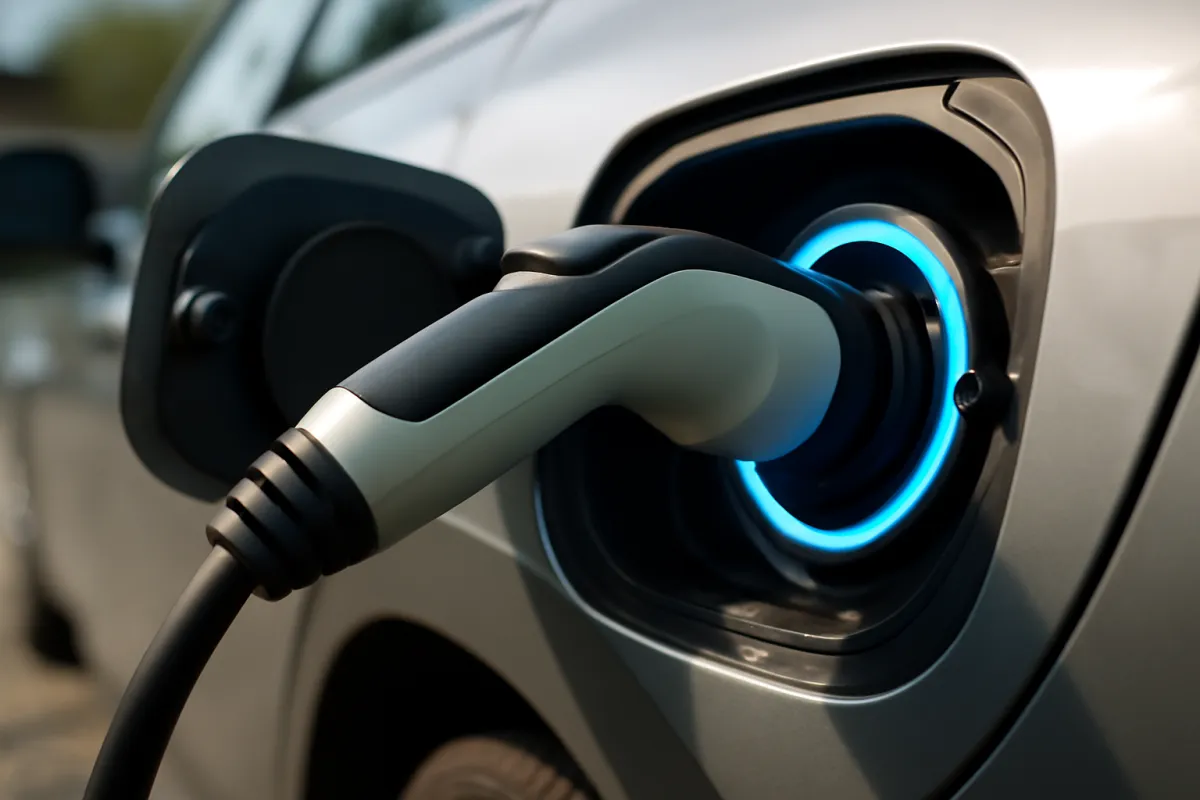
NACS, the North American Charging Standard, is the connector originally designed by Tesla and since opened as an industry standard, and it is the story of the moment in EV charging. Its design advantage is a single, compact port that handles both AC and DC charging through one plug, rather than combining two sections like CCS1, and it is the connector the entire Tesla Supercharger network uses, at up to about 250 kilowatts on V3 Superchargers. Through 2024 to 2026, most major automakers, including Ford, GM, Rivian, Honda, and Nissan, announced adoption of NACS for their new models.
That broad adoption is why NACS is becoming the 2026 US standard, and it reshapes what drivers can plug into. New NACS-equipped cars can use Superchargers natively, while existing CCS1 cars reach many Superchargers through a NACS adapter where access has been enabled, and NACS cars can use older CCS stations with the reverse adapter. The two standards coexist during the transition rather than one abruptly replacing the other. For anyone buying an EV now, it is worth knowing which port a given model ships with and what adapter, if any, it needs for the networks on your routes. The direction of travel is clear even as the details settle.
CHAdeMO: the legacy connector being phased out
CHAdeMO is the oldest of the DC fast-charging connectors still seen in North America, and it is on the way out here. It is most associated with earlier Nissan Leaf models, uses a large round plug distinct from CCS and NACS, and was common on some early fast chargers. New North American EVs have moved on, first to CCS1 and now to NACS, so CHAdeMO is not a connector you will find on current cars in this market.
For owners of older CHAdeMO vehicles, the practical reality is a shrinking network. Some CHAdeMO stations remain, and adapters exist in places, but coverage is thinning rather than expanding, which is worth factoring into any purchase of an older used EV that uses it. If you drive routes that depend on fast charging, checking CHAdeMO availability along them is prudent, since you cannot assume the density you would get with CCS or NACS. CHAdeMO is included here for completeness and because used cars keep it relevant, but it is a legacy standard, not one to plan a new purchase around.
AC versus DC: why the onboard charger matters
The split between AC and DC charging comes down to where one conversion happens, and understanding it explains the whole speed hierarchy. Batteries store direct current, but the grid and your home wiring deliver alternating current, so the AC must be converted to DC somewhere before it reaches the pack. On Level 1 and Level 2 charging, that conversion happens inside the car, in a component called the onboard charger, and the onboard charger’s rating is what caps AC charging speed.
DC fast charging moves the conversion out of the car and into the large, expensive station, which can then push direct current straight into the battery and bypass the onboard charger entirely. That bypass is the reason DC fast charging reaches power levels an onboard charger never could: the car’s built-in bottleneck is out of the loop. It also explains why a home wallbox cannot simply be made as fast as a Supercharger; the limit is the modest AC-to-DC converter the car carries, sized for cost, weight, and heat rather than for maximum speed. When you read a car’s specs, the onboard charger figure governs your home and workplace charging, while the peak DC rate governs your road-trip charging, and they are two separate numbers.
Reading a charger’s kW rating versus your car’s accept rate
The single most misunderstood point in charging is that the charger and the car form a pair, and the slower of the two sets the speed. A charger advertises a maximum power, but your car has its own maximum accept rate, and you get the lower of the two, never more. On AC, that car limit is the onboard charger, commonly between about 7.4 and 11.5 kilowatts, so a 19.2 kilowatt Level 2 station charges a 7.4 kilowatt car at 7.4. On DC, the limit is the car’s peak DC accept rate, so a 100 kilowatt car sees only 100 at a 350 kilowatt station.
The practical lesson is to check your own car’s two accept-rate numbers before you judge any charger or plan any stop. A higher-rated charger buys nothing above what the car will take, which means paying for a bigger home unit than your onboard charger can use is money spent on a number you will never see, and expecting peak DC speed from a car that cannot accept it leads to disappointment on a road trip. The companion on this page bakes this in: enter your battery and the charger power, and it applies the formula so you can see the realistic time rather than the station’s headline. For the deeper treatment of accept rates and the charging curve, see our charge-time breakdown.
How long to add 150 miles, by level
A concrete target makes the levels tangible, so here is roughly what it takes to add 150 miles of range, using a typical efficiency of about 30 kilowatt-hours per 100 miles, which means 150 miles needs about 45 kilowatt-hours. Run that through the time formula at each level and the spread is stark. On Level 1 at 1.4 kilowatts, 45 kilowatt-hours takes over a day, which is why Level 1 is for topping up small deficits rather than adding big chunks of range in a hurry.
On Level 2 at 7.4 kilowatts, the same 45 kilowatt-hours takes about 6 hours, an easy overnight, and at 11 kilowatts closer to 4 hours. On DC fast charging at an effective 150 kilowatts, the raw math is under 20 minutes, which lines up with the rule of thumb that 150 kilowatts adds roughly 150-plus miles in about 20 minutes, before the taper near the top of the battery slows the last stretch. Same 45 kilowatt-hours, same 150 miles, and a spread from over a day to under half an hour depending only on the level. These are illustrative and shift with your car’s efficiency and accept rate, but the ratios hold, and you can run your own numbers in the companion or price the energy in our cost calculator.
Where your charging happens in a typical week
Because the levels serve different roles, a real owner’s week is a mix, and seeing where the charging actually happens explains why the dramatic speed differences rarely bite in daily life. Most energy comes from slow overnight charging at home, a smaller share from public fast charging on the occasional longer trip, and a little from workplace or destination charging.
Where a typical home-charging owner's charging happens
Illustrative share of weekly charging energy by location and level.
Illustrative only. For a home-charging owner, most energy is slow overnight charging where speed is irrelevant, and the fast-charging slice is a trip expense, not a daily one.
The mix explains a paradox: charging speed varies enormously between levels, yet most owners rarely think about it. Roughly three-quarters of a typical week’s energy is slow home charging done while you sleep, where the total time is invisible, and only the small public-fast slice, on trips, is charging where minutes are counted. An owner who charges mainly at home experiences the car as simply full each morning, with the levels and connectors a thing they looked up once. Our home charging teardown covers making that overnight habit cheap and automatic.
Adapters and cross-compatibility
During the NACS transition, adapters are what keep the ecosystem usable, and knowing the basic logic helps. Because NACS and CCS1 both carry DC fast charging, an adapter can translate one to the other, so CCS1 cars reach NACS stations with a NACS adapter and NACS cars reach CCS stations with the reverse. AC adapting, for J1772 to a NACS AC port or the reverse, is simpler still because AC charging is lower power. Automakers rolling out NACS have generally paired the change with adapter programs so existing cars are not stranded.
The caveats are worth respecting. Not every station generation supports every car through an adapter, network access for non-Tesla cars has been rolling out in stages rather than all at once, and a specific adapter has to be rated for the power and protocol you are using. So while the ecosystem is converging on NACS, the transition period rewards checking compatibility for your exact car and the stations on your route rather than assuming any plug reaches any station. This is a moving target, and the practical advice is to confirm access before you rely on it for a trip, not to memorize a snapshot that will shift. Our charge-time breakdown and public charging cost teardown cover the timing and cost once you are plugged in.
Charging networks and the NACS shift
Behind the connectors sit the charging networks, the companies that operate public stations, and the NACS shift is reshaping them too. The Tesla Supercharger network, built around NACS, has been among the most extensive and reliable fast-charging networks, and its gradual opening to non-Tesla cars is one of the largest practical changes for EV drivers, widening the fast-charging options for cars that were previously limited to CCS networks. Other networks operate CCS stations, and many are adding or planning NACS connectors as the standard converges.
For a driver, the upshot is that network access is broadening, but it still varies by car, by network, and by whether a given site has enabled non-Tesla or NACS charging. The reliable approach is to use your car’s built-in route planner or a charging app that filters by your connector and by live station status, rather than assuming coverage. Fast-charging pricing also varies by network and by membership, which our public charging cost teardown breaks down. The trend is toward more stations reachable by more cars, which is good news, but the transition means checking the specifics for your vehicle remains worthwhile.
A worked example: planning charges for one car
Tie it together with one car. Say you drive an EV with a 60 kilowatt-hour battery, an 11 kilowatt onboard charger, and a peak DC accept rate around 150 kilowatts, and you want to understand your charging across a normal week and a road trip. At home, on a Level 2 wallbox, the car charges at its 11 kilowatt onboard limit, so topping up a daily 40-mile deficit, about 12 kilowatt-hours, takes a bit over an hour, trivial inside an overnight window. Level 1 would also cover that 40 miles across a full night, so on light days you might not even need the wallbox.
On a road trip, you rely on DC fast charging, and here the connector matters: if the car is NACS-equipped you plug into Superchargers directly, and if it is CCS1 you use CCS stations or a NACS adapter where access is open. Adding 150 miles, about 45 kilowatt-hours, at an effective 150 kilowatts is under 20 minutes to 80 percent, roughly the length of a break, before the taper slows any push toward full. The same car, then, sees three very different experiences from the same standards: a slow overnight trickle, a brisk overnight wallbox, and a fast road-trip stop, all resolved by the one time formula. Run your own battery and charger through the companion on this page, and price the energy in our cost calculator.
The bottom line
EV charging is a small, learnable map: three levels set by power, four connectors set by plug and protocol, and one formula that ties them to time. Level 1 is the 120-volt trickle for modest daily top-ups, Level 2 is the 240-volt home and workplace standard that refills overnight, and DC fast charging bypasses the car’s onboard charger to add a road trip’s worth of range in the time of a rest stop. On the plug side, J1772 handles AC, CCS1 adds DC fast to it, CHAdeMO is a legacy connector being phased out, and NACS, the Tesla connector adopted by Ford, GM, Rivian, Honda, Nissan and others for 2024 to 2026 models, is becoming the 2026 US standard. The rule to keep is that hours roughly equal the kilowatt-hours you need divided by the charger’s kilowatts, with AC capped by your car’s onboard charger and the real speed always the lower of the charger and the car. Every figure here is illustrative and varies by vehicle, so confirm your own car’s accept rates and check station access for your routes, then use the companion and our charge-time breakdown to turn the standards into your actual numbers.
This reference is educational and independent, compiled by people who like sorting standards into tidy tables, not by any automaker, charging network, or connector body. Every power figure, range-per-hour, charge time, and connector rating above follows general SAE and industry conventions and is illustrative, varying with your specific vehicle, its onboard charger and peak DC accept rate, the battery’s temperature and state of charge, and the individual station. The NACS transition is ongoing, and network access, adapter compatibility, and station coverage are changing, so confirm what your own car supports and what the stations on your route accept before relying on any detail here. Check current specifications and consult a qualified professional for electrical work.
Frequently asked questions
What are the three EV charging levels?
EV charging is grouped into three levels by power. Level 1 uses a standard 120-volt household outlet at roughly 1.4 kilowatts, adding about 3 to 5 miles of range per hour, which suits overnight top-ups of modest daily driving. Level 2 uses a 240-volt circuit, the same voltage as an electric dryer, at roughly 7 to 19.2 kilowatts, adding about 25 to 40 miles per hour, and it is the home and workplace standard. Level 3, universally called DC fast charging, ranges from about 50 to 350 kilowatts, bypasses the car's onboard charger, and can add roughly 150 or more miles in about 20 minutes at 150 kilowatts. The framing follows SAE and industry standards, and the exact speeds vary by vehicle and onboard charger.
What is the difference between J1772, CCS, and NACS connectors?
These are the plug standards for North American EVs. J1772 is the universal Level 2 AC connector for non-Tesla cars, handling AC charging up to about 19.2 kilowatts. CCS1, the Combined Charging System, adds two DC pins below a J1772 plug so one port handles both AC and DC fast charging, up to about 350 kilowatts on the DC side. NACS, the North American Charging Standard originally the Tesla connector, is a single smaller port that handles both AC and DC through one plug, up to about 250 kilowatts on Tesla V3 Superchargers, and it has been adopted by Ford, GM, Rivian, Honda, Nissan, and others for 2024 through 2026 models. NACS is becoming the 2026 US standard, though many existing cars still use CCS1 with adapters bridging the two.
What is the NACS connector?
NACS, the North American Charging Standard, is the connector originally designed by Tesla and now opened up as an industry standard. Its appeal is that a single compact port handles both AC charging and DC fast charging, unlike CCS1 which combines two plug sections, and it is the connector used across the Tesla Supercharger network at up to about 250 kilowatts on V3 stations. Through 2024 to 2026, most major automakers including Ford, GM, Rivian, Honda, and Nissan announced adoption of NACS for new models, and it is becoming the 2026 US standard. Drivers of existing CCS1 cars are being served by adapters that let them use NACS stations, and NACS-equipped cars can use older CCS stations with the reverse adapter, so the two coexist during the transition.
How long does it take to charge an EV?
The rule of thumb is that the hours to add energy roughly equal the kilowatt-hours you need divided by the charger's kilowatts, with AC charging limited by the car's onboard charger. Illustratively, adding a near-full charge to a 60 kilowatt-hour battery takes over a day on Level 1, about 6 to 8 hours on a Level 2 home wallbox, and roughly 20 to 40 minutes to reach 80 percent on DC fast charging. The figures vary with the vehicle, its maximum accept rate, the battery's temperature, and how full it already is. Our dedicated charge-time breakdown works the formula in full detail, and the companion on this page lets you run your own battery and charger.
Can any EV use a Tesla Supercharger?
Increasingly yes, but it depends on the car and an adapter during the transition. Tesla vehicles use the NACS connector natively and can use Superchargers directly. Non-Tesla cars built with CCS1 can use many Superchargers through a NACS adapter where the network has opened access, and newer non-Tesla models built with NACS ports can plug in directly. Because automakers including Ford, GM, Rivian, Honda, and Nissan adopted NACS for 2024 through 2026 models, native access is spreading quickly. Compatibility still varies by station generation and by whether a given network has enabled non-Tesla charging, so it is worth confirming access for your specific car and the stations on your route before relying on them.
What is CHAdeMO and is it being phased out?
CHAdeMO is an older DC fast-charging connector, most associated with earlier Nissan Leaf models in North America, and it is being phased out here. It uses a separate large round plug distinct from CCS and NACS, and new North American EVs generally no longer ship with it, having moved to CCS1 and now NACS. Drivers of older CHAdeMO cars can still find some stations and use adapters in places, but the network is shrinking rather than growing. If you own or are considering a used EV with a CHAdeMO port, it is worth checking fast-charger availability along the routes you drive, since coverage is thinner than for the current standards.
Does a faster charger always charge my car faster?
Not beyond what your car will accept. Every EV has a maximum accept rate: an onboard charger that caps AC charging speed, commonly somewhere between about 7.4 and 11.5 kilowatts, and a peak DC rate for fast charging. If your car's onboard charger tops out at 7.4 kilowatts, a 19.2 kilowatt Level 2 station still charges it at 7.4, because the car is the bottleneck. The same holds on DC fast charging: a car that accepts 100 kilowatts gains nothing from a 350 kilowatt station beyond 100. So the practical speed is the lower of the charger's rating and your car's accept rate, which is why checking your vehicle's specs matters more than chasing the highest-rated charger.
What is the difference between AC and DC charging?
The distinction is where the conversion from AC to DC happens. Batteries store direct current, but the grid and home wiring deliver alternating current, so somewhere the AC must be converted to DC. On Level 1 and Level 2 charging, that conversion happens inside the car, in a component called the onboard charger, which is why AC charging speed is capped by that onboard charger's rating. DC fast charging moves the conversion into the large station itself, so it can push direct current straight into the battery, bypassing the onboard charger and enabling the much higher power of Level 3. That is the core reason DC fast charging is so much quicker: it sidesteps the car's built-in bottleneck.