What's in this teardown
- What a public charging session actually costs
- How much does an EV charging station cost? (the hardware, not the charge)
- Cost of charging an EV at home vs a charging station
- The arithmetic behind every public charging session
- How to compute your cost per mile from the price on the screen
- Public charging pricing models and what each one does to your bill
- Why per-minute billing penalises a slow-charging car
- Session fees and why they land hardest on small top-ups
- Level 2 vs DC fast charging cost
- Why DC fast charging costs multiples of home charging
- Where a public charging dollar goes
- The cost to add 200 miles, four ways
- State of charge, taper, and your effective rate
- How much to fill up 10 to 80 percent at a fast charger
- Battery size, efficiency, and what really scales your bill
- Idle fees are a separate mechanism, not a rate
- Memberships and the break-even that decides them
- Free and destination charging in the same arithmetic
- Demand charges and time-of-use pricing
- How much to charge an EV on a road trip
- Public charging versus gas, per mile
- Public versus home charging cost
- What ChargePoint, EVgo and Electrify America actually charge you
- Where the network name matters and where it does not
- Utility programmes, state schemes, and why no numbers appear here
- A worked example: a road trip versus the same in gas
- Common public-charging cost mistakes
- The bottom line
Short answer: Charging an EV at a public station typically costs an illustrative 30 to 60 cents per kWh at DC fast chargers and about 20 to 35 cents at public Level 2, so a session adding 40 to 60 kWh commonly runs roughly $15 to $30, two to four times the per-kWh price of home charging. At an illustrative 48 cents and 3.3 miles per kWh, a public mile costs about 14.5 cents.
The cost to charge an EV at a public charging station, set beside the cost of the same energy at home, is the most misread comparison in EV ownership, because the two ends of that gap are priced on completely different terms. Our home-charging teardown priced the cheap end, the electricity that flows into the car while it sleeps in the driveway. This teardown prices the other end, what it costs when you plug into a public station at a rate someone else set, and then sets the two side by side so you can see exactly when home wins and by how much.
What follows is deliberately arithmetic rather than a price list. Public charging rates, billing models, membership terms and access rules change constantly and differ by site, so any table of network prices would be wrong somewhere and stale everywhere. What does not change is the structure: why fast charging costs multiples of home charging, how per-kWh and per-minute billing produce different bills for identical energy, how state of charge quietly moves your effective rate, and how to turn whatever number the screen shows into a cost per mile you can compare with a gallon of gas. Every figure below is illustrative and internally consistent, and you can swap in your own in about a minute with our cost calculator.
Key takeaways
- The cost to charge an electric car at a charging station is typically an illustrative 30 to 60 cents per kWh at DC fast chargers and about 20 to 35 cents at public Level 2, so a session that adds 40 to 60 kWh commonly runs roughly $15 to $30.
- Public charging commonly costs two to four times more per kWh than home charging, and the reason is structural: demand charges, hardware and site costs, not the electricity itself.
- The billing model can matter more than the rate. A per-minute price divided by a slow charging speed produces an effective per-kWh rate several times higher than the same price on a fast-accepting car.
- Cost per mile is two divisions: price per kWh divided by miles per kWh. At an illustrative 48 cents and 3.3 miles per kWh, that is about 14.5 cents a mile, against 11.7 cents for a 30 mpg gas car at $3.50 a gallon.
- Idle fees are a separate mechanism from the charging rate, billed by the minute after the session ends, and they are entirely avoidable by moving the car.
What a public charging session actually costs
Here is the direct answer first. Charging an EV at a public station costs an illustrative 30 to 60 cents per kWh at DC fast chargers and about 20 to 35 cents at public Level 2, so a session that adds 40 to 60 kWh commonly runs roughly $15 to $30. That is more than home charging, often still cheaper per mile than gas, and driven mostly by which charger type you use and how the station bills.
Everything else here is the detail behind that sentence. A public charging session has no single price the way a gallon of gasoline roughly does. It has a rate, a charger type, a billing model, a location, sometimes a time of day, and sometimes a fee that has nothing to do with energy at all. A driver topping up on a slow public plug outside a grocery store and a driver splashing in 200 miles at a highway fast charger are doing the same verb at prices that can differ by three times. The useful thing to carry away is not a number but a method: read the rate, read the model, work out the energy you need, and multiply. Our public charger walkthrough covers the mechanics of starting a session; this article prices it.
How much does an EV charging station cost? (the hardware, not the charge)
Two different questions share one phrasing, so it is worth splitting them before the arithmetic starts. When drivers ask how much EV charging stations cost, some mean the session, what it costs to put energy in the car, which is what every other section here prices. Others mean the equipment, the unit itself and the work of fitting it. If you came for the second question, our home charger installation teardown is the page that answers it properly. The shape of that answer is a home Level 2 charger priced as hardware plus an electrical job, where the electrical job is the part that moves: the cable run from the panel to the parking space, and whether the panel itself needs work, decide far more of the bill than which box goes on the wall. Our installation walkthrough covers the steps, our Level 2 explainer covers what the unit is, and our panel upgrade teardown covers the expensive branch of that decision.
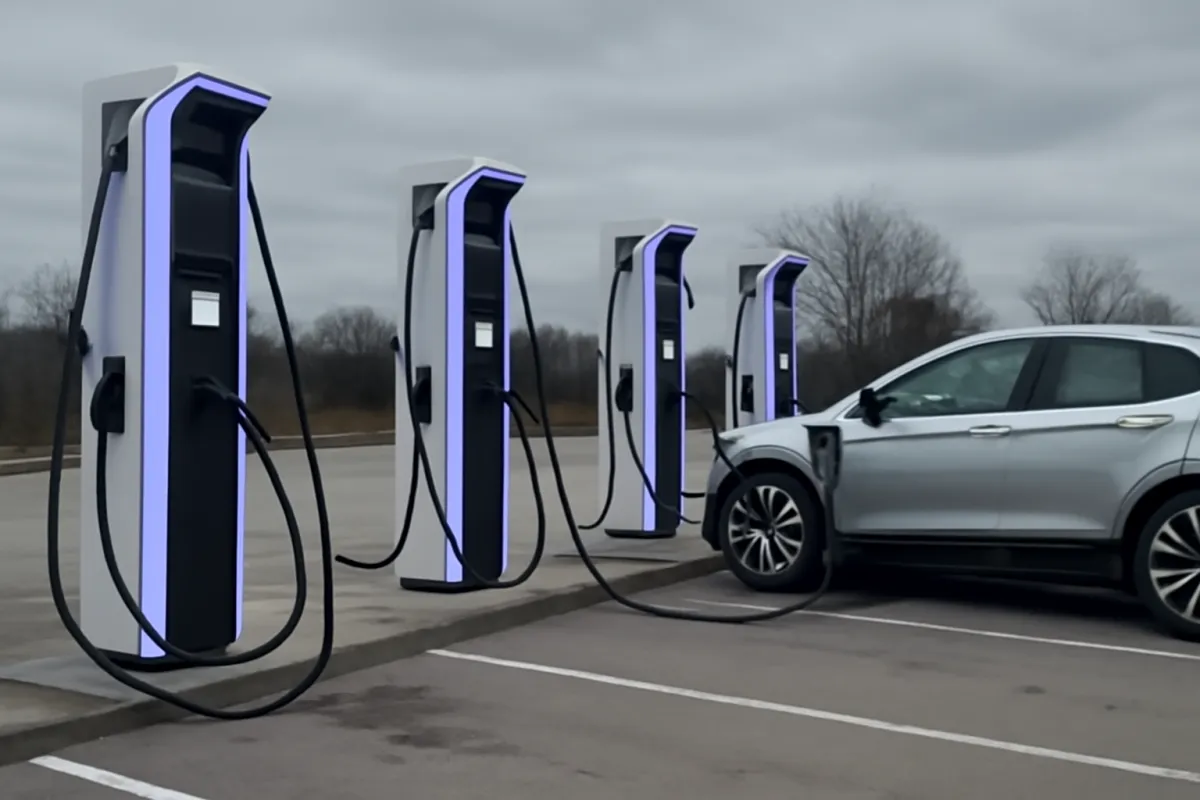
A public DC fast charging station is a third question again, and not a consumer purchase at all. The pedestals you plug into on a highway are commercial capital equipment: high-power cabinets, a utility service large enough to feed them, trenching and site works, payment hardware, network fees and an ongoing maintenance contract. That cost sits with a network operator or the business hosting the site, it is quoted per project rather than read off a price list, and any figure printed on a page like this would be wrong the moment a real quote landed. It reaches you only indirectly, through the per-kWh price at the stall, which is exactly what the rest of this teardown takes apart. If you are a driver rather than a site host, the number you can act on is the rate on the screen, not the price of the pedestal.
Cost of charging an EV at home vs a charging station
Here is the head-to-head most drivers actually want. The cost of charging an EV at home vs a charging station is a gap of roughly two to four times per kWh, and it runs the same direction every time: home is cheaper. Charging at home commonly costs an illustrative 15 cents per kWh, close to an ordinary residential electricity rate (check yours against the EIA’s average retail electricity prices by state), because you are paying for power you were already connected to with no separate delivery business loaded on top. A public station has to cover expensive equipment and grid demand, so public Level 2 commonly runs an illustrative 20 to 35 cents per kWh and public DC fast charging an illustrative 30 to 60 cents. The same 60 kWh that costs about $9 in a driveway costs roughly $18 on a public Level 2 plug and closer to $29 at a fast charger.
So when is each one cheaper? On price per kWh, home wins essentially every time, which is why our home-charging teardown treats the driveway as the economic anchor of ownership. A public station is the cheaper choice only in the sense that it is the choice you have when home is not an option: far from your own outlet on a trip, in an apartment or on a street with no plug, or when you need range faster than a home circuit can deliver it. Public Level 2 sits between the two and is the closest a public plug gets to home pricing. Charger type explains most of the spread, and our charging levels and connectors reference sets out what each level actually is.
The practical reading is blunt. If you can charge where you park, do most of your charging there and treat every public session as convenience you are paying a premium for. If you cannot, favour public Level 2 for routine top-ups and reserve fast charging for when speed genuinely matters (those are the two public tiers the DOE Alternative Fuels Data Center’s public charging page describes), because that is the priciest way to buy an EV mile. Drivers without a driveway have their own playbook in our apartment charging teardown. You can price both ends of this comparison on your own rate and battery in our cost calculator.
The arithmetic behind every public charging session
Strip away the branding and every public charging bill is the same short equation. You pay for energy, sometimes for time, and sometimes a fixed amount for the privilege of starting. Written out, the session cost is the energy you add multiplied by the price of that energy, plus any time-based charge multiplied by the minutes you occupy the stall, plus any flat session fee. Three terms, and most sessions use only the first.
The energy term is the one you can predict before you arrive. Energy added equals your battery capacity multiplied by the percentage you add. A 75 kWh pack taken from 10 to 80 percent adds 70 percent of 75, which is about 52 kWh. At an illustrative 48 cents per kWh that is roughly $25. Nothing about that calculation depends on which logo is on the pedestal, which is exactly why it is worth learning: it survives every price change, every rebrand, and every new network that appears next year.
A useful habit is to convert the percentage you need into kWh before you plug in, because percentages hide the size of the transaction. Twenty percent of a small pack and twenty percent of a large one are the same on the dashboard and can differ by $10 at the till. Once you are thinking in kWh, the price on the screen becomes directly comparable across stations, across charger types, and against your own home rate. Our charge-time teardown works the same conversion from the time side, and our cost calculator does both at once.
How to compute your cost per mile from the price on the screen
Cost per kWh is not a number you can compare with a gallon of gas. Cost per mile is. The conversion is two divisions and it works at any station, on any network, at any price.
First, find your efficiency in miles per kWh. Most cars report either miles per kWh directly or its inverse, kWh per 100 miles. An illustrative 30 kWh per 100 miles is 3.3 miles per kWh. Second, divide the price per kWh by that efficiency. At an illustrative 48 cents per kWh, 48 divided by 3.3 is about 14.5 cents a mile. At an illustrative 30 cents on a public Level 2 plug, the same car costs about 9 cents a mile. At an illustrative 15 cents at home, about 4.5 cents a mile. One car, one method, three very different miles.
The comparison that makes it concrete is gasoline, where the equivalent arithmetic is price per gallon divided by miles per gallon. A 30 mpg car at $3.50 a gallon costs 11.7 cents a mile. Set that beside the three figures above and the shape of EV running costs appears immediately: home charging is roughly a quarter of the gas mile, public Level 2 is comfortably under it, and premium fast charging sits slightly above it. Our cost-per-mile teardown develops the same maths across a full year of driving, and our EV versus gas teardown sets it against the rest of the ownership ledger. Efficiency is the term drivers forget: a car that manages 4 miles per kWh pays 12 cents a mile at the same 48-cent station where a heavy, inefficient one pays 18.
Public charging pricing models and what each one does to your bill
Before pricing anything, learn the four ways a station can bill you, because the model shapes the cost as much as the rate does. The cleanest and most common is per kWh: you pay for the energy that flows into the car, exactly like paying per gallon. It is the fairest model for the driver, because a slow-charging car and a fast one pay the same for the same energy, and it is the only model where the number on the screen is directly comparable to your home rate.
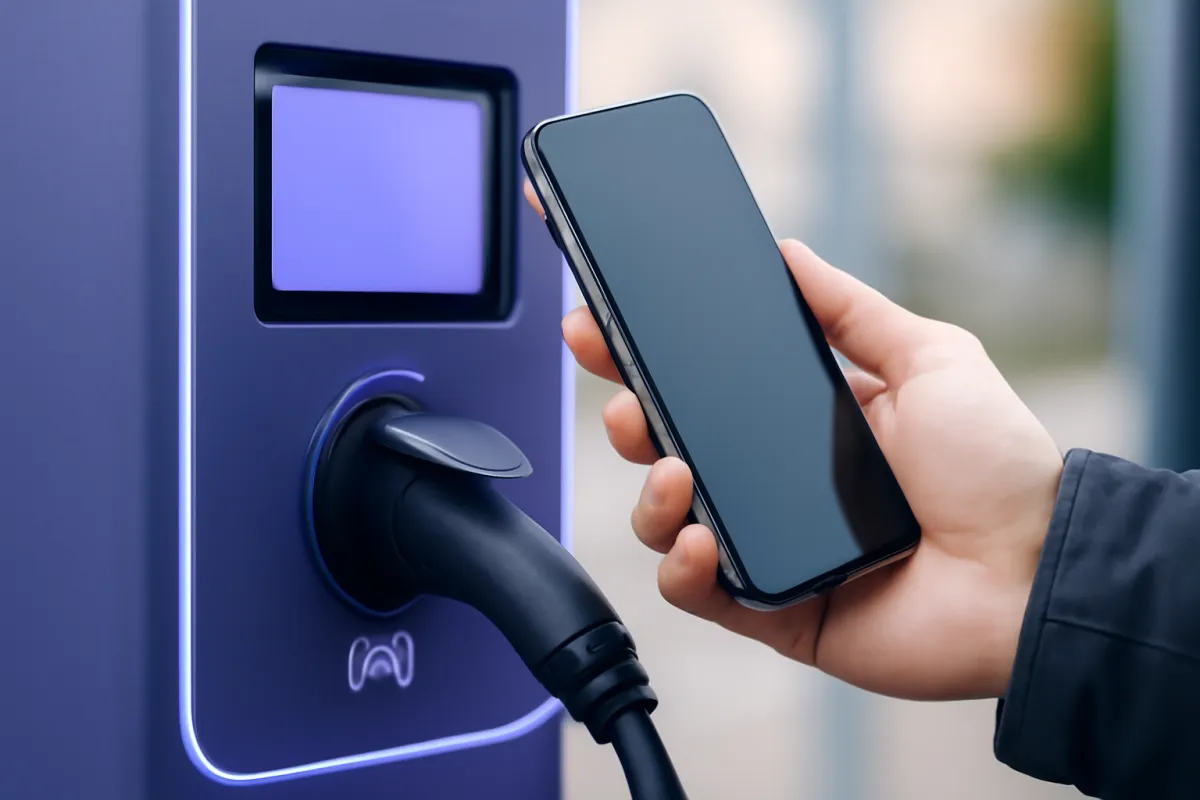
The second is per minute, used in some regions and by some operators, often where per-kWh billing is restricted by weights-and-measures rules. Here you rent the stall rather than buy the energy, and what you actually pay per kWh depends entirely on how fast your car draws power. The third is a flat session fee, sometimes layered on top of one of the other two, which behaves like a fixed cost and therefore lands hardest on small top-ups. The fourth is a subscription: a recurring fee that buys a lower rate on the other three, which is a break-even calculation rather than a discount.
Reading which model applies, right there on the screen or in the app before you commit, is the first move in controlling what a session costs. It takes a few seconds and it is the difference between an expected bill and a surprising one. The next two sections take the second and third models apart, because they are the two that produce bills drivers did not expect.
Why per-minute billing penalises a slow-charging car
Per-minute pricing is the single most misunderstood structure in public charging, and the arithmetic explains why. When you pay by the minute, your effective price per kWh is the per-minute price multiplied by 60, then divided by the average power your car is actually accepting in kilowatts. That is the whole conversion.
Run it. At an illustrative 30 cents a minute, you are paying $18 an hour. A car averaging 150 kW over the session receives 150 kWh in that hour, so it pays about 12 cents per kWh, which is close to home pricing. A car averaging 100 kW pays about 18 cents. A car averaging 50 kW, because its pack is cold, its onboard limit is lower, or it is sitting high in the state of charge where the taper bites, pays about 36 cents per kWh. Same station, same posted price, three times the cost of the identical energy.
Two consequences follow. First, if your car charges slowly, seek out per-kWh stations, because per-minute billing transfers your car’s limitation straight onto your bill. Second, on per-minute pricing the things that make charging faster become money-saving habits rather than time-saving ones: preconditioning the battery on the drive in, arriving at a low state of charge, and stopping before the taper. Our preconditioning teardown covers the first, and our cold-weather range teardown explains why a cold pack accepts power slowly in the first place. In winter, per-minute billing and a cold battery are an expensive combination.
Session fees and why they land hardest on small top-ups
A flat session fee is a fixed cost, and fixed costs behave differently from rates: they do not scale with what you buy, so their weight depends entirely on how much you buy. Divide the fee by the energy you add and you get the amount it adds to your effective per-kWh price.
An illustrative $1 session fee on a 50 kWh fill adds 2 cents per kWh, which barely registers against a 48-cent rate. The same $1 on a 10 kWh top-up adds 10 cents per kWh, a fifth on top. The same $1 on a 5 kWh splash-and-dash adds 20 cents, which can be worse than the energy itself is cheap. The rule that falls out is simple: where a session fee applies, small frequent top-ups are the expensive pattern and fewer, deeper sessions are the cheap one.
This runs directly against the instinct many new EV drivers have, which is to plug in whenever they see a free stall. On a per-kWh station with no session fee, topping up constantly costs nothing extra and is a fine habit. Where a fixed fee exists, each plug-in has a price of admission, and the way to control it is to arrive lower and leave with more. It is the same logic as a delivery charge on a small order. Our road trip planner works the routing side of the same trade, since fewer stops also means less time lost to parking, walking and starting sessions.
Level 2 vs DC fast charging cost
The single biggest lever on public charging cost is not the operator or the city; it is whether you plug into a Level 2 charger or a DC fast charger. Public Level 2 commonly costs an illustrative 20 to 35 cents per kWh and delivers energy slowly, adding perhaps 20 to 30 miles of range per hour. Public DC fast charging commonly costs 30 to 60 cents per kWh and adds that same range in minutes. On a 60 kWh fill, the gap between an illustrative 30 cents and 48 cents is about $11, which is the explicit price of the speed.
The premium is not arbitrary. A DC fast charger is expensive hardware pulling enormous power from the grid, sitting on real estate that has to earn its keep, and it triggers the demand charges described further down. A public Level 2 unit is far cheaper equipment drawing modest power, closer to what a home unit pulls, so its costs are lower and its price can be too. Our Level 2 charger explainer covers what that hardware actually is on both sides of the meter.
The practical rule writes itself: use Level 2 when you have time, such as while parked for shopping, dining, a film, or overnight, and reserve fast charging for when you genuinely need range quickly. A driver who matches the charger to the situation, slow and cheap when parked anyway, fast and pricey only when moving, holds a blended public cost far below someone who defaults to fast charging for every top-up. The speed you are not using is speed you should not pay for.
Why DC fast charging costs multiples of home charging
It is worth being precise about why the gap exists, because the reason is structural and therefore durable. Four things separate a fast-charging stall from a garage socket, and each adds cost per kWh.
The first is peak power. A home charger draws a modest, steady load for hours. A fast charger draws a very large load in short bursts, and commercial electricity tariffs bill that peak separately from the energy, which is the demand charge, the cost the DOE Alternative Fuels Data Center’s charging operation and maintenance page flags as more likely with DC fast equipment. The second is hardware. Fast-charging equipment involves power electronics, cooling, liquid-cooled cables and payment systems, and it wears, fails and needs servicing, all amortised across the kWh it sells. The third is utilisation. A stall that sits idle most of the day still owes rent and demand charges, so its fixed costs are spread across fewer kWh, which is why quiet sites often price higher than busy ones. The fourth is the site itself: lease, lighting, maintenance, insurance and the margin that keeps the operator solvent.
None of that applies to your driveway, where the wiring already exists, the draw is modest, the utilisation is whatever you make it, and nobody needs a margin. That is the entire two-to-four-times premium in one paragraph, and it is why the gap will not close simply because more chargers get built. What changes it for an individual driver is the mix: how many miles come from the cheap plug versus the expensive one.
Where a public charging dollar goes
Seeing the split makes the premium feel less like a markup and more like a delivery cost. Break a public fast-charging dollar into where it goes and the energy itself is only a slice. The shares below are illustrative, but the shape is the point.
Where a public DC fast-charging dollar goes
Illustrative breakdown of what a per-kWh price actually covers.
Barely a third of a public fast-charging dollar is the energy. Demand charges and hardware, the cost of pulling huge power on demand, are what push public rates far above the home rate for the very same kWh.
The breakdown explains the whole price gap in one bar. At home you pay close to the delivered cost of electricity and almost nothing else, because your house wiring already exists and a modest overnight draw does not attract a demand charge. A fast charger pulls enormous power in short bursts, which is exactly what demand charges penalise, and it needs costly hardware that wears and must eventually be replaced. Add the site lease, the payment systems and a margin, and the per-kWh price has to sit well above the raw energy cost.
The chart also predicts how prices move. Because the electricity is the minority of the bill, a change in wholesale power prices moves public rates less than drivers expect, while anything that changes utilisation, hardware cost or demand-charge structure moves them a lot. It is also why a site with few sessions per day cannot easily be cheap, whatever its operator would prefer.
The cost to add 200 miles, four ways
The clearest way to see where public charging sits is to price the same task, adding 200 miles of range, across the realistic ways to do it. Every figure below assumes a typical 30 kWh per 100 miles, so 200 miles is 60 kWh of energy, priced at common illustrative rates.
Illustrative cost to add 200 miles of range, by source
60 kWh of energy at 30 kWh per 100 miles; home 15 cents, public Level 2 30 cents, DC fast 48 cents per kWh; gas 30 mpg at $3.50.
Public Level 2 sits well under gasoline, home charging sits far under everything, and public DC fast lands beside or above the gas mile. The whole public-charging cost story is the spread between these four bars.
The chart settles the argument on sight. Home charging is a fraction of the cost of the same 200 miles anywhere else. Public Level 2 is genuinely cheap, clearly below the gasoline bar, which makes it the underrated option in public charging. Public DC fast lands beside or above the gasoline mile, the single most misunderstood fact about running an EV. The energy is identical in all four bars. Only the delivery, and its price, changed.
Read the bars as a dial rather than a ranking. Almost nobody lives on one of them: a real year is a weighted average of home nights, occasional public Level 2, and a handful of fast-charging days. An owner whose mix is 90 percent home pays close to the first bar. One who cannot charge at home and defaults to fast charging pays close to the last, and has, in fuel terms, bought an expensive gas car. The mix is the decision, not the badge.
State of charge, taper, and your effective rate
Fast charging is not a constant-speed process, and that has a direct effect on cost. A battery accepts high power when it is fairly empty and progressively less as it fills, a curve usually called the taper. Above roughly 80 percent the acceptance rate falls sharply, which is why the standard fast-charging session runs from about 10 to 80 percent rather than to full.
On per-kWh billing, the taper costs you time but not money: a kWh is a kWh whatever speed it arrives at. On per-minute billing it costs both, and dramatically. Take an illustrative 75 kWh pack. From 10 to 80 percent it adds about 52 kWh, and at an average 105 kW that takes roughly 30 minutes. Filling the last 20 percent adds about 15 kWh, but at an average acceptance nearer 30 kW it takes about another 30 minutes. Two equal halves of your time, and one delivers three and a half times the energy of the other.
Price those halves at an illustrative 30 cents a minute. The first 30 minutes cost $9 for 52 kWh, an effective 17 cents per kWh. The second 30 minutes cost the same $9 for 15 kWh, an effective 60 cents per kWh. The identical station charged you three and a half times more for the top of the pack than the bottom, and no rate on the screen changed. This is the clearest reason to unplug at 80 percent when you are billed by time, and our charge-time teardown shows how the same curve shapes the clock.
How much to fill up 10 to 80 percent at a fast charger
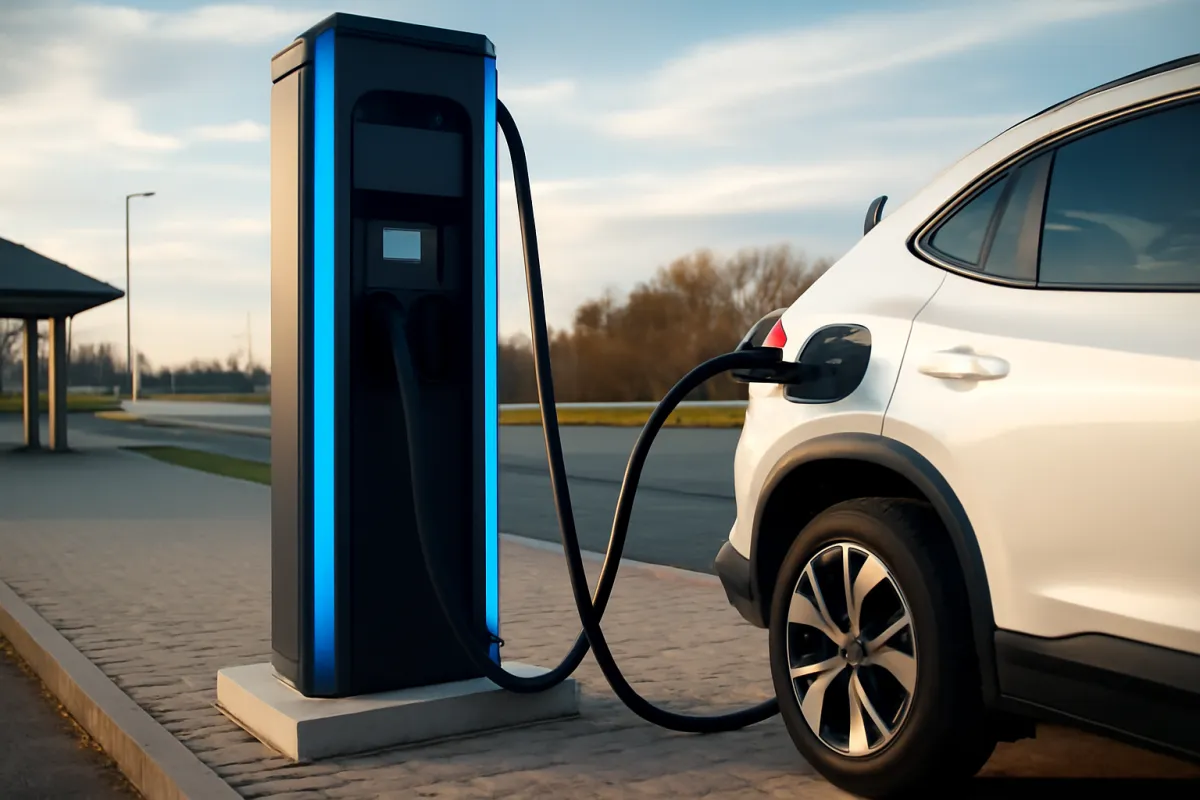
Pricing the standard session makes all of this concrete. A 75 kWh battery charged from 10 to 80 percent adds about 52 kWh; at an illustrative 48 cents per kWh, that session costs roughly $25 and adds around 175 miles at 3.3 miles per kWh. A smaller 60 kWh pack over the same window adds about 42 kWh, closer to $20 and around 140 miles. A large 100 kWh pack adds about 70 kWh, near $34 and around 230 miles.
Notice what changes and what does not. The bill scales with pack size, but so does the range it buys, so the cost per mile is identical in all three cases: 48 cents divided by 3.3 miles per kWh, about 14.5 cents. Battery size changes the size of each transaction and the frequency of stops, not the underlying price of a mile. What does change cost per mile is efficiency, the rate you find, and the billing model you accept.
That is why comparing sessions between drivers is misleading. A friend reporting a $34 charging stop is not paying more per mile than one reporting $20; they are carrying a bigger pack and stopping less often. The comparable figure is always cost per mile, which is why it is worth computing once and remembering the method. Run your own pack, target and rate through our cost calculator and the session cost, the miles added and the cost per mile all fall out together.
Battery size, efficiency, and what really scales your bill
Two vehicle properties determine what public charging costs you over a year, and drivers routinely credit the wrong one. Battery size sets the size of each bill. Efficiency sets the price of every mile. Only the second is a running cost.
Work it through. A car that manages 4 miles per kWh at an illustrative 48-cent station pays 12 cents a mile. One that manages 2.7 miles per kWh, perhaps a large SUV or a truck on winter tyres, pays about 17.8 cents a mile at exactly the same station. Over 10,000 public miles that is a difference near $580, decided entirely by the vehicle, not by where or how you charged. Our range-maximising teardown covers the habits that move efficiency, and they move public charging cost by the same proportion.
Battery size, by contrast, is neutral on cost per mile and helpful on convenience. A larger pack means fewer stops, less exposure to session fees, and more of a trip that can start on cheap home energy. A smaller pack means smaller bills more often. Neither is inherently cheaper to run. Where pack size does touch cost is at the extremes: a very small pack on a long trip forces more sessions, more session fees and more time in the slow taper region if you have to fill higher to reach the next stop. Our electric truck comparison shows how heavy vehicles turn efficiency into the dominant line in a charging budget.
Idle fees are a separate mechanism, not a rate
One line item catches new drivers off guard because it is not part of the price of energy at all. Many fast-charging sites apply an idle fee: a per-minute charge that begins after the car has finished charging and continues until you unplug and move. It exists because a finished car occupying a stall blocks the next driver and earns the site nothing, so the fee is a queue-management tool wearing the clothes of a price.
Treat it as a separate term in the session equation, because that is how it behaves. An illustrative 50 cents a minute for the 20 minutes you spent finishing a coffee is $10, which on a $25 session is a 40 percent surcharge for zero additional energy. Nothing about your car, your rate or your efficiency changes that; only your attention does. Most apps will send a notification when the session ends, and some sites offer a short grace period before the meter starts.
The deeper reason matters for behaviour. Fast-charging stalls are scarce and expensive, so operators price to keep them turning over. That nudges the efficient pattern: charge to your target, ideally near 80 percent where the taper begins, then leave. It also nudges longer stops toward Level 2, which rarely carries idle fees because it is designed for cars parked for hours. Treating a fast-charging stall as a fuel pump you clear promptly, rather than a parking space, keeps this fee off your bill entirely.
Memberships and the break-even that decides them
Most operators offer some form of subscription that trades a recurring fee for a lower rate. Whether it pays is arithmetic, not loyalty, and the arithmetic is one division: the monthly fee divided by the per-kWh saving gives the kWh you must buy each month to break even.
An illustrative example. A subscription costs $10 a month and lowers the rate by 10 cents per kWh. Ten dollars divided by ten cents is 100 kWh a month, which at 3.3 miles per kWh is about 330 miles of publicly fast-charged driving. Above that you are ahead; below it you are paying for the privilege of a discount you do not use. A driver without home charging who buys 400 kWh a month clears the bar easily. A driver who fast charges twice a year never will, and the pay-as-you-go rate is the right call.
Two cautions keep the calculation honest. Compute your monthly public kWh from real sessions rather than intention, because the number people estimate is usually higher than the number they buy. And check that the saving applies where you actually charge, since discounts often vary by site type or by region. The same method applies to any bundled charging offer attached to a vehicle or an energy plan: convert it to cents per kWh and compare it with the rate you would otherwise pay. Our cost calculator will run the break-even against your own monthly energy.
Free and destination charging in the same arithmetic
Some of the best-priced public charging is the kind you do not pay for, and it belongs in the same equation with a rate of zero. Workplaces, hotels, shopping centres and some parking garages offer complimentary Level 2 as an amenity, and while it is slow, it is genuinely free energy accumulated while you were parked anyway. For a commuter whose employer offers it, that can cover a large share of the year at no personal cost, which drags the blended cost per mile toward the floor. Our workplace charging teardown and our free charging teardown both work that side of the ledger.
The right way to think about it is as a bonus term rather than a strategy. Chasing free plugs across town usually costs more in time and detour miles than it saves in energy, and the detour itself consumes energy you then have to buy back. The value is highest when the free charger already sits where you were going.
One caution deserves stating plainly. Do not let occasional free charging talk you out of a home setup or into depending on infrastructure you do not control. Free charging is unpredictable in availability, often occupied, and slow by design, which makes it a fine supplement and a poor foundation. Where it appears in your routine, take it. Where it does not, do not reorganise your day to find it. Our home charger installation teardown prices the alternative that you do control.
Demand charges and time-of-use pricing
Two features of how electricity is sold to charging sites shape what you pay, and understanding them explains why prices move the way they do. The first is the demand charge, already flagged as a large slice of the dollar. A demand charge bills on the highest power draw in a billing period rather than on energy consumed, and a fast charger is precisely a machine for creating short, enormous peaks. A site that sees few sessions still incurs the peak charge, which is why low-traffic fast chargers are structurally expensive to run and rarely cheap to use.
The second is time-of-use pricing, increasingly common on public networks as it already is on home bills. Where an operator prices energy lower in off-peak windows, the same stall can cost noticeably less at ten in the morning than at six in the evening on a holiday weekend. For a driver with any flexibility, shifting a charge into the cheaper window is free money, the same lever that makes off-peak home charging so powerful.
Both features reward attention over autopilot. Notice whether a site posts time-based pricing, charge in the cheaper window when the schedule allows, and remember that the most convenient moment to charge is often the most expensive one. The same logic runs on the home side of the meter, where a time-of-use tariff and a scheduled overnight charge are the cheapest energy most drivers will ever buy, and where pairing charging with rooftop generation, covered in our solar charging teardown, can push it lower still.
How much to charge an EV on a road trip
A road trip is where public charging cost is felt most, because it is the one time a car runs mostly on other people’s electricity. Budget an illustrative 12 to 18 cents per mile for a trip leaning on fast charging, depending on the rates you find. A 500-mile day at an illustrative 48 cents per kWh and 30 kWh per 100 miles needs about 150 kWh and works out near $72 in energy if every mile comes from a fast charger. That is close to, or a touch above, the same 500 miles in a 30 mpg gas car at $3.50 a gallon, which is about $58.
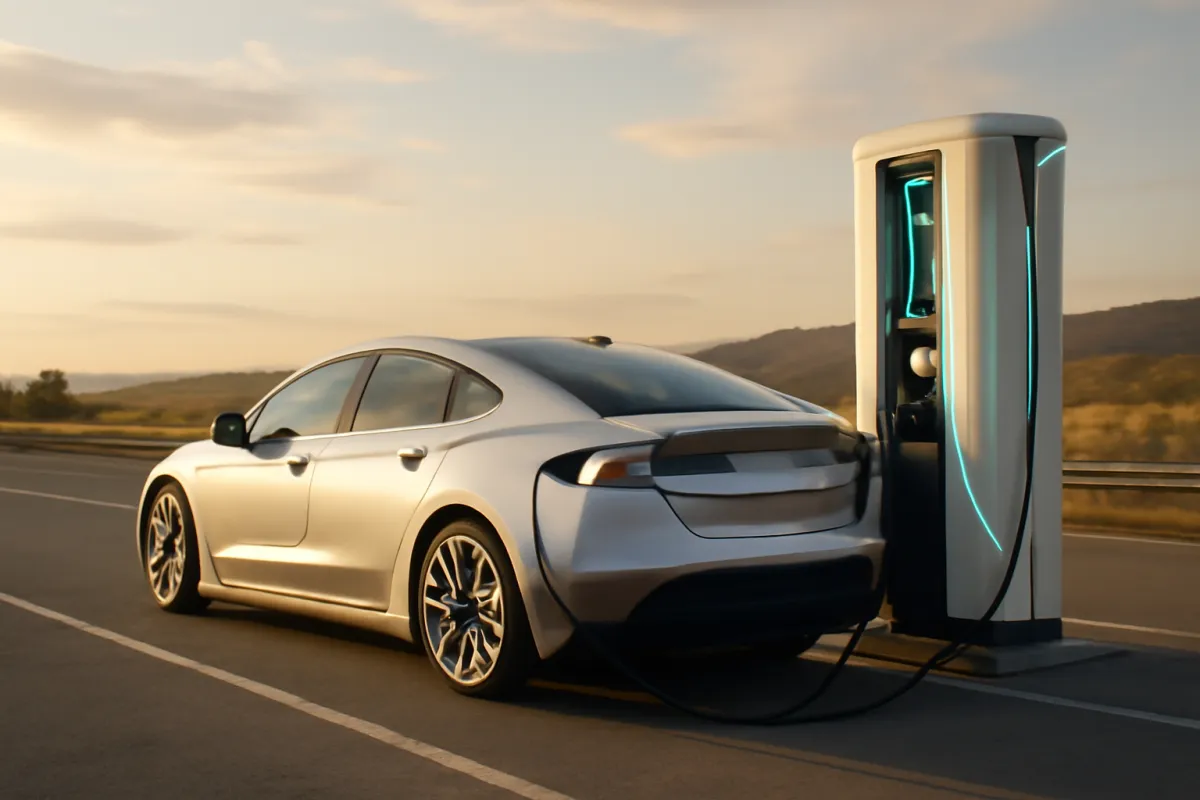
The lever that changes the trip maths is where you start. Depart on a full home charge and the first 200 miles come from the wall at an illustrative 15 cents rather than 48, which pulls the blended cost of the day well below the all-public figure and back under the gas car. A 500-mile day that starts full might need $40 to $50 of public charging instead of $72, because a third of the trip already lives in the battery at home rates.
Two more levers matter on long days. Planning stops so that each one starts low and ends near 80 percent keeps you in the fast part of the curve and out of the expensive taper. And routing to per-kWh stations rather than per-minute ones protects you on the legs where the battery arrives cold. Our road trip teardown handles the routing; the plug you leave from matters as much as the plugs you find.
Public charging versus gas, per mile
Usually electricity wins per mile, but the margin is far thinner than the home comparison and depends entirely on which public charger you use. Run the numbers honestly. At an illustrative 48 cents per kWh and 3.3 miles per kWh, a public fast-charged mile costs about 14.5 cents. A 30 mpg gas car at $3.50 a gallon costs about 11.7 cents a mile. So default fast charging can land beside or slightly above gasoline, which surprises drivers who assumed electric always means cheaper.
Public Level 2 tells a happier story. At an illustrative 20 to 35 cents per kWh, the same car costs roughly 6 to 11 cents a mile, generally under a comparable gas car, which is why the slow public plug is the one that reliably beats the pump. And both figures move with the two variables the pump comparison hides: the price of gasoline where you drive, and your own efficiency. A 25 mpg vehicle at $4 a gallon costs 16 cents a mile, above even premium fast charging.
The full picture is that public charging usually beats gas per mile, decisively at Level 2 and marginally at premium fast charging, while home charging wins by a distance in every scenario. This is the nuance our EV versus gas teardown and cost-per-mile teardown develop at length: the fuel advantage is real, but it is a property of where you charge rather than of the badge on the car.
Public versus home charging cost
This is the comparison that stays lopsided no matter how the others shake out. Public fast charging commonly costs an illustrative two to four times more per kWh than home charging, and public Level 2 usually costs more than home too, if less than fast charging. Where a home mile might cost 4 to 5 cents, a public fast-charged mile can run 14 cents or more. The energy is identical; the price gap is entirely about who pays for the delivery.
Scale that to a year and it becomes an ownership fact rather than a session detail. Twelve thousand miles at an illustrative 4.5 cents is about $540 of home energy. The same year at 14.5 cents of public fast charging is about $1,740. Most drivers land between those, and where they land is decided by one thing: what share of miles comes from the cheap plug. That is why the household that finds an EV expensive to run is rarely the one with the wrong car; it is usually the one that cannot charge where it parks. Our monthly cost teardown folds the same figure into a full monthly budget, and our worth-it teardown sets it against the rest of the ownership case.
The practical consequence is that a home charging setup is best judged against the public charging it displaces rather than in isolation. If public fast charging would supply most of your miles at an illustrative 14.5 cents against 4.5 at home, every 1,000 miles moved from the station to the driveway is about $100 saved, which is the arithmetic our installation cost teardown sets against the price of the equipment and the wiring.
What ChargePoint, EVgo and Electrify America actually charge you
Drivers usually arrive with an operator name rather than a rate, so it is worth saying what the named networks have in common. ChargePoint, EVgo, Electrify America and the other public operators do not each have a price. Each has a pricing model, and the model is the durable part, because it tells you which arithmetic to run while the numbers underneath it keep moving.
Four models cover almost everything you will meet at a public stall. Per kWh is the cleanest, because you pay for energy and nothing else, so a slow-charging car and a fast one pay the same for the same charge. Per minute bills the time you occupy the stall instead, which quietly penalises a car that accepts power slowly and any session run deep into the taper. A session fee is a flat amount for connecting at all, regardless of how much you take, so it lands hardest on a small top-up. And a membership or subscription tier trades a monthly fee for a lower rate, which only pays above a break-even level of use, worked out in the membership section below.
Which model you meet is not decided by the logo on the pedestal. Some operators run largely as a marketplace, where the business hosting the site sets the price, which is why two stalls under the same brand can differ by multiples and why some of them are free. Others set rates centrally across their whole footprint. Per-minute pricing tends to appear where selling electricity by the unit is treated as something only a regulated utility may do, so the same operator can bill one way in one place and another way elsewhere. Rates, tiers and fees are also restructured regularly. That is why this teardown names the models and not the numbers: read the model on the screen or in the operator’s app, then put the operator’s own current rate into the arithmetic above.
Where the network name matters and where it does not
That leaves the narrower question of whether the brand on the pedestal predicts your bill, and the honest answer is that no page should quote you an operator’s rate. Public rates are restructured regularly, differ by site and by time of day, and sometimes differ by account type at the same stall, so a figure printed here would mislead you at the exact moment you relied on it. The live number belongs on the screen in front of you and in the operator’s own app, which is the only source current by definition. Our Tesla charging teardown and our non-Tesla Supercharger walkthrough take the same position for that network specifically, and for the same reason.
What does travel between sites is structure, and three structural facts are worth knowing. Some operators set one rate across their whole footprint, so their price is predictable but not always competitive. Others run as marketplaces where each site host sets the price, which is why two stalls under the same brand can differ by multiples, from free at a shop to a full fast-charging rate on a highway. And access, which used to sort neatly by brand, increasingly does not, as ports and adapters converge.
So the useful habit is not brand loyalty but a short pre-plug routine: read the rate, read the billing model, check for a session or idle fee, and confirm the charger type. Those four facts determine your cost. Reliability belongs in the same routine, in a cost sense that is easy to miss, because a broken or occupied stall that forces a detour to a pricier site is a real cost that never appears on a receipt.
Utility programmes, state schemes, and why no numbers appear here
Readers reasonably ask whether any programme lowers what charging costs. Programmes touching electric vehicles and charging exist at state and utility level, and they are separate from one another, differ enormously by area, change without notice, run out of funding mid-year, and often carry conditions about equipment, metering, enrolment or who performs an installation. Any figure printed here would be wrong somewhere and stale everywhere, so this teardown prints none.
Two sources are current by definition. Your own electricity utility can tell you what applies to a residential account today, including any vehicle-specific tariff, off-peak window or charger programme, and those affect the home end of this comparison directly, which is the end where most of your energy should come from. Your state’s own energy or transportation agency publishes what it currently runs at state level. Ask both, ask for the conditions in writing, and confirm eligibility before you buy anything, because some programmes require approval before work starts and will not pay for work already done.
On the public charging side, the honest position is that programmes rarely change the price at the stall for an individual driver. What changes that price is the charger type, the billing model and the fees, all of which are posted before you plug in. That is where your attention returns the most money per minute spent.
A worked example: a road trip versus the same in gas
Numbers land harder as a story, so here is one day run three ways. A driver covers 500 miles in a car that uses 30 kWh per 100 miles, so the day needs about 150 kWh. The vehicle it replaced was a 30 mpg sedan fuelled at $3.50 a gallon, which needs about 16.7 gallons, or roughly $58.
Run it as pure fast charging at an illustrative 48 cents per kWh and the 150 kWh costs about $72, a little more than the gas car. Now depart on a full home charge covering the first 200 miles: that 60 kWh came from the wall at an illustrative 15 cents, about $9, and only the remaining 90 kWh comes from fast charging at 48 cents, about $43, for a blended day near $52 and comfortably under the gas car. Take one of those stops on public Level 2 over a long lunch, say 30 kWh at an illustrative 30 cents rather than 48, and $5.40 comes off again, landing near $47.
One driver, one car, one 500-mile day, and a spread of roughly $25 decided entirely by how much of the trip ran on home electricity and which plugs supplied the rest. Add a per-minute stall and a cold battery and the same day could cost more than the $72 figure; add an idle fee and it climbs again. The fuel cost of an EV is a dial you control rather than a fixed fact, which is the same lesson our monthly cost teardown draws for everyday driving. Run your own trip on your battery, rate and charger type in our cost calculator.
Common public-charging cost mistakes
A handful of recurring errors distort what drivers think public charging costs, in both directions.
- Treating fast-charging prices as the whole story. Fast charging is the expensive exception. Public Level 2 and, above all, home charging cover most sensible drivers’ miles at a fraction of the rate, so quoting a fast-charging price as typical makes EVs look pricier to run than they are.
- Ignoring the billing model. A per-minute price can cost a slow-charging car three times what a per-kWh price would for the same energy. Reading the model before plugging in is as important as reading the rate.
- Filling to 100 percent out of habit. Above roughly 80 percent the taper makes energy arrive slowly, which costs time on any station and real money on a time-based one.
- Forgetting idle fees. Leaving a finished car in a fast-charging stall can add a penalty that rivals the charge itself, for no energy at all.
- Skipping the membership break-even. Frequent public chargers leave money on the table without a subscription; occasional ones lose money paying for one. The answer is your real monthly kWh, not the advertised saving.
- Comparing session totals instead of cost per mile. A bigger pack means bigger bills and longer gaps between them, which says nothing about the price of a mile.
Each mistake pushes the estimate toward a wrong conclusion, which is why matching the charger, the model and the plan to your actual driving beats any remembered rule of thumb.
The bottom line
The cost to charge an electric car at a charging station is an illustrative 30 to 60 cents per kWh at DC fast chargers and about 20 to 35 cents at public Level 2, which turns into roughly $15 to $30 for a typical fast-charge session. Convert that to the only figure that compares with a gallon of gas, price per kWh divided by miles per kWh, and an illustrative 48-cent fast-charging mile costs about 14.5 cents against 11.7 cents for a 30 mpg gas car, while a public Level 2 mile costs about 9 cents and a home mile about 4.5.
The levers are all mechanical, which is what makes them durable. Read the billing model, because a per-minute price on a slow-charging car can triple the effective rate. Stop near 80 percent, because the taper above it is slow on any station and expensive on a timed one. Watch for session and idle fees, which are fixed costs rather than rates and hit small top-ups and long lunches hardest. Run the break-even on any subscription against your real monthly energy. Depart on a full home charge whenever a trip allows it. And do most of your charging where you park if you possibly can, because the cheapest station in town remains the one in your own garage, a point our home-charging teardown makes in full. Price your own session, trip and charger type in our cost calculator, and the vague public-charging range becomes your actual number.
This teardown is educational and independent, written by people who plainly enjoy pricing an EV to the cent, not by any charging operator, automaker or utility. Every per-kWh, per-session and per-mile figure above is illustrative and moves constantly with the site you use, the charger type, the billing model, the time of day, your car’s efficiency, your battery size and the price of gasoline where you drive. Public charging rates, billing structures, subscription terms, idle fees and network access change frequently and differ by region, so read the live rate and terms at the station or in its app, and check your own car’s consumption, before you budget on any number here. Utility and state programmes are separate from one another, change without notice, and should be confirmed with your own utility and your state agency. Nothing in this article is financial advice.
Frequently asked questions
How much does an EV charging station cost to buy and install?
That is a different question from what a charge costs, and it splits again by who is buying. For a driver, it means a home Level 2 charger, which is priced as hardware plus an electrical job, and the electrical job is the variable half: the cable run from the panel to the parking space, the difficulty of that route, and whether the panel itself needs upgrading. Our home charger installation teardown covers that arithmetic properly, and no single figure describes it, because two identical chargers in two different houses produce very different bills. A public DC fast charging station is not a consumer purchase at all. It is commercial capital equipment with a utility service, site works and a maintenance contract behind it, quoted per project by an operator or site host, and it reaches a driver only through the per-kWh rate at the stall.
What is the cost of charging an EV at home vs a charging station?
Illustratively, charging at home commonly costs about 15 cents per kWh, close to your residential electricity rate, while a public charging station costs more: roughly 20 to 35 cents per kWh at public Level 2 and 30 to 60 cents at DC fast charging. That makes public charging commonly two to four times more expensive per kWh than home. The same 60 kWh that adds about 200 miles costs near $9 at home, around $18 on public Level 2, and close to $29 at a DC fast charger. Home is cheaper essentially every time on a per-kWh basis. A public station is the cheaper option only in the sense that it is the one available on a road trip or when you cannot charge where you park. Treat home as your primary fuel and public charging as a convenience you pay a premium for.
How much does it cost to charge an EV at a public station?
Illustratively, public DC fast charging commonly runs about 30 to 60 cents per kWh and public Level 2 about 20 to 35 cents, so a fast-charge session that adds 40 to 60 kWh often costs roughly $15 to $30. The rate is only half the answer, because the billing model matters as much as the number: some stations bill per kWh, some per minute, and some add a flat session fee on top. Charger type moves your cost more than anything else, since a DC fast session costs far more per unit of energy than a slower public Level 2 plug. The reliable method is to read the rate and the model on the station screen or in its app, then multiply the energy you actually need by that rate rather than trusting a remembered figure.
Is public EV charging cheaper than gas?
Usually yes on a per-mile basis, though the margin is far thinner than the home-charging comparison. Work it as rate divided by efficiency. At an illustrative 48 cents per kWh and a car that travels 3.3 miles per kWh, a public fast-charged mile costs about 14.5 cents, while a 30 mpg gas car at $3.50 a gallon costs about 11.7 cents a mile. So premium fast charging can match or exceed gasoline per mile. Public Level 2 at an illustrative 30 cents per kWh works out near 9 cents a mile, comfortably under most gas cars. The honest summary is that public Level 2 reliably beats the pump, DC fast charging runs it close, and home charging near 15 cents per kWh, roughly 4.5 cents a mile, is the only one that wins by a wide margin.
Is public charging more expensive than home charging?
Yes, and usually by a wide margin, for structural reasons rather than gouging. When you charge at home you pay your ordinary residential rate for power you were already connected to, with no extra delivery business loaded on top. A public network pays for high-power hardware, installation, maintenance, site rent, payment processing, and utility demand charges that bill on peak power draw rather than energy used, and all of that rides on the per-kWh price you see. The result is an illustrative two to four times premium at DC fast charging, with public Level 2 in between. Where a home mile might cost 4 to 5 cents, a public fast-charged mile can run 14 cents or more. The energy is identical; the price gap is entirely about who pays for the delivery.
What is the difference in cost between Level 2 and DC fast charging in public?
Public Level 2 charging commonly costs an illustrative 20 to 35 cents per kWh and delivers energy slowly, adding perhaps 20 to 30 miles of range per hour. Public DC fast charging commonly costs 30 to 60 cents per kWh and adds that same range in minutes. You pay a premium for speed because the hardware is far more expensive and the power draw triggers steep utility demand charges. The rule of thumb is to use Level 2 when you have time, such as while parked for shopping, dining, or overnight, and reserve DC fast charging for when you genuinely need range quickly. On a 60 kWh fill, the difference between an illustrative 30 cents and 48 cents per kWh is about $11, which is the price of the speed you may not need.
How much does it cost to fast charge from 10 to 80 percent?
It depends on your battery size and the rate you are billed. Illustratively, charging a 75 kWh battery from 10 to 80 percent adds about 52 kWh, which at 48 cents per kWh costs roughly $25 and adds around 175 miles at 3.3 miles per kWh. A 60 kWh pack over the same window adds about 42 kWh, closer to $20. The 10 to 80 percent convention exists because charging slows sharply above 80 percent, so most sessions stop there to save time. That taper matters to cost as well as time: on a per-minute price, the slow kWh above 80 percent can carry an effective per-kWh rate several times higher than the fast kWh below it, which is why stopping at 80 is a money decision too.
How much does it cost to charge an EV on a road trip?
For a trip leaning on DC fast charging, budget an illustrative 12 to 18 cents per mile depending on the rate you find. A 500-mile day at 48 cents per kWh and 30 kWh per 100 miles needs about 150 kWh and works out near $72 in energy if every mile comes from a fast charger, against roughly $58 for the same distance in a 30 mpg gas car at $3.50 a gallon. Departing on a full home charge changes the arithmetic: the first 200 miles come from the wall at an illustrative 15 cents, about $9, so the day lands near $52 instead. Road-trip fast charging is the priciest energy an EV normally buys, which is why the plug you leave from matters as much as the plugs you find.
How do I work out my cost per mile from the price on the charger screen?
Two divisions and you are done. First, find your efficiency in miles per kWh, which most cars display directly or as kWh per 100 miles; 30 kWh per 100 miles is 3.3 miles per kWh. Second, divide the price per kWh by that figure. At an illustrative 48 cents per kWh, 48 divided by 3.3 gives about 14.5 cents a mile. If the station bills per minute, convert first: multiply the per-minute price by 60 to get a price per hour, then divide by the average power your car is actually accepting in kW. An illustrative 30 cents a minute is $18 an hour, which is 12 cents per kWh at 150 kW but 36 cents per kWh at 50 kW. The same screen, the same car, three times the rate.
How can I reduce the cost of public EV charging?
A handful of habits do most of the work. Read the billing model before you plug in, since a per-minute price punishes a car that charges slowly. Stop near 80 percent rather than filling, because the tapered kWh above that point are the slowest and, on time-based pricing, the dearest. Favour public Level 2 when you are parked anyway and reserve fast charging for when speed genuinely matters. Move the car promptly once the session ends so idle fees never appear. Run the break-even on any membership against your real monthly energy rather than the advertised saving. Charge in off-peak windows where a network offers them, and take free workplace or destination charging where it already sits in your day. Above all, do most of your charging at home if you can.