What's in this teardown
- The short answer: reused first, recycled last
- Why an EV battery retires long before it dies
- From degradation to retirement: the full lifecycle
- The capacity ladder, on one chart
- First stop: back into vehicles
- Second life: the stationary storage career
- Why storage is the ideal retirement job
- Grading and testing: how a pack qualifies
- The honest economics of second life
- Repair and remanufacture: the module level path
- Recycling step one: collection and discharge
- Recycling step two: shredding and black mass
- Recycling step three: recovering the metals
- What to believe about recovery percentages
- Where retired packs go, on one chart
- The waste problem, sized honestly
- Do EV batteries end up in landfills?
- Chemistry matters: LFP and NMC retire differently
- What this means for current owners
- What it means for used EV buyers
- How to retire a pack the right way
- The bottom line
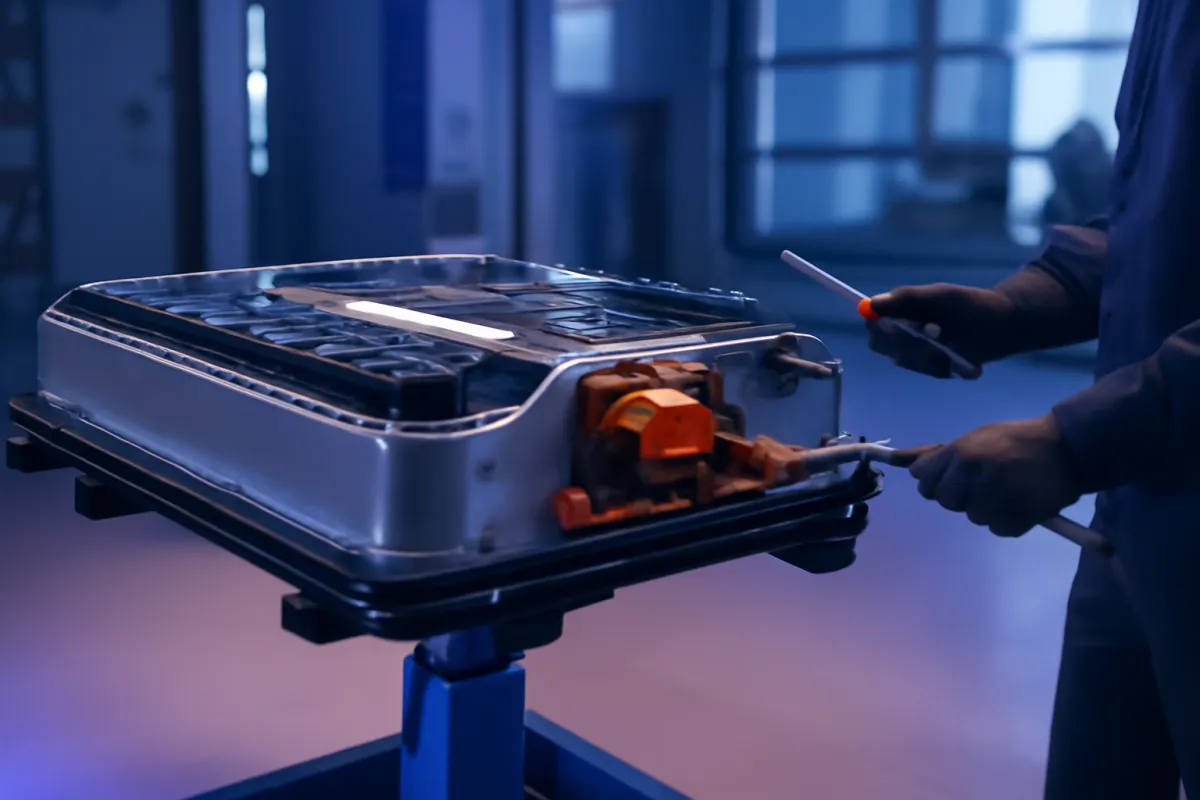
Type the question into any search box and the autocomplete finishes it with a note of dread: what happens to old EV batteries, are they piling up, is the waste problem the dirty secret of electric cars. It is a fair question aimed at a genuinely large object, a pack weighs as much as several adults and holds materials mined on three continents, and it deserves a better answer than either the doom version or the brochure version. The honest answer is a supply chain: retired packs flow first back into vehicles, then into stationary storage, and finally into recycling processes that exist at industrial scale today because the contents are worth real money.
This teardown walks that whole chain in order. It covers why a pack retires long before it dies, what the commonly cited seventy to eighty percent retirement bar actually means, how a pack qualifies for a second life in storage, what the recycling process physically does, which recovery percentages to believe, and how big the waste problem honestly is. Along the way it connects to our companion teardowns on how long EV batteries last and what a replacement costs, because retirement is where those two stories end up. Every figure here is illustrative or commonly cited rather than a measurement of any specific pack.
Key takeaways
- Old EV batteries follow a preference order: reuse in vehicles first, second life in stationary storage next, recycling last. Landfill is not a normal path, because the material is valuable and the packs are regulated.
- A pack commonly retires from a car at roughly seventy to eighty percent of original capacity: too faded for a vehicle that sells on range, still a large working battery.
- Second life means stationary storage, buffering solar, supporting grids, backing up buildings, where weight stops mattering and a retired pack can commonly serve five to ten more years.
- Recycling shreds cells into black mass, then recovers metals by smelting or chemical leaching. High recovery figures are commonly cited for nickel, cobalt, and copper; treat exact percentages as claims to verify, not constants.
- The waste problem is real as a logistics buildout, not as a landfill crisis: the lead acid precedent shows valuable, regulated batteries get captured and processed.
The short answer: reused first, recycled last
When an EV battery leaves a car, it enters a rough hierarchy that mirrors how the industry values it. The best outcome is more vehicle service: a pack pulled under warranty may be repaired at the module level and returned to duty, and healthy packs from crashed cars trade as salvage parts. The next outcome is repurposing, commonly called second life: packs too faded for a car are graded, repackaged, and put to work as stationary storage. The last stop is recycling, where the pack is discharged, shredded, and chemically processed so its lithium, nickel, cobalt, and copper can feed new cell production. Each step extracts the remaining value before passing what is left down the chain.
Notice what is not on the list: the dumpster. That is not naivety, it is economics doing quiet work. A retired pack is a dense box of refined metals that recyclers pay for, and valuable objects have a way of not getting thrown away. Layer on top of that the regulatory reality, large lithium batteries are treated as controlled waste in most places, with rules in some regions that make manufacturers responsible for taking packs back, and the landfill scenario becomes something the system actively resists rather than something it drifts toward. The rest of the sections walk each stage of the chain in the order a real pack experiences it.
Why an EV battery retires long before it dies
The single most misunderstood fact in this topic is that automotive retirement is not battery death. A lithium battery fades gradually, losing a little usable capacity each year, and a car is an unusually demanding employer: it sells on range, so every lost kilowatt-hour is a visible, resented loss. Somewhere around seventy to eighty percent of original capacity, a commonly cited band rather than a hard rule, the car’s range no longer fits the owner’s life, or a module fault makes repair uneconomical against the car’s value, and the pack leaves automotive service. At that moment it is still a large, functional battery, holding more energy than many home storage products sold new.
That gap between what a car demands and what the pack can still do is the entire foundation of everything that follows. A battery retired at seventy five percent has lost its automotive career but not its usefulness, the way a retired athlete has lost a step but can still outrun almost everyone at the gym. Our full teardown on how long EV batteries last covers the fade curve in detail: fast early loss, then a long flat middle, with heat and charging habits as the main accelerators. What matters here is the endpoint it implies: packs arrive at retirement with most of their capacity intact, which is precisely why an entire industry exists to catch them.
From degradation to retirement: the full lifecycle
Laid end to end, the lifecycle reads like a career. Years one and two: the pack loses capacity fastest, commonly a few percent, as the chemistry settles. The long middle, commonly a decade or more: fade slows to a gentle annual drift, the car quietly loses a mile or two of range per year, and almost no owner notices day to day. Then one of three triggers ends automotive service: capacity fades below what the driver tolerates, a fault appears that costs more to fix than the aging car is worth, or the car itself is crashed or scrapped for unrelated reasons with a healthy pack still aboard.
That third trigger matters more than people expect. A meaningful share of packs leave service not because the battery failed but because the car around it did, which means the retirement stream is a mix of genuinely tired packs and nearly healthy ones. This mix is why grading, covered below, is the crucial gatekeeping step: a crashed two year old car might donate a pack at ninety five percent health, destined for reuse, while a fifteen year old commuter donates one at seventy percent, destined for storage or recycling. The lifecycle does not end at retirement; it forks, and the pack’s measured health decides which branch it takes.
The capacity ladder, on one chart
The cleanest way to see the whole story is as a ladder of capacity thresholds, each one a career change rather than an ending. The bars below track an illustrative seventy five kilowatt-hour pack through its life, with each width drawn from its remaining capacity.
One pack's working life: illustrative usable capacity at each stage
An illustrative 75 kWh pack. Thresholds are commonly cited bands, not specifications of any vehicle.
Even the bottom rung is a working 45 kWh battery, larger than many home storage units sold new. Retirement in this system means demotion to easier work, and recycling only claims the pack after two careers.
Read the chart bottom up and the waste narrative gets harder to sustain. The pack that finally enters a shredder spent perhaps a decade and a half moving a car, then commonly another five to ten years storing energy, and it arrives at recycling still holding roughly sixty percent of its original capacity, all illustrative figures. Nothing about that trajectory resembles disposable electronics. It resembles industrial equipment being worked down through progressively less demanding jobs until only the raw material value remains, which is exactly how expensive machines have always ended their lives.
First stop: back into vehicles
Before any pack reaches storage or a shredder, the industry tries to keep it doing its highest value job: powering a car. Warranty replacements are the most visible version, when a manufacturer swaps a defective pack, the returned unit does not vanish, it is diagnosed, often repaired at the module level, and can re-enter service as a remanufactured replacement part. This is the same logic engines and transmissions have followed for a century, and it is commonly cheaper for everyone than building a new pack for every claim, a dynamic our replacement cost teardown covers from the owner’s side of the invoice.
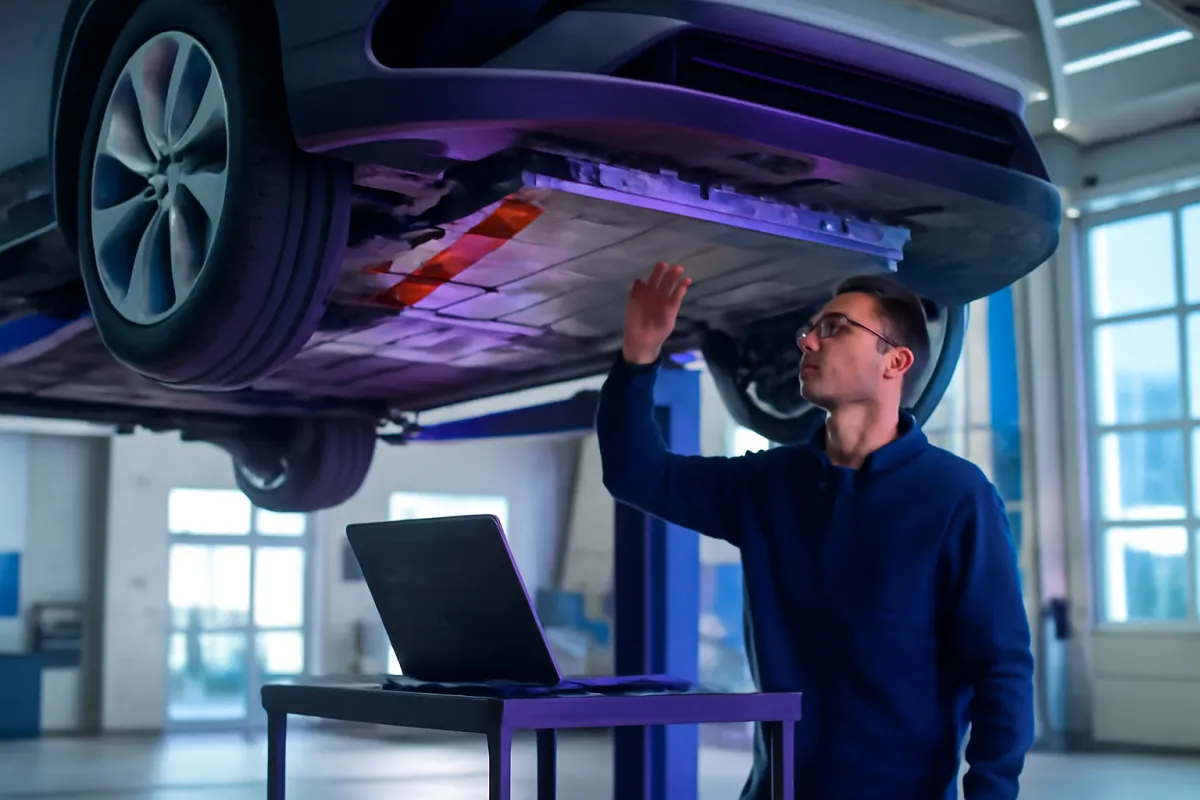
The less visible version is salvage. Crashed EVs with healthy packs feed an active market: dismantlers test and sell complete packs and individual modules for repairs, for older EVs needing a transplant, and for conversion and storage projects. A pack from a lightly used, badly crashed car can be the cheapest route to fixing another car of the same model, which is why salvage pack prices track health and demand rather than scrap value. Every pack that finds vehicle work this way delays the rest of the chain by years, and the market handles the sorting: packs worth vehicle money get vehicle jobs, and the rest flow onward.
Second life: the stationary storage career
Second life is the stage that surprises people, and it rests on one clean insight: the qualities that end a battery’s automotive career are irrelevant to stationary storage. A car needs its battery to be light, compact, and capable of huge power swings, because it is carrying the thing everywhere it goes. A storage container bolted to a concrete pad cares about none of that. It wants cheap capacity that can absorb energy at midday and release it in the evening, gently, on a schedule, at moderate power. A pack at seventy five percent health fails the first job description and comfortably fits the second.
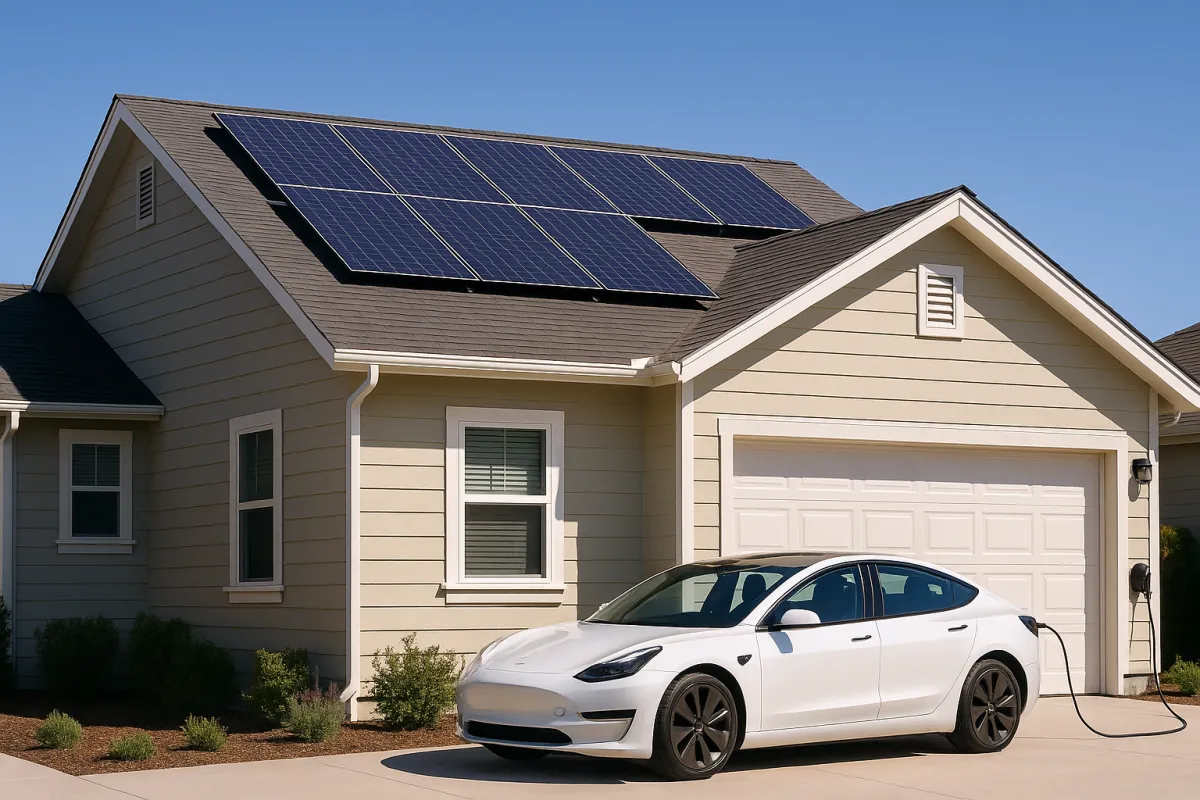
So retired packs, or modules harvested from them, get racked into stationary systems and put back to work. The commonly cited applications are exactly what you would guess: storing rooftop and utility solar for evening use, smoothing demand peaks for buildings and grid operators, and providing backup power. Because the duty is gentle, no winter cold starts, no highway sprints, no fast charging, degradation in this role is slower, and second careers are commonly framed as five to ten additional years depending on chemistry and workload. The pack that could no longer earn its keep moving a family works quietly for another decade holding sunshine for the evening.
Why storage is the ideal retirement job
It is worth pausing on why this pairing works so well, because it is not a coincidence, it is arithmetic. In a vehicle, every kilogram of battery must be hauled around, so energy per kilogram is the metric that rules the design. In stationary storage the metric flips to cost per stored kilowatt-hour, and a retired pack is hard to beat on that measure: the enormous expense of manufacturing it was already paid by its first career, so its second owner is buying capacity at a steep discount to new cells. Degraded weight efficiency, the fatal flaw in a car, literally does not appear in the equation.
The demand side is growing just as conveniently. Solar and wind generate on nature’s schedule, not the grid’s, and the gap between when energy is made and when it is wanted is precisely what storage fills. Every solar roof and renewable heavy grid is a potential customer for cheap capacity that does not need to move. That is the deeper reframing this section argues for: old EV batteries are not a waste stream looking for a dump, they are a supply stream arriving just as a storage hungry grid develops an appetite for exactly what they offer. Whether the economics fully cooperate is the honest question, taken up two sections down.
Grading and testing: how a pack qualifies
No pack walks into a second career without an interview. The gatekeeping step is grading: measuring what a retired pack can actually still do before deciding its fate. The commonly used measure is state of health, the pack’s current usable capacity as a percentage of original, established through controlled charge and discharge cycles, internal resistance measurements, and a review of the battery management system’s own logged history. Modern packs help by keeping records; the car’s electronics log temperatures, cycles, and faults, which gives graders a biography to check against the bench results.
Grading typically happens at two levels, and the second is where the craft lives. A pack is a team of modules, and modules age unevenly: one weak module can drag down an otherwise healthy pack. Dismantlers therefore commonly test module by module, sending strong modules to reuse or storage projects and weak ones straight to recycling, so a single retired pack can feed all three paths at once. The grade determines the price and the job: high health units command vehicle money, mid health units go to storage, and anything faulty, swollen, or damaged is safety triaged out of reuse entirely. It is the used car inspection, rebuilt for chemistry.

The honest economics of second life
Here is the caveat the optimistic version skips: second life is an engineering success still proving itself as a business. The problem is a moving target. A repurposed pack competes against new cells, and new cells get cheaper every year, so the discount a second life system must offer keeps shrinking. Meanwhile the repurposer carries real costs the new cell vendor does not: collection and transport of heavy regulated freight, testing and grading labor, repackaging, and the integration work of making mismatched used modules behave in one system. If those costs eat the discount, recycling the pack immediately can beat repurposing it.
The honest framing is therefore a race, not a verdict. Where used packs are cheap and plentiful, grading is efficient, and the application tolerates variability, second life pencils out, and projects run today on exactly that basis. Where new cell prices undercut the whole exercise, packs skip straight to the shredder, which is not a tragedy, it is the system correctly routing material to its highest value use. Expect the share of packs taking each fork to keep shifting with cell prices, regulation, and grading technology, and distrust any account, rosy or grim, that presents one fork as the permanent answer.
Repair and remanufacture: the module level path
Between full reuse and full retirement sits a middle path that deserves its own section because it quietly rescues so many packs: repair. A pack that fails in service often fails small, one module, a sensor, a contactor, a cooling fault, while the surrounding modules remain healthy. Replacing the failed module rather than the whole pack restores the car for a fraction of the headline replacement figure, and it keeps a multi hundred kilogram assembly in service because of a fault the size of a shoebox. Our replacement cost teardown prices this from the invoice side; here it matters as a waste story, because every module level repair is a pack that never becomes waste at all.
Remanufacturing industrializes the same idea. Returned and salvaged packs are stripped, their healthy modules tested, matched, and rebuilt into certified replacement packs with warranties, feeding the repair market with units far cheaper than new. This is precisely the path engines and alternators have followed for decades, and its emergence for packs is a sign of a maturing, value hungry chain rather than a wasteful one. The pattern to notice across this whole half of the teardown: at every stage, someone has a financial reason to keep the pack, or its pieces, working. Waste requires everyone to stop caring, and too much money is at stake for that.
Recycling step one: collection and discharge
Eventually a pack, or its weakest modules, exhausts every working career, and recycling begins with the unglamorous parts: getting the thing there safely and making it inert. Collection is genuinely hard logistics. A pack is heavy, high voltage, and classed as dangerous goods for transport, so it moves through licensed channels with tracking, not in the back of a pickup. In some regions, rules push manufacturers to organize this take back themselves; details vary by jurisdiction and keep evolving, so treat the specifics as something to confirm locally rather than assume.
At the facility, the first technical step is discharge: draining the remaining energy so the pack cannot arc, short, or ignite during dismantling, with the recovered electricity sometimes fed to the facility itself. Then comes disassembly, largely skilled manual work today: the case is opened, wiring harnesses, connectors, coolant lines, and electronics are stripped out and sorted into their own recycling streams, and the pack is reduced to modules and cells. Only then does the material processing that people picture as recycling actually begin. The order matters because most of the safety risk lives in these first steps, which is exactly why do it yourself pack handling is a terrible idea at every scale.
Recycling step two: shredding and black mass
The cells then meet the step with the memorable name. Shredding grinds cells into fragments under controlled conditions, and downstream separation pulls out the casing metals and foils, leaving a dark powder the industry calls black mass: a concentrated blend of the electrode materials, holding the lithium, nickel, cobalt, manganese, and graphite that made the battery work. Black mass is the commodity at the heart of the whole recycling economy, dense enough in valuable metals to be worth refining, and it is the product early stage recyclers sell to the refiners who do the final chemistry.
It is worth appreciating what this step accomplishes conceptually. A battery pack is a fiendishly layered object, metals laminated in micrometer thin films, glued, welded, and sealed, and no one unbuilds it layer by layer at scale. Shredding sidesteps the whole puzzle by giving up on the structure and keeping only the elements: destroy the object, save the atoms. That is also why battery recycling differs from, say, bottle recycling in spirit. The goal is not to make the old thing again from the old material directly, it is to return refined raw materials to the top of the supply chain, indistinguishable from mined inputs.
Recycling step three: recovering the metals
Turning black mass back into battery grade materials is refining chemistry, and the industry commonly describes two main routes, often used in combination. The pyrometallurgical route smelts material at high temperature, recovering metals like nickel, cobalt, and copper in an alloy for further refining; it is robust and tolerant of mixed feedstock, but lithium has historically been hard to recover economically this way, commonly ending up in the slag. The hydrometallurgical route dissolves black mass in chemical solutions and selectively precipitates each metal out; it runs at lower temperatures and is commonly credited with higher recovery rates across more elements, including lithium, at the cost of more complex chemical processing.
A third approach, commonly called direct recycling, aims to recover the cathode material with its structure intact rather than tearing it down to elements, promising better economics if it scales; treat it as an active research and early commercial frontier rather than the current standard. Which route a given facility runs depends on its feedstock, its markets, and its era, and many operations chain them: mechanical processing to black mass, then hydrometallurgical refining. The output, battery grade metal salts and materials, sells into the same supply chain as freshly mined material, which is the quiet punchline: recycling succeeds exactly to the degree that its product is boring and indistinguishable.
What to believe about recovery percentages
Recovery rate claims deserve their own section because they are where this topic most often slides from fact into marketing. You will encounter figures above ninety percent for specific metals, and such numbers are commonly cited in good faith, but every one of them sits inside quiet qualifiers: which metal, which process, which feedstock, measured at which step, in a lab or at production scale. Nickel, cobalt, and copper recover well in established processes; lithium has historically been the harder, more variable case, improving as processes designed to capture it spread. A whole pack figure, including casings, plastics, and electronics, is a different and usually lower number than any single metal headline.
So here is the calibrated position worth carrying. Directionally: a large majority of the valuable metal in an EV battery can be recovered with current industrial methods, recovery keeps improving, and regulation in some regions now sets minimum recovery and recycled content requirements that you can look up for your jurisdiction. Precisely: refuse to carry any single unqualified percentage around as a fact. When a specific number matters to a decision you are making, trace it to the process and conditions it describes. That habit, demanding the qualifiers, is the entire skill of reading recycling claims honestly.
Where retired packs go, on one chart
Pull the paths together and you can sketch the flow, with a caveat drawn in bold: the split below is illustrative and directional, because the real shares shift year by year with cell prices, regulation, and how old the retiring fleet is. What the proportions convey is the structure: multiple destinations, ordered by remaining value, with recycling as the largest single stage only because every other path eventually feeds it.
Where an illustrative 100 retired packs flow next
Directional shares for framing, not measurements. Real splits vary by region, year, and fleet age, and every reuse path ends at recycling eventually.
The right way to read this: not one destination but a cascade sorted by remaining value. The recycling share is a floor that grows over time, because second life and reuse are delays on the way there, not exits from the system.
Two features of the flow deserve emphasis. First, the awaiting slice is real: packs do sit in warehouses between careers, and critics sometimes photograph exactly that and call it waste, when it is more honestly inventory in a young supply chain still building its sorting capacity. Second, the chart describes a single year’s snapshot of a system where every pack eventually visits the last stage: recycling is not competing with reuse and second life, it is downstream of them, patiently inheriting everything they finish with. A pack’s destinations are sequential careers, not rival fates.
The waste problem, sized honestly
So how big is the EV battery waste problem, honestly? It is real, and it is mostly a problem of buildout rather than burial. The wave of retiring packs is still early, because EVs sold in volume only recently and packs are lasting longer than early skeptics predicted, but the wave is coming and grows for decades, and it demands things that do not yet exist at matching scale: collection networks in every region, safe transport capacity, grading throughput, and recycling plants sized for the future fleet rather than today’s trickle. Investors and manufacturers are building all of these now, precisely because the feedstock forecast is bankable.
The strongest reason for calibrated optimism is precedent. The conventional car has always carried a large, toxic battery, the lead acid starter battery, and that battery is commonly described as one of the most successfully recycled consumer products anywhere, captured through an unglamorous system of deposits, take back at point of sale, and smelters that want the lead. It works because the battery is valuable, regulated, and returned through an existing channel, all three of which are true or becoming true for EV packs, with the added twist that an EV pack is worth far more per unit. The honest worry is not landfills filling with packs; it is whether capacity and regulation scale smoothly ahead of the wave, and that is a race with a plausible winner.
Do EV batteries end up in landfills?
The blunt question deserves a blunt answer: it is not the normal path, and the system is arranged to prevent it. Economically, a retired pack is a box of refined metals with a market price, and dumping it means paying to throw away money. Legally, large lithium batteries are regulated waste in most jurisdictions, so businesses handling end of life vehicles cannot lawfully landfill packs, and the vehicles themselves funnel through dismantlers whose entire trade is extracting value before scrap. None of this requires anyone to be virtuous; it only requires them to be greedy and law abiding in the usual proportions.
The confusion comes from a neighboring, genuinely bad problem: small lithium batteries in household trash. Phones, vapes, earbuds, and tool packs hidden in general waste cause fires at trucks and sorting facilities with depressing regularity, and headlines about lithium battery fires at the dump are commonly about exactly this stream. EV packs, tracked commercial freight moving between licensed businesses, live in a different universe from a vape in a kitchen bin, and lumping the two produces most of the popular dread. There will be edge cases, abandoned vehicles, bad actors, and no system captures everything, but the claim that EV batteries routinely end up in landfills does not survive contact with how the chain actually pays and polices itself.
Chemistry matters: LFP and NMC retire differently
One genuinely useful nuance for reading this topic: not all packs retire into the same economics, because chemistry sets the value of what is inside. Nickel rich chemistries, the NMC and NCA families common in longer range vehicles, contain nickel and cobalt, the metals recyclers most want, so their end of life value is comparatively high and their recycling case is easy. Lithium iron phosphate, LFP, increasingly common in standard range vehicles, contains no nickel or cobalt; its materials are cheaper, which is part of why the cars are cheaper, but it also means an LFP pack is worth less to a shredder, and its recycling economics lean harder on regulation and process efficiency.
The same fork tilts the other way for second life. LFP is commonly credited with long cycle life and good tolerance of repeated full charging, traits that make a retired LFP pack an attractive candidate for years of stationary duty, arguably the chemistry’s best retirement. So the two mainstream chemistries age toward different defaults, framed illustratively: nickel rich packs carry strong recycling value, LFP packs carry strong second life value. For an owner this is trivia; for anyone reading industry claims it is a decoder ring, because a statement about battery recycling economics that does not say which chemistry it means is averaging two quite different businesses.
What this means for current owners
If you own an EV, the practical content of this whole teardown compresses to something reassuring: the end of life problem is not yours to solve, and it is priced to not need you. You will most likely never touch the retirement chain directly. If the pack fails young, warranty replaces it and the old unit disappears into the manufacturer’s reman stream. If the car serves out its life, the pack’s residual value rides along invisibly in every subsequent transaction, in the trade in offer, the insurance total, the dismantler’s bid, because each buyer in that chain knows what packs and modules fetch.
Your only real influence is upstream: how the pack ages under your care decides which retirement it earns, and gentler aging means more value at every fork. The habits are the ones our battery care teardown details, moderate state of charge, restraint with fast charging, shade in summer, and they are worth money at the end, not just range in the middle. The one hard rule: never open, salvage, or transport a pack yourself. The voltages are lethal, the regulations are real, and every legitimate path runs through people equipped for both. Your part of the system is to drive, charge sensibly, and hand the pack to the chain when the time comes.
What it means for used EV buyers
For used EV shoppers, this teardown reframes the scariest question in the purchase. The fear, what if the battery dies, imagines a cliff; the reality documented here is a slope with a market at the bottom. A used EV’s pack has a measurable state of health, and that number, not the odometer alone, is the honest core of the car’s value: it predicts remaining range, remaining automotive years, and the residual value the retirement chain will eventually pay. Insist on a state of health reading before buying, exactly as our used buying teardowns advise, and price the car against it.
The second reassurance is about worst cases. Even if a pack fault does surface, the existence of module level repair, remanufactured packs, and a salvage market means the fix is frequently far cheaper than the headline replacement figure that dominates search results, a distinction our replacement cost teardown works through line by line. And the warranty floor, commonly eight years or one hundred thousand miles on the pack, transfers with the car in the common case. A used EV is not a ticking write off; it is a machine whose most expensive component has a published health metric, a repair market, and a queue of buyers for its retirement. Few used purchases offer that much visibility.
How to retire a pack the right way
Should you ever actually hold the decision, an old EV in the driveway, a dead pack, a project car, the right moves are few and specific. First, exhaust the vehicle value: a dealer trade in, a private sale disclosing the pack’s condition, or a quote from an EV literate dismantler will usually beat anything you could arrange for the pack alone, because the buyer captures the reuse value you cannot. Second, if the car is beyond selling, route it through a licensed auto recycler and say the word battery early; they have, or know, the channels for packs, and in some regions the manufacturer’s take back program is a phone call away.
The list of things not to do is shorter and sharper. Do not open the pack: several hundred volts, stored energy even when the car is dead, and thermal risk make it genuinely dangerous rather than merely inadvisable. Do not ship it yourself; lithium batteries are regulated dangerous goods, and casual freight is both illegal and uninsurable. Do not sell it into gray channels, the buyer who wants an untested pack with no questions is planning something you do not want your name attached to. And do not pay anyone to landfill it, which in most places is not even a legal option. Hand it to the chain; the chain wants it.
The bottom line
What happens to old EV batteries is a supply chain, not a landfill. Packs retire from cars at a commonly cited seventy to eighty percent of capacity, still large working batteries, and cascade down a value ladder: repair and salvage keep the healthiest units in vehicles, second life puts mid health packs to work storing solar and backing up buildings for commonly five to ten more years, and recycling finally shreds the exhausted remainder into black mass and refines the metals back into the supply chain. High recovery figures for key metals are commonly cited and directionally credible, with the exact percentages always owed a qualifier. Value and regulation, not virtue, keep the system honest.
The honest open questions are about pace, not direction: whether collection, grading, and recycling capacity scale ahead of the retirement wave, and how the second life business fares against ever cheaper new cells. Those are real uncertainties, worth watching skeptically. But the picture the dread question imagines, mountains of dumped packs, requires everyone in a chain of paid participants to abandon money on the ground, and that is not how any of this works. If the topic decides a purchase for you, run your own numbers with the cost calculator and read the state of health before you sign; the battery’s afterlife, it turns out, is the best documented part of the car’s future.
Kaito took apart the afterlife of a battery here so you would not have to, but a written teardown is education, not engineering or purchasing advice. Every percentage, lifespan, capacity figure, and market split above is illustrative or commonly cited rather than measured from your vehicle, and battery regulations, take back programs, warranty terms, and recycling economics differ by manufacturer, chemistry, region, and year. Before you buy, sell, scrap, or plan around a specific pack, get its actual state of health read, confirm the warranty documents and your local battery disposal rules, and put real questions to a qualified technician, dealer, or licensed recycler. And whatever you do, never open or transport a high voltage pack yourself.
Frequently asked questions
What happens to old EV batteries?
Most retired EV packs follow one of three paths, usually in this order of preference: reuse, repurposing, then recycling. Reuse means the pack, or its healthy modules, goes back into a vehicle as a warranty replacement, remanufactured unit, or salvage part. Repurposing, commonly called second life, puts packs that are too worn for a car into stationary storage, where they buffer solar power or back up buildings for years more. Recycling is the final stop: the pack is discharged, shredded, and processed so its metals, including lithium, nickel, cobalt, and copper, can feed new battery production. Landfilling an EV pack is not a normal path, because the materials are valuable and the packs are regulated waste in most places.
Are EV batteries recyclable?
Yes, and the industry treats them that way because the contents are worth money. The commonly cited process discharges the pack, dismantles it, shreds the cells into a material called black mass, then recovers metals through smelting, chemical leaching, or a combination of the two. Recovery rates for metals like nickel, cobalt, and copper are often quoted as very high, sometimes above ninety percent for specific metals in specific processes, though real world figures vary by facility, chemistry, and process, so treat any single percentage as a claim to check rather than a law of nature. The honest summary is that EV batteries are recyclable at industrial scale today, and the economics improve as more packs retire.
Do EV batteries end up in landfills?
It is not the intended path, and it is actively discouraged by both economics and regulation. A retired pack still contains metals that recyclers pay for, which is the strongest possible protection against dumping: valuable things tend not to get thrown away. Most regions also regulate large lithium batteries as controlled or hazardous waste, so a dismantler or dealer cannot legally toss one in general waste. The lithium battery fires you read about at waste facilities are overwhelmingly caused by small consumer batteries, phones, vapes, and power tools, hidden in household trash, a real problem that is largely separate from EV packs, which move through tracked commercial channels. No system is perfect, but a landfill full of EV packs is not where the evidence points.
What is a second-life EV battery?
A second-life battery is a retired EV pack repurposed for stationary energy storage instead of being recycled immediately. A pack commonly leaves automotive service with roughly seventy to eighty percent of its original capacity, which is too little for a car that sells on range but plenty for a battery that just sits and stores energy. In a stationary role, weight and size stop mattering, charging is gentle and scheduled, and the pack can keep working for additional years, commonly cited as five to ten depending on chemistry and duty. Typical jobs include storing rooftop solar, smoothing grid demand, and backing up buildings. The economics are still maturing, since new cells keep getting cheaper, but the engineering logic is sound.
What percentage of an EV battery can be recycled?
There is no single honest number, and any source that gives you one without caveats is simplifying. Recovery depends on the metal, the chemistry, and the process: figures above ninety percent are commonly cited for metals like cobalt, nickel, and copper in well run hydrometallurgical processes, while lithium recovery has historically been harder and more variable, though newer processes target it directly. Overall material recovery for a whole pack, including casings, wiring, and plastics, is a different and usually lower figure than the headline metal numbers. The directionally safe claim is that a large majority of the valuable material in a pack can be recovered with current methods, and that regulations in some regions now push recyclers toward specific minimum rates, which you can check for your jurisdiction.
How long do EV batteries last before they are retired?
Modern packs commonly outlast expectations, with typical automotive service lives cited in the range of twelve to fifteen or more years, and federal rules in the US require a warranty of at least eight years or one hundred thousand miles on the pack. Retirement usually happens not when the battery dies but when capacity fades below the level a driver will tolerate, commonly framed as seventy to eighty percent of original. Degradation is fastest in the first year or two, then flattens into a slow fade, and heat, sustained high state of charge, and heavy fast charging are the main accelerators. Our teardown on how long EV batteries last covers the full degradation math.
Can I sell my old EV battery?
Usually not directly as a private owner, because a several hundred pound high voltage pack is dangerous to handle and illegal to ship casually, but its value does flow back to you through normal channels. If the pack fails under warranty, the manufacturer replaces it and takes the old one into its own reuse and recycling stream. If the car is sold, totaled, or scrapped, the pack's remaining value is priced into what the buyer, insurer, or dismantler pays, since salvage packs and healthy modules trade actively for repairs, conversions, and storage projects. The practical advice is simple: never open or transport a pack yourself, and let a dealer, dismantler, or licensed recycler handle the transaction.
Is there really an EV battery waste problem?
There is a real logistics challenge, but the popular image of mountains of dumped EV batteries does not match how the system works. The volume of retiring packs is growing and will keep growing for decades, which demands collection networks, safe transport, and recycling capacity that are all still being built out. But the material is valuable, the packs are regulated, and recyclers are investing precisely because feedstock is coming. The closest historical precedent is the lead acid car battery, commonly described as one of the most successfully recycled consumer products, which suggests that a valuable, regulated battery with an established return channel gets captured, not dumped. Skepticism about timelines is fair; the landfill apocalypse framing is not well supported.