
What's in this teardown
- What is a range extender for an EV
- How a range extender actually works
- How a range extender differs from a pure BEV
- EREV: the electric car with a backup generator
- PHEV: the plug-in hybrid middle ground
- BEV vs EREV vs PHEV compared
- Illustrative electric-only range by vehicle type
- The pros: range anxiety relief and no charging stops
- The cons: complexity, weight, and burning fuel
- Efficiency: why a range extender is a compromise
- The two-powertrain tax: cost and weight
- Are range extenders making a comeback
- Charging still matters more than the engine
- Range extenders and battery life
- Who a range extender actually suits
- How much of your driving would be electric
- Are range extenders worth it
- A worked example: one driver’s electric-versus-gas split
- Common myths about range extenders
- The bottom line
Short answer: Yes, EV range extenders work: a small onboard generator, usually a gasoline engine, makes electricity to feed the battery once the plug-in charge runs low, and in the purest design it never drives the wheels. A vehicle built this way is an EREV. The payoff is no range anxiety and no forced charging stops; the cost is carrying two powertrains and being thirstier than a good hybrid once the engine runs.
A range extender for an EV is a small onboard generator, most often a compact gasoline engine, that makes electricity to keep the battery and electric motor running after your plug-in charge runs low. It does not power the wheels the way a normal car engine does. In the cleanest version of the idea, the engine only ever spins a generator, so the vehicle drives as an electric car at all times and simply gains a way to refuel with gasoline when a charger is out of reach. The concept has a name, the extended-range electric vehicle or EREV, and it sits in the space between a pure battery car and a plug-in hybrid.
This teardown explains how a range extender actually works, how it differs from a pure battery electric vehicle, and where the whole idea fits among EREVs, plug-in hybrids, and conventional hybrids. It weighs the honest pros, chiefly relief from range anxiety and no forced charging stops, against the real costs of complexity, extra weight, and the fact that you are still burning fuel. It also looks at why the concept is drawing fresh interest, and how to tell whether it suits you. Every figure here is illustrative and directional rather than a spec for any particular vehicle. See how much of your own driving would run on electricity in about a minute with the companion estimator.
Key takeaways
- A range extender is a small onboard generator, usually a gasoline engine, that makes electricity to feed the battery once the plug-in charge is low. In the purest design it never drives the wheels directly.
- A vehicle built around this idea is an EREV. It drives like an electric car full time and uses fuel only as backup, unlike a plug-in hybrid, where the engine can also turn the wheels.
- The main payoff is removing range anxiety and forced charging stops, because you can refuel with gasoline anywhere. The cost is two powertrains: more weight, more complexity, and continued fuel use.
- On battery power it drives as efficiently as any EV, but once the engine runs, converting fuel to electricity to motion loses energy, so it is generally thirstier than a good hybrid in that mode.
- Whether it is worth it hinges on charging access. Charge at home and drive mostly local, and you run on electricity nearly all the time; cannot charge, and you mostly carry the weight for little gain.
What is a range extender for an EV
A range extender for an EV is best understood as a backup power source bolted onto an otherwise electric car. The vehicle has a battery you charge from the wall and an electric motor that drives the wheels, exactly like a normal EV. What sets it apart is a second, small energy source on board, almost always a compact gasoline engine, whose only job is to generate electricity when the battery is running low. Think of it less as an engine and more as a portable generator that happens to live under the hood, quietly topping up the battery so the electric motor never runs out of energy.
The reason the idea exists is to solve the one problem that still makes some buyers hesitate on a pure battery car: what happens when the charge runs out and there is no charger nearby. A range extender answers that by letting you pour in gasoline, the same fuel and the same infrastructure the world already runs on, and keep going. You spend most of your miles on cheap electricity you charged at home, and you keep a fuel tank in reserve for the times when charging is inconvenient. It is a hedge, and understanding it as a hedge is the key to judging whether you need one.
How a range extender actually works
The mechanics are simpler than they sound. In the cleanest layout, called a series design, there is no mechanical connection between the engine and the wheels at all. The electric motor turns the wheels, drawing energy from the battery. When the battery falls to a set level, the small engine starts, spins a generator, and the electricity it produces flows into the battery or straight to the motor. The engine runs at its most efficient speed rather than revving up and down with your foot, because it is not chasing the road; it is just making power. To the driver, nothing changes: the car accelerates, cruises, and brakes with the smooth, instant response of an electric vehicle.
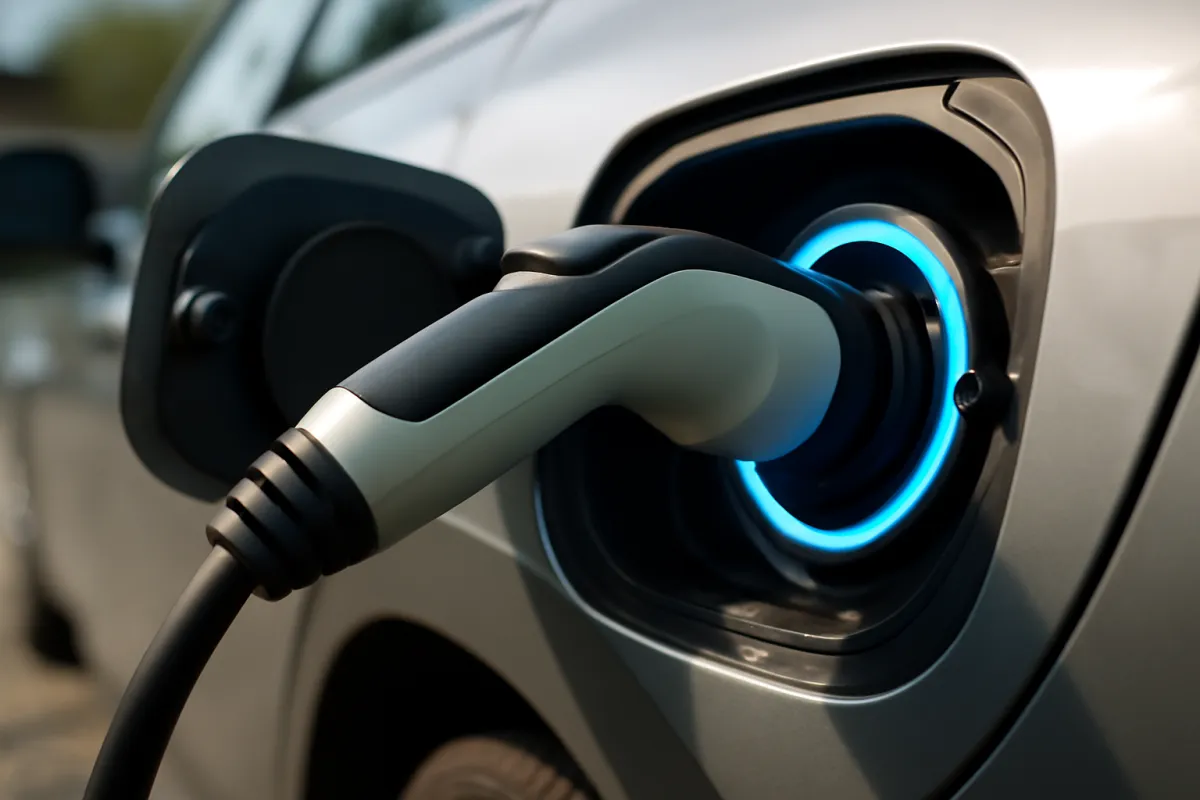
Because the engine only ever acts as a generator in this design, it can be small, tuned for one steady job, and sized to sustain cruising rather than to deliver peak power. Hard acceleration still comes from the battery and motor, so the generator does not need to be powerful, only steady. That is the whole trick: decouple the fuel-burning part from the driving experience, use it purely to make electricity, and you get the smooth electric drive most of the time with a gasoline safety net underneath. Some designs allow the engine to assist the wheels at high speed for efficiency, which nudges them toward plug-in hybrid territory, a distinction the next sections unpack.
How a range extender differs from a pure BEV
A pure battery electric vehicle, or BEV, carries only a battery. There is no engine, no fuel tank, and no tailpipe. When the charge runs low you must find a charger and plug in, and the size of the battery sets a hard ceiling on how far you can go before that stop. This is a clean, simple, and efficient arrangement, and for drivers with reliable charging it is usually the better tool. The single point of failure is charging access: if you cannot conveniently plug in, the car’s whole value proposition weakens, which is the gap a range extender is designed to fill.
A range-extended EV keeps everything the BEV has and adds a small engine and a fuel tank. The trade is deliberate. You accept extra weight, extra cost, extra parts that can wear, and continued fuel use, and in return you get freedom from the charging network on the days you need it. For a reader weighing the two, the honest question is not which technology is cleverer but which failure mode you would rather avoid: the BEV’s occasional charging hunt, or the range extender’s permanent burden of carrying an engine you may rarely use. On battery power the two feel identical, which is why so much of the decision comes down to how often you would actually light the engine, a figure the companion estimator puts a number on. Our teardown on the electric cars with the longest range covers how far modern BEVs now go on the battery alone.
EREV: the electric car with a backup generator
An extended-range electric vehicle, or EREV, is the vehicle type built squarely around the range-extender idea. Its defining feature is that the electric motor always drives the wheels; the gasoline engine, when it runs, does nothing but generate electricity. That means an EREV feels like an electric car in every situation, whether the battery is full or the engine is humming away making power. EREVs typically carry a meaningful battery, large enough to cover a normal day of driving on electricity alone, and treat the engine as a reserve for longer trips or for times when charging is not an option.
The appeal of the EREV is that it tries to give you the best of both worlds: the quiet, cheap, responsive daily driving of an EV, plus the reassurance of a fuel tank you can refill anywhere. A driver who charges at home might go weeks running purely on electricity, then fire the generator only for a long weekend drive. The catch is that you are paying to carry two systems, and the generator is dead weight on every electric mile. Whether that trade is smart depends on how your driving splits between short local trips and long ones, which is exactly what the worked example later measures. Electric-only range on newer EREVs has climbed a long way, pushing well past the modest figures early designs offered.
PHEV: the plug-in hybrid middle ground
A plug-in hybrid electric vehicle, or PHEV, sits one step closer to a conventional car. Like an EREV it has a battery you charge from the wall and a gasoline engine, but the key difference is that in most PHEVs the engine can also drive the wheels directly, not just generate electricity. You get a stretch of electric-only driving after each charge, and once that runs out the car behaves like a normal hybrid, blending engine and motor power as conditions demand. The engine is a full participant in moving the car, not merely a generator, which is the cleanest way to tell a PHEV apart from a classic EREV.
PHEVs usually carry smaller batteries than EREVs, so their electric-only range tends to be shorter, often enough for a commute but not for a long day. That smaller battery keeps cost and weight down, and the ability to drive the wheels with the engine can make the vehicle more efficient at sustained highway speed than a pure series design. The downside is that once the battery is empty, a PHEV is only as clean and cheap to run as its underlying hybrid economy, so drivers who rarely plug in end up hauling a battery they barely use. Our note on whether an electric car is worth it frames the same charge-at-home logic that decides how much a PHEV’s electric range pays off.
BEV vs EREV vs PHEV compared
Set side by side, the three plug-in approaches trade the same few variables: battery size, how the engine is used, and how dependent you are on charging. A BEV is the simplest and most efficient but leans entirely on charging access. An EREV keeps the full electric driving feel and adds a generator for backup, accepting weight and complexity. A PHEV shrinks the battery, lets the engine drive the wheels, and behaves like a hybrid once depleted. None is universally best; each suits a different mix of driving and charging.
| Trait | BEV | EREV | PHEV |
|---|---|---|---|
| Onboard engine | None | Generator only | Can drive the wheels |
| Wheels driven by | Electric motor | Electric motor | Motor and or engine |
| Typical battery size | Large | Medium to large | Small to medium |
| Electric-only range | Longest | Long | Shortest |
| Refuel away from a plug | Not possible | Gasoline | Gasoline |
| Depends on charging network | Most | Least | Least |
| Efficiency when engine runs | N/A | Lower | Higher at speed |
| Overall complexity | Lowest | Highest | High |
The table makes the pattern clear: as you move from BEV to EREV to PHEV, you trade electric purity and simplicity for gasoline flexibility and mechanical complexity. The BEV bets everything on charging being easy; the PHEV keeps the engine central; the EREV tries to stay electric first while carrying a fuel backup. Where you land should follow your charging reality and trip mix, not the badge, and the companion estimator helps translate that mix into an electric-versus-gas split you can actually see.
Illustrative electric-only range by vehicle type
Numbers land better on one scale, so the chart below places illustrative electric-only ranges side by side. These are directional bands, not specs for any model, and the point is the shape of the gap rather than any single figure. A pure BEV runs entirely on its battery, an EREV covers a long electric stretch before the generator helps, a PHEV offers a shorter electric commute, and a conventional hybrid you never plug in has essentially no electric-only range at all.
Illustrative electric-only range by vehicle type
Commonly cited, illustrative electric-only ranges before any fuel is used; directional bands, not model-specific figures.
Each bar is an illustrative electric-only range, scaled against the BEV at 100 percent. An EREV or PHEV then adds hundreds more total miles from its fuel tank, which this chart does not show, because that range comes from gasoline rather than the battery.
The gap that matters is not the electric-only bar alone but how it compares to your daily mileage. A vehicle whose electric range comfortably clears your normal day means you rarely touch fuel, while one that falls short of your commute pushes you onto the engine every day. That is why the same range-extended car can be nearly all-electric for one driver and mostly gasoline for another. Feed your own daily miles and electric range into the companion estimator to see which of those two you would be.
The pros: range anxiety relief and no charging stops
The headline benefit of a range extender is psychological as much as practical: it removes range anxiety. Because you can refuel with gasoline anywhere, the fear of being stranded with a dead battery simply does not apply. For drivers who love the idea of an electric car but worry about long trips, unfamiliar routes, or regions with thin charging coverage, that reassurance is the whole point, and it is a real, honest advantage that a pure battery car cannot match without a mature charging network behind it.
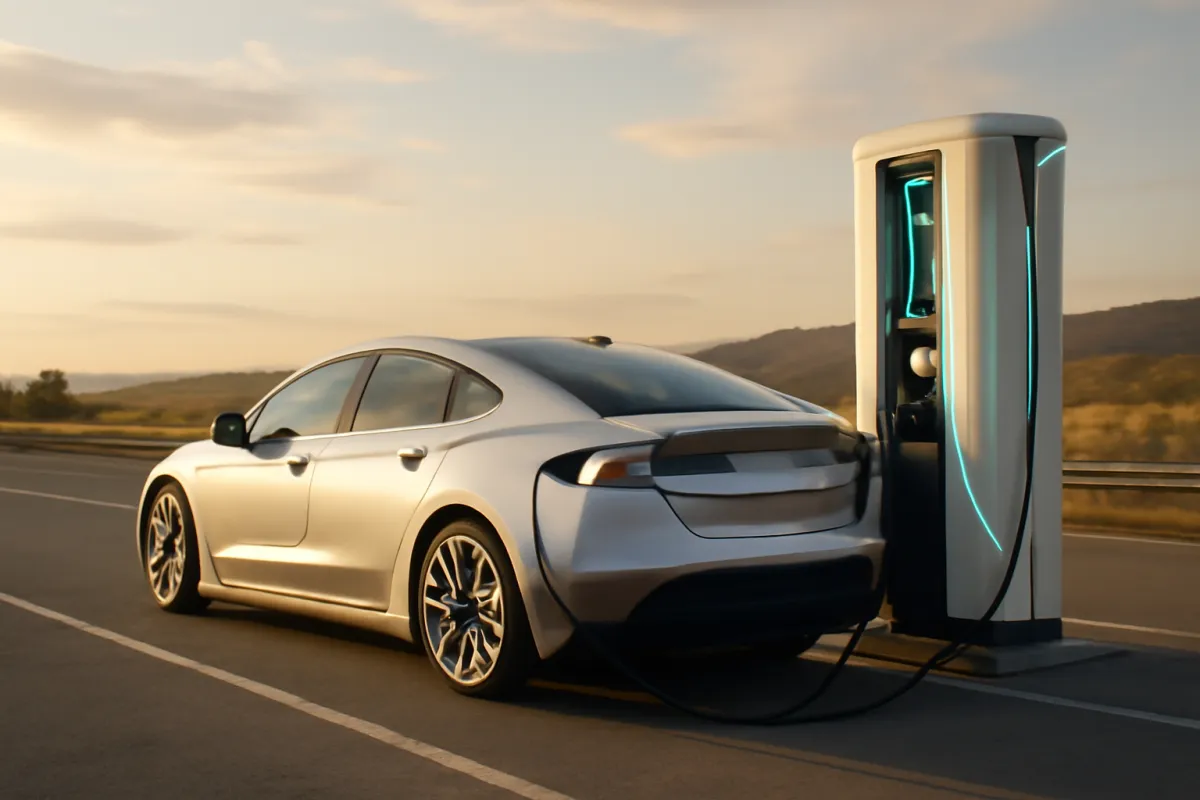
The second benefit follows from the first: no forced charging stops on a long drive. A pure BEV road trip is planned around chargers, with stops timed to the network, which our EV road trip planning teardown walks through in detail. A range-extended car sidesteps that planning entirely, because when the battery is low you simply fill the tank in a few minutes and drive on. For daily life the car is still an EV, cheap and quiet on home-charged electricity, so you get the low running costs of electric driving without the trip anxiety. It is a genuinely flexible package, and for the right driver the flexibility is worth a lot.
The cons: complexity, weight, and burning fuel
The costs are just as real. The most obvious is that you are carrying two power systems where a BEV carries one and a gas car carries the other. That means more parts, more things that can wear or fail, more maintenance, and the return of items a pure EV owner leaves behind, like engine oil, a fuel system, and an exhaust. Complexity is not free; it shows up as service visits and as more ways for something to go wrong over the life of the vehicle. A pure electric drivetrain is mechanically simpler, and that simplicity is one of the quiet advantages a BEV holds.
Weight is the second cost, and it is constant. The engine, generator, and fuel tank all add mass that the car hauls on every single mile, including the many electric miles when the engine is not even running. That weight costs energy to accelerate and to carry up hills, so it slightly reduces the electric efficiency you would otherwise enjoy. The third cost is the plainest: you are still burning fuel. A range-extended EV is not a zero-emission vehicle whenever the engine runs, and the fuel it burns costs money and produces tailpipe emissions. For buyers whose goal is to leave gasoline behind entirely, a range extender is a compromise, not a destination.
Efficiency: why a range extender is a compromise
The efficiency story is the most misunderstood part of the concept, so it is worth being precise. When a range-extended EV runs on the electricity you charged from the wall, it is exactly as efficient as any other electric car, because it is one. The nuance appears only when the engine is running. At that point the car is turning gasoline into electricity, then electricity into motion, and every energy conversion loses a little along the way. A conventional hybrid, by contrast, can send engine power more directly to the wheels, so on a long gasoline-fueled drive a pure series range extender generally uses more fuel per mile than a well-designed hybrid would.
This is why the honest framing is that a range extender works as a backup, not as a fuel-economy champion. Used the way it is intended, running mostly on cheap home electricity with the engine as an occasional reserve, the efficiency penalty barely matters, because the engine rarely runs. Used the wrong way, by a driver who almost never charges and leans on the generator constantly, the car gives up most of its advantage and pays a real fuel penalty for hauling a battery it does not use. The technology is neutral; how you use it decides whether it is efficient. Our electric car cost per mile teardown prices out how much cheaper the electric miles are than the gasoline ones, which is the gap the engine erodes when it runs too often.
The two-powertrain tax: cost and weight
Carrying both a battery and an engine imposes what is fair to call a two-powertrain tax, paid in money and in mass. On the money side, the vehicle needs a battery, a motor, and their electronics, plus an engine, a generator, a fuel system, and an exhaust. That is more hardware than either a pure BEV or a pure gasoline car carries, and although the battery can be smaller than a long-range BEV’s, the added engine hardware offsets some of that saving. The result is a vehicle that can be complex to build and to service, with a cost structure that only makes sense when the flexibility it buys is genuinely valuable to the owner.
Illustrative annual mileage split for an EREV commuter
Illustrative shares of a year's miles for a driver who charges at home most nights; shares shift with your charging habits and trips.
The three slices sum to 100 percent of the year's miles, not of the range. For a home charger who drives mostly local, the electric slices dominate and the engine runs seldom, which is exactly when the two-powertrain tax is easiest to justify.
The chart shows why the tax can be worth paying for the right driver: when the electric slices dominate, the engine is a rarely-used safety net rather than a daily workhorse, and the flexibility it buys is nearly free in running-cost terms. Flip the split so the gasoline slice grows, and the calculus changes: now you are paying to carry and maintain an engine you use constantly, and a plain hybrid would likely serve you better. Your own split depends on your charging habits and trips, which the companion estimator turns into a personalized version of this chart.
Are range extenders making a comeback
The range-extender concept is not new; it had a moment years ago, faded as battery ranges grew and charging improved, and is now drawing fresh interest. The revival is concentrated in larger vehicles, particularly trucks and SUVs, and the reasoning is grounded in physics and economics. A big, heavy vehicle needs an enormous battery to deliver long electric range, and that battery is expensive and adds significant weight. Pairing a smaller battery with a generator is a cheaper, lighter way to reach a long total range, which is why some manufacturers are reportedly revisiting the idea for exactly these segments.
It is best to frame the comeback honestly, as a bridge rather than a revolution. Range extenders make the most sense in the current moment, when many buyers want mostly-electric driving but charging is not yet effortless everywhere and big batteries remain costly. If batteries keep getting cheaper and lighter and charging keeps getting faster and more widespread, the case for carrying an engine weakens, because the pure BEV’s simplicity wins once its two weaknesses, cost and charging, fade. So the technology may be enjoying a genuine second wind, especially in trucks, while still being a transitional answer rather than the long-term endpoint. Watching how far BEV range and charging speed climb, as covered in our longest-range EV teardown, is the best gauge of how long the window stays open.
Charging still matters more than the engine
It is tempting to think a range extender makes charging optional, but the opposite is closer to the truth: charging access is still what decides whether the vehicle makes sense. The entire value of a range-extended EV comes from running most of your miles on cheap home electricity and using the engine only as a reserve. Take away the home charging and you invert the design, running mostly on gasoline while dragging a battery around, at which point you would have been better served by a normal hybrid or a pure BEV depending on your trips. The engine is the backup; the plug is the main event.
This is why the first question to ask before buying any plug-in vehicle, extender or not, is where and how you will charge. A driver with a home charger who plugs in nightly will run a range-extended EV almost entirely on electricity, using the fuel tank only for the occasional long trip, and that driver gets the full benefit. A driver with no reliable charging gets little from the plug-in design and mostly carries its costs. Our teardown on charging an EV at home covers how to set up the overnight charging that makes the whole concept work, and our note on home charging costs shows how cheap those electric miles really are.
Range extenders and battery life
A common worry is whether the engine and the smaller battery in a range-extended EV change how the pack ages. The reassuring answer is that the fundamentals are the same as for any lithium battery: it fades gradually, at a rate commonly cited in the low single digits of percent per year, and it is defended by a warranty on most vehicles. A range extender does not accelerate that process by existing; the pack ages based on how it is cycled, its temperature, and its state of charge, the same factors that govern any EV, which our battery longevity teardown explores in depth.
There is a subtle interaction worth naming. Because a range-extended EV often carries a smaller battery than a long-range BEV, that pack may be cycled more deeply and more often to cover the same daily miles, and deep, frequent cycling is one of the things that ages a battery a little faster. On the other hand, the engine can prevent the pack from ever being run completely flat, which is a gentler pattern in some respects. The net effect is modest and highly dependent on the specific design and how you drive. The general battery-care habits that slow fade in any EV apply here too, and our range maximizing teardown covers the driving habits that keep both range and pack health strong.
Who a range extender actually suits
A range extender is not for everyone, and being honest about who it suits is more useful than selling it to all. The clearest fit is the driver who wants to go mostly electric but is not ready to depend entirely on the charging network: someone with home charging who does short local trips most days, yet occasionally drives long distances into areas where charging is sparse or unfamiliar. For that driver the car runs on cheap electricity nearly all the time and keeps a gasoline safety net for the trips that would otherwise require careful charge planning. The flexibility maps directly onto their real anxiety.
It suits some larger-vehicle buyers for a different reason. A truck or SUV owner who needs long total range and towing capability may find that a big enough battery to do it all electrically is prohibitively expensive and heavy, while a smaller battery plus a generator delivers the range at a lower cost and weight. It is a poor fit, by contrast, for anyone without reliable charging, for whom the plug-in design mostly adds cost, and for the committed electric driver with good charging access, who gets a simpler, cheaper, cleaner vehicle from a pure BEV. Figure out which camp you fall into by running your own numbers through the companion estimator.
How much of your driving would be electric
The single most useful number for judging a range extender is the share of your driving that would actually run on electricity, because that share decides everything downstream: your fuel cost, your emissions, and whether the engine is a rare backup or a daily crutch. That share is set by three things you already know: how far you drive on a typical day, how much electric-only range the vehicle offers, and how often you plug in. If the electric range clears your daily miles and you charge nightly, the electric share is high and the engine sleeps; if either condition fails, gasoline creeps back in.
The estimator on this page turns those inputs into a personalized electric-versus-gasoline split, then carries the number into an illustrative annual fuel figure so the abstract idea becomes concrete. It uses illustrative constants for the engine’s fuel economy and gas price, both clearly framed as typical rather than exact, so the output shows the shape of your result rather than a precise bill. Nudge the daily-miles field up or the electric range down and watch the gasoline slice grow; the point is to see how sensitive the whole case is to your own habits. Our electric versus gas cost teardown prices the two kinds of miles in more detail once you know your split.
Are range extenders worth it
Whether a range extender is worth it comes down to a single honest test: how much of your driving would be electric, and how much you value the gasoline backup for the rest. If you can charge at home and most of your miles are local, a range-extended EV lets you run on electricity nearly all the time while keeping a fuel tank for the occasional long trip, and many drivers find that combination genuinely reassuring and easy to live with. In that case the extra weight and complexity buy real peace of mind, and the fuel you burn is a small annual figure rather than a constant expense.
If you cannot charge conveniently, the answer flips. Without regular charging you lose the main advantage and mostly carry the burden of two powertrains, at which point a plain hybrid gives you similar flexibility with less complexity, or a pure BEV gives you a simpler, cheaper electric car if your charging situation can be fixed. The middle case, a committed electric driver with good charging, usually finds a pure BEV the better buy, because the engine is weight and cost they will rarely use. The technology is not universally worth it or not; it is worth it precisely for the driver whose charging and trip mix match its design, which is why the personalized split matters more than any general verdict. Weigh your own case in the companion estimator before deciding.
A worked example: one driver’s electric-versus-gas split
Numbers land harder as a story, so here is one illustrative driver, with every figure directional rather than a spec for any vehicle. Call him a suburban commuter who drives about 35 miles on a typical day, charges at home most nights, and is looking at a range-extended EV with an illustrative 40 miles of electric-only range. Because that electric range comfortably clears his daily mileage and he plugs in nightly, the vast majority of his ordinary driving runs on electricity, and the engine simply never needs to start on a normal day.
The engine earns its keep a few times a year. When he takes a long trip that outruns the battery, the generator kicks in and he refuels with gasoline, no charging stop required. Across a full year of an illustrative 12,000 miles, the split might land around 70 percent electric and 30 percent gasoline, so his fuel bill is a modest annual figure rather than a monthly one, and his running costs stay close to a pure EV’s. The lesson is not the exact percentages, which depend on your own habits, but the shape: with home charging and short daily trips, a range extender runs mostly on electricity and touches fuel rarely. Change his charging habit to rarely plugging in and the gasoline slice balloons, which is the scenario where the whole case falls apart. Run your own version of this split in the companion estimator.
Common myths about range extenders
A few persistent myths distort how people think about range extenders, and naming them is half the cure.
- A range extender makes an EV more efficient. It does not. On battery power it is as efficient as any EV, and once the engine runs it is generally thirstier than a good hybrid, because converting fuel to electricity to motion loses energy. It buys flexibility, not fuel economy.
- The engine drives the wheels like a normal car. In a classic EREV it never does; it only spins a generator, and the electric motor always turns the wheels. That is what separates an EREV from most plug-in hybrids, where the engine can drive the wheels directly.
- A range extender means you never have to charge. The opposite is closer to true. The design only pays off if you charge regularly and run mostly on electricity; skip charging and you carry a battery you barely use while burning fuel.
- It is a zero-emission car. Only when running on the battery. Whenever the engine is generating power it burns gasoline and produces tailpipe emissions, so it is a low-emission compromise, not a zero-emission vehicle.
- Range extenders are obsolete. Interest has actually revived, especially for trucks and large SUVs, as a cheaper, lighter path to long range than a giant battery. It is best seen as a bridge technology whose usefulness tracks how fast batteries and charging improve.
Each myth pushes buyers toward the wrong expectation. The accurate picture is narrower and more useful: a range extender is an electric-first car with a gasoline backup, efficient when charged and driven as intended, and a compromise the moment it is not.
The bottom line
A range extender for an EV is a small onboard generator, usually a compact gasoline engine, that makes electricity to keep an electric car moving after its plug-in charge runs low. In the cleanest design, the EREV, the engine never drives the wheels; it only generates power, so the car feels fully electric at all times while gaining the freedom to refuel with gasoline anywhere. That is the whole promise: the cheap, quiet daily driving of an EV, with a fuel tank in reserve to erase range anxiety and skip charging stops on long trips.
The costs are real and worth respecting: more weight, more complexity, continued fuel use, and an efficiency penalty whenever the engine runs. Whether the trade is worth it hinges almost entirely on charging access and trip mix. A driver who charges at home and drives mostly local runs on electricity nearly all the time and touches fuel rarely, and for that driver a range-extended EV is a flexible, reassuring package. A driver who cannot charge conveniently mostly carries the burden for little gain, and is usually better served by a plain hybrid or, with better charging, a pure BEV. Do range extenders work? As a backup and a confidence-builder, yes; as a way to beat a hybrid on fuel economy, no. Size your own electric-versus-gas split in the companion estimator, then let your real driving decide.
This teardown is educational and independent, written to explain how EV range extenders, EREVs, and plug-in hybrids actually work rather than to recommend or rank any specific vehicle. Every range, percentage, fuel-economy, and cost figure above is illustrative and directional, framed as commonly cited rather than measured, and is meant to show the shape of the concept, not to specify any particular model. Real numbers depend on the exact vehicle, its battery and engine design, your charging habits, your trips, the weather, and how you drive, and manufacturer lineups and specifications change frequently. Nothing here is purchasing, financial, environmental, or professional advice. Confirm current electric range, fuel economy, emissions ratings, and specifications from the manufacturer before making a buying decision, and treat any figure on this page as a way to think, not a promise you are owed.
Frequently asked questions
What is a range extender for an EV?
A range extender is a small onboard generator, usually a compact gasoline engine, that makes electricity to feed the battery and electric motor once the plug-in charge runs low. It is not there to drive the wheels the way a normal car engine does; in the purest design it only spins a generator, so the car still drives as an electric vehicle at all times. The point is to remove the hard ceiling that a battery alone imposes, letting you refuel with gasoline when charging is not practical. A vehicle built around this idea is usually called an extended-range electric vehicle, or EREV, and it sits between a pure battery car and a plug-in hybrid.
Do EV range extenders actually work?
Yes, in the narrow sense that they do reliably remove range anxiety and let you keep driving without stopping to charge. The onboard generator turns fuel into electricity, the electricity keeps the battery from emptying, and the car carries on past the point where a pure battery vehicle would need a plug. Where the honest answer gets more nuanced is efficiency: converting fuel to electricity to motion loses energy at each step, so on a long gasoline-powered drive a range extender is generally thirstier than a good conventional hybrid doing the same trip. It works as a safety net and a convenience, not as a way to beat a hybrid on fuel economy.
What is the difference between an EREV and a PHEV?
Both plug in and both carry a gasoline engine, but they use that engine differently. In a classic EREV the wheels are always turned by the electric motor and the engine only ever acts as a generator, so the car feels fully electric even when it is burning fuel. In most PHEVs the gasoline engine can also drive the wheels directly, especially at higher speeds, so the car behaves like a conventional hybrid once the battery is depleted. EREVs also tend to carry larger batteries and longer electric-only range than PHEVs, which typically offer a shorter electric commute before the hybrid system takes over. The line between the two has blurred as designs converge.
How is a range extender different from a normal hybrid?
A normal hybrid, the kind you never plug in, uses a small battery purely as a buffer and gets all of its energy from gasoline, so it can only ever be as clean and cheap to run as its fuel economy allows. A range-extended EV is a plug-in first: you charge it from the wall, do most of your daily driving on cheap grid electricity, and the engine only wakes up on longer trips. That flips the usual ratio, because a driver who charges nightly and keeps trips short may use the engine only a handful of times a year. The hybrid is a gasoline car with electric assistance; the range extender is an electric car with a gasoline backup.
Are EV range extenders making a comeback?
Interest has clearly picked back up after the concept faded for several years, and the renewed attention is concentrated in larger vehicles like trucks and SUVs. The logic is straightforward: a big battery that delivers long range in a heavy vehicle is expensive and adds a lot of weight, so some manufacturers are reportedly revisiting a smaller battery paired with a generator as a cheaper, lighter path to long total range. It is best understood as a bridge technology for buyers who want mostly-electric driving without depending on a mature charging network. Whether it becomes widespread or stays a niche depends on how fast batteries get cheaper and charging gets easier.
Are EV range extenders worth it?
It depends almost entirely on your charging access and how you drive. If you can charge at home and most of your driving is local, a range-extended EV lets you run on electricity nearly all the time while keeping a gasoline safety net for the occasional long trip, which many drivers find genuinely reassuring. If you cannot charge conveniently, you lose the main advantage and mostly carry the weight and complexity of two powertrains, at which point a plain hybrid or a pure battery car often makes more sense. The worked example and the estimator on this page help you see how much of your own driving would actually be electric, which is the number the decision should rest on.
Does a range extender make an EV less efficient?
When the car is running on the battery you charged from the wall, no; it drives with the same efficiency as any electric vehicle. The efficiency question only appears once the engine is running, because turning gasoline into electricity and then into motion loses energy at each conversion, so a range extender burns more fuel per mile in that mode than a well-designed conventional hybrid would. The extra weight of carrying both a battery and an engine also costs a little energy all the time. The net effect for most owners is small, because the engine runs rarely, but a driver who relies on it constantly gives up much of the point and pays a real fuel penalty.
How much electric range does a range-extended EV have?
It varies widely by design and has been climbing. Older and smaller plug-in systems offered an illustrative 20 to 40 miles of electric-only range before the engine was needed, enough for many commutes but not much more. Newer EREVs, especially larger models, push electric-only range far higher, with commonly cited figures reaching well past 100 miles before a drop of fuel is used, after which the generator adds hundreds more miles of total range. The useful way to size any specific vehicle is to compare its electric-only range against your typical daily mileage: if it comfortably covers your normal day, you will spend most of your time driving on electricity and rarely touch the fuel.