What's in this teardown
- The short answer: which car is actually cheaper
- The upfront price gap, and why it is shrinking
- Cost per mile: electricity versus gasoline
- The four ways to power a mile, compared
- The five-year total cost of ownership
- Maintenance: where the EV pulls ahead
- What happened to the EV tax credit
- Home charging is the savings engine
- Insurance: the cost that often runs higher
- Depreciation and the used-EV question
- Battery longevity and the replacement worry
- The break-even point: when the EV overtakes
- Where the EV’s savings come from
- Who saves most, and who does not
- The gas car’s genuine advantages
- Road trips and range: the honest gas win
- A worked example: one EV versus one gas car
- Common mistakes in the comparison
- A buyer’s decision checklist
- The bottom line
Short answer: An electric car usually costs more to buy and less to run than a gas car, so the real comparison is a five-year total of purchase price, fuel, maintenance, insurance and depreciation. Home charging is the savings engine, at an illustrative 4.5 cents per mile against 11 to 14 cents for gasoline. High-mileage home chargers reach break-even fastest; low-mileage, apartment and road-trip drivers may find the gas car cheaper to own.
Ask whether an electric car or a gas car is cheaper and you will get a confident answer either way, usually from someone who has picked one number and ignored the rest. The EV camp points at the tiny cost of charging at home. The gas camp points at the higher sticker price. Both are telling the truth about one piece of a puzzle that only makes sense whole. The real comparison is not a single price, it is a stream of costs over the years you own the car: what you pay at the counter, then what you pay every mile, every service, every insurance renewal, and finally what you get back when you sell.
This teardown runs that full comparison honestly. It starts with the upfront price gap and why it is shrinking, priced in detail in our purchase-price teardown. It works through the running-cost engine, the per-mile gap between electricity and gasoline that our charging-cost teardown prices out. Then it assembles the five-year total cost of ownership from purchase, fuel, maintenance, insurance, and depreciation, finds the break-even year where the EV overtakes, and says plainly who saves and who does not. Every figure here is illustrative and moves with the car and the market, but the structure is stable enough to learn once. You can price your own case in about a minute with our cost calculator.
Key takeaways
- An EV usually costs more upfront but less to run: the higher sticker is a battery premium, and lower fuel and maintenance costs work to repay it over time.
- Home charging is the savings engine. At an illustrative 4.5 cents per mile against 11 to 14 for gasoline, it is where almost all of the running-cost advantage lives, and public fast charging erodes it.
- The five-year total cost stacks five numbers: the purchase price you actually pay, fuel or charging, maintenance, insurance, and depreciation. The EV wins some and loses some.
- The break-even year is the key number: the point where lower running costs have repaid the price premium. High mileage plus home charging reaches it fast; low mileage without home charging may never.
- Who you are decides the answer. High-mileage home-chargers save the most; low-mileage, apartment, and road-trip drivers may find the gas car cheaper to own.
The short answer: which car is actually cheaper
The honest short answer is that an EV usually costs more to buy and less to run, and which of those wins depends on how long and how far you drive. On day one, standing in the showroom, the gas car is almost always cheaper, because it does not carry the price of a large battery. From that day forward, the EV starts clawing the gap back a few cents at a time, mile after mile, service after service. The whole comparison is a race between an upfront premium and a running-cost discount.
That framing dissolves most of the usual argument. The person who says EVs are expensive is looking at the sticker and is right about the sticker. The person who says EVs are cheap is looking at the fuel bill and is right about the fuel bill. Neither has run the full total cost of ownership that decides the actual question, which is not “what does it cost to buy” or “what does it cost to fuel” but “what does it cost to own for the years I will keep it.” This teardown builds that number piece by piece, and our cost calculator lets you assemble your own version as you read.
The upfront price gap, and why it is shrinking
The gas car’s biggest and most durable advantage is the one you see first: a lower purchase price. A comparable EV has generally cost more upfront, and the reason is a single component. The battery is the most expensive part of an electric car and has no counterpart in a gas vehicle, which spends its money instead on a mature, cheap-to-build engine and transmission. That battery sets a floor under the EV’s price and is the whole source of the premium, as our purchase-price teardown lays out in full.
The premium is real, but it is not fixed, and the direction of travel matters. Battery costs have fallen substantially over the years as manufacturing has scaled and chemistry has improved, and every drop narrows the gap between an EV and its gas equivalent. A state or utility programme, where one applies to you, can narrow it further. So the upfront gap you see today is generally nearer the top of its historical range than the bottom, which is a reassuring backdrop but does not change the core structure: on the sticker, the gas car still usually wins, and the EV has to earn back that difference from the running costs the rest of this teardown prices.
Cost per mile: electricity versus gasoline
The engine of the entire EV case is the cost of a single mile, because that is the number that repeats thousands of times a year and slowly repays the price premium. A gas car’s fuel cost per mile is its price per gallon (the EIA’s weekly retail gasoline price page carries the current national figure) divided by its miles per gallon: a 30 mpg car at $3.50 a gallon costs about 11.7 cents per mile. An EV’s energy cost per mile is its efficiency in kWh per 100 miles times your electricity rate (the EIA’s average retail electricity prices by state show where yours sits): at an illustrative 30 kWh per 100 miles and a 15 cent home rate, that is about 4.5 cents per mile. The gap between those two numbers, repeated over your annual miles, is the largest single saving in the comparison.
Our charging-cost teardown prices this in full, but the headline is that home charging usually costs a fraction of gasoline per mile, and the reason is physics rather than the market. An electric motor turns most of its energy into motion, while a combustion engine loses much of gasoline’s energy to heat, so electricity is simply a more efficient way to buy movement. That efficiency advantage holds across a wide range of fuel and power prices rather than only when the numbers happen to line up. The one scenario that erases it is not cheap gasoline, it is the EV owner charging in public rather than at home, which the chart below makes vivid. What those public sessions actually run, per kWh, per stop, and network by network, is priced in our charging station cost teardown.
The four ways to power a mile, compared
The cleanest way to see where each fuel sits is to line the realistic options up and let the widths do the talking. Every bar below is an illustrative cost per mile, drawn directly from its value against the most expensive option at full width, so the picture is proportional rather than decorative.
Illustrative cost per mile, by way of powering the car
EV at 30 kWh/100mi; home 15 cents, public DC fast 45 cents per kWh; hybrid 50 mpg, gas 30 mpg, both at $3.50.
Home charging sits far below the gas mile most drivers are used to, while public fast charging lands beside or above it. The EV's whole running-cost advantage is really the distance between the top bar and the gas bar.
The chart settles the running-cost debate on sight, and it carries the single most misunderstood fact in the comparison. The same EV can be the cheapest bar or nearly the most expensive one, and the only thing that changed is where it plugged in. An owner who charges at home lives on the top bar and saves accordingly; an owner who defaults to public fast charging lives near the bottom and wonders where the savings went. The hybrid sits sensibly in the middle, a useful reminder that the choice is not only electric versus gas. Match this chart to your own rate and mpg in our cost calculator and the abstract gap becomes your number.
The five-year total cost of ownership
Cost per mile is the engine, but the decision runs on total cost of ownership, which stacks five separate numbers over the years you keep the car. Those five are the purchase price you actually pay, the fuel or charging cost, the maintenance, the insurance, and the depreciation you eat when you sell. The EV wins some of these and loses others, and only by adding all five over a realistic holding period, commonly five years, do you get a number that actually decides the question rather than a slogan that flatters one side.

Laid out that way, the shape of the comparison becomes clear. The EV starts behind on purchase price, pulls ahead steadily on fuel and maintenance, gives some of it back on insurance, and lands somewhere uncertain on depreciation depending on the specific models. The purchase gap is a lump sum paid once; the running savings are a stream paid back over years. So the total-cost answer is really about time: keep the car long enough and the stream overtakes the lump, and the EV wins; sell early and it may not. The sections that follow price each of the five pieces in turn, and our cost calculator assembles them into a running total you can steer with your own inputs.
Maintenance: where the EV pulls ahead
After fuel, maintenance is the EV’s most dependable saving, and unlike charging it does not hinge on where you plug in. An electric car has no oil to change, no spark plugs or filters tied to combustion, no timing belt, no exhaust or emissions system, and a drivetrain with far fewer moving parts than a gas engine and transmission. Regenerative braking, which slows the car by generating electricity, means the friction brakes do less work and wear more slowly. A whole category of scheduled service that gas cars need simply does not exist for an EV.
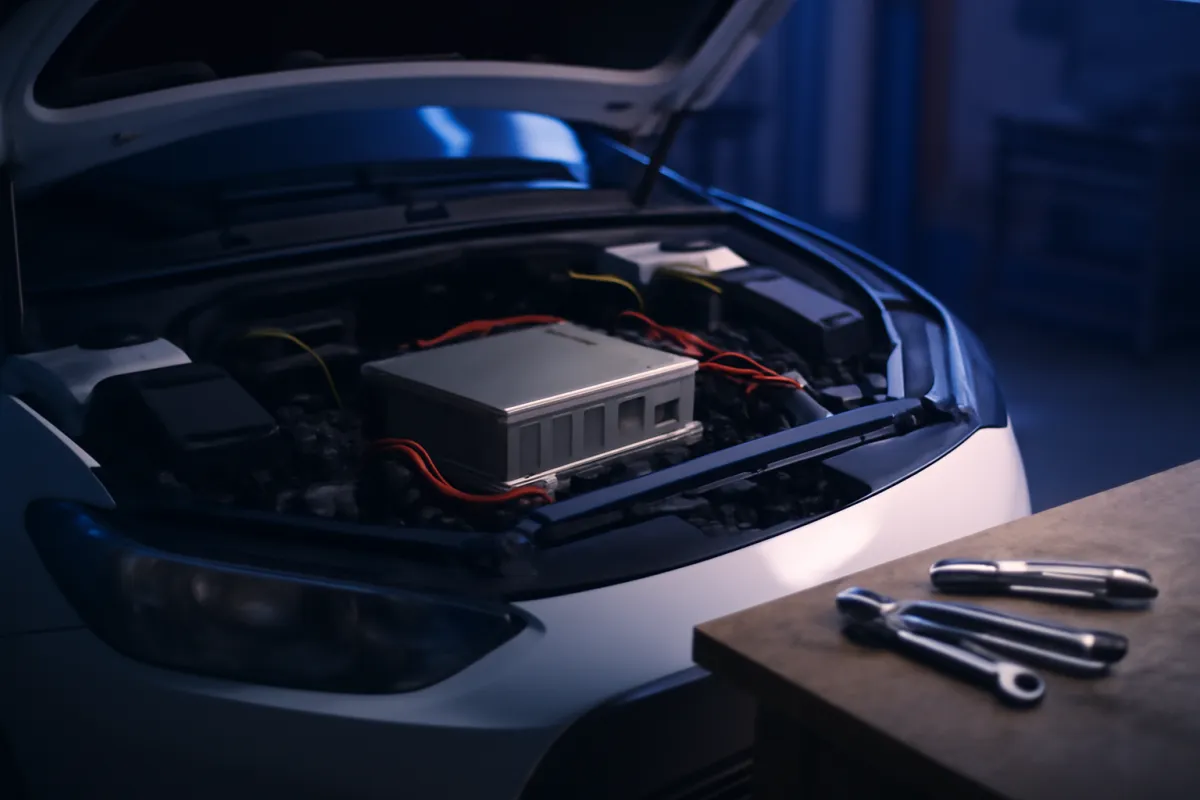
The saving is real but it is lower maintenance, not no maintenance, and it is worth being precise. EVs still need tires, and their instant torque and extra battery weight can wear tires faster, so that line can run higher than on a gas car. They still need cabin air filters, brake fluid, coolant service in some models, and the occasional repair, and a rare fault in the battery or power electronics can be expensive and require a specialist. Netted out, the routine-service gap still commonly favors the EV by a meaningful sum each year, and because it is an annual saving rather than a one-time one, it stacks with the fuel saving to pull the break-even year closer, as the total-cost sections keep showing.
What happened to the EV tax credit
Start with what is no longer here, because it is the single biggest change to this comparison in years. The federal clean vehicle credits are not available for vehicles acquired after September 30, 2025, where acquired means a written binding contract plus a payment and a nominal deposit or a trade-in counts as that payment, as the IRS’s new clean vehicle credit page states. There is no federal amount to look up and nothing federal coming off at the point of sale, so the upfront premium in this comparison is the full premium, and the running savings have all of it to repay.
What can still narrow the gap is non-federal: a state programme, a utility rebate, or a dealer or manufacturer discount. Those are set locally, vary enormously, and are not a federal credit, so the only way to know what applies to you is to ask your own utility and your state energy office or revenue agency directly, and to take any tax question to a qualified tax professional. Whatever you are offered, it counts only when it is in writing on the deal you are signing. If a dealer quote or an online estimator still shows a federal credit netted off the price of a purchase now, it is working from superseded rules, and the break-even year it is showing you is too optimistic. Lower the premium in our cost calculator only by a discount you actually have, and watch how hard it moves the break-even year.
Home charging is the savings engine
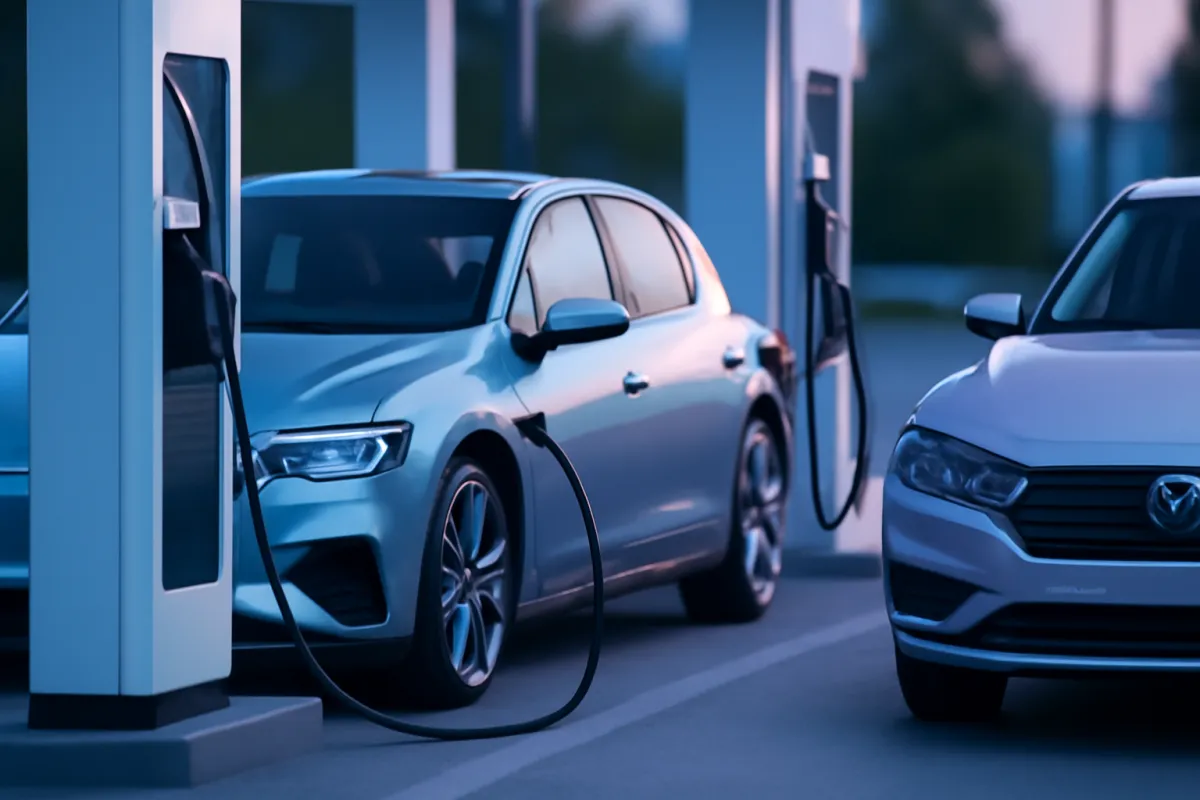
If there is one thing that decides whether an EV is cheaper than gas, it is not the car, it is the plug. Home charging is the engine of the entire running-cost advantage, because it is what keeps the per-mile fuel cost down at the illustrative 4.5 cents that beats gasoline so decisively. You pay your ordinary residential electricity rate, or a cheaper overnight rate if your utility offers one, for fuel that arrives while you sleep and while the car sits parked doing nothing anyway. That is the low bar on the cost-per-mile chart, and almost the whole EV case rests on it.
Public DC fast charging erodes that advantage fast, and this is the most important caveat in the comparison. Fast charging commonly costs two to four times more per unit of energy than home charging, because the provider is paying for expensive high-power hardware, real estate, grid demand charges, and a margin. At those prices a public-charged mile can cost as much as or more than a gas mile, which is exactly why the cost-per-mile chart puts public charging at the bottom beside gasoline rather than up with home charging. Our home-vs-public charging cost read prices this gap in detail, and the practical rule it lands on is simple: an EV is a cheap car to run if you charge at home and reserve fast charging for trips, and an expensive one if you fast charge by default. Set your charging mix in our cost calculator to watch the saving grow or shrink.
Insurance: the cost that often runs higher
Insurance is the line where the gas car frequently wins, and leaving it out is one of the easier ways to make the EV look cheaper than it really is. EV insurance premiums can run higher than for a comparable gas car, influenced by the vehicle’s value and by the cost and specialization of repairs. A damaged battery pack or the sensors and electronics packed into a modern EV can be expensive to fix, and until repair networks are as dense and routine as they are for gas cars, that cost tends to show up in the premium. It is a running cost, paid every year, that partly offsets the fuel and maintenance savings.
The gap varies widely and is not a fixed penalty. It depends on the specific model, the driver’s history, and the location, and it has generally been narrowing as EVs become more common and insurers gather more data. Some EVs insure close to their gas equivalents while others carry a clear premium, so an average is close to useless here. The honest move is to get an actual quote on the exact cars you are comparing before you decide, and to fold that annual number into the total cost rather than discovering it later. A car that is cheap to fuel but dear to insure has quietly handed some of its savings back, and only a real quote tells you how much.
Depreciation and the used-EV question
Depreciation is the largest cost in most people’s ownership of any car, and it is the one where the EV-versus-gas answer is least settled. Electric cars have tended to depreciate quickly in their first few years, faster than many comparable gas models, driven by rapid technology improvement, shifting policy, and buyer caution about older batteries. For someone buying new and selling after a few years, that fast depreciation is a genuine cost that can outweigh the fuel and maintenance savings, and it is a major reason leasing is so popular for EVs, since a lease hands the depreciation risk to someone else.
The same fast depreciation that stings the first owner is an opportunity for the second, which is why the used market rewrites this comparison. A used EV with a verified healthy battery can capture most of the car’s useful life for a large discount, arriving with a low purchase price and the same cheap running costs, which is often the strongest total-cost position of all. The catch is the battery: its remaining capacity and any warranty left are what preserve both range and resale value, so a used EV is a bargain with a healthy pack and a risk with a tired one, a check our purchase-price teardown walks through. Because depreciation is so model-specific, the safe posture is to look up resale trends for the exact cars you are weighing rather than assume either powertrain holds value better.
Battery longevity and the replacement worry
No cost worries EV buyers more than the battery, and the fear is specific: that the pack will wear out and a five-figure replacement bill will wipe out every dollar the car saved on fuel. It is worth taking seriously because a battery replacement genuinely is expensive, but the evidence on how often it actually happens is reassuring. Modern EV batteries degrade gradually rather than failing suddenly, typically losing a small percentage of capacity per year, and they are commonly covered by long warranties defending a capacity floor for around eight years or a high mileage figure. Our battery-life teardown projects that curve forward in detail.
For the cost comparison, the practical point is that battery replacement is a tail risk, not a routine line item, and it rarely enters a normal five-year ownership window at all. Most packs outlast the warranty with plenty of usable capacity, the fade shows up as slightly reduced range rather than a dead car, and by the time replacement could become a real question the rest of the vehicle is often near the end of its life anyway. The right way to handle it in the math is to weight it by how likely it is rather than to book the full replacement cost as a certainty, which would be like pricing a gas car assuming the engine blows. On a used EV the check is simpler still: verify the current capacity and remaining warranty, and the worry mostly resolves itself.
The break-even point: when the EV overtakes
Here is the number the whole comparison has been building toward. The break-even point is the moment the EV’s accumulated running savings have repaid its higher upfront price, and from that point on the EV is the cheaper car to own. It is set by three inputs: the full price premium you pay, your annual mileage, and the per-mile gap between electricity and gasoline. Divide the premium by the annual saving and you get the break-even in years; the smaller the premium and the larger the yearly saving, the sooner it arrives.
Put illustrative numbers on it. A $6,000 premium at full price, with no federal credit netted off it, against an $860-a-year fuel saving from 12,000 miles at the rates above, breaks even in about seven years on fuel alone. Fold in a few hundred dollars of annual maintenance saving and the crossover pulls in toward five to six years. Now change the driver: at 24,000 miles a year the fuel saving roughly doubles and the break-even can halve to around three to four years, while at 6,000 miles it stretches out past the time most people keep a car. That sensitivity is the entire point. The break-even is not a property of the cars, it is a property of you, and our cost calculator computes yours from your own premium, mileage, and rates. The rule of thumb it produces: if you will keep the car comfortably longer than its break-even, the EV is the cheaper choice; if not, the gas car may be.
Where the EV’s savings come from
It helps to see which parts of the running cost do the heavy lifting, because that split explains why the levers in this teardown matter as much as they do. Over a typical ownership period, the EV’s advantage is not spread evenly across the five cost lines; it is concentrated. The bar below is an illustrative breakdown of where an EV’s total running-cost saving comes from, and its segments sum to 100 percent.
Where an EV's running-cost saving comes from
Illustrative split of the total saving over a typical ownership period. Actual shares vary by driver and model.
Fuel leads by a wide margin, which is why home charging is the savings engine and why swapping it for public fast charging does the most damage to the case. Maintenance is a steady second.
The split makes the strategy obvious. Because fuel leads by a wide margin, protecting the fuel saving matters more than anything else, and the single biggest threat to it is charging in public rather than at home. Maintenance is a dependable second that does not depend on the plug, which is why it is the saving that shows up even for drivers who cannot charge cheaply. The “other” slice is a net figure: an assortment of small running-cost savings pushing the total up, higher insurance pulling it down. Read together, the chart says the EV case is really a charging case with a maintenance bonus, and anyone who cannot charge at home is knocking out the largest bar before the comparison even starts.
Who saves most, and who does not
Because the break-even depends on you, the comparison has clear winners and clear non-winners, and knowing which you are answers the question faster than any average. The biggest savers are high-mileage drivers who charge at home. High mileage multiplies the per-mile fuel advantage into a large annual number, and home charging is what keeps that per-mile cost low, so the two together drive the fastest break-even and the deepest lifetime savings. A driver covering well above average miles from a home charger often reaches break-even in a few years and then banks the running savings for as long as they keep the car.
Drivers who keep cars for many years also do well regardless of mileage, because time lets even a modest annual saving overtake the premium eventually. The people who save least, or nothing, are the mirror image: low-mileage drivers, whose small annual fuel saving may never repay the upfront gap; drivers without home charging, who lose the largest bar on the savings chart to expensive public charging; and frequent long-distance road-trippers, for whom refueling speed and range tilt the everyday experience toward gas. None of this is a verdict on EVs, it is a matching problem. The same car is a clear money-saver for one household and a money-loser for another, and the difference is mileage, charging access, and holding period, which is exactly what our cost calculator is built to test.
The gas car’s genuine advantages
An honest comparison has to give the gas car its due, because it holds several real advantages that no amount of charging math erases. The first is the one this teardown opened with: a lower purchase price, still usually the case for a comparable model, which means less money tied up on day one and a smaller sum to finance. For a low-mileage driver, that upfront saving may simply never be overtaken, making the gas car the cheaper total-cost choice outright. The lowest possible sticker price in a segment today still tends to belong to a gas car.
The second cluster of advantages is about convenience and certainty rather than cost, though they carry cost implications. Refueling is fast and universal, a five-minute stop at any of a dense network of stations, with no dependence on installing a home charger or finding a working public one. There is no range anxiety to plan around and no charging strategy to learn. For someone who cannot charge at home, whose driving is unpredictable, or who takes frequent long trips, those advantages are worth real money in saved time and avoided hassle even where the per-mile fuel cost is higher. The gas car is the lower-friction, lower-commitment option, and for the right driver that is not a consolation prize, it is the correct answer.
Road trips and range: the honest gas win
The road trip is where the two cars feel most different, and where the gas car’s advantage is most concrete. A gas car refuels to full in a few minutes at almost any exit and carries on, so a long drive is a series of brief, predictable stops. An EV on the same trip depends on public DC fast charging, which is slower than pumping gas, requires more planning around charger locations and availability, and, as the cost-per-mile chart showed, costs far more per mile than charging at home. For a driver whose life includes frequent long hauls, that combination of slower stops and higher trip cost is a genuine mark against the EV.
It is worth keeping the size of the effect in proportion, though. For most drivers, long road trips are a handful of days a year against a background of ordinary local driving that the EV powers for a few cents a mile at home. The right way to weigh it is by how often you actually take those trips, not by how the worst-case trip feels. A driver who road-trips most weekends should lean hard on this advantage; one who does it twice a year is letting two days set the economics of three hundred and sixty-three. Our charging-cost teardown prices the fast-charging premium that makes trips the EV’s weakest cost scenario, and the cost calculator lets you raise the public-charging share to see it bite.
A worked example: one EV versus one gas car
Numbers land harder as a story, so here is one buyer weighing two comparable cars over five years, with every figure illustrative. The gas car stickers at $30,000, does 30 mpg, and costs nothing extra to insure. The EV stickers at $36,000, priced at the full number with no federal credit to net off it, a $6,000 upfront premium over the gas car. Both drivers cover 12,000 miles a year, gasoline is $3.50 a gallon, and home electricity is 15 cents per kWh.
Now run the streams. The gas car burns about $1,400 a year in fuel; the home-charged EV uses about $540, a fuel saving near $860 a year. Maintenance favors the EV by an illustrative $500 a year, no oil changes and fewer parts, while insurance runs an illustrative $300 a year higher on the EV. Net the running lines and the EV saves roughly $1,060 a year. Against the $6,000 premium, that repays in a little under six years, so at this mileage the two cars land near even at the five-year mark, with the EV pulling clearly ahead in year six and beyond. Depreciation is the wildcard: if the EV holds value poorly it can tip the five-year total back toward the gas car, and if the buyer had gone used and skipped the premium entirely, the EV would have won from the start. Change any input, the mileage, the premium, the rates, and the crossover moves, which is precisely the calculation our cost calculator runs on your own numbers.
Common mistakes in the comparison
A handful of recurring errors push people toward confident wrong conclusions in both directions.
- Comparing only the sticker. The gas car’s lower purchase price is real but is one of five cost lines, and stopping there ignores the running savings that repay it over time.
- Comparing only the fuel bill. The EV’s cheap mile is real but does not, on its own, prove the EV is cheaper to own once the premium, insurance, and depreciation are counted.
- Assuming home-charging prices with public-charging habits. The whole EV case rests on charging at home; someone who will fast charge by default should price the mile near gasoline, not near 4.5 cents.
- Booking a battery replacement as a certainty. It is a tail risk that rarely enters a normal ownership window, and pricing it as guaranteed is like assuming a gas engine will blow.
- Ignoring your own mileage and holding period. The break-even is a property of the driver, so an average from someone else’s driving can point you the wrong way entirely.
Each mistake isolates one number and treats it as the whole answer, which is exactly the habit the total-cost frame is meant to break.
A buyer’s decision checklist
Before you conclude that either car is cheaper for you, work through these questions.
- Estimate your annual mileage honestly, because it is the multiplier that turns the per-mile fuel gap into a real yearly saving, and it drives the break-even more than almost anything else.
- Confirm your charging reality, since a home charger unlocks the cheap mile and reliance on public fast charging largely erases it. This one fact reshapes the whole comparison.
- Price the upfront premium at the full price, since no federal credit comes off a purchase now, and lower it only for a state, utility, or dealer discount you already have in writing.
- Get real insurance quotes on both cars, and fold the difference into the annual running total rather than assuming parity.
- Decide how long you will keep the car, then compare that against the break-even year: keep it comfortably longer and the EV wins, sell earlier and the gas car may.
Run your mileage, your rates, your gas price, and your car’s mpg through our cost calculator to see your annual EV charging cost, your annual gas cost, the saving between them, and which car comes out cheaper to run, side by side.
The bottom line
Is an EV cheaper than a gas car? Usually more to buy and less to run, and which wins is a question of time and miles rather than a fixed verdict. The gas car takes the sticker, refueling speed, road trips, and often insurance. The EV takes the per-mile fuel cost by a wide margin, the maintenance bill, and, over enough years and miles, the total cost of ownership. The break-even year is where those two stories meet, and it is set by your full price premium, your mileage, and your per-mile fuel gap, not by anyone’s average.
So the real answer is personal and knowable. A high-mileage driver who charges at home and keeps cars for years is very likely to save real money with an EV, and reaches the crossover fast. A low-mileage driver without home charging who takes frequent long trips may find the gas car cheaper to own and easier to live with. Most people fall somewhere between, close enough that their own numbers decide it. Price your case with the pieces in this teardown, lean on our charging-cost and purchase-price teardowns for the two biggest inputs, and let the break-even year, not a slogan, make the call.
This teardown is educational and independent, written by people who enjoy running these numbers rather than selling either kind of car. Every price, premium, cost-per-mile, maintenance, insurance, depreciation, and break-even figure above is illustrative and general, and will move with the specific models you compare, their efficiency and battery size, your annual mileage, your local electricity and gasoline prices, where and how you charge, your insurance profile, and the year and market you buy in. Insurance premiums and resale values in particular vary by vehicle and situation and change over time, so confirm current prices, quotes, and charging costs for the exact cars you are weighing before making a purchase decision. Federal clean vehicle credits are not available for vehicles acquired after September 30, 2025, so nothing above nets one off a price.
Frequently asked questions
Is an electric car cheaper than a gas car?
It depends on the time frame you measure. On the sticker, a comparable EV usually costs more upfront, driven by the price of its battery, though falling battery costs have been narrowing that gap. On running costs, the EV is almost always cheaper: home charging commonly costs a fraction of gasoline per mile, and maintenance is lower too. Over enough years and miles, those running savings repay the higher purchase price and the EV becomes the cheaper car to own. For a high-mileage driver who charges at home, that crossover comes quickly; for a low-mileage driver without home charging, it may not come at all.
How much cheaper is an EV to run than a gas car?
Illustratively, a home-charged EV at 30 kWh per 100 miles and a 15 cent electricity rate costs about 4.5 cents per mile in energy, against roughly 11 to 14 cents for a typical gas car. Over 12,000 miles a year that is commonly a several-hundred-dollar fuel gap in the EV's favor, and lower maintenance adds more on top. The advantage shrinks sharply if you rely on public DC fast charging, which can cost as much as gasoline per mile. So the running-cost saving is large but conditional on how and where you charge, a point our charging-cost teardown prices out in detail.
What is the break-even point between an EV and a gas car?
The break-even is the moment the EV's lower running costs have repaid its higher upfront price. It is a function of three things: the size of the price premium you actually pay, your annual mileage, and the per-mile gap between electricity and gasoline. Illustratively, a $6,000 premium at full price against an $860-a-year fuel saving breaks even in about seven years on fuel alone, and sooner once lower maintenance is counted. Drive more miles or charge cheaper and the crossover arrives faster; drive very little and it may arrive after you have already sold the car.
Do electric cars cost less to maintain than gas cars?
Generally yes, and it is one of the more reliable savings in the comparison. An EV has no oil to change, no spark plugs, no timing belt, no exhaust system, and far fewer moving parts in its drivetrain, and regenerative braking reduces brake wear. That removes a whole category of routine service that gas cars need on a schedule. EVs still need tires, cabin filters, brake fluid, and occasional service, and a rare battery or electronics repair can be expensive, so maintenance is lower rather than zero. Across the years you own the car, the routine-service gap commonly favors the EV by a meaningful annual sum.
Are electric cars more expensive to insure than gas cars?
Often, yes, and it is a real cost that partly offsets the fuel savings. EV insurance premiums can run higher than for a comparable gas car, influenced by the vehicle's value and by the cost and specialization of repairs, particularly anything involving the battery pack. The gap varies widely by model, driver, and location, and it has been narrowing as EVs become more common and repair networks mature. Because it varies so much, the honest move is to get an actual quote on the specific cars you are comparing rather than assuming parity, and to fold that number into the total cost rather than leaving it out.
Do electric cars depreciate faster than gas cars?
Electric cars have tended to depreciate quickly in their first few years, faster than many comparable gas models, driven by rapid technology improvement, shifting policy, and buyer caution about older batteries. That fast depreciation is a genuine cost for the first owner and a reason leasing is popular. It is also an opportunity for the second owner, since a used EV with a verified healthy battery captures most of the car for a large discount. Depreciation is illustrative and model-specific, so it is worth checking resale trends for the exact cars you are weighing rather than assuming the EV or the gas car will hold value better.
Who saves the most money with an electric car?
The clearest winners are high-mileage drivers who can charge at home. High mileage multiplies the per-mile fuel saving into a large annual number, and home charging is what keeps that per-mile cost low, so the two together drive the fastest break-even. Drivers who keep cars for many years also benefit, because they own the car well past the crossover point where running savings overtake the price premium. The drivers who save least, or not at all, are low-mileage drivers, those who must rely on public fast charging, and frequent long-distance road-trippers, for whom the gas car's advantages weigh heavier.
When is a gas car the cheaper choice?
A gas car can be the cheaper total-cost choice for a low-mileage driver whose small annual fuel saving never repays the EV's higher upfront price, and for anyone without reliable home charging who would depend on expensive public fast charging. It can also suit drivers who take frequent long road trips where refueling speed and range matter, or who keep cars only briefly and would eat the EV's steep early depreciation. The gas car also wins on the lowest possible sticker price today. The right answer is specific to your mileage, your charging access, and how long you keep cars, which is why running your own numbers beats any average.