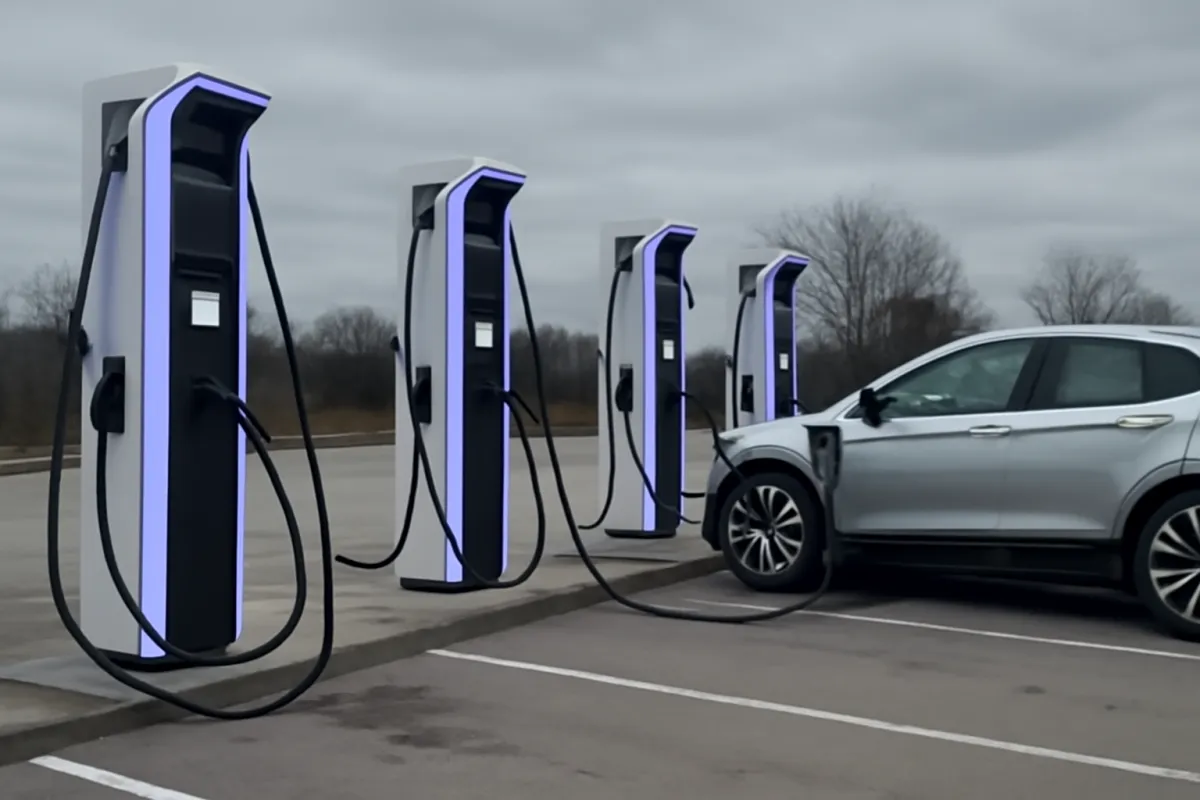
What's in this teardown
- What free EV charging actually means
- Where free EV charging exists
- Free charging at shopping malls and retail centers
- Free charging at grocery stores
- Free charging at hotels and destination stops
- Free charging at your workplace
- Free charging at car dealerships
- Municipal and public lot free charging
- Illustrative free charging speed by location
- How to find free EV charging with apps and maps
- Reading a listing to confirm a charger is free
- Free with a purchase, membership, or car brand
- The catch: free charging is usually slow
- Time limits, idle rules, and blocked stalls
- Where a free-charging month’s miles come from
- Etiquette at a free charger
- Is free charging worth the wait
- A worked example: a month leaning on free charging
- How free charging fits your overall plan
- Common mistakes when hunting for free charging
- The bottom line
Short answer: Free EV charging is most common at shopping malls, grocery stores, hotels, workplaces, car dealerships and some municipal lots, offered as an amenity to keep you on site. Find it by filtering a charging app or your car's map to free stations along routes you already drive, then confirm the connector, working status and time limits. Almost all of it is slower Level 2, an illustrative 25 to 40 miles per hour.
Free EV charging is real, more common than many new owners expect, and quietly one of the best ways to lower what an electric car costs to run, but it comes wrapped in conditions that are worth understanding before you build a routine on it. This article maps where free charging stations for EVs actually exist, from the mall parking lot to the hotel garage to your own workplace, shows you how to find the ones near you, and then does the less glamorous work of explaining the catch, because free charging is almost always slower and more limited than the paid kind, and knowing that is what turns it from a frustration into a genuine saving.
Read it as the opportunistic companion to our paid-charging coverage. Where our public charging cost teardown prices what you pay at a station and our walkthrough on using a public charger covers the mechanics of any session, this one is about the plugs that cost nothing: where they hide, how to spot them, what strings come attached, and when the slow speed makes free worth it versus when paying to get on with your day is the smarter move. You can run your own free-charging saving in about a minute with the companion on this page, and price the paid alternative in our cost calculator.
Key takeaways
- Free EV charging is most common at shopping malls, grocery stores, hotels, workplaces, car dealerships, and some municipal lots, offered as an amenity to attract or keep you on site.
- Almost all of it is slower Level 2 charging (an illustrative 25 to 40 miles of range per hour), because a host giving energy away wants cheap hardware and a low power draw, not expensive fast chargers.
- Find it by filtering a charging app or your car's map to free stations along routes you already drive, and confirm the connector, the working status, and any time limits before you rely on a spot.
- Much of it is free with a condition: a purchase, a loyalty membership, a hotel stay, an employer relationship, or a car brand's included-charging promotion, so the plug is free while the arrangement is a trade.
- Free charging is worth it when it happens passively during a stop you were making anyway, and stops being worth it the moment you detour, circle for a stall, or sit idle purely to save a few dollars of energy.
What free EV charging actually means
Free EV charging means exactly what it says at the plug, the electricity flows into your car and no one asks you to pay for it, but the arrangement around that free energy is rarely charity. In almost every case a host is giving the energy away because it buys them something else: your foot traffic in a store, your overnight stay at a hotel, your continued employment, your goodwill as a shopper looking at their cars. Understanding that trade is the whole key to using free charging well, because it tells you where free plugs appear (places that benefit from you lingering) and why they can vanish (when the amenity stops paying off for whoever installed it).
The practical way to think about a free charger is as a rate of zero cents per kilowatt-hour dropped into the same arithmetic you would run for any other charging. Where our home-charging cost teardown treats the driveway as the cheap anchor of ownership at an illustrative 15 cents per kWh, a free charger is that same math with the rate set to nothing, which makes any energy it adds pure saving against what you would otherwise pay. On the companion, setting your inputs shows that free energy is worth about {saveMonth} a month to you at your rates, which is the honest measure of what free charging is really doing for your budget.
The important mental correction is that free does not mean unlimited or reliable. A free charger is slower, less available, and more conditional than a paid one, precisely because no one is being paid to keep it running for you. That makes free charging an excellent supplement layered on top of a charging plan you control, and a poor foundation to build one on. The rest of this article is about extracting the real value from free charging while keeping that limitation in clear view.
Where free EV charging exists
Free charging is not scattered at random; it clusters at businesses and institutions that gain something from having you park on their property. The reliable categories, roughly in order of how often drivers actually meet them, are workplaces, shopping malls and retail centers, grocery stores, hotels and destination stops, car dealerships, and a patchwork of municipal lots, libraries, parks, and civic buildings. A few utilities, universities, and apartment complexes add free or bundled charging as a perk too. What unites them is that the charger is there to serve a stay you were already making, not to be a fuel stop in its own right.
That pattern is also your search strategy. Rather than hunting for free chargers as destinations, look for them at the places you already go: the supermarket you shop at weekly, the mall you visit on weekends, the office you park at every day, the hotel you booked for a trip. On the companion, at your driving and free-charging share, roughly {freeMiles} of your monthly miles could plausibly come from these opportunistic sources, which is the size of the prize worth organizing around. The sections below walk each category in turn, with the honest caveat that availability is intensely local and changes constantly, so treat the categories as where to look, not as a promise of what you will find.
One more framing helps before the tour: free charging splits into two flavors. The first is open free charging, a Level 2 plug anyone can use at no cost, often at retail or municipal sites. The second is conditional free charging, energy that is free only if you are a customer, a guest, an employee, or a specific car’s owner. Both are worth having; they just ask different things of you, and the difference matters when you are counting on a plug being available to you specifically.
Free charging at shopping malls and retail centers
Shopping malls and large retail centers are among the most common places to find open free charging, because the math works cleanly for the property: a set of Level 2 stalls costs relatively little to install and run, and the payoff is EV drivers who choose their center over a competitor and stay longer while the car tops up. You will typically find these stalls in a marked area of the parking structure or lot, offering an illustrative 25 to 40 miles of range in the couple of hours a shopping trip runs. That is rarely a full charge, but it is a meaningful top-up gained while you were spending time there anyway.
The realistic experience is that mall charging is convenient and genuinely free at many sites, but not guaranteed to be available when you arrive, because the stalls are popular and few relative to the lot. Treat it as a bonus you take when it is open rather than a stop you rely on. It pairs especially well with the kind of errand that keeps you parked for an hour or two, which is exactly the window a Level 2 charger needs to add useful range. For a driver without home charging, a weekly shopping trip that reliably adds 50 to 80 miles of free range can quietly cover a real slice of the month.
The watch-outs are the ordinary ones for shared free amenities. Some malls cap the free session with a time limit or validate charging only with a purchase or loyalty membership, so read the signage or the app listing before assuming it is unconditional. Others gate the garage after hours. And because the stalls are free, they fill up, so a busy weekend may leave none open. None of that undercuts the value; it just means mall charging belongs in the opportunistic column, taken when it lands in your day rather than planned as your primary source.
Free charging at grocery stores
Grocery stores follow the same logic as malls with an even better fit to the EV owner’s rhythm, because a grocery run is a predictable, repeated stop of roughly the right length for a Level 2 top-up. A growing number of supermarket chains and individual stores install a handful of free or low-cost Level 2 stalls near the entrance as a draw, betting that an EV driver will choose their store and perhaps shop a little longer while the car charges. For a weekly shopper, that is a recurring, passive top-up that requires no detour at all, which is the gold standard for free charging value.
The honest picture is that grocery charging is patchy and store-specific: one chain may offer it broadly while another offers none, and even within a chain it varies store to store. Some stalls are truly free, some are free only for loyalty members or with a minimum purchase, and some are simply low-cost rather than free. The way to know is to check the app listing or the signage at your specific store rather than assuming. Where it exists and is free, it is among the most convenient charging a driver can have, because it stacks onto a trip you make every week regardless.
Because grocery stalls are few and popular, etiquette matters here more than almost anywhere: the whole point is a quick top-up during a shop, so a car left parked and fully charged for hours defeats the amenity for everyone behind it. Get the range you need during your shop and move on. If a grocery store on your regular route offers free Level 2 charging, it is worth making a habit of, because the energy is free, the time is time you were spending anyway, and the saving compounds every single week.
Free charging at hotels and destination stops
Hotels and destination venues are a distinct and valuable category, because the stay is long, often overnight, which is exactly the window Level 2 charging needs to add real range or even a full charge. Many hotels now advertise EV charging as an amenity, and a meaningful share of it is free for guests, folded into the room rate the way parking or wifi often is. For a road tripper, a hotel with free overnight charging is close to ideal: you arrive, plug in, sleep, and leave in the morning with a full or near-full battery, having paid nothing extra for the energy. This is the destination-charging model that makes EV travel work between fast-charging stops.
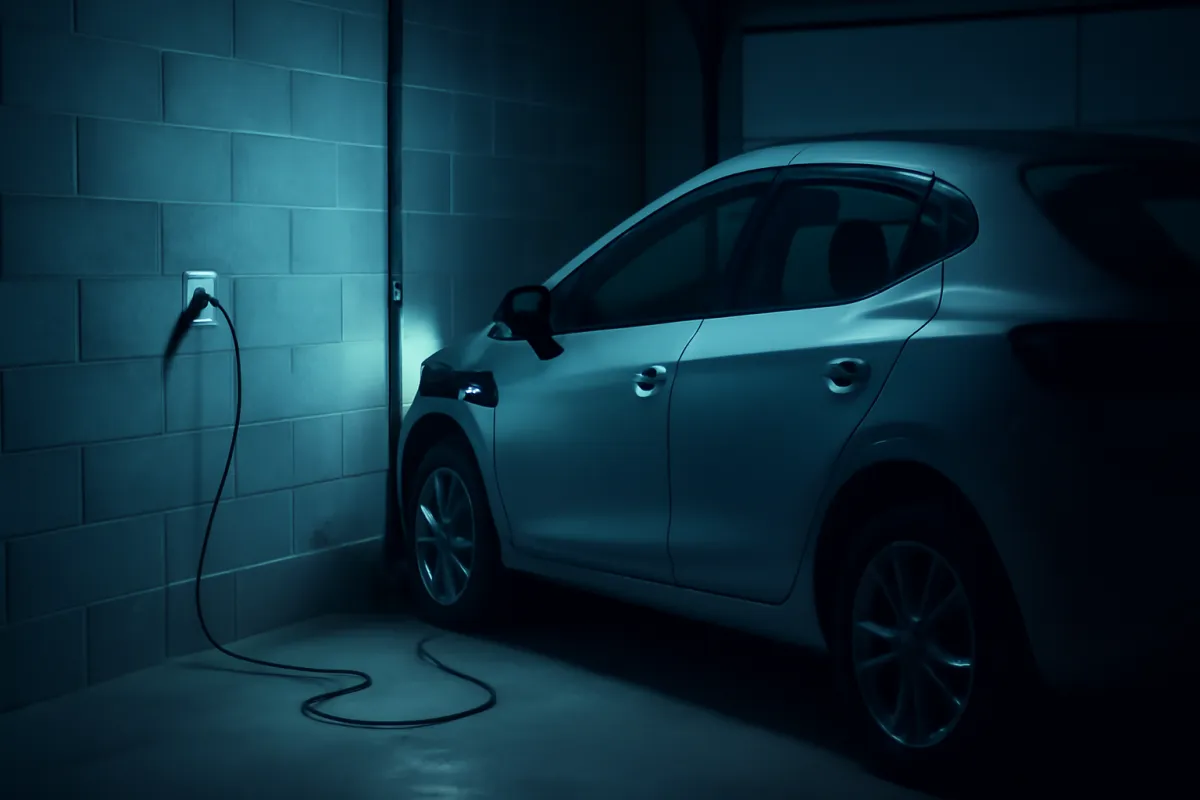
The caveats are worth knowing before you count on it. Hotel charging is frequently first-come-first-served with only one or two stalls, so a full hotel can mean no charger available even if the listing shows one. Some hotels charge for the energy or reserve the stalls for a loyalty tier, and some list a charger that turns out to be a single slow outlet. The reliable move is to confirm free charging when you book, not when you arrive, and to have a nearby public fast charger in mind as a backup, the same contingency our road-trip planning teardown builds into a full itinerary. Booked deliberately, a chain of hotels with free overnight charging can carry the charging load of a multi-day trip almost entirely.
Beyond hotels, other destinations follow the pattern: some restaurants, wineries, ski resorts, campgrounds, museums, and tourist attractions install free Level 2 charging to attract visitors who will stay for hours. The value is identical to the hotel case, energy added free during a stop you were making for its own sake. The unpredictability is identical too, so treat destination charging as a welcome bonus you confirm ahead rather than a fixture, and you will be pleasantly surprised often enough to make checking worthwhile.
Free charging at your workplace
For a commuter, free workplace charging is very often the single most valuable free charging there is, because it lines up perfectly with the eight or nine hours the car sits parked in a lot doing nothing. A Level 2 stall that adds an illustrative 25 to 40 miles of range per hour will comfortably cover a typical commute and then some over a workday, which means an employee with workplace charging can offset a large share of their monthly miles at zero personal cost. On the companion, that share shows up as roughly {freeKwh} free kilowatt-hours a month at your inputs, energy you would otherwise be buying somewhere.
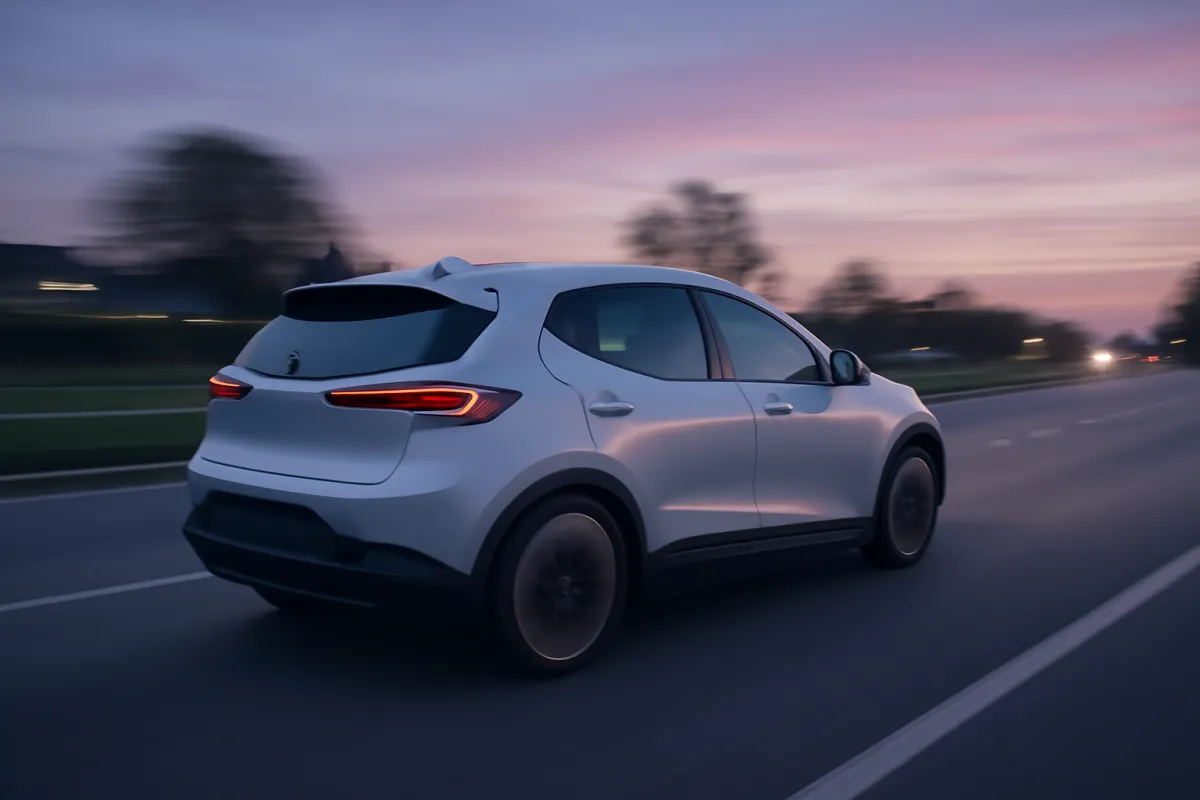
The reason workplace charging is so valuable is that it is passive in the best sense. You plug in on arrival, forget about it, and unplug when you leave, with no detour, no waiting, and no reorganizing of your day, which is what separates high-value free charging from the kind that costs you time. For a driver who can charge at work most weekdays, the office becomes the practical base load, with home charging as the controllable supplement, an inversion of the usual pattern that can push a commuter’s blended cost per mile close to the floor. This is the same free-charging-as-a-bonus principle our home-charging cost teardown flags, applied to the place most drivers spend their weekdays.
The realistic frictions are social and logistical rather than technical. Popular workplace chargers can be oversubscribed, leading to sign-up sheets, move-your-car-at-noon norms, or app-based queues, and the free perk can be capped or eventually converted to a paid amenity as EV adoption rises among staff. Where the charging is genuinely passive, it is close to pure value; where it requires mid-day car shuffling, some of that value leaks back out in hassle. Still, if your employer offers free charging, it is almost always worth using as your primary weekday top-up, and worth asking for if they do not yet.
Free charging at car dealerships
Car dealerships are a frequently overlooked source of free charging, installed partly to serve their own EV service and sales customers and partly as a public-facing amenity that signals the brand takes EVs seriously. Many dealerships offer Level 2 charging and some have a DC fast charger on site, and policies on public access range from fully open to customers-only to available only during business hours. For a driver whose route passes a dealership, it can be a handy opportunistic top-up, and for someone doing business there, service, a test drive, a purchase, the charging is a natural free add-on.
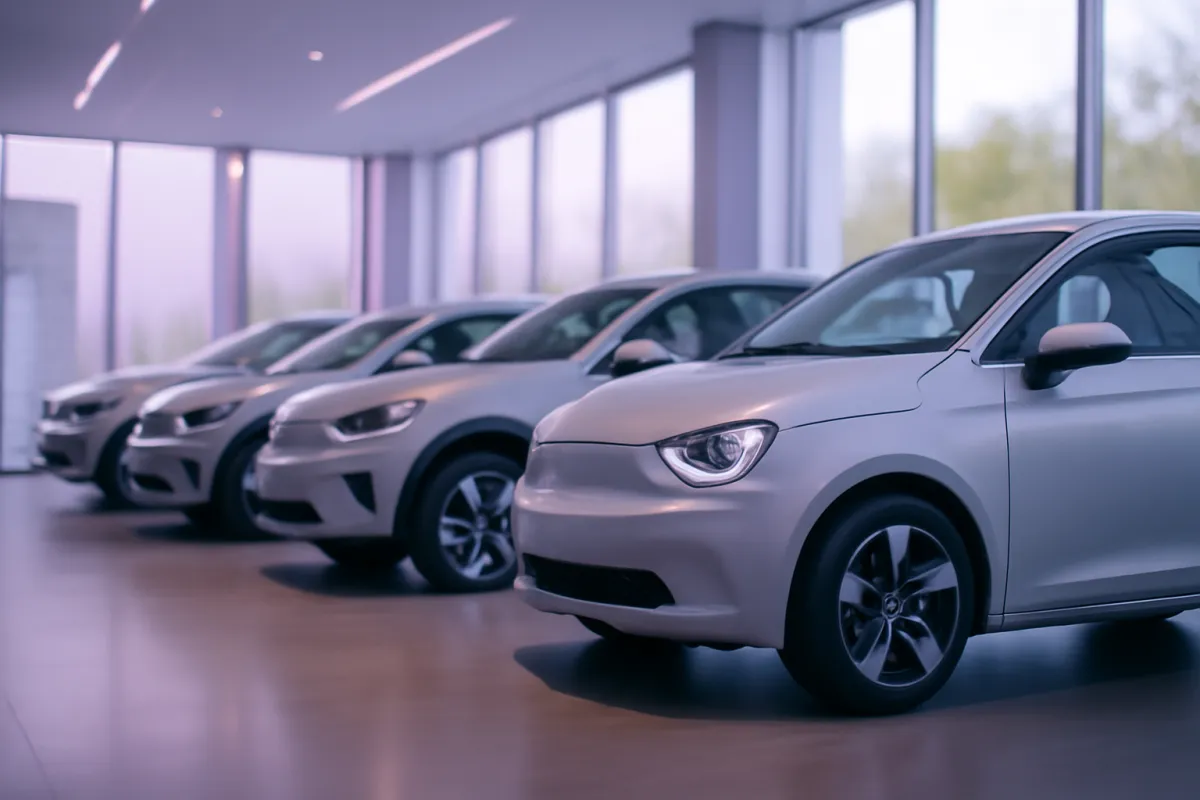
The honest caveat is that dealership charging is entirely at the dealer’s discretion and varies enormously, so it belongs firmly in the bonus column rather than the plan. A charger listed as public may be gated after hours, reserved for customers, or occupied by inventory being prepped. The reliable approach is to confirm access in a charging app or with a quick call before you rely on one, especially outside business hours when the lot may be locked. Some automakers also bundle free or discounted charging at their dealer networks for buyers of their EVs, which shades into the brand-promotion category covered below.
Where a dealership charger is open and on your way, it is worth having on your mental map as a fallback, particularly because dealerships are often located on commercial strips near other errands. But its unpredictability makes it a poor primary source: you cannot count on a specific dealer stall being free and available at the moment you need it. Use it the way you would any conditional free charger, as a welcome opportunity when it lines up, backed by a paid option you actually control for the times it does not.
Municipal and public lot free charging
A quieter but real category is free charging installed by cities, towns, and public institutions as a public service or an early-adoption incentive. This shows up at municipal parking lots and garages, libraries, community centers, parks, transit stations, government buildings, and sometimes on-street in EV-friendly neighborhoods. The motive is usually policy rather than commerce, encouraging EV adoption, supporting residents without home charging, or meeting a climate commitment, which means the terms can be genuinely open, though often with a time limit to keep the stalls turning over.
The value of municipal charging is highest for drivers without reliable home charging, for whom a free public Level 2 stall near home can serve as a partial substitute for a driveway plug. It is slow, so it suits a car parked for hours, an overnight on-street stall, a long stop at a library or civic building, an all-day municipal garage. Because these programs are funded rather than profit-seeking, they can also be more stable than a retailer’s amenity, though they are equally subject to being capped, metered, or converted to paid as usage grows and budgets tighten.
The practical frictions are availability and rules. Municipal stalls are few and popular, time limits are common and sometimes enforced, and some require a city permit, a resident registration, or a specific payment card even when the energy itself is free. As always, the way to know is to check the specific site’s listing and signage rather than assume. For a driver who cannot charge at home, mapping the free municipal options near their address is a genuinely worthwhile exercise, because a reliable free Level 2 stall a few blocks away changes the ownership math the way our is-an-EV-worth-it teardown shows home charging does for everyone else.
Illustrative free charging speed by location
The defining trait of nearly all free charging is that it is slow, and lining up the illustrative speeds against a paid fast charger shows exactly how slow. Free charging is almost always Level 2, so the range it adds per hour is a fraction of what a DC fast charger delivers. Every bar below is illustrative miles of range added per hour at a typical 30 kWh per 100 miles, and the paid DC fast bar is there only for scale, to make the gap honest.
Illustrative range added per hour, free chargers versus a paid fast charger
Miles of range per hour at 30 kWh per 100 miles. Free charging is the four Level 2 bars; the paid DC fast bar is shown only for scale.
Widths are the raw ratio of miles per hour against a 500 mi/hr fast-charging reference. Free charging is the slow end by design, which is exactly why it fits long stops where the car is idle anyway, not quick ones. On the companion, adding 100 miles at your selected free power takes about {hrsPer100}.
The chart carries the whole strategy for using free charging. Because a free Level 2 stall adds range at a small fraction of fast-charging speed, it only makes sense when the car is going to sit for hours regardless: a workday, an overnight, a long shop, a full day in a municipal garage. Trying to use free charging the way you would a fast charger, waiting on the car for a quick top-up, wastes the very time the free plug was supposed to save you money on. Read the chart as the reason free charging belongs to long, passive stops, and lean on our charge-time teardown for the full math of how power and battery size set the wait.
How to find free EV charging with apps and maps
Finding free charging is a filtering problem, and the tools are the same charging apps and in-car maps you would use for any station, with one crucial setting: filter by cost so only free sites show. Most public charging maps let you narrow results to free stations, and community-driven apps go further, adding user check-ins on whether a listed free charger is actually working, actually free, and actually unblocked, which is worth its weight when a listing and reality have drifted apart. Your car’s built-in navigation often carries the same underlying station data and can route you to a filtered result.
The higher-value habit is to search along the places you already go rather than treating free chargers as destinations. Filter the map for free stations near your workplace, your usual grocery store, the mall you frequent, and the hotels on a planned trip, and you build a personal set of passive top-ups that cost you no extra driving. On the companion, the whole exercise is worth about {saveMonth} a month at your rates, which is the number that tells you how much effort the search deserves. Chasing a free plug across town almost never clears that bar; mapping the free options on routes you already drive almost always does.
Before you rely on any listed free charger, run three quick checks, the same discipline our walkthrough on using a public charger applies to paid stations. Confirm the connector matches your car, since a free stall your car cannot plug into is no use. Read the most recent user check-ins for reports that it is working and free, because listings go stale and a charger flagged free may have gone paid or offline. And note any time limit or access condition in the listing so you are not surprised on arrival. A minute of reading the listing is what separates a smooth free top-up from a wasted detour to a broken or blocked stall.
Reading a listing to confirm a charger is free
A station listing carries more than a pin, and reading it properly is what keeps free charging from turning into a wasted trip. The first thing to confirm is the cost field itself, which on most apps distinguishes free sites from paid ones explicitly, sometimes with a dollar figure and sometimes with a plain free label. Be a little skeptical of an unconfirmed free tag, because hosts change pricing and a stall listed free last year may now bill for energy; the recent user check-ins are your reality check on whether the free label still holds.
Next, read the access and restriction notes, because free rarely means unconditional. Listings often flag whether a charger is public or restricted to customers, employees, or guests, whether it is behind a gate or inside a garage with limited hours, and whether a time limit or a required app or membership applies. A charger that is free but customers-only, or free but gated after 6 p.m., is a very different proposition from one that is openly free around the clock, and the listing usually tells you which if you read past the pin. The connector and power details matter too, since they set what your car can use and how fast.
Finally, weigh the freshness and volume of user reports. A free charger with many recent positive check-ins is a far safer bet than one with a single old listing and no confirmation, especially on a route where you have no backup. Community notes frequently surface the details that make or break a stop: the stall that is always blocked by gas cars, the one that needs a validation from the front desk, the unit that has been broken for months. Treating the listing as a document to read rather than a pin to trust is the single habit that makes free charging dependable enough to plan a stop around.
Free with a purchase, membership, or car brand
A large share of free charging is not open to everyone but comes bundled with something you buy or belong to, and understanding these conditional offers is what lets you use them deliberately. The most common condition is a purchase or patronage: a store or restaurant that validates free charging with a receipt, a hotel that includes it in the room rate, a mall that ties it to a loyalty membership. The energy is genuinely free, but only because you are a paying customer of the host, which is a fair trade when you were going to be their customer anyway and a poor deal if you are buying something you did not want just to charge.
A second condition is a network or loyalty membership. Some charging networks and retailers offer free or discounted charging as a perk of a paid membership or a rewards tier, where the free energy is really a benefit you already paid for with the membership fee. The math here is the same break-even our public charging cost teardown applies to any membership: it pays only if the value you extract exceeds the fee, so free-with-membership charging is worth it for heavy users of that program and a loss for occasional ones.
The third condition is a car brand’s included-charging promotion. Automakers periodically bundle a period of free or discounted charging on a particular network with the purchase or lease of their EVs, as a sales incentive. These are real and valuable while they last, but they are time-limited and specific to the car, network, and terms of the promotion, so they are a nice bonus for the covered period rather than a permanent feature of ownership. The honest way to treat all three conditional types is to use them fully where the condition is one you would have met anyway, and to avoid letting the free charging tempt you into a purchase, membership, or car choice that does not stand on its own.
The catch: free charging is usually slow
The single most important thing to internalize about free charging is that it trades speed for price, because the two are linked at the level of the hardware. Free charging is almost always Level 2, running at an illustrative 7 to 19.2 kilowatts and adding roughly 25 to 40 miles of range per hour, rather than DC fast charging, which adds hundreds of miles in the same time. The reason is economic, not accidental: a host giving energy away wants the cheapest hardware and the lowest power draw, and a Level 2 unit is far cheaper to buy, install, and run than a fast charger, which pulls enormous power and triggers steep utility demand charges that no one wants to eat for free.
This is why free charging fits long, passive stops and fits quick top-ups poorly. A Level 2 charger is designed to trickle range into a car that is going to sit for hours anyway, at work, at a hotel, during a shop, and in that context its slowness costs you nothing because you were not waiting on it. Try to use it the way you would a fast charger, sitting in the car for a quick fill, and the slow speed becomes the whole experience, an hour of waiting for what a fast charger would add in minutes. On the companion, adding 100 miles at your selected free power takes about {hrsPer100}, which makes the point in your own numbers: free energy is slow energy, and the slowness is the price of the price.
There is a deeper reason not to resent the slowness: fast free charging would not survive. If free chargers were fast, they would be swamped, expensive for the host, and gone within a year, because the economics of giving away high-power energy do not work. The slowness is part of what keeps free charging available at all, by matching it to stops where speed does not matter and by naturally limiting how much any one driver can take. Accept free charging as slow-by-design and you use it correctly; expect it to be fast and you will be perpetually frustrated by the thing that is actually saving you money.
Time limits, idle rules, and blocked stalls
Beyond slowness, free charging carries a set of practical limitations that separate a smooth free top-up from a frustrating one, and knowing them ahead of time is half the battle. The first is time limits: because free stalls are scarce and popular, many hosts cap sessions, two hours at a mall, three at a garage, to keep the stalls turning over, and some enforce it with move-along notices or even towing. A time limit is usually fine given that free charging suits stops of exactly that length, but it means you cannot treat a free stall as an all-day parking spot for the car, only for the charge.
The second limitation is availability, which is the real constraint on free charging far more than the energy itself. Free stalls are few relative to demand, so arriving to find them all occupied is common, especially at popular sites during peak hours. This is the core reason free charging cannot be a foundation: you cannot count on a specific free stall being open at the moment you need it. The fix is to treat free charging as opportunistic, taking it when it is available and having a controllable backup, home charging or a nearby paid station, for when it is not.
The third limitation is the blocked stall, in two forms. A gas car parked in an EV charging spot, sometimes called being ICE-d, occupies the stall without using it, and a fully charged EV left sitting past the point it stopped charging does the same. Both are why etiquette matters so much at free chargers, and both are why the user check-ins that flag chronically blocked sites are worth reading. A free charger that is reliably free but reliably blocked is not actually available, so weigh the reports on availability as heavily as the ones on price. Plan around these three limits and free charging is a pleasure; ignore them and it becomes the unreliable thing its critics complain about.
Where a free-charging month’s miles come from
To make free charging concrete, it helps to see how it fits into a real driver’s month rather than treating it as an all-or-nothing thing. Almost no one charges entirely for free; instead free charging is a slice layered onto a base of home and paid charging. The illustrative breakdown below shows how the monthly miles might divide for a driver who leans on free charging where it is available, keeping home charging as the base and paying for the rest.
Where a free-charging driver's monthly miles come from
Illustrative share of monthly miles by charging source for a driver who uses free charging opportunistically.
Illustrative shares summing to 100 percent. Free charging (the two middle segments) covers a real slice while home charging stays the base and paid public fills the gaps. On the companion, at your inputs about {freeMiles} of your monthly miles come free.
The shape is the lesson: free charging is a supplement, not a foundation. Home charging remains the controllable base a driver actually relies on, the two free segments cover a meaningful and genuinely free slice, and paid public charging fills the gaps where free was not available. A driver who inverts this, trying to run mostly on free charging, ends up hostage to availability and slowness; a driver who layers free charging onto a solid home base extracts the saving without the fragility. Adjust the free-charging share on the companion and you can see how much of your own month a realistic amount of free charging covers, and what it is worth.
Etiquette at a free charger
Free charging runs on two things: a host’s goodwill and drivers being decent to each other, and both erode fast when etiquette slips, so the manners here are not just politeness but the thing that keeps free charging available. The core rule is to treat a free charger as a shared amenity rather than a personal parking spot. Plug in, get the top-up you need, and move your car when it is done or when you are, so the next driver can use the stall. A fully charged car left sitting in a scarce free stall for hours is the single behavior that turns free charging from a community benefit into a source of resentment.
A few specific courtesies follow from that principle. Do not unplug someone else’s actively charging car unless the site clearly permits it and the car is visibly finished. Respect posted time limits, since they exist to keep the stalls turning over for everyone. Park squarely so you are not blocking a neighboring stall or tempting a gas car into the spot, and never park a non-charging car in a charging stall yourself. If a unit is broken, report it through the app or to the host so it gets fixed rather than sitting dead, which quietly shrinks the free capacity for everyone.
There is a self-interested reason to hold to all of this beyond simple decency: free charging exists only as long as it works for the host and the community, and bad behavior is exactly what makes a host cap it, meter it, or remove it. Every driver who hogs a stall, blocks a spot, or leaves a mess is nudging a free charger toward becoming a paid one or disappearing. The same etiquette our public-charger walkthrough lays out for paid stations applies with extra force where the energy is free, because there is no paying customer relationship to fall back on, only goodwill, and goodwill is easy to spend and hard to rebuild.
Is free charging worth the wait
The honest answer to whether free charging is worth it turns entirely on whether the wait costs you anything, and this is the judgment that separates smart free charging from the frustrating kind. When free charging happens passively during a stop you were making anyway, at work, at a hotel overnight, during a grocery shop, the slow speed costs you nothing, because you were not waiting on the car. In that case free charging is close to pure value: real energy saved with no time lost, which is exactly the saving the companion is quantifying at about {saveMonth} a month for you, and {saveYear} across the year.
Free charging stops being worth it the moment the wait or the detour costs more than the energy saves. Circling a mall lot for a free stall, driving across town to a free charger, or sitting idle purely to save a few dollars of energy are all cases where your time and the extra miles usually outweigh the saving. A useful test is simple: if the free charge fits inside something you were already going to do, take it; if you are reorganizing your day around it, the paid plug that lets you get on with your life is often the better deal. Our public charging cost teardown prices what that paid alternative actually costs, so you can weigh it against the free option honestly.
The deeper point is that free charging is a supplement whose value is highest when it is invisible, folded into stops you were making regardless, and lowest when it becomes a project. On the companion, weighing the {saveMonth} monthly saving against the {hrsPer100} it takes to add 100 miles makes the trade explicit: the saving is real, but it is only worth it if the hours are hours you were spending anyway. Used that way, free charging is one of the better small levers in EV ownership; chased as a goal in itself, it costs more than it saves. The math is the same one our is-an-EV-worth-it teardown applies to the whole ownership case: the saving is real, and it is a property of how you charge, not a headline number.
A worked example: a month leaning on free charging
Numbers land harder as a story, so here is one month for a driver who uses free charging well. Say they drive about 1,000 miles a month, their car uses roughly 30 kWh per 100 miles, and they have free Level 2 charging at work most weekdays plus an occasional free top-up at their grocery store. Their commute and errands mean free charging plausibly covers about a quarter of their miles, with home charging as the base and a little paid public charging for the rest. That free quarter is roughly 250 miles a month gained at a rate of zero, which is the whole saving to price.
Run the arithmetic. Those 250 free miles need about 75 kWh of energy at 30 kWh per 100 miles. Priced against an illustrative 30 cents per kWh they would otherwise pay at a public Level 2 station, that free energy is worth roughly 22 dollars a month, or about 270 dollars across the year, all of it from charging that happened while the car was parked at work or the store anyway. The companion runs exactly this calculation on your own inputs, showing about {freeKwh} free kilowatt-hours and {saveMonth} saved a month at your numbers, so you can swap in your real mileage, rates, and free-charging share.
The lesson of the example is where the value comes from: not from any single dramatic free charge, but from a modest, passive slice repeated every week. The driver never detoured, never waited on the car, never reorganized a day around a plug; they simply used the free charging that landed in stops they were making regardless, and it quietly took a couple hundred dollars a year off their fuel bill. That is free charging working as intended, a supplement that compounds without costing time. A driver who instead chased free plugs across town for the same 270 dollars would likely spend more than that in time and miles, which is the whole difference between using free charging and hunting it.
How free charging fits your overall plan
The right place for free charging in an EV owner’s life is as the top layer of a plan whose base you actually control, and getting that hierarchy right is what makes free charging a benefit rather than a liability. The base, for anyone who can manage it, is home charging, the cheapest and most reliable energy a car can run on, priced in full in our home-charging cost teardown and set up in our home-charging walkthrough. On top of that base sits free charging as an opportunistic supplement, taken wherever it lands in your routine, and paid public charging as the gap-filler for trips and top-ups the first two do not cover.
That ordering matters because it puts the reliable, controllable sources at the foundation and the unpredictable, free ones where their unpredictability does no harm. A driver who builds this way is never stranded by a blocked free stall, because free charging was only ever a bonus; a driver who tries to run mostly on free charging is at the mercy of availability and slowness. For the specific case of a driver without home charging, the plan shifts, free and paid public charging carry more of the load, and mapping reliable free municipal or workplace options becomes genuinely important, but even then the principle holds: lean hardest on the sources you can count on.
Fitting free charging into the plan also means being honest that it can change. A workplace perk can be capped, a free mall stall can go paid, a brand promotion can expire, so a plan built on free charging staying free is fragile. The durable approach is to enjoy free charging fully while it lasts, take every passive top-up that lands in your routine, and never let it talk you out of a home setup or into depending on infrastructure you do not control. Treated as the flexible top layer it is best at, free charging lowers your costs without ever becoming a single point of failure, which is exactly the role it should play.
Common mistakes when hunting for free charging
A handful of recurring errors turn free charging from a quiet saving into a time sink, and avoiding them is most of what it takes to use it well.
- Chasing free plugs as destinations. Driving out of your way to a free charger usually costs more in time and miles than the free energy saves. Filter for free stations along routes you already drive, and take free charging where it lands rather than hunting it across town.
- Trusting a free label without checking. Hosts change pricing and chargers go offline, so a stall listed free may have gone paid or broken. Read the recent user check-ins to confirm it is still free, working, and unblocked before you rely on it on a low battery.
- Expecting free charging to be fast. Nearly all free charging is slow Level 2, and treating it like a fast charger by waiting on the car wastes the time it was meant to save. Use free charging only for long, passive stops where the car sits for hours anyway.
- Building a routine on availability you do not control. Free stalls are few and popular, so counting on a specific one being open is how you get stranded. Keep home charging or a paid station as the backup and let free charging be the bonus, not the base.
- Ignoring conditions and time limits. Free-with-purchase, customers-only, membership-gated, and time-capped offers all look like plain free on a pin. Read the access notes so you meet the condition you were going to meet anyway and are not surprised by a validation requirement or a two-hour cap.
- Letting free charging drive a bigger decision. A free-charging promotion is a nice bonus, not a reason to buy a car, join a membership, or shop somewhere you did not want. Let the underlying purchase stand on its own and treat the free energy as the extra it is.
Each mistake shares a root: treating free charging as a goal rather than a supplement. Keep it in the opportunistic column, layered on a plan you control, and every one of these errors dissolves.
The bottom line
Free EV charging is real and genuinely worth using, but only if you understand what it is: slow, conditional, unpredictable energy offered as an amenity by places that benefit from you parking there. It clusters at workplaces, malls, grocery stores, hotels, dealerships, and some municipal lots, almost always as Level 2 charging that adds an illustrative 25 to 40 miles of range per hour, and much of it is free only with a purchase, a membership, a stay, or a specific car. Find it by filtering a charging app or your car’s map to free stations along routes you already drive, confirm the connector, the working status, and any conditions before you rely on a spot, and mind the etiquette that keeps free charging available at all. Above all, treat it as the top layer of a plan whose base you control, home charging where possible, paid public charging for the gaps, and free charging as the opportunistic bonus it does best. Used that way, it quietly takes real money off your fuel bill; chased as a goal, it costs more than it saves. Run your own free-charging saving on the companion, price the paid alternative in our cost calculator, and the vague promise of free charging becomes your actual number.
This article is educational and independent, written by EV owners who like a good deal as much as anyone, not by any charging network, retailer, automaker, or property owner. Every charging speed, range figure, and dollar amount above is illustrative and shifts with your specific car and its efficiency, the individual charger, and your local rates, and the availability of any given free charger changes constantly and is entirely at the host’s discretion. Free-charging offers, access rules, time limits, and pricing are added and withdrawn all the time, so confirm that any station is actually free, working, and open to you before you rely on it, and never let a free plug talk you out of a charging setup you control. Nothing here is financial advice.
Frequently asked questions
Where can I find free EV charging?
Free EV charging most commonly turns up at places that use it as an amenity to attract or keep you on site: some shopping malls, grocery stores, hotels, workplaces, car dealerships, and a scattering of municipal lots, libraries, and parks. Almost all of it is slower Level 2 charging offered while you are parked and doing something else, not fast charging you wait around for. The single most reliable source for most drivers is a workplace that offers it, since it lines up with hours the car sits idle anyway. Availability is local and changes often, so the honest answer is that free charging exists in pockets rather than everywhere, and the way to find yours is to check a charging app filtered to free stations along the routes you already drive.
Is EV charging ever really free?
Yes, but almost always with a condition attached rather than as pure charity. The energy is genuinely free at the plug in many cases, though the host is usually buying something with it: your foot traffic at a store, your overnight stay at a hotel, your loyalty as an employee, or your attention as a car shopper at a dealership. Some offers are free only with a purchase, a loyalty membership, or a specific car brand's included-charging promotion. So the electricity can be free while the arrangement around it is a trade, which is worth understanding before you build a routine on it, because the free plug can disappear when the amenity stops paying off for whoever installed it.
How do I find free EV charging near me?
The practical tool is a public charging map or app that lets you filter stations by cost, since most of them flag free sites explicitly. Open the map, filter to free stations, and look along the places you already go rather than driving across town to chase one. Your car's built-in navigation often carries the same station data, and community-driven apps add user notes on whether a listed free charger is actually working and unblocked. Confirm the connector matches your car and read recent check-ins before relying on a spot, because a free charger that is broken, occupied, or blocked by a gas car is no charger at all when you arrive on a low battery.
Why is free EV charging usually slow?
Because free charging is almost always Level 2, running on 240 volt power at roughly 7 to 19.2 kilowatts, which adds an illustrative 25 to 40 miles of range per hour rather than the hundreds a DC fast charger delivers. The economics explain it: a host giving energy away wants cheap hardware and a low power draw, and Level 2 units are far cheaper to buy and run than fast chargers, which pull enormous power and trigger steep utility demand charges. Free charging is designed to top you up gently while you shop, work, or sleep, not to fill a battery quickly. That is why it fits long stops where the car is idle anyway and fits road trips poorly, where you actually need speed.
Do car dealerships offer free EV charging?
Many do, both to serve their own service customers and as a goodwill amenity, and some are open to any EV driver while others are reserved for customers or after-hours restricted. The chargers are frequently Level 2, sometimes with a DC fast charger on site that may or may not be available to the public. Because policies vary widely by dealership and brand, it is worth confirming in a charging app or with a quick call before you count on one, especially outside business hours when the lot may be gated. A dealership charger is a fine opportunistic top-up if it is on your way, but its availability is entirely at the dealer's discretion, so treat it as a bonus rather than a fixture in your plan.
Is free workplace EV charging worth it?
For a commuter it is often the single most valuable free charging there is, because it lines up perfectly with hours the car sits parked and can cover a large share of daily miles at zero personal cost. Illustratively, a driver who charges free at work for a 30 mile round-trip commute might offset most of a month's charging, worth a meaningful amount against public or even home rates over a year. The value is highest when the charging is passive, plugged in on arrival and forgotten until you leave, rather than something you have to move your car for mid-day. If your employer offers it, it is usually worth using as your primary weekday top-up, while keeping home charging as the base you control.
Is free EV charging worth the wait?
It depends entirely on whether the wait costs you anything. When free charging happens passively while you were going to be parked anyway, at work, at a hotel overnight, during a grocery run, the value is close to pure, because the slow speed does not cost you time you wanted. It stops being worth it the moment you are detouring, circling for a stall, or sitting idle purely to save a few dollars of energy, since your time and the extra miles usually outweigh the saving. A rough test: if the free charge fits inside something you were already doing, take it; if you are reorganizing your day around it, the paid plug that lets you get on with your day is often the better deal.
What is the etiquette at a free EV charger?
The core courtesy is to treat a free charger as a shared amenity rather than a personal parking spot: plug in, get the top-up you need, and move your car when you are done so the next driver can use it. Do not leave a fully charged car sitting in a free stall for hours past the point it stopped charging, especially where stalls are scarce, and do not unplug someone else's actively charging car unless the site clearly permits it and the car is finished. Park so a gas car is not tempted into the spot, report a broken unit so the host can fix it, and respect any posted time limits. Free charging runs on the host's goodwill and on drivers being decent to each other, so the behavior that keeps it available is the same behavior that makes it pleasant.