What's in this teardown
- Why this question keeps coming up
- What “catching fire” means for each kind of car
- How a gasoline car fire starts
- How a lithium-ion battery fire starts: thermal runaway
- What actually triggers thermal runaway
- Are EVs more likely to catch fire? What the research actually says
- Why the comparison is genuinely hard to measure
- Why an EV fire behaves differently once it starts
- Firefighting an EV versus a gasoline car
- Reignition and what it means for towing and storage
- Charging-related fires specifically
- Battery age, damage history, and risk over time
- Flood damage: the clearest documented trigger
- Manufacturer safeguards: recalls, monitoring, and design
- Does weather itself cause fires?
- Plug-in hybrids: a genuinely different category
- What you can actually control as an owner
- A worked scenario: what actually happened
- How insurers actually treat this risk
- How this fits the rest of the ownership picture
- Common mistakes and misconceptions
- Where your own risk factors actually sit
- A practical checklist
- The bottom line
Short answer: Most available safety research points the same direction: electric cars are not more likely to catch fire than gasoline cars, and some analyses find gasoline vehicles catch fire more often per vehicle on the road. Treat any specific number you see quoted as a claim to verify, not a settled fact. What is well documented is that when an EV battery fire does happen, it behaves differently: it starts from a different mechanism, it can be harder to extinguish, and it can reignite after the flames first go out.
Every few months a video of a burning electric car circulates, and it is a genuinely unsettling thing to watch. A fire involving a vehicle that can store the energy of a few sticks of dynamite in a sealed box under the floor looks and feels different from the fires most of us grew up seeing. The question that follows is a fair one: does an electric car actually carry more fire risk than the gasoline car it replaced, or does it just look scarier when it happens?
This teardown answers that question by mechanism rather than by headline. It explains how a lithium-ion battery fire actually starts, how that differs from how a gasoline car catches fire, what the available safety research says about relative frequency, and why the honest answer resists being compressed into one number. Then it moves to the practical half: what actually triggers these events, what firefighters and manufacturers do differently because of them, and what you can control as an owner. Our battery replacement teardown covers what is physically inside the pack this article keeps referring to, and our EV insurance teardown covers how insurers price risk around it.
Key takeaways
- Most available safety research finds electric cars are not more likely to catch fire than gasoline cars, and some finds the opposite; the exact gap is contested and changes with the dataset, so distrust any single confident statistic.
- A gasoline fire is fed by a volatile liquid fuel and oxygen. An EV fire is driven by thermal runaway, a self-sustaining chemical reaction inside damaged or defective battery cells that does not need an external ignition source once it starts.
- The real, well-documented difference is what happens after ignition: an EV battery fire can burn hotter, is harder to extinguish with water alone, and can reignite hours or days later even after it appears to be out.
- The clearest known triggers are severe physical damage, manufacturing defects, electrical faults, and water intrusion from flooding, not ordinary charging or ordinary weather.
- Owners control more of this risk than headlines suggest: avoiding damaged or recalled packs, using certified charging equipment, and treating a battery warning as urgent are the levers that actually matter.
Why this question keeps coming up
Part of the answer is simple availability bias. A burning gasoline car is common enough that it rarely makes the news outside a local report, while a burning electric car is still novel enough to go viral, especially if it reignites on camera or if firefighters are shown dousing it for an unusually long time. Seeing more footage of one kind of fire does not mean that kind of fire happens more often; it means it is more newsworthy right now, which is a very different thing.
The other part is legitimate. EV battery fires genuinely do behave differently once they start, in ways that are worth understanding rather than dismissing as media hype. The honest version of this article has to hold both truths at once: the viral-video effect is real and distorts perception, and the underlying mechanism really is different and does carry some genuinely distinct risks. Flattening either one into the other is how you end up either panicking unnecessarily or dismissing a real safety topic.
What “catching fire” means for each kind of car
Before comparing frequency, it helps to be precise about what each type of fire actually is, because they are different events wearing the same word.
A gasoline car fire is, mechanically, a fuel fire. It needs a flammable liquid, an ignition source, and oxygen, and it is typically triggered by a fuel line rupture, an electrical short near the fuel system, an overheated component igniting leaked fluid, or a collision that ruptures the tank. Remove any one of those three ingredients and the fire stops. That is why a gasoline fire is usually extinguishable with standard methods relatively quickly, once the fuel source is cut off or exhausted.
An EV battery fire is a different kind of event entirely. It does not need an external ignition source or an oxygen supply in the way a fuel fire does, because the reaction driving it is happening inside the cells themselves. That distinction, a fire that has to be fed from outside versus a reaction that can sustain itself from inside a sealed battery cell, is the single most important mechanical fact in this entire topic.
How a gasoline car fire starts
Worth walking through briefly, because comparing to it is the whole point of the next section. A typical gasoline fire traces to one of a handful of causes: a fuel system leak meeting a hot surface or spark, an electrical short in aging wiring, an overheated catalytic converter igniting nearby debris, or fuel escaping and igniting after a serious collision. Modern gasoline cars are engineered hard against all of these, with crash-rated fuel tanks, breakaway fuel lines, and fused electrical circuits, which is a large part of why gasoline car fires, while not rare, are usually a contained and well-understood event for first responders.
The fuel itself is the hazard. Gasoline is a volatile liquid that ignites easily and burns fast, but it also burns out: once the available fuel is consumed or isolated, the fire has nothing left to feed on.
How a lithium-ion battery fire starts: thermal runaway
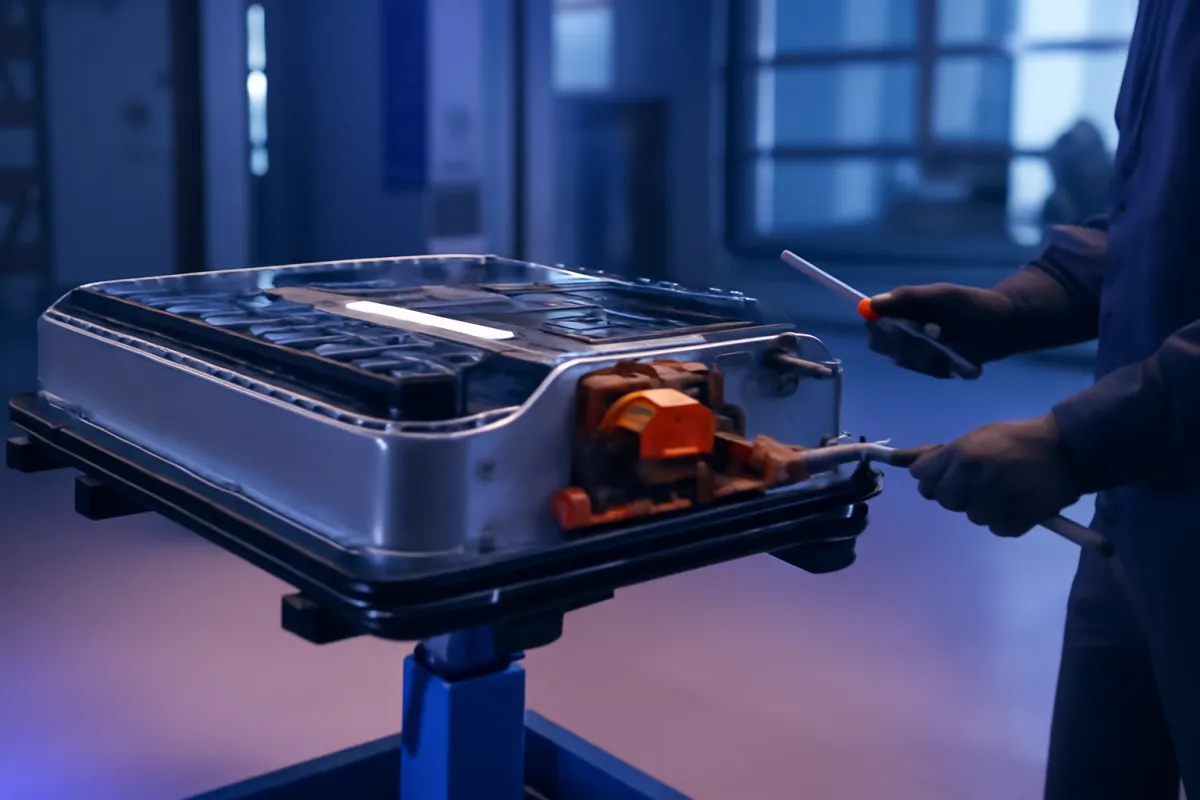
This is the mechanism behind nearly every EV battery fire, and understanding it is what makes the rest of this teardown make sense. A lithium-ion cell stores energy in a tightly packed chemical structure. If a cell is damaged, defective, overcharged, or overheated past a critical threshold, an internal chemical reaction begins that generates heat faster than the cell can dissipate it. That heat raises the temperature further, which accelerates the reaction, which generates more heat. It is a feedback loop, which is why it is called thermal runaway rather than simply overheating.

Once one cell enters runaway, the heat it generates can push neighboring cells past their own threshold, and the reaction can propagate through the pack cell by cell. A modern EV’s thermal management system and battery management software exist largely to prevent exactly this: monitoring individual cell temperatures and voltages, cooling the pack actively, and isolating or shutting down a cell group that starts to misbehave before the cascade can start. That system is also why most developing faults are caught and resolved, quietly, long before they ever become a fire you hear about.
What actually triggers thermal runaway
Four categories account for nearly every real-world case, and none of them is “the car was simply driving along and charging normally.”
Physical damage. A severe collision, a hard impact to the underbody from road debris or a curb, or any event that punctures or crushes the pack enclosure can physically damage individual cells, which is the most common single trigger behind the dramatic post-crash fires that make headlines.
Manufacturing defects. A contamination or structural flaw introduced during cell production can create an internal short circuit that develops slowly, sometimes showing up weeks or months after the vehicle left the factory. This is the category behind most EV battery recalls, where a manufacturer identifies a defect pattern across a production batch and proactively replaces or repairs the affected packs before a fault develops.
Electrical or charging faults. A damaged charging cable, a poorly installed home circuit without proper protection, or a fault inside the vehicle’s own charging electronics can, in rare cases, deliver current the pack was not designed to safely absorb.
Water intrusion, especially flooding. Saltwater or floodwater reaching internal battery components can corrode connections and create short circuits that develop over hours, days, or even weeks after the exposure, which is why flood-damaged EVs are treated as a distinct, serious hazard category by fire services and insurers alike.
Illustrative share of documented EV fire triggers, by category
A typical breakdown reported across safety investigations, shown to illustrate proportion rather than as a precise industry figure. Real shares vary by dataset and model.
Read this for structure, not precision: ordinary, undamaged, properly maintained charging sits outside all four of these categories. Every documented trigger involves damage, a defect, or water intrusion, not routine use.
Are EVs more likely to catch fire? What the research actually says
Here is where this teardown has to be most careful, because this is exactly the question people search for a single clean number to answer, and no honest single number exists. Various safety-research bodies, insurance data providers, and vehicle-recall analysts have attempted to measure fire incidents per vehicle on the road or per mile driven, and the commonly reported conclusion across most of this work is that electric cars are not more likely to catch fire than gasoline cars. Several widely cited analyses find the opposite is true: gasoline and hybrid vehicles show meaningfully higher fire incident rates per vehicle than battery electric vehicles.
Treat any specific percentage or ratio you see quoted, including from this article if one ever appeared here, as a claim to check against its original source rather than a settled fact. The reason is not that the research is untrustworthy, it is that the measurement itself is genuinely hard: EV fleets skew newer on average than the full gasoline fleet, which affects comparisons since newer vehicles of any kind tend to have fewer mechanical faults; the definition of a “fire incident” varies between datasets; and the much larger base of gasoline vehicles on the road for decades longer creates its own statistical noise. Two careful researchers using different datasets and different time windows can reach different numbers in good faith.
Why the comparison is genuinely hard to measure
A few specific distortions are worth naming, because they explain why you can find confident claims pointing in both directions.
Fleet age. The average electric car on the road today is newer than the average gasoline car on the road, and newer vehicles of any kind tend to have fewer age-related faults, which can make EV fire rates look artificially low in a simple comparison that does not control for vehicle age.
Sample size and history. Gasoline vehicles have been manufactured and driven for over a century, producing enormous historical datasets. Electric vehicles at meaningful volume are a much newer phenomenon, so the data is thinner and more sensitive to a handful of high-profile incidents.
What counts as a fire. Some datasets count any vehicle fire regardless of cause, including arson and post-collision fires from any source. Others try to isolate fires that originated from the drivetrain or battery specifically. These are not the same question, and conflating them produces misleading comparisons in both directions.
Severity versus frequency. A dataset can show EVs catch fire less often while also being true that, when they do, the event is more severe, harder to extinguish, and more resource-intensive for first responders. Both of those things being true at once is not a contradiction, and a lot of online argument comes from each side quoting only one half.
Why an EV fire behaves differently once it starts
This is the part of the topic that is genuinely, verifiably distinct, and it deserves more attention than the frequency debate, because it is where the practical differences actually live.
It burns hotter and is harder to extinguish. Thermal runaway releases its own oxygen as part of the chemical reaction, which means a battery fire can continue to burn even when starved of outside air in ways that would smother a conventional fire. Water remains useful, mainly as a cooling agent to slow the reaction and limit cell-to-cell propagation, but it does not extinguish the reaction the way it extinguishes a typical structure fire, and large volumes are often needed over an extended period.
It can reignite. Because the reaction can continue smoldering inside sealed cells that look visually extinguished from the outside, a damaged pack can reheat and catch fire again hours or, in documented cases, days after the original incident appeared to be resolved. This is the single most operationally significant difference for anyone handling a damaged EV, including tow operators, storage facilities, and insurers.
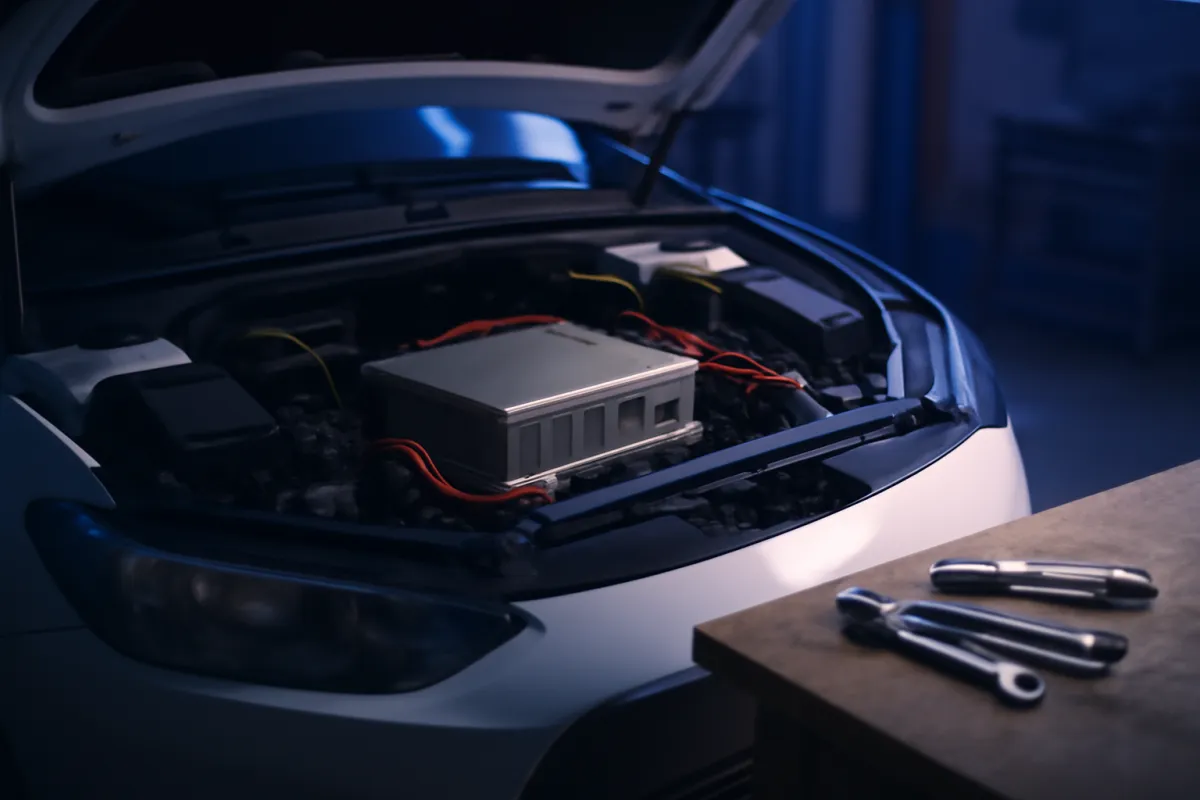
It requires different first-response handling. Fire services increasingly train specifically for EV incidents, which can mean using significantly more water over a longer duration, isolating the vehicle in an open area away from structures and other cars, and monitoring it for an extended period, sometimes many hours, after visible flames are gone, precisely because of the reignition risk.
Firefighting an EV versus a gasoline car
The operational differences are now well established enough that most fire departments carry specific guidance for them. A gasoline fire is typically approached as a fuel fire: control the source, apply foam or water to cool and smother it, and the event is generally resolved within a predictable window. An EV battery fire is approached as a sustained cooling operation: apply large volumes of water primarily to cool the pack and slow propagation between cells, expect the process to take considerably longer, and do not consider the vehicle fully safe the moment flames are no longer visible.
Some departments now use purpose-built tools for EV fires specifically, including submersion containers that can fully immerse a burning or recently burned vehicle in water for an extended period to guarantee the reaction has fully stopped. None of this means EV fires are unmanageable, it means they are managed differently, and the firefighting community has adapted its procedures accordingly as the vehicle population has grown.
Reignition and what it means for towing and storage
A reignited EV is not a hypothetical, it is a documented enough occurrence that it has reshaped how damaged electric vehicles are handled after any serious incident. A vehicle involved in a fire, a severe collision, or known flood exposure is typically recommended to be stored outdoors, away from structures and other vehicles, with monitoring, for a period that can extend well beyond what would be routine for a gasoline vehicle after an accident.
This has practical consequences beyond the fire itself. It affects where a damaged EV can be towed to, how quickly an insurer can close a total-loss claim, and why some storage facilities and tow operators now charge differently for handling a damaged electric vehicle. None of that reflects ordinary operation, only the aftermath of real damage, but it is worth knowing if you are ever on the other side of a collision or flood event with an EV involved.
Charging-related fires specifically
Charging itself is the scenario people worry about most, since it is the daily routine moment where the car and the electrical system are both actively engaged. The documented reality is reassuring with a real caveat attached. A properly installed, manufacturer-certified charger connected through a correctly wired and protected circuit, used with an undamaged cable on a healthy vehicle, is not a documented meaningful fire risk on its own.
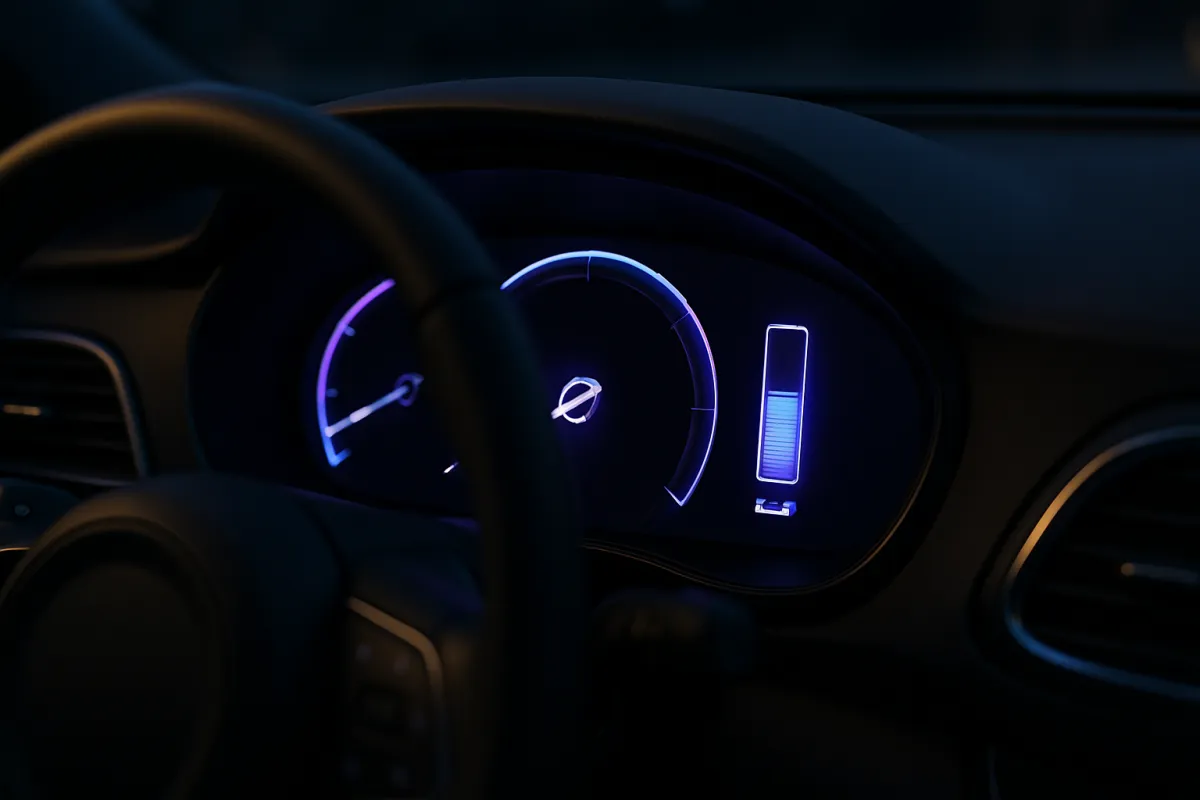
The real-world charging-related incidents that do occur trace back to identifiable faults: a damaged, cracked, or counterfeit charging cable; a home circuit installed without the ground fault protection a charging circuit requires; a loose or corroded connection that arcs under sustained load; or, less commonly, a pre-existing fault in the vehicle’s own pack that happens to surface while it is plugged in, which is coincidence of timing rather than causation by the charger. None of those is an argument against charging an EV, they are an argument for using certified equipment and proper installation, which is true of any household electrical circuit carrying meaningful current.
Battery age, damage history, and risk over time
A pack’s fire risk is not static over the vehicle’s life, and the trajectory is worth understanding. A new, undamaged, properly manufactured pack has a very low baseline risk that the battery management system is actively working to keep low. That risk can rise meaningfully if the pack sustains damage it is not repaired or properly inspected for, if a manufacturing defect in a specific production batch has not yet been addressed by a recall, or if the car has been exposed to flooding without a full post-flood inspection.
This is why buying a used EV with an unknown or undisclosed damage history carries a real, if hard to quantify, risk beyond the usual range and performance concerns covered in our used EV buying teardown and battery health check teardown. A battery health check focused on range and degradation is not the same inspection as a structural and electrical safety check after a known collision or flood event, and a cautious buyer asks about both separately.
Flood damage: the clearest documented trigger
Among the specific triggers, flood exposure deserves its own section because the mechanism and the timeline are unusually well understood. Saltwater and floodwater carry minerals and contaminants that are highly conductive and corrosive. When they reach internal battery connections, they can create short circuits that do not announce themselves immediately. The corrosion and the resulting short can develop over hours, days, or in some documented cases weeks after the vehicle was submerged, which means a flood-damaged EV can appear to start and drive normally for a period before a fault develops.
This delayed-onset pattern is why any vehicle, electric or otherwise, that has been submerged in flooding is treated with real caution, but it is a specifically serious concern for EVs because of what a developing short circuit inside a large battery pack can lead to. A flood-exposed EV needs a manufacturer-level inspection before it is charged, driven, or parked anywhere near a structure or other vehicles again, and this is not a step to skip on the assumption that the car “seems fine.”
Manufacturer safeguards: recalls, monitoring, and design
It is worth giving equal weight to what the industry does to prevent these events, because the system is not passive. Battery management software continuously monitors individual cell voltage, temperature, and internal resistance, watching for the early electrical signature of a developing fault long before it would be visible or feelable to a driver. When a manufacturer identifies a defect pattern, whether from field reports, internal testing, or a specific incident, it typically issues a recall covering the affected production range, sometimes replacing entire packs proactively rather than waiting for a fault to develop.
Thermal management systems, the same liquid cooling loops that keep a pack in its efficient operating temperature range day to day, also function as a safety system, actively pulling heat away from cells that start to run warm. And physical pack design, crash structures, cell separation, and fire-resistant barriers between modules, has measurably matured since the earliest mass-market EVs, specifically in response to early incidents and the lessons they produced. None of this makes the risk zero, but it is a real, continuously improving system rather than a fixed, unaddressed hazard.
Does weather itself cause fires?
Ordinary hot or cold weather is not a documented trigger of thermal runaway in a healthy, undamaged pack under normal operation. A hot day does add thermal load, and the cooling system works harder to compensate, which is one reason manufacturers size thermal management the way they do, but there is no established link between ordinary ambient temperature swings and fire risk in a pack that is otherwise intact. Our hot weather range teardown and cold weather range teardown both cover how temperature genuinely does affect a battery, which is performance and degradation, a separate and much more common concern than fire.
Where weather does interact with fire risk is indirectly: a severe storm that causes flooding is the pathway, not the rain or wind itself, which loops back to the flood-damage section above as the actual mechanism.
Plug-in hybrids: a genuinely different category
A plug-in hybrid is worth separating out because it is not simply “a smaller version of the EV fire question.” It carries two distinct fire-prone systems: a lithium-ion battery, generally smaller than a full EV’s pack, and a conventional gasoline fuel system with its own separate set of well-understood ignition pathways. That does not mean a plug-in hybrid simply adds the two risks together, since each system differs in size and design from its single-powertrain counterpart, but it does mean a plug-in hybrid’s overall fire profile is its own category rather than a blend you can average from the other two numbers. Our plug-in hybrid versus hybrid teardown walks through how the two powertrain layouts actually differ mechanically.
What you can actually control as an owner
Most of what determines fire risk on any individual car is outside daily control, which is exactly why the four trigger categories above matter: none of them is “normal use.” The levers that are in your control are narrower but real.
- Buy and keep a car with no undisclosed collision or flood history, or have any known history professionally inspected at the battery level before relying on the car, not just visually.
- Use manufacturer-certified charging equipment, installed by a qualified electrician on a properly protected circuit, and avoid uncertified aftermarket adapters of unknown origin.
- Stay current on recalls. A completed recall is the system working as intended; an open, uncompleted one on your specific vehicle is the single most actionable risk factor you can personally close out.
- Treat a battery warning, unusual smell, or visible swelling as urgent, not as something to monitor over a few days, and know your manufacturer’s emergency guidance before you need it.
- Have any vehicle inspected after a serious collision or flood exposure before charging, driving, or parking it near anything flammable, even if it appears to start and run normally.
A worked scenario: what actually happened
Numbers are more useful as a story than as an abstraction, so follow one illustrative case through the mechanism this teardown describes. A three-year-old EV is involved in a moderate collision that damages the underbody near the battery pack but does not appear to breach the enclosure. The car is towed, and visually there is no fire, no smoke, no obvious damage to the cells. Two days later, while sitting in a storage yard, an internal short that developed slowly from the impact pushes one cell group into thermal runaway, and the vehicle catches fire with no one nearby to have seen it coming.
This is precisely why damaged EVs are increasingly stored separately and monitored, and precisely why “it looked fine” is not the same as “it was inspected.” The same collision in a gasoline car would have its own serious risks, principally a ruptured fuel line, but the timeline would almost certainly be immediate rather than delayed by days, which is the practical difference this article keeps returning to.
How insurers actually treat this risk
It is worth closing the loop on how the industry that is most financially motivated to get this right actually prices it, because insurers do not have the luxury of being swayed by a viral video. Our EV insurance teardown found that fire risk, charging accidents, and electrical faults get a lot of comment-section attention and very little weight in the actual premium arithmetic, because they are rare events relative to the far more common cost driver: a valuable battery pack pushing an ordinary collision estimate past the total-loss threshold.
That is a meaningful, independent signal. Insurers employ people whose entire job is pricing probability correctly, and if EV battery fires were a dominant, frequent cost driver, it would show up prominently in how premiums are built, the way collision severity and repair network costs clearly do. It does not show up that way, which lines up with the broader research picture in this teardown rather than contradicting it.
How this fits the rest of the ownership picture
Fire risk is one line in a much longer list of ownership considerations, and it is worth keeping it in proportion against the rest. Our maintenance teardown covers the ordinary upkeep that actually occupies most of an EV owner’s attention, and our battery warranty teardown covers what coverage looks like if a defect is identified before it becomes a safety issue. None of those topics are about fire at all, which is itself informative: for the overwhelming majority of EV owners, the daily experience of the car has nothing to do with any of the mechanisms described above, because none of the four trigger categories, collision damage, a manufacturing defect, flood exposure, or an electrical fault, describes ordinary use.
Common mistakes and misconceptions
A handful of recurring errors distort how people reason about this topic, in both directions.
- Treating a viral video as a statistic. A dramatic video proves an event happened, not how often it happens relative to the size of the fleet. Availability is not frequency.
- Quoting a single fire-rate number as settled fact. The underlying research is genuinely contested and sensitive to methodology, fleet age, and dataset. Any number without a clearly stated source and time window is a claim, not a fact.
- Assuming “less likely to start” means “nothing to worry about.” Frequency and severity are different axes. A rarer event that is harder to extinguish and can reignite is still worth understanding on its own terms.
- Assuming gasoline cars are risk-free by comparison. Gasoline fires are common enough to be background noise in the news, which does not make the underlying fuel any less flammable; it is simply a familiar risk rather than an unfamiliar one.
- Ignoring flood exposure. A submerged EV that “still starts fine” is not an inspected EV, and this is the trigger with the clearest documented delayed-onset pattern.
- Skipping an open recall. This is the single most controllable risk factor on the list, and it is often ignored simply because the notice arrived by mail and got set aside.
Where your own risk factors actually sit
Pulling the trigger categories from earlier into a single picture helps put an individual owner’s situation in proportion. The scale below counts how many of the four documented trigger categories, collision damage, a manufacturing defect, flood exposure, and an electrical or charging fault, are plausibly present for a few illustrative ownership situations, as a count rather than a probability.
Illustrative count of plausible risk factors present, by ownership situation
A relative illustrative count of the four documented trigger categories that could plausibly apply, not a measured probability of fire.
Read this as a checklist, not a forecast: every row above zero is addressed by an action in this teardown, a recall check, a history check, or a professional inspection, which is the entire point of separating risk into named, controllable factors rather than leaving it as a single vague worry.
A practical checklist
- Confirm there are no open recalls on your specific vehicle identification number, checked directly with the manufacturer rather than assumed from memory of an old notice.
- Inspect charging equipment periodically for cracked housings, exposed wire, or a connector that feels loose, and stop using anything that shows damage.
- Confirm your home charging circuit has proper ground fault protection, installed by a licensed electrician, which our home charger installation guide covers in detail.
- Have the car inspected after any serious collision or flood exposure, even if it appears to run normally, before charging, driving, or parking it near a structure.
- Know your manufacturer’s emergency guidance for a battery warning light, unusual smell, or visible swelling before you ever need it, rather than improvising in the moment.
- Store a damaged or recently flooded EV outdoors, away from structures and other vehicles, until a professional inspection clears it.
The bottom line
Most available safety research points toward electric cars not being more likely to catch fire than gasoline cars, and some of it finds the opposite of what intuition suggests, that gasoline vehicles catch fire more often per vehicle on the road. Treat any precise number you encounter on either side as a claim to verify against its source rather than a settled fact, because the underlying measurement is genuinely difficult and sensitive to fleet age, dataset, and definition.
What is well documented and worth taking seriously on its own terms is that an EV battery fire behaves differently once it starts: it is driven by a self-sustaining internal chemical reaction rather than an external fuel source, it can be harder to extinguish with water alone, and it can reignite hours or days after it first appears to be out. The known triggers are collision damage, manufacturing defects, electrical faults, and water intrusion from flooding, not ordinary charging or ordinary weather. Stay current on recalls, use certified charging equipment, treat any flood or collision exposure as something that needs a real inspection, and treat a battery warning as urgent. That is the whole of what you actually control, and it is also most of what the data says actually matters.
This teardown explains the mechanisms behind EV and gasoline vehicle fires to the best of publicly available, commonly cited safety information, and it is not a safety certification, an engineering assessment, or a substitute for your vehicle’s own manufacturer guidance. No specific fire-rate statistic in this article is asserted as a precise, verified figure; where frequency is discussed, it is described as commonly reported and contested rather than settled, and any number you encounter elsewhere should be checked against its original source. If you smell something unusual, see smoke, or get a battery warning, follow your manufacturer’s emergency guidance and contact local emergency services rather than relying on anything written here.
Frequently asked questions
Do electric cars catch fire more often than gas cars?
There is no settled single number, and treat any confident statistic you see quoted as a claim to check rather than a fact. Various safety-research and insurance-industry analyses have looked at fire incidents per vehicle on the road, and the commonly reported conclusion across most of them is that electric cars do not catch fire more often than gasoline cars, with some analyses finding gasoline vehicles catch fire more often per vehicle. The size of any specific gap is genuinely contested and moves with the dataset, the time period, and how a fire is counted, so the honest answer is mechanism over headline number: both kinds of car can catch fire, the triggers differ, and the event looks different once it starts.
What causes an EV battery to catch fire?
The mechanism is called thermal runaway: a lithium-ion cell overheats past a threshold, the heat triggers a chemical reaction that generates more heat, and that reaction can cascade to neighboring cells faster than it can be removed. The usual triggers are physical damage to the pack, such as a severe collision or a deep undercarriage impact, an internal manufacturing defect, a charging or electrical fault, or exposure to water that corrodes internal components over time, most notably after a vehicle has been submerged in floodwater. It is a rare event relative to the number of EVs on the road, but it is not a zero-probability one, which is why manufacturers build thermal management and monitoring systems specifically to catch it early.
Can an EV battery fire restart after it has been put out?
Yes, and this is one of the real, verifiable differences from a typical gasoline fire. Because thermal runaway can continue smoldering inside sealed battery cells even after visible flames are extinguished, a damaged pack can reheat and reignite hours or, in some documented cases, days later. This is why fire services commonly isolate and monitor a burned or badly damaged EV for an extended period, sometimes keeping it in an open area away from other vehicles and structures, rather than treating it as resolved once the flames are out.
Does cold or hot weather make an EV more likely to catch fire?
Not directly through temperature alone under normal operation. Extreme heat can add thermal stress to a pack that is already compromised by damage, age, or a manufacturing flaw, and a battery management system works harder to keep cells in a safe range on a hot day, but ordinary hot or cold weather is not a documented trigger of thermal runaway in a healthy, undamaged pack. This article's cold weather and hot weather range teardowns cover how temperature affects performance, which is a separate question from fire risk.
Are EV charging stations a fire risk?
Charging-related fires exist but are commonly traced to identifiable faults rather than ordinary charging: a damaged or counterfeit cable, a poorly installed circuit without proper ground fault protection, a loose connection that arcs under load, or a vehicle with a pre-existing battery fault that happens to be plugged in at the time. A properly installed, certified charger used on a healthy vehicle with an undamaged cable is not a documented meaningful fire risk on its own. Our home charger installation guide covers the installation details that matter here.
What should I do if my EV shows a battery warning or smells unusual?
Treat it as urgent rather than routine. Stop charging or driving as soon as it is safe to do so, move away from structures and other vehicles if you can do it quickly and safely, and contact the manufacturer or emergency services rather than waiting to see if the warning clears. A battery management system's job is to flag a developing problem before it becomes visible, so an unusual smell, visible swelling, smoke, or a persistent fault light is not something to drive through or sleep next to.
Does flood damage make an EV more likely to catch fire?
Yes, and this is one of the better-documented triggers. Saltwater or floodwater intrusion into a battery pack can corrode internal components and create short circuits that develop slowly, sometimes triggering thermal runaway hours, days, or even weeks after the vehicle was submerged, which is why flood-damaged EVs are typically flagged for isolated storage rather than resale or repair without a full inspection. Any EV that has been submerged, even partially, needs a manufacturer-level inspection before it is charged, driven, or parked near anything flammable again.
Are plug-in hybrids at higher fire risk than pure EVs?
There is no reliable single answer, because a plug-in hybrid carries two separate fire-prone systems, a smaller lithium-ion battery and a gasoline fuel system, rather than one. That does not straightforwardly add up to double the risk, since each system is smaller or different from its single-powertrain counterpart, but it does mean a plug-in hybrid's fire profile is genuinely its own category rather than a blend of the other two. This site's plug-in hybrid versus hybrid teardown covers the mechanical differences between the two layouts.