
What's in this teardown
- Why EV insurance runs higher
- What EV insurance actually costs
- The mechanisms behind the gap
- The battery pack and the total-loss threshold
- How a total loss decision gets made
- Where an EV repair dollar goes
- Specialist repair networks and the queue
- Parts, panels, and structural castings
- Sensor calibration after a repair
- Weight, torque, and crash energy
- Vehicle value is the biggest single driver
- Illustrative premiums by EV class
- A compact EV against a large electric SUV
- Performance trims and the torque surcharge
- Why used EVs often insure cheaper
- What driver-assist tech gives back
- Deductibles: the lever closest to hand
- Gap coverage and fast depreciation
- Where you live and where you park
- Mileage, usage, and telematics
- The levers a driver actually controls
- Quoting the car before you buy it
- How insurance fits the all-in monthly
- A worked example: two drivers, two premiums
- Common mistakes when pricing EV insurance
- An EV insurance checklist
- The bottom line
Insurance is the line item that surprises electric car buyers most, because it is the one running cost that usually moves the wrong way. Charging is cheaper than petrol, routine maintenance is lighter, and then the insurance quote lands a few hundred dollars a year above what the buyer paid on the petrol car they just traded in. That gap is real, it is commonly observed across the market, and it has almost nothing to do with the electricity. It is the arithmetic of what an insurer expects to pay when the car is damaged, and every piece of that arithmetic points the same direction.
This teardown pulls the EV insurance cost apart mechanism by mechanism: why the battery pack pushes repair estimates toward total loss decisions, why a smaller network of qualified shops raises labor cost and repair time, why sensors that need recalibration after body work added a line to every estimate, and why weight and torque change the size of the damage in the first place. Then it moves to the practical half: how the gap varies from a compact EV to a large electric SUV to a performance trim, and which levers a driver genuinely controls. Our monthly cost teardown treats insurance as one line in a five line budget, and our maintenance teardown handles the servicing side. This one is strictly about the premium. Model insurance alongside the rest of your running costs in our cost calculator.
Key takeaways
- EV premiums commonly run above closely comparable petrol cars, but the gap is usually a few hundred dollars a year rather than a doubling, and it varies more by model than by drivetrain.
- The dominant mechanism is claim severity, not claim frequency: a valuable battery pack, a smaller pool of qualified repairers, and expensive parts push the average payout up.
- Driver assistance sensors that need recalibration after body work added a real, recurring line to repair estimates, and that cost lands in everyone's premium.
- Vehicle value is the single largest input, which is why a five year old EV often insures for meaningfully less than the same model new.
- The levers you control are ordinary ones: trim choice, deductible, mileage, address, and shopping quotes on the exact car before you buy it.
Why EV insurance runs higher
Start with what an insurance premium actually is, because the answer explains almost everything that follows. A premium is a price for a probability distribution: how often the insurer expects to pay a claim on this car and this driver, multiplied by how much each claim is expected to cost, plus expenses and margin. Two levers, frequency and severity, and electric cars mostly move the second one.
There is little reason to think electric cars crash dramatically more often than comparable petrol cars in ordinary driving. What is commonly observed is that when they do get damaged, the bill tends to be larger. A pack worth thousands of dollars sits under the floor. The body may be built from large castings that get replaced rather than pulled straight. The shop that can safely work on it may be an hour away and booked out. Cameras and radar units behind the panels need to be recalibrated before the car is handed back. None of those is exotic on its own, and together they lift expected severity enough that the price at the top of the quote moves.
That framing matters because it tells you where the fix lives. If severity is the driver, then the choices that reduce the value at risk, the trim you pick, the deductible you accept, and the age of the car you buy, move your premium more than any argument about electric cars being safe. Test that against your own budget in our cost calculator.
What EV insurance actually costs
The honest first answer is that no single number is true, and anyone who gives you one without asking your postcode is guessing. Premiums are individual: your record, your address, your age, your coverage limits, and your deductible often matter more than the badge on the bonnet. What we can do is show the shape of the range with clearly illustrative figures and let you slot your own quote into it.
For working purposes in this teardown, take a comparable compact petrol car quoted at an illustrative $1,650 a year, roughly $138 a month. A new compact EV in the same class might land near $1,900 a year, about $158 a month. That is a gap of roughly $250 a year, real money but not the catastrophe forum threads suggest. Move up the range and the absolute gap widens with the value of the car: a mid-size electric SUV near $2,300, a large three row electric SUV near $2,700, and a performance electric sedan comfortably past $3,200.
Every one of those figures is illustrative and internally consistent within this article only. They exist to show proportion, not to predict your bill. The companion beside this teardown rebuilds all of them from your own inputs, which is a better use of your time than memorising anyone’s averages.

The mechanisms behind the gap
It helps to name the mechanisms individually, because each one has a different size and a different amount of give in it. There are five worth separating, and the rest of this teardown takes them in turn.
First, battery value and its effect on total loss decisions. Second, the concentration of qualified repair work in a smaller network of shops. Third, the cost and availability of parts, particularly body structures that are replaced rather than repaired. Fourth, the recalibration of driver assistance sensors after almost any significant body repair. Fifth, the physics: extra mass and instant torque change both the energy in a collision and the wear on consumables.
Notice what is missing from that list. Fire risk, charging accidents, and electrical faults get most of the attention in comment sections and very little of the weight in the arithmetic, because they are rare events. Notice also that none of the five is permanent. Repair networks widen as volume grows, parts supply chains mature, and calibration becomes routine. The gap that exists today is a snapshot of an industry still building capacity, not a fixed property of electric cars, which is worth remembering before you conclude anything sweeping from a single quote.
The battery pack and the total-loss threshold
The battery pack is the most consequential object in this entire discussion, and not because it catches fire. It is because of what it is worth. In a modern electric car the pack is typically the single most expensive assembly in the vehicle, often accounting for a large share of the car’s value, a figure our battery replacement teardown prices out in detail.
Now consider where it sits. The pack occupies the floor, spread across the wheelbase, low and wide. That placement is excellent for handling and for crash protection of the occupants. It is less excellent for repair economics, because side impacts, kerb strikes, and road debris all arrive at exactly that height. Damage does not need to be dramatic to be expensive: if a shop cannot certify that the enclosure is intact and the cells are undisturbed, the safe answer is to replace rather than to guess.
The consequence is that an otherwise moderate collision can generate an estimate that includes the most expensive part in the car. That is what insurers are pricing when they quote comprehensive and collision cover on an electric vehicle, and it is why the pack shows up in your premium long before it ever shows up in a workshop.
How a total loss decision gets made
The total loss decision is mechanical, and understanding it removes most of the mystery. An insurer compares the estimated cost to repair the vehicle against the vehicle’s value, minus whatever the damaged car is worth as salvage. When repair cost approaches or crosses that line, writing the car off becomes the cheaper outcome, and the insurer pays the value of the car rather than the cost of the repair.
Two features of electric cars push more collisions across that line than you might expect. The first is the pack: if it enters the estimate, the estimate leaps rather than climbs. The second is depreciation. Electric cars have often lost value quickly in their early years, so the value side of the comparison falls faster than on a petrol equivalent while the repair side does not fall at all. A three year old car with a low market value and a high value component under the floor is exactly the profile that produces write offs.
More write offs mean a higher average payout per claim, which is severity, which is the premium. This is also the clearest example of why the insurance line and the depreciation line are connected, a link our ownership cost teardown traces across the whole ownership window.
Where an EV repair dollar goes
Repair estimates are not one number, they are a stack of them, and the composition is different from what the same collision would have produced on a combustion car a decade ago. The bar below splits an illustrative post collision repair bill into four parts. Its segments sum to 100 percent, and the point is the size of the last two slices, not the precision of any single figure.
An illustrative EV repair bill, by share
Illustrative split of a moderate post collision repair estimate. Actual composition varies widely by model, damage, and shop.
The slice most people never anticipate is diagnostics and calibration, work that barely existed on an older car and is now a standard line on many estimates. The towing and storage slice grows too when a damaged high voltage vehicle has to be quarantined before assessment.
Read that chart for its structure rather than its digits. Parts dominate, as they always have. Labor is substantial. But the third slice is the genuinely new one: verifying a high voltage system is safe, then recalibrating the sensors that were disturbed. On an older car that work was a multimeter and ten minutes. Those slices are also where repair times stretch, and longer repairs mean more days of a courtesy vehicle, which is the fourth slice growing quietly alongside.
Specialist repair networks and the queue
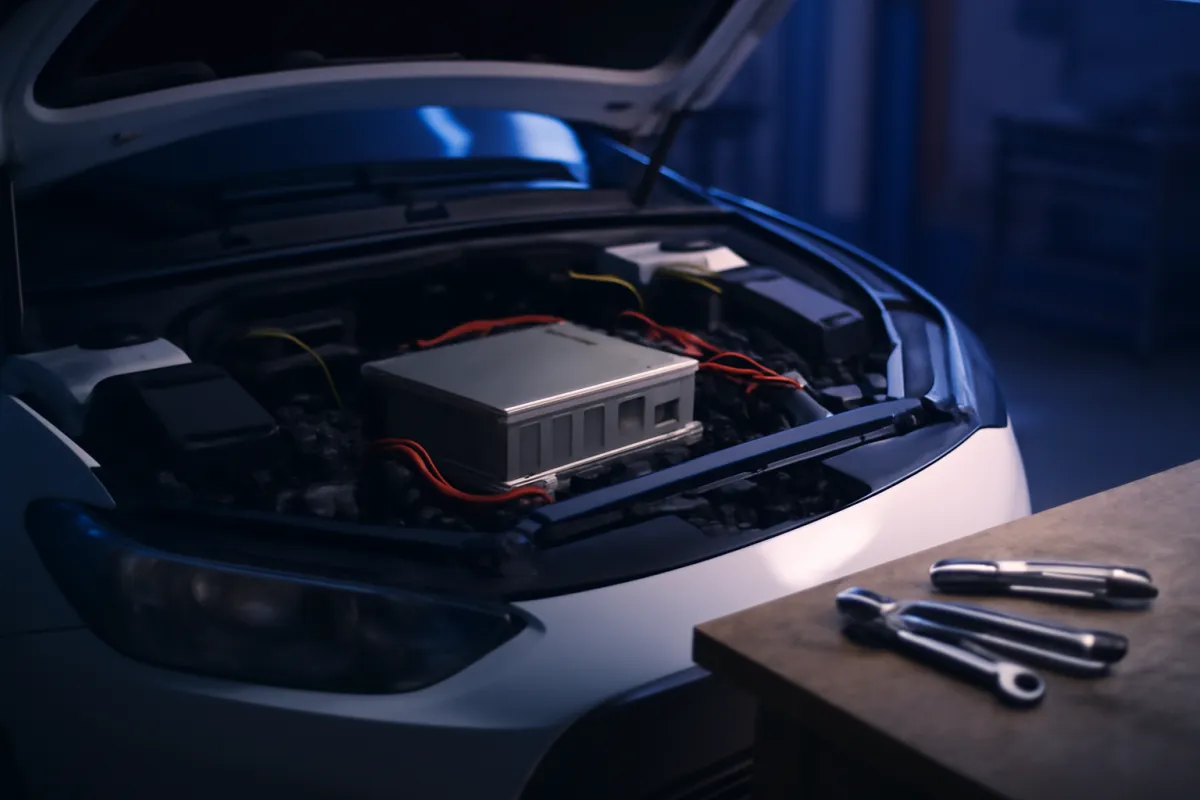
A high voltage system is not something a general body shop can safely improvise around. Working on a damaged electric car properly means de-energising the system, following a manufacturer specific procedure, using insulated tools, and often storing the vehicle separately until it has been assessed. That requires training, equipment, insurance of the shop’s own, and physical space.
The result is concentration. In many areas a much smaller number of shops are equipped and certified to take the work, and that has three effects on cost, all pointing the same way. Labor rates at a specialist facility tend to sit above the general market. Queues are longer, because demand funnels into fewer bays, and a longer queue means more days of storage and more days of a replacement vehicle on the insurer’s tab. And the vehicle may need to be transported further to reach a qualified shop in the first place.
None of that is a permanent condition. Repair capacity follows volume, and it has been expanding steadily as electric cars become ordinary. But an insurer prices the world as it is when the policy is written, and today that world still has fewer doors to knock on.
Parts, panels, and structural castings
The second cost mechanism is what the shop has to buy. Many electric cars use body structures built around large single piece castings and mixed material assemblies, chosen because they are light, stiff, and efficient to manufacture. They are excellent engineering. They are also, in a collision, frequently a replace rather than repair proposition, because a large casting cannot be heated and pulled straight the way a stamped steel rail can.
That shifts money from labor into parts, and it shifts the outcome of borderline cases. Damage that would once have been an afternoon of panel work and a respray can become a structural section order, which is expensive, sometimes slow to arrive, and occasionally the item that tips the whole estimate past the total loss line.
Parts availability compounds it. A newer model line with a shorter production history has a thinner supply of spares and less of a used parts market to draw on, so shops wait longer and pay more. Older, higher volume vehicles enjoy deep parts ecosystems that electric models are still building. Again, this is a maturity problem rather than a physics problem, but the premium reflects the present state, not the eventual one.
Sensor calibration after a repair
This is the mechanism most owners have never heard of, and it is one of the most reliable additions to a modern repair bill. Driver assistance systems, adaptive cruise, lane keeping, automatic emergency braking, blind spot monitoring, depend on cameras, radar units, and sometimes other sensors mounted in the windscreen, the grille, the bumpers, and the door mirrors. Those sensors must be aimed with considerable precision to work.
Remove a bumper, replace a windscreen, straighten a bracket, or even change ride height, and that aim can no longer be assumed. The correct procedure is recalibration, either in a workshop against a calibration target at measured distances, on a road drive under specified conditions, or both. It needs floor space, level ground, controlled lighting, the right targets, and the manufacturer’s software. It is a billable procedure with real time attached.
Two things make this land harder on electric cars specifically. Assistance systems tend to be fitted more comprehensively across electric model ranges, so more vehicles carry more sensors. And electric cars skew newer as a fleet, which means a higher proportion of them have the technology at all. The calibration line is not really an electric car cost, it is a modern car cost, and electric cars are disproportionately modern.
Weight, torque, and crash energy
Now the physics, which is smaller than the folklore suggests but not zero. A battery pack is heavy, and an electric car is commonly heavier than a comparable combustion car in the same class. Kinetic energy scales with mass, so a heavier vehicle carries more energy into a collision at the same speed, which means more deformation to absorb somewhere. In a single vehicle incident that means more damage to your own car. In a multi vehicle incident it can mean more damage to the other party, which is a liability claim rather than a collision one.
Torque contributes on a different timescale. Electric motors deliver maximum torque from a standstill, which is delightful and also a genuine variable in low speed incidents and in tyre wear. Our maintenance teardown covers the tyre side, and while tyres are not an insurance cost, they belong to the same underlying story about mass and instant power.
Keep this mechanism in proportion. Modern electric cars generally perform well in crash testing, and a low centre of mass genuinely helps stability. Weight is a cost driver in the severity arithmetic, not an indictment of the vehicle. The insurer is pricing repair bills, not making a safety judgement.
Vehicle value is the biggest single driver
Strip away every mechanism above and one input still dominates: what the car is worth. Comprehensive and collision cover are, at heart, a promise to hand you the value of the vehicle if it is destroyed. The more that promise is worth, the more it costs.
This is why the most reliable predictor of a high premium is a high transaction price, and why electric cars, which have often carried a price premium in their segment, arrive at the quote counter with a handicap that has nothing to do with their drivetrain. It is also why comparing an electric car to a cheaper petrol car and blaming the difference on electricity is a category error. Compare like for like on value and the gap narrows considerably, though it does not vanish, because the repair mechanisms remain.
The practical implication is direct. If you want a lower premium, the highest leverage decision is made in the showroom, not on the phone with an insurer afterward. Our purchase price teardown covers what sets that number, and the trim you choose echoes into your premium for as long as you own the car.
Illustrative premiums by EV class
Putting the classes side by side makes the pattern legible: the premium tracks the value and the repair complexity of the vehicle far more closely than it tracks the drivetrain. Each bar below is an illustrative annual premium, and each bar’s width is computed directly from its dollar figure against the highest bar on the scale, so the picture is proportional rather than decorative.
Illustrative annual premiums by vehicle class
Illustrative full coverage figures for one driver profile, used to show proportion only. Real quotes vary by driver, address, coverage, and model.
The two compact rows are the ones worth staring at. New against comparable petrol is a gap of roughly $250 a year, while the same electric model five years later drops below the petrol car entirely, because value has fallen and value is the biggest input.
The chart carries the argument of this teardown in one picture. The spread within electric cars, from a compact to a performance sedan, is far wider than the spread between an electric car and its petrol equivalent. Anyone deciding between drivetrains on insurance alone is optimising the small axis and ignoring the large one. Run your own class and vehicle value through the companion beside this teardown to see where your row would sit.
A compact EV against a large electric SUV
Take the two ends of the mainstream range and the mechanisms compound visibly. A compact EV has a smaller pack, less mass, fewer square metres of panel, a lower purchase price, and a shorter parts list. A large three row electric SUV has a bigger pack, considerably more mass, larger and more expensive panels, more sensors distributed around a bigger body, and a purchase price that can be double the compact’s.
Every mechanism in this teardown reads worse for the larger vehicle. Value at risk: higher. Pack replacement exposure: higher. Repair labor hours: higher. Sensor count needing calibration: higher. Damage inflicted on other parties in a collision, which drives the liability side: higher. The illustrative $1,900 against $2,700 in the chart above is not an arbitrary spread, it is the sum of five mechanisms all leaning the same way.
There is a useful corollary for buyers. If insurance is a meaningful part of your budget, the size of the vehicle is a more powerful lever than the drivetrain. Dropping a class saves you more per year than switching from electric to petrol within the same class would, and it usually improves the charging and running numbers too, a trade our cost per mile teardown quantifies from the energy side.
Performance trims and the torque surcharge
Performance variants deserve their own section because they distort the picture badly if you average them in. A high output electric sedan or SUV combines several risk multipliers at once: a higher purchase price, higher output, larger wheels with expensive tyres, uprated brakes, and frequently a driver profile that correlates with more claims.
Insurers do not price a performance trim as the same car with a different badge. They price it as a separate vehicle with its own claim history, and those histories commonly look worse. The illustrative $3,200 figure in the chart above is not the electric drivetrain being punished, it is a fast car being priced as a fast car, exactly as a fast petrol car would be.
The lesson for a buyer is that trim selection is one of the largest single line items you control. Choosing the standard motor over the dual motor performance variant can move your annual premium by hundreds of dollars, often more than every discount and shopping strategy in the rest of this teardown combined. If you are weighing a leased performance trim, our leasing teardown covers how coverage requirements can be higher on a leased vehicle, which stacks on top.
Why used EVs often insure cheaper
Here is the section that reframes the whole topic. The premium follows the value, and electric cars have often depreciated quickly in their early years. That is painful if you are selling and quietly advantageous if you are insuring.
Illustratively, the compact EV quoted at $1,900 a year when new might be quoted near $1,470 at five years old, using a rough rule of the premium easing by something in the region of four to five percent a year as value falls, with the effect flattening out once the car reaches its long plateau. At that point the electric car is cheaper to insure than the illustrative comparable petrol car was when new, which is not the story anyone expects going in.
Two honest caveats. First, a lower value cuts both ways: if the car is written off you receive less, and the gap between what you owe and what you receive can be uncomfortable on a financed car, which is the next section. Second, insurance is one line among several on a used electric car, and battery condition matters more, a check our used buying teardown walks through properly. Set your own car age in the companion beside this teardown and watch this effect run.
What driver-assist tech gives back
It would be unbalanced to describe assistance systems only as a repair cost. They also prevent collisions, and prevention shows up on the frequency side of the premium equation rather than the severity side.
Automatic emergency braking, forward collision warning, blind spot monitoring, and lane keeping are all aimed at the most common categories of claim, particularly low speed rear end impacts and lane change incidents. To the extent they work, they reduce how often a claim happens at all, and insurers do reflect claim experience in their pricing over time. Some also offer explicit discounts for specific safety equipment.
The awkward truth is that these two effects, fewer claims but more expensive ones, partially cancel. A car that avoids three minor collisions and then suffers a fourth that costs more to repair because of the very sensors that avoided the first three has not obviously moved the total. The industry is still resolving where the balance lands, which is another reason to treat any confident claim about the exact size of the electric premium gap with suspicion. It is a moving target being measured while it moves.
Deductibles: the lever closest to hand
Of every lever in this teardown, the deductible is the one you can move today with a phone call. It is a straightforward trade: you agree to absorb more of a small claim yourself, and in exchange the insurer charges less for the cover.
Illustratively, raising a deductible from $500 to $1,000 might trim something in the region of six percent from the premium, which on a $1,900 quote is roughly $115 a year. Push further, to $1,500 or $2,000, and the saving continues but with diminishing returns, because most of the value in the policy sits in the catastrophic tail, not in the first thousand dollars.
Two cautions. Do not set a deductible you could not comfortably pay tomorrow, because the whole point of insurance is to convert an unaffordable shock into an affordable regular cost, and a deductible you cannot cover reintroduces the shock. And check any loan or lease agreement, since some require a maximum deductible. Model the trade in the companion beside this teardown by changing the deductible field, then take the resulting annual figure into our cost calculator to see how it lands in your full running cost picture.
Gap coverage and fast depreciation
Fast depreciation and a high total loss rate combine into a specific hazard for financed electric cars, and it is worth naming plainly. If you finance a car with little money down and its market value falls faster than your loan balance, you can owe more than the car is worth. If it is then written off, the insurer pays the market value and you are left owing the difference on a car you no longer have.
The product that addresses this is commonly called gap coverage, and it pays the shortfall between the settlement and the loan balance. It is an additional cost on top of the premium, and it is not always necessary: a large down payment, a shorter loan, or a car whose value holds up well can all close the exposure without buying anything.
Whether it makes sense for you is a genuine calculation rather than a rule, and it depends on your loan terms, your down payment, and how quickly your specific vehicle loses value. Our ownership cost teardown covers the depreciation curve that sits underneath the question. Treat this as a mechanism to be aware of and check with a licensed professional, not as a recommendation either way.
Where you live and where you park
Location is one of the strongest inputs into any premium and it is entirely independent of the drivetrain, which makes it easy to overlook when you are busy blaming the battery. Insurers price by area because claim experience varies sharply by area: density of traffic, theft and vandalism rates, weather exposure, repair labor rates in the local market, and the litigation environment all differ.
There is a mild electric specific wrinkle. Repair capacity is unevenly distributed, so an owner far from a qualified shop can generate longer repair times, more transport, and more days of a replacement vehicle. That difference is small compared with the ordinary geographic variation, but it is real and it tends to favour urban and suburban owners over rural ones on this particular line, even though density works against them on most others.
Parking matters too, for the same unremarkable reasons it always has. A car kept in a locked garage overnight is exposed to less risk than one on a street, and insurers ask because the answer changes the numbers. Owners with home charging tend to have off street parking by definition, which is a small structural advantage that rarely gets mentioned in the electric versus petrol conversation.
Mileage, usage, and telematics
Annual mileage is a direct input, and the logic is unarguable: more miles means more exposure means more expected claims. Illustratively, a driver logging 18,000 miles a year rather than 12,000 might see the premium rise by something in the region of five percent, other things being equal.
This interacts with electric ownership in an interesting way. Because electricity typically costs less per mile than petrol, some owners drive more after switching, simply because each mile feels cheaper. That extra driving is a real cost even when the fuel is cheap, and part of it lands in the insurance line rather than the energy line. If you are comparing your new running costs with your old ones, compare at the same mileage or you will mislead yourself, a trap our electric versus petrol cost teardown works through.
Usage based and telematics programmes are the other half of this. Where offered, they price your actual driving, mileage, braking, time of day, rather than your demographic profile, and a genuinely low mileage or careful driver can benefit. They also collect data about your driving, which is a personal trade off rather than a purely financial one. Set your annual mileage in the companion beside this teardown to see the effect on your own figure.
The levers a driver actually controls
Gathering the practical levers in one place, roughly in order of how much they move the number.
- The vehicle you choose. Class, trim, and value dominate everything else. One class down, or the standard motor instead of the performance variant, is worth more than every other item on this list.
- The age of the car. A used electric car insures for less because it is worth less, and the effect is substantial in the early years.
- Your deductible. An immediate, controllable trade of small claim exposure for a lower premium, illustratively around six percent from $500 to $1,000.
- Shopping the quote. Pricing differs materially between insurers on the same vehicle, particularly on newer model lines where their claim data is thin and their appetite differs.
- Coverage choices. Liability limits, comprehensive and collision on an older low value car, optional add ons: each is a decision rather than a default.
- Mileage and usage. Lower annual mileage lowers exposure, and where usage based programmes exist they can reward it explicitly.
- The ordinary ones. Clean record, bundled policies, off street parking, and any safety equipment discount available on the vehicle.
Notice how few of those are electric specific. That is the real finding of this teardown: an electric car starts from a slightly higher base, and then behaves exactly like any other car in how you can lower it.
Quoting the car before you buy it
The single most useful action in this entire teardown takes about fifteen minutes and happens before you sign anything. Get an insurance quote on the exact vehicle you are considering, ideally by trim and specification rather than by model name alone.
The reason is the spread. Two electric cars sitting in the same showroom, similar in size and price, can quote hundreds of dollars a year apart because their claim histories, parts costs, and repair complexity differ. No article, including this one, can predict which is which. Only a quote can, and a quote is free.
Do it on two or three candidate vehicles and you convert insurance from a post purchase surprise into a comparison input, the same way you would compare range or charging speed. Then take the winning figure into our monthly cost teardown and add it to your payment, charging, and maintenance lines so the all in number is honest. That is the difference between budgeting and hoping.
How insurance fits the all-in monthly
Zoom out and insurance stops being a grievance and becomes one line among several, which is a healthier way to see it. In an illustrative electric car monthly budget the loan or lease payment dominates, insurance is usually the second largest line, and charging and maintenance are noticeably smaller.
Now put the electric premium gap in that context. An illustrative $250 a year above a comparable petrol car is roughly $21 a month. Against home charging that commonly runs well below what the same miles cost in petrol, and against a lighter routine maintenance schedule, that $21 is frequently absorbed and then some. The electric car can be more expensive to insure and still cheaper to run overall, and both statements can be true without contradiction.
That is why treating insurance as a disqualifying fact is a mistake, and equally why ignoring it is a mistake. It is a real line, it usually leans the wrong way, and it is one input into a total that has several inputs leaning the other way. Build the whole picture in our cost calculator rather than deciding on any single line.
A worked example: two drivers, two premiums
Numbers land harder as a story, so here are two drivers using the illustrative figures from this teardown.
The first buys a new compact EV, keeps it in a suburban driveway, drives about 12,000 miles a year, and holds a $500 deductible. Her quote comes in near $1,900 a year, about $158 a month, against the $1,650 the comparable petrol car would have cost her. The gap is $250 a year. She raises her deductible to $1,000, which trims roughly six percent, and lands near $1,785. Her home charging saves her more than that over the same year, so her all in running cost still falls.
The second buys a large three row electric SUV, parks on a dense urban street, and drives 18,000 miles. His starting point is the illustrative $2,700 for the class, and the extra mileage adds something in the region of five percent, so he sits near $2,835 before his address is even considered. Same market, same year, same drivetrain, and a premium roughly $1,050 apart from the first driver’s.
The variable that separated them was not electricity. It was vehicle size, mileage, address, and deductible, in that order. Run your own version in the companion beside this teardown and watch which field moves your number hardest.
Common mistakes when pricing EV insurance
A handful of recurring errors distort what people believe about the electric premium gap, in both directions.
- Comparing an electric car to a cheaper petrol car. Value is the biggest input, so comparing a premium electric SUV to a budget petrol hatchback measures price segment, not drivetrain, and produces a wildly inflated gap.
- Assuming the gap is huge. It is commonly a few hundred dollars a year on comparable vehicles, not a doubling. Forum anecdotes skew toward performance trims and unusual circumstances.
- Assuming the gap is zero. The repair mechanisms are real, and pretending otherwise leaves a hole in your budget. Both denial and panic produce bad numbers.
- Skipping the quote before purchase. The spread between specific models is larger than the spread between drivetrains, and only a quote reveals it. This is the cheapest mistake to avoid.
- Forgetting the deductible and coverage choices. Two quotes on the same car are not comparable unless the deductible, limits, and add ons match, and many apparent bargains are just thinner cover.
- Judging the car on insurance alone. Insurance is one line in a budget where charging and maintenance usually lean the other way, and the all in total is the only number that decides anything.
An EV insurance checklist
Before you commit to an electric car on the strength of its running costs, work through these steps.
- Quote the exact vehicle, by trim and specification, on two or three candidates, before you sign anything.
- Quote a comparable petrol car too, matched on value and class rather than on whatever you happen to be driving now, so the gap you see is a real one.
- Match the coverage across quotes: same deductible, same liability limits, same add ons, or the comparison is meaningless.
- Test the deductible at two or three levels and pick the highest you could comfortably pay tomorrow.
- Check the finance exposure, including whether your loan or lease sets coverage requirements and whether a value shortfall is a realistic risk for your terms.
- Add the annual figure to your full budget, alongside payment, charging, and maintenance, so the decision rests on the all in monthly rather than on one line.
- Re-shop at renewal, since pricing on newer model lines moves as insurers accumulate claim data, and last year’s best quote may not be this year’s.
Run your premium, mileage, and deductible through the companion beside this teardown, then take the annual number into our cost calculator and see where it lands against everything else.
The bottom line
EV insurance cost commonly runs above a closely comparable petrol car, and the reason is severity rather than frequency: a valuable battery pack that can push an estimate past the total loss line, a smaller network of qualified repairers, expensive structural parts, sensors that need recalibrating after body work, and extra mass carrying more energy into a collision. Those mechanisms are real, they are measurable in a repair estimate, and they are also temporary in character, because repair capacity, parts supply, and calibration routine all mature as electric cars become ordinary.
The size of the gap is more modest than the reputation. On comparable vehicles it is commonly a few hundred dollars a year, illustratively around $250 on a compact, which is roughly $21 a month against running costs that usually lean the other way. And the spread within electric cars, from a compact to a performance sedan, is far wider than the spread between drivetrains, which tells you exactly where to push: the vehicle you choose, its age, your deductible, your mileage, and the quotes you bother to shop.
So price it properly rather than fearing it. Quote the exact car before you buy, match the coverage when you compare, take the deductible you can genuinely afford, and add the annual figure to your payment, charging, and maintenance lines as our monthly cost teardown and maintenance teardown lay them out. Do that and the insurance line stops being the thing that ambushed you and becomes one more number you chose on purpose.
This teardown is written to explain how insurance pricing mechanisms work, not to recommend a policy, an insurer, or a vehicle, and it is not insurance, legal, or financial advice. Every premium, repair share, deductible saving, and depreciation figure above is illustrative and internally consistent within this article only; none of it is drawn from a quoted rate, and none of it predicts what any insurer will charge you. Real premiums are set by your driving record, address, age, credit and claims history where permitted, coverage limits, deductible, annual mileage, and the exact vehicle specification, and they change as insurers accumulate claim data on newer model lines. Coverage rules, total loss thresholds, and the availability of products such as gap coverage differ by jurisdiction and by contract. Read the actual policy wording and speak with a licensed insurance professional about your own circumstances before relying on anything here.
Frequently asked questions
Is EV insurance more expensive than insurance on a petrol car?
It is commonly observed that premiums on electric cars run above those on closely comparable combustion cars, though the size of the difference varies enormously by model, driver, and location. The usual explanation is not that electricity is risky but that the cars tend to be worth more, cost more to repair, and are repaired by a smaller pool of qualified shops. Illustratively, a compact EV might be quoted near $1,900 a year where a comparable compact petrol car is quoted near $1,650, a gap of a few hundred dollars rather than a doubling. Those figures are illustrative only, and the honest number for you comes from real quotes on the specific vehicle you are considering.
Why is electric car insurance so expensive?
Several mechanisms stack on top of each other rather than one dramatic cause. The battery pack is the single most valuable component in the car, so damage near it can push a repair estimate past the point where writing the car off is cheaper than fixing it. Repairs often route to a smaller network of shops with the training and equipment to work safely around a high voltage system, which lengthens the queue and raises labor cost. Add driver assistance sensors that need recalibration after body work, plus heavier vehicles that do more damage in a collision, and the claim cost an insurer expects to pay is simply higher.
How much does it cost to insure an electric car per month?
There is no single true figure, because the premium is set mostly by the vehicle's value and your own driving record, address, and coverage choices rather than by the drivetrain alone. Illustratively, a new compact EV might sit near $158 a month, a mid-size electric SUV near $192, and a performance electric sedan well above $250, while a five year old compact EV might come in near $122. Every one of those numbers is a placeholder to show the shape of the range, not a quote. Treat monthly figures as budgeting scaffolding and replace them with real quotes before you sign anything.
Does the battery make EV insurance more expensive?
Indirectly, and more than most owners expect. The pack is typically the most expensive single assembly in the vehicle, so a collision that damages or even casts doubt on the pack's integrity can produce a repair estimate that exceeds the car's market value, which is what triggers a total loss decision. Insurers price the probability of paying out the whole car, not just the probability of a fender repair, and packs sit low and wide where impacts often land. Our teardown on replacement cost walks through what a pack is actually worth, which is the number underneath this whole mechanism.
Do electric cars cost more to repair after an accident?
Commonly yes, for reasons that have little to do with the motor. Fewer shops hold the certification and equipment to safely de-energize and work around a high voltage system, so the work concentrates in a smaller network, which lengthens repair times and raises labor rates. Body structures on many EVs use large castings and mixed materials that are replaced rather than straightened. Then the driver assistance cameras and radar units mounted in bumpers, mirrors, and windscreens usually require recalibration after the panel goes back on, which is a separate billable procedure the old repair playbook never included.
Is a used EV cheaper to insure than a new one?
Usually, and the mechanism is simple: the largest input to a comprehensive and collision premium is what the insurer would have to pay if the car were written off, and that number falls as the car depreciates. Electric cars have often depreciated quickly in their early years, which is unwelcome for the owner selling the car but genuinely helpful for the person insuring it. Illustratively, a five year old compact EV might be quoted near $1,470 a year where the same model new was quoted near $1,900. Our used buying teardown covers what else to check before letting a lower premium decide the purchase.
What actually lowers an EV insurance premium?
The levers that move a premium on an electric car are mostly the same levers that move any premium, which is oddly reassuring. Raising the deductible shifts small claims back to you and reduces the premium, illustratively around six percent for going from $500 to $1,000. Choosing a lower value, lower output trim rather than the fastest one usually matters more than any discount you can negotiate afterward. Shopping several quotes on the exact vehicle, bundling policies, reducing annual mileage, parking off street, and maintaining a clean record all pull in the right direction, and none of them are EV specific.
Should I get an insurance quote before buying an EV?
Yes, and it is the single most useful thing in this article. Premiums vary far more between specific models than between drivetrains in general, so two electric cars in the same showroom can quote hundreds of dollars a year apart. Getting a quote on the exact vehicle identification number or at least the exact trim before you sign turns insurance from a surprise line into a number you chose. Because premiums also change with your address, your record, and the market, confirm current quotes rather than relying on any figure in this teardown.