What's in this teardown
- What actually happens when an EV runs out of charge
- The warnings arrive in stages, not all at once
- Reduced power mode and what it trades away
- The car does not stop dead, it slows to a controlled stop
- Steering and brakes still work, and here is why
- Pull over while you still have propulsion
- The roadside sequence, in the order that matters
- What to tell the dispatcher when you call
- Why a flatbed is usually the only safe tow
- Mobile charging services and what they actually deliver
- An illustrative recovery, start to finish
- Does running to empty damage the battery
- Sitting at zero is the part that actually hurts
- The 12 volt battery is the quiet failure point
- Running out in extreme cold
- Running out in extreme heat
- The last few percent are not planning miles
- Buffer discipline: the habit that makes this a non-event
- Planning a route with a real reserve
- Around town versus a long highway leg
- The mistakes that put people on the shoulder
- What to keep in the car for this
- How this compares with running out of gas
- What to check once you are home
- Rebuilding confidence after a close call
- The bottom line
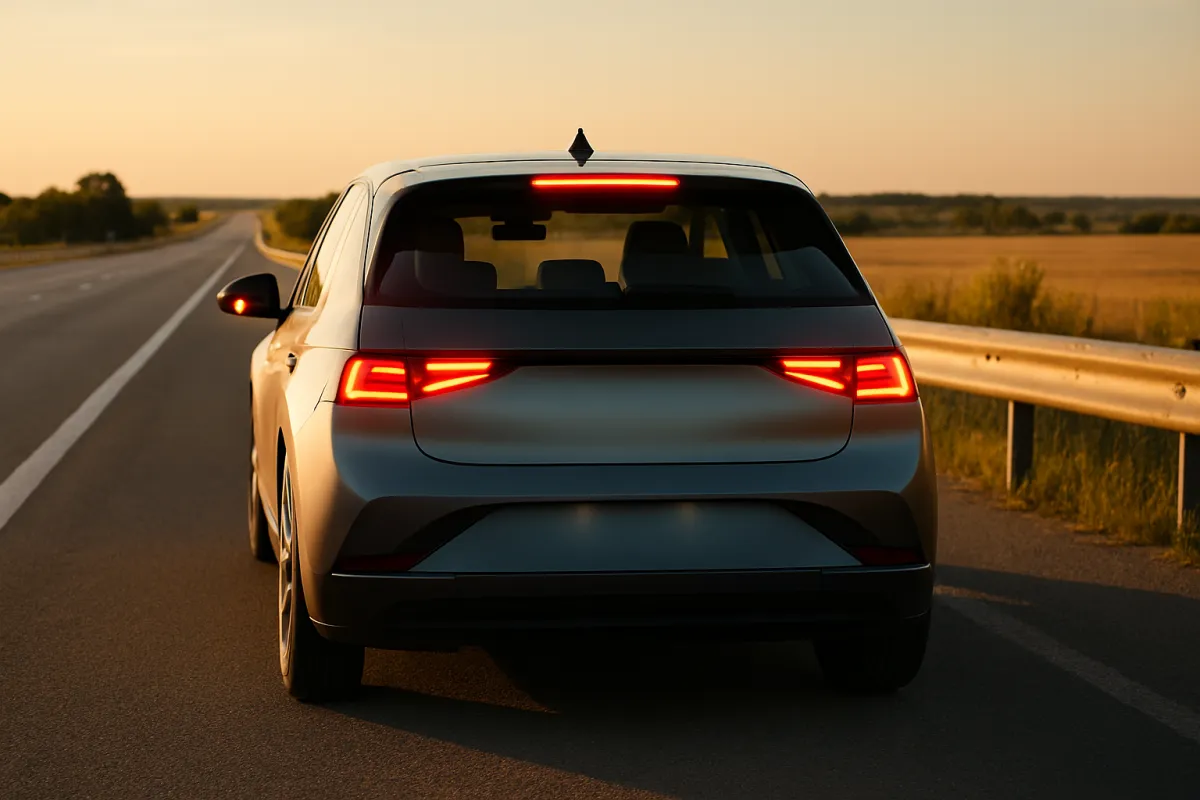
Almost every objection to electric cars eventually reduces to one unspoken question: what happens if I get it wrong? Range articles answer the confident half of that question, explaining how far you can go and how to go further. The failure case, the one that actually keeps people out of showrooms, tends to get a nervous joke and a change of subject. That is a shame, because the honest answer is far less dramatic than the imagination supplies, and knowing it takes most of the fear out of the decision.
This teardown covers the failure case properly. What the car does as the battery empties, in the order it does it. Why steering and brakes keep working when propulsion stops. What to do at the roadside, in the sequence that keeps people safe rather than the sequence panic suggests. How recovery actually works, why the tow truck is usually a flatbed, and what that costs you in time. Whether the episode hurts the battery, which has a clearer answer than the internet suggests. And then the part that makes all of it moot, which is the buffer discipline that keeps you off the shoulder in the first place. Our range-maximizing teardown handles the habits that stretch a charge; this article handles what happens when they were not enough.
Key takeaways
- An EV does not cut out without warning. Most implement a staged sequence of alerts, then a reduced-power state that trades acceleration for a few extra miles, then a slow loss of propulsion rather than an abrupt stop.
- Steering and brakes are electrically assisted and stay available while the low-voltage system is live, so the car remains controllable, but you should pull over while you still have propulsion rather than coasting to a halt in a live lane.
- Recovery almost always means a flatbed, because most EVs cannot be towed with the driven wheels rolling on the road without risking the drive unit. The manufacturer's instruction is the only authority on this.
- One deep discharge is not catastrophic. Leaving the car sitting at zero for a long period genuinely is, because the low-voltage battery drains and the pack can enter a protective state.
- The fix is arithmetic, not nerve. On an illustrative 260 mile car in conditions costing 15 percent, a 15 percent arrival reserve is worth about 33 miles of cushion, which is the difference between a rethink and a rescue.
What actually happens when an EV runs out of charge
Start with the picture most people carry, because it is wrong in a specific and correctable way. The imagined scenario is a car that behaves like a torch with a flat cell: full brightness, then nothing, in the middle lane, at speed. That is not how any modern electric vehicle is designed to behave, and it is not what the battery management system is doing during those last miles.
What actually happens is a managed descent. The car has been tracking energy, temperature, and consumption continuously, and it starts telling you about the problem long before it becomes one. Those messages escalate. When the usable energy genuinely runs low, the vehicle protects itself and you by limiting what it will deliver, which shows up as a car that will still hold a moderate speed but will not accelerate the way it did. When even that reserve is exhausted, propulsion fades rather than vanishing, and the car slows while remaining fully steerable and fully able to brake.
The whole sequence is closer to a plane running a checklist than to a light going out. That framing matters because it tells you where your decisions actually sit. The critical choices happen during the warning phase, when you still have miles and options. By the time the car is coasting, the only decision left is where to put it.
The warnings arrive in stages, not all at once
The staging is the part worth internalising, because each stage is asking you to do something different. The exact thresholds vary between manufacturers and even between software versions of the same vehicle, so the sequence below is the common shape rather than a specification for your car. Your owner’s manual is the authority on what your specific vehicle does and when.
The first stage is informational. A low-charge notice appears, the range readout may change colour, and on many cars the navigation system quietly starts surfacing charging locations. Nothing is wrong yet. You have a normal driving car with a normal amount of energy in reserve, and the message is simply telling you to make a plan.
The second stage is directive. The prompts become harder to dismiss, the car may offer to route you to the nearest suitable charger, and some vehicles will begin trimming comfort loads such as cabin conditioning to preserve driving energy. This is the point at which “I will find something” stops being a plan and needs to become an actual destination on the screen.
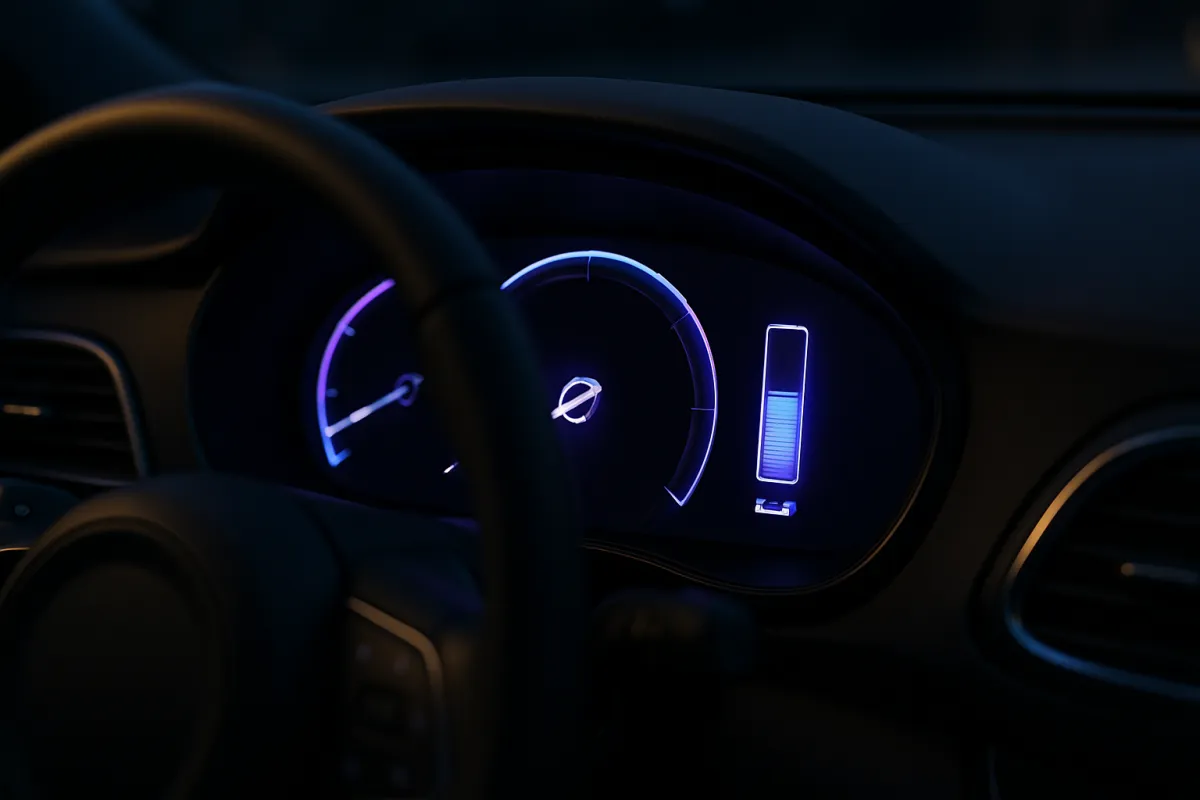
The third stage is protective. The car limits available power, which is the state commonly called reduced power or turtle mode, and it is a clear signal that the remaining energy is measured in a handful of miles rather than a comfortable margin. The right response is not to press on hopefully. It is to identify the safest place to stop within the next mile or two.
Reduced power mode and what it trades away
Reduced power mode gets described as a punishment. It is closer to a rationing decision made on your behalf, and understanding the trade it makes explains why it feels the way it does.
Energy spent on acceleration is energy that does not become distance. Pushing a car from 40 to 70 miles per hour costs a meaningful chunk of what is left in the pack, and at higher speed the aerodynamic penalty rises steeply on top of that. If the goal is to convert the last usable energy into the greatest number of miles, then capping power and discouraging high speed is exactly the right lever. The car is choosing distance over performance because distance is what you need.
The practical experience is a vehicle that will still move, still steer, still brake, and still hold a modest speed on level ground, but which responds to a firm accelerator request with a polite refusal. Climbing a gradient may slow it further. Air conditioning and heating may be curtailed. A warning symbol, often a tortoise, stays lit.
What you should not do is treat the reduced-power state as a bonus fuel tank. It is small by design, it is unpredictable in exactly the conditions where you are likely to need it, and it is being spent while you are looking for somewhere to stop. As an illustration only, if a car withholds around 1.5 kilowatt hours below the displayed zero and delivers it at roughly 3 miles per kilowatt hour in a limited state, that is somewhere near 4 or 5 miles of movement. Any figure like that is an assumption, not a specification, and it differs by manufacturer.
The car does not stop dead, it slows to a controlled stop
When the reserve is finally gone, propulsion goes away gradually rather than instantly. The motor stops producing torque, the car begins to decelerate under rolling resistance and drag, and on level ground at moderate speed that decay takes a while. You are not thrown forward. Nothing bangs. The dominant sensation is that the accelerator has stopped meaning anything.
This is the moment the imagined disaster and the real event diverge most sharply. A car that stops producing power is not a car that stops moving. It is a car that becomes a rolling object with all of its control systems still functioning, and rolling objects can be steered to a chosen place. The window is short but it is real, and it is far more useful if you have already decided where you are aiming.
Because of that, the honest advice is to never rely on this window. It is a safety property of the vehicle, not a driving strategy. Treat the moment power is limited as the moment to stop, and this section becomes a description of something that never happened to you.
Steering and brakes still work, and here is why
This is the single most important safety point and the one most commonly misunderstood, so it deserves its own explanation rather than a reassurance.
In an older combustion car, power steering came from a pump driven by the engine and brake assistance came from vacuum generated by the engine. Kill the engine and both faded, which is why “the engine died” and “the car became hard to control” were genuinely connected. That mental model has been inherited by people thinking about electric cars, and it does not transfer.
An electric vehicle uses electrically assisted steering and an electrically boosted braking system. Both draw from the low-voltage side of the car, the part that runs lights, screens, and controls, rather than from anything spinning. That low-voltage supply is maintained from the traction pack through a converter, and it remains powered well past the point where the pack can no longer move the car. So when propulsion stops, assistance does not.
Two caveats keep this honest. First, this holds while the low-voltage system is live, which is why a car left sitting at zero for a long time is a different and worse situation, covered further down. Second, braking behaviour changes character because regenerative braking has nothing left to work with, so the friction brakes do all the work and the pedal may feel different from what you are used to. The car remains controllable. It simply does not feel identical.
Pull over while you still have propulsion
Everything above leads to one instruction, and it is the instruction that actually keeps people safe: stop the car while stopping is still your choice.
A vehicle with propulsion can climb a shoulder camber, take an exit ramp, cross to a lay-by, reach the far side of a bend where it is visible, or make the last hundred yards to a car park. A vehicle without propulsion can only continue in roughly the direction it is already travelling, losing speed. The difference between those two situations is enormous, and it is entirely decided by whether you chose to stop at the reduced-power warning or waited to find out how far the car would go.
That means when the car limits power, the search changes. You are no longer looking for a charger. You are looking for a safe stopping place, and a merely adequate one you can reach comfortably beats a better one you might not. An exit ramp with a wide verge, a service road, a petrol station forecourt, a lay-by past the crest rather than on it, anywhere with sight lines and space to walk away from the vehicle.
There is a psychological trap here worth naming. The instinct when the range readout collapses is to press on toward the known charger, because turning off feels like giving up the miles you have left. In practice the known charger is often further than the safe stopping place, and arriving somewhere safe with a stationary car is a much smaller problem than stopping somewhere unsafe.
The roadside sequence, in the order that matters
Once the car is stopped, there is an order to things, and it is not the order panic produces. Panic reaches for the phone first. The correct sequence deals with the road, then the people, then the vehicle, then the call.
Get off the road, as far as the car will allow. If the vehicle still moves, use it. If it does not, and it is safe to do so, the question of whether to push it is a judgement about traffic, gradient, and how many able people are present, and on a high-speed road the answer is usually no.
Hazard lights on immediately. They are the cheapest safety measure available and they run off the low-voltage system, which is still live. If you carry a warning triangle and local practice supports placing one, place it in line with local guidance for the road type.
Get the occupants somewhere safe. On a motorway or any high-speed road, remaining inside a stationary vehicle close to live traffic is generally the worst option, and being behind a barrier away from the carriageway is generally the best. Local rules and road layouts differ, so learn the guidance for the roads you actually drive before you need it. Children and animals come out with you, not later.
Now make the call. Roadside assistance through your insurer, the manufacturer’s own programme, a motoring organisation, or the emergency number if the vehicle’s position is genuinely hazardous. In many places a car stopped in a live lane is treated as an emergency rather than a breakdown, and calling it in as one is correct.
Then wait visibly and patiently. Recovery of an electric vehicle is not a five minute job, because the right truck is a specific truck. Getting comfortable with that in advance removes a lot of the stress from the wait.
What to tell the dispatcher when you call
This is a small thing that changes your afternoon, and almost nobody thinks about it until they are doing it badly.
Say the word electric in the first sentence. A dispatcher who hears “my car has stopped” may send whatever is nearest, and whatever is nearest may be a conventional tow rig that cannot legally or safely take your vehicle. A dispatcher who hears “my electric car has run out of charge and needs a flatbed” is looking at a different list.
Give the vehicle’s location precisely, using a junction number, a marker post, a landmark, or the location function on your phone. Say whether the car is in a live lane or fully clear of the carriageway, because that changes the priority of the job. Say whether anyone is vulnerable, and whether occupants are inside the vehicle or behind a barrier.
Ask two questions before you hang up. First, is the vehicle being recovered by flatbed, because that is the answer you want and it is worth confirming. Second, where is it being taken, because “to the nearest charger” and “to a compound” are very different outcomes and you would rather hear it now than later. Our teardown on using public chargers is worth a read if the nearest working charger is a network you have never used, since setting up an account while you wait is a better use of the time than worrying.
Why a flatbed is usually the only safe tow
Here is the technical heart of the recovery question, and the one place where a mistake genuinely costs money.
In a conventional car with an automatic gearbox, towing with the driven wheels on the ground is discouraged largely because the transmission’s pump is not turning to circulate lubricant. In an electric car, the reason is different and firmer. The wheels are connected to a motor through a fixed reduction gear, and if the wheels turn, the motor turns. A turning motor is a generator. It will produce voltage back into a system that may not be awake, prepared, or willing to receive it, and the energy has to go somewhere.
That is why the standard recovery method for most electric vehicles is a flatbed, with all four wheels lifted clear of the road, or a wheel-lift with dollies placed under the driven axle so that the driven wheels do not rotate. It is not a preference or an upsell. It is a protection for the drive unit and the power electronics.
The honest caveat, and it is an important one, is that this is not identical across every vehicle. Some manufacturers publish a transport or tow mode with strict limits on speed and distance for short moves. Some vehicles drive only one axle, which changes which wheels must be lifted. Some publish an explicit prohibition with no exceptions. There is no universal rule you can safely apply from an article, and the only authority is the towing section of your own owner’s manual. Getting this wrong can damage the drive unit, so if the operator’s plan differs from what the manual says, the manual wins.
Mobile charging services and what they actually deliver
Mobile charging is the option everyone hopes for and the one least likely to be available, so it is worth being clear about what it is and is not.
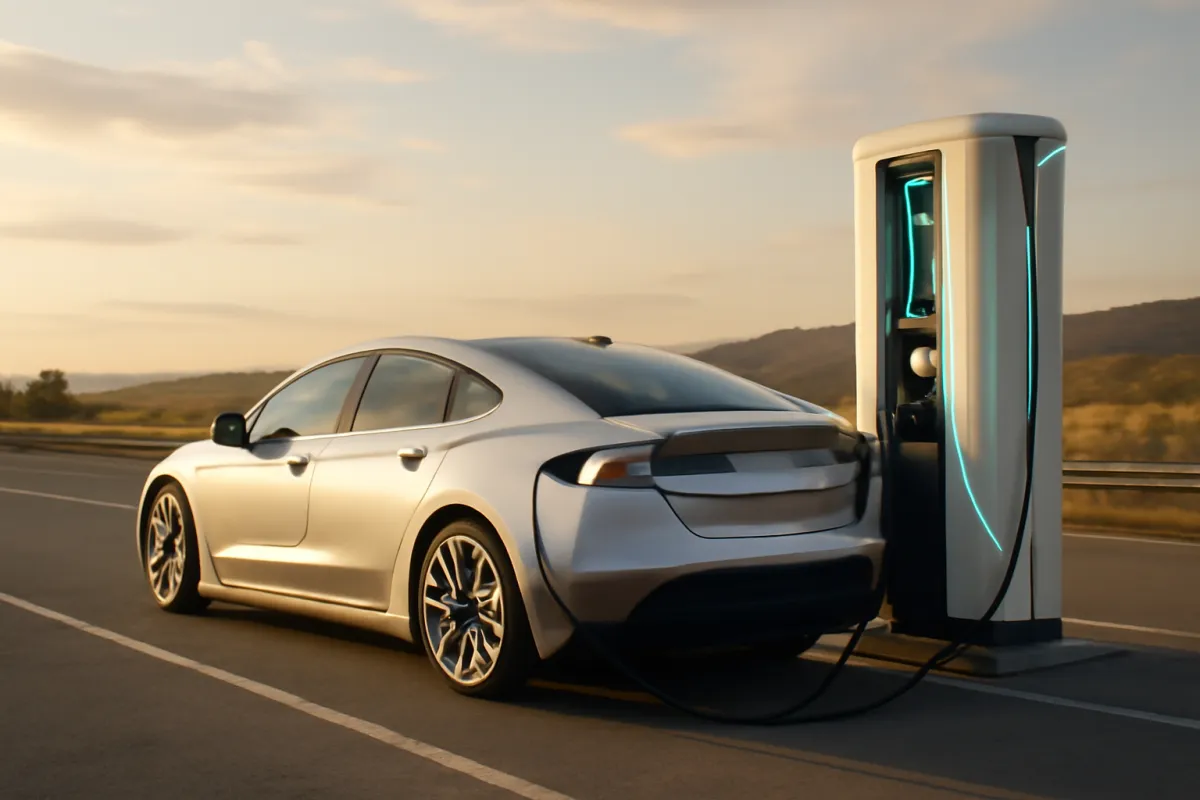
The concept is straightforward. A van arrives carrying a battery pack or a generator, connects to your car, and delivers enough energy to reach a real charger. Some roadside assistance programmes and some manufacturers have offered this in particular regions, some breakdown operators have trialled it, and coverage is patchy and changes over time. Whether it exists where you are is a question for your own provider, not something an article can promise.
Two limits shape the experience even where it is offered. The first is speed. A mobile unit is delivering at a rate closer to home charging than to a fast charger, so the useful outcome is a small number of miles rather than a full pack. The second is that adding energy takes time on top of the wait for the van, whereas a flatbed can be loading you within minutes of arriving.
Which is why the honest expectation to carry is the tow. If mobile charging turns up, treat it as a pleasant surprise. If you want to know what your provider actually offers, the time to find out is a quiet evening at home rather than a hard shoulder, and the answer belongs in the same mental file as your tyre repair kit.
An illustrative recovery, start to finish
Numbers help, so here is one plausible episode followed end to end. Every figure is illustrative and chosen to show the shape of the thing, not a measurement of anything. Wait times in particular vary enormously with location, weather, and time of day.
Say the car stops on a shoulder at midday, cleanly off the carriageway. You call, describe the situation, and confirm a flatbed. Ten minutes of that call and confirmation. The truck arrives an hour later, which is unremarkable rather than unlucky. Loading, securing, driving to the nearest working charger, and unloading takes another fifty minutes. Then you charge for an hour, which on the illustrative car used in this teardown is enough to put back a comfortable margin plus the leg you still have to drive. Three hours, door to moving again.
Where the time goes in one illustrative recovery
A hypothetical three hour episode broken into its parts. Not measured data, and the waiting slice is the one that varies most.
The shape is the point rather than the totals. Two of the four slices are pure waiting, which is why the emotional cost of running out is mostly boredom rather than danger.
Read that chart as reassurance rather than as a warning. Three hours is an annoying afternoon. It is not a damaged car, an injury, or an expensive repair. Almost everything people fear about running out of charge turns out, in the ordinary case, to be a scheduling problem. Compare it against what your own leg would look like using the companion estimator, and the size of the risk stops being abstract.
Does running to empty damage the battery
Here is the straight answer people ask for and rarely get: one deep discharge is not catastrophic, and the panic around it is out of proportion to the mechanism.
The reason is architectural. The number on your dashboard is not the physical bottom of the pack. Manufacturers deliberately reserve a hidden buffer below the displayed zero, partly so that the reduced-power reserve exists and partly so that the cells are never actually driven into the deeply discharged state that would genuinely harm them. When you run the display to zero, you have run out of the energy the car is willing to give you, not out of the energy that exists. The management system is still standing between you and real damage.
Lithium cells do dislike being held at very low states of charge, and repeatedly running a pack to empty as a habit is not a kind way to treat it. But a habit and an incident are different things, and the incremental degradation from a single episode is not something you would ever detect on a health readout. Our teardown on battery lifespan covers what actually drives long-term capacity loss, and heat, time, sustained high states of charge, and heavy fast charging feature far more prominently than one bad afternoon.
So the answer is genuinely reassuring, with one large exception, which is the subject of the next two sections. What matters is not that you reached zero. What matters is how long you stay there.
Sitting at zero is the part that actually hurts
This is the distinction the internet consistently blurs, and it is the one worth remembering.
A car sitting at an indicated zero is not asleep. It is running a low-voltage electrical system that keeps the computers, the security system, the connectivity, and the wake-on-command features alive. That system is normally kept topped up from the traction pack through a converter. When the traction pack is genuinely empty, that top-up cannot happen, and the low-voltage battery starts running down with nothing behind it.
Once the low-voltage side falls far enough, the consequences are practical rather than chemical. The car may not respond to the key or the app. Doors and the charge port may not unlock. The vehicle may be unable to wake up enough to accept a charge even when a working charger is connected, because closing the contactors requires the low-voltage system to be functioning first. Recovering from that generally means someone with the right knowledge putting energy into the low-voltage battery before the car can be revived at all.
There is a second layer beneath that. If the traction pack itself is left at a very low state for an extended period, the management system can put it into a protective lockout, and unlocking that is a workshop conversation rather than a driveway one. Neither outcome is likely from an afternoon on a shoulder. Both are entirely plausible from a car abandoned at zero for weeks. The rule that follows is simple: get it recharged reasonably soon, and do not leave the problem to solve itself.
The 12 volt battery is the quiet failure point
Because it deserves emphasis, spend a moment on the low-voltage battery on its own, since it explains several things that otherwise look inconsistent.
Electric cars still carry a small conventional battery, usually 12 volt, that powers the ordinary electrical car rather than the drivetrain. Almost every “my EV is completely dead and will not respond” story turns out to be this battery rather than the big pack. It is also the reason your car can be at 40 percent charge and still refuse to wake up.
It matters here for two connected reasons. First, it is what keeps steering assistance, braking assistance, hazard lights, and door locks alive after propulsion stops, which is why the car remains controllable and why the hazards still work. Second, it is what runs out first if the car is abandoned at zero, converting a simple recharge into a jump start plus a recharge plus, sometimes, a call to someone who knows the vehicle.
The maintenance point is unglamorous and genuinely useful: this battery ages like any other, and a weak one turns a mild inconvenience into an immovable car. If yours is old, replace it before it decides for you. Our teardown on the electric car maintenance schedule covers where it sits among the handful of things an EV actually needs.
Running out in extreme cold
Cold changes this situation in three separate ways, and only one of them is about range.
The first is the obvious one. Cold reduces the miles you had available before things went wrong, both because a cold pack temporarily holds back some of its energy and because cabin heating draws real power from the same battery. That means the winter version of “I have enough” is systematically more optimistic than the summer version, which is why so many first winters produce a first close call. Our cold weather range teardown sizes the effect properly.
The second is about what happens after you stop. In a petrol car, waiting is warm, because the engine can idle. In an electric car with an empty pack, heat is the thing you no longer have. That converts a comfortable wait into a genuinely cold one, and it is why winter clothing that lives in the car matters more than any charging accessory you could buy.
The third is that recovery itself is slower in winter. Cold snaps are when breakdown services are busiest, roads are worse, and the wait slice of that recovery chart stretches. Every part of the episode gets harder at exactly the same time.
The response is not to drive nervously. It is to change the number. A reserve that is comfortable in mild weather should be larger in the cold, and adding to it costs almost nothing on a route where charging is plentiful.
Running out in extreme heat
Heat gets less attention here and deserves a short section, because the failure mode is different.
Range in hot weather usually holds up better than in cold, since air conditioning is a smaller load than cabin heating and the pack is already near a temperature it likes. So heat is less likely to be what puts you on the shoulder in the first place. Where it bites is what happens next.
A stationary car with an empty pack cannot run air conditioning, and a closed vehicle in strong sun gets hot quickly. That makes the “get the occupants somewhere safe” step of the roadside sequence a comfort and health matter as well as a traffic one, and shade, water, and getting out of the vehicle move up the priority list. This is genuinely more important with children, older passengers, or animals in the car, and it is worth deciding in advance rather than in the moment.
The other heat consideration is charging once you are recovered. A pack that has been sitting hot may accept a fast charge more slowly than you expect while the thermal management brings it back into range. Building a little slack into your plan after a recovery is sensible for the same reason it was sensible before one.
The last few percent are not planning miles
Now to prevention, which is where the whole subject should have started. The single most useful habit is to stop counting the bottom of the battery as distance you can spend.
There are three good reasons for that. The bottom of the pack is where range estimates are least reliable, because small changes in speed, gradient, temperature, or wind move a small remaining number by a large proportion. It is also where your options narrow fastest, since a diversion that costs 8 miles is trivial at 40 percent and decisive at 5 percent. And it is where the consequences of a wrong guess stop being a rethink and start being a recovery.
The practical translation is to plan against a target arrival percentage rather than a target of zero. Everything below that line stops being miles and becomes cushion. The chart below prices that cushion for the illustrative car used throughout this teardown, a vehicle rated at 260 miles that is realistically returning about 221 miles in conditions costing 15 percent.
What each arrival reserve is worth in miles
Illustrative cushion for a 260 mile rated car returning about 221 real miles in conditions costing 15 percent.
Illustrative figures for one hypothetical vehicle. The useful reading is the gap between the rows: moving from 5 percent to 20 percent buys roughly 33 extra miles of options, which is the whole difference between a detour and a tow.
Look at the bottom row honestly. Eleven miles is not a reserve. It is a rounding error on an estimate that is least accurate exactly there, and it disappears entirely if the charger you were counting on is occupied, broken, or the wrong connector. Run your own rated range and conditions through the companion estimator and read the reserve figure it produces as your real safety margin.
Buffer discipline: the habit that makes this a non-event
Buffer discipline is a boring name for the single behaviour that separates drivers who worry about this from drivers who do not think about it.
The rule is one line: pick an arrival percentage, and treat arriving below it as a planning failure rather than a close call. Somewhere between 10 and 20 percent suits most people for ordinary driving. Push toward the higher end in cold weather, on unfamiliar routes, where charging is sparse, or when you are towing, and our teardown on towing with an electric car explains why that last case moves the number so much.
Percentages work better than miles for this because they scale with the vehicle and because the car already displays them. A driver thinking in miles has to recompute their cushion every time conditions change. A driver thinking in percentages has one number to hold, and the car does the arithmetic.
The reason this works is psychological rather than technical. Deciding your reserve while calm, at home, in advance, is a completely different act from deciding it while the range readout falls and the next charger is 40 miles away. The first is arithmetic. The second is negotiation with yourself, and it reliably produces a worse answer. Set the line once and stop relitigating it at 6 percent.
One more nuance keeps this honest. A reserve is not there to be spent every trip. If you routinely arrive at exactly your reserve, your reserve has quietly become your plan, and you have no cushion at all. It should feel like an unused margin most of the time.
Planning a route with a real reserve
Applying the reserve to an actual journey is straightforward once you stop planning against the full battery.
Take the illustrative car again: rated 260 miles, returning about 221 in conditions costing 15 percent, leaving home at 80 percent. That is roughly 177 miles of energy on board. Hold back a 15 percent reserve, worth about 33 miles, and the plannable distance to the next charging stop is about 144 miles. A 120 mile leg fits comfortably, arriving at roughly 26 percent, with about 24 miles of margin above the reserve line. That margin is what absorbs a headwind, a closed exit, or a charger that turns out to be occupied.
Notice what changed. Nothing about the car, and nothing about the route. The only difference between “144 miles of plannable range” and “177 miles of range” is whether the last stretch is being counted as distance or as cushion, and that single accounting choice is what decides whether an unlucky day is inconvenient or expensive.
Two habits make this stick on longer journeys. Set the charging stops before you leave rather than while the number falls, and prefer two shorter stops over one long one, because a plan with a second option in it survives a broken charger. Our road trip teardown works through the full method, and the charging reference covers which connector and speed you should be filtering for at each stop.
Around town versus a long highway leg
The risk of actually running out is not evenly spread across the way you drive, and treating it as though it is produces unnecessary anxiety in one place and false confidence in the other.
Around town, running out is close to a self-inflicted injury. Trips are short, chargers are usually dense, speeds are low so consumption is modest, and you pass options constantly. The failure mode is not misjudging a distance. It is a sequence of days where charging kept getting postponed, ending in a morning where the car had less than anyone remembered. The cure is a routine, and our teardown on home charging is really about building one.
On a long highway leg the picture inverts. Speed makes consumption high and estimates sensitive, chargers are separated by real distances, the alternatives if one fails may be far away, and cold or wind applies for hours rather than minutes. This is where reserve discipline earns its keep, and where the difference between a 10 percent and a 20 percent arrival target is the difference between a plan with options and a plan with none.
The practical conclusion is to carry different reserves for different driving rather than one number for everything. A modest cushion is plenty for a familiar town routine. A larger one belongs on any leg where the next option is far enough away to matter.
The mistakes that put people on the shoulder
Running out is almost never caused by one dramatic error. It is a sequence of small, reasonable-sounding decisions, and the same handful recur.
- Planning from the rated range rather than the real one. The sticker figure is a comparison tool produced under standardised conditions. Planning a fast, cold, or hilly leg from it starts you with a number that does not exist that day.
- Counting on a single charger with no backup. Occupied, broken, wrong connector, or a queue are all ordinary outcomes. A plan with one option is not a plan.
- Spending the reserve early in the leg. Deciding to press on at 25 percent because there is “still plenty” is how the cushion evaporates before the difficult part of the route.
- Trusting the range readout to be linear. It is an estimate built on recent consumption, and it moves fastest exactly when you most want it to hold still.
- Treating reduced power mode as extra miles. It is a signal to stop, not a bonus tank, and driving it out is how a solvable problem becomes a stationary one.
- Ignoring the first low-charge warning. The first alert is the cheapest moment to act and the one most commonly dismissed, because it arrives while everything still feels fine.
- Assuming any tow truck can take an electric car. Say the word electric when you call, and confirm a flatbed before it is dispatched.
None of these requires bad judgement. They require a small optimism repeated a few times, which is why the fix is a rule set in advance rather than better decisions in the moment.
What to keep in the car for this
The kit is small, cheap, and mostly not about charging at all, which surprises people.
A warning triangle and a high-visibility vest, in line with what the roads you drive expect. Warm layers and a blanket, kept in the car year round rather than added in November, because the cold wait is the genuinely unpleasant version of this. Water. A phone power bank, since the car’s own low-voltage system is doing more important work and you may be relying on your phone for hours.
On the charging side, the useful item is a portable Level 1 or Level 2 cable if your car did not come with one, because it turns any ordinary outlet at a friendly business into a slow but real option. It will not rescue you on a motorway shoulder, but it repeatedly rescues people who reach a destination with almost nothing left.
What is not worth carrying is a portable battery marketed as an emergency charger for the traction pack. The energy involved is far larger than a carryable device can supply, and the miles such things return are not the miles you need. The realistic emergency plan is a phone, a membership, and a reserve you did not spend.
How this compares with running out of gas
It is worth putting the fear in proportion by comparing it with the equivalent event in a petrol car, because people who have done that once tend to remember it as a nuisance rather than a trauma.
Running out of fuel produces a car that also stops, also needs assistance, and also cannot be fixed by the driver in most cases. Its advantages are real: a can of fuel is easy to fetch, any tow truck can take the vehicle, and the fuelling infrastructure is dense. Its disadvantages are equally real, in that running a tank truly dry can pull debris through a fuel system and leave a car needing more than a refill.
The electric version differs in what recovery looks like rather than in how dangerous it is. You cannot carry the equivalent of a fuel can, and the tow needs the right truck. In exchange, the car warned you repeatedly for many miles, gave you a reduced-power reserve, and stayed fully controllable throughout. Neither event is a safety crisis when handled sensibly. Both are avoided by the same habit, which is not letting the gauge get there.
The one asymmetry worth respecting is availability of help. A wrong-truck dispatch costs you a second wait, which is exactly why the phone call matters more in an electric car than in a petrol one.
What to check once you are home
The episode is not quite over when the car moves again, and a short follow-up saves confusion later.
Charge to a normal level rather than leaving the car sitting low, and do it reasonably promptly. Everything harmful about running out lives in the sitting-at-zero part, so removing that condition is the whole of the aftercare.
Expect the range estimate to behave oddly for a while. It is built from recent consumption, and it has just been fed a very unusual drive followed by a tow. It settles over the next few normal journeys, and a strange number in the first day or two is not evidence of damage.
Check the low-voltage battery’s behaviour over the following week, particularly whether the car wakes up promptly on the app and starts normally after sitting. A battery that was dragged down while the pack was empty may have taken a knock, and this is the moment it will show. Our teardown on checking battery health covers how to read the traction pack’s state of health properly, and one deep discharge should leave no visible mark on it.
Finally, do the boring review. Which decision put you there, and what number would have prevented it? Almost always the answer is a reserve that was set too low or spent too early, and writing the new number down is the difference between a lesson and a repeat.
Rebuilding confidence after a close call
A near miss changes how people drive, and not always for the better. The overcorrection is real: drivers who have had one bad afternoon sometimes start charging to full constantly and refusing any leg with less than half a battery, which is both tiring and, in the case of habitual full charging, mildly counterproductive for the pack.
The healthier response is to convert the fright into a number. Decide your reserve, decide how much you add in winter, decide that reduced power means stop rather than press on, and then drive normally. Rules made once are what let you stop thinking about the problem, whereas vigilance without rules just means worrying continuously and still making the same call badly at 6 percent.
It also helps to remember what the incident actually cost. In the illustrative recovery above it was three hours, most of it spent waiting, with no damage to the vehicle and no danger to anyone who followed the roadside sequence. Weighed against the thousands of uneventful miles either side of it, that is a small and survivable event.
Our battery life teardown is a useful antidote to the overcorrection, because it explains why the habits that actually preserve a pack are moderate rather than anxious, and why charging to full every night is not the reassurance it feels like.
The bottom line
If an EV runs out of charge, the car warns you in stages, limits power to stretch the last few miles, and then slows to a controlled stop while steering and brakes keep working. It does not cut out without notice and it does not become uncontrollable. The decisions that matter all happen earlier, during the warning phase, and the single best one is to stop somewhere safe while you still have propulsion rather than finding out how far the reserve goes.
At the roadside, the order is road, people, vehicle, call. Get clear of traffic, hazards on, occupants somewhere safe, then phone for help and say the word electric in the first sentence so the right truck is dispatched. Expect a flatbed, because most electric cars must not be towed with the driven wheels turning, and let your own owner’s manual settle that question rather than an article or an operator’s habit. Expect the whole thing to cost you an afternoon, mostly spent waiting.
On the battery, the answer is genuinely reassuring with one caveat. A single run to empty is not catastrophic, because the pack keeps a hidden buffer below the displayed zero. Leaving the car sitting at zero for a long period is the real harm, because the low-voltage battery drains with nothing to replenish it and the vehicle can end up unable to wake up and accept a charge. Recharge reasonably soon and the episode leaves no trace.
Prevention is arithmetic rather than nerve. Stop counting the last few percent as planning miles, set an arrival reserve you refuse to negotiate with, raise it in the cold and on unfamiliar routes, and build every leg around reaching the next charger with a real cushion. On the illustrative car in this teardown that reserve is worth about 33 miles, which is the entire distance between a minor rethink and a tow truck. Put your own rated range, starting charge, leg length, and reserve into the companion estimator, write the plannable figure somewhere you will see it, and the failure case stops being a fear and becomes a number you have already handled.
This teardown is educational and independent, written to replace a vague fear with a clear sequence rather than to instruct anyone on how to drive. Every range, percentage, mile, kilowatt hour, and minute figure above is illustrative and internally consistent for one hypothetical vehicle, chosen to show how the arithmetic behaves rather than to describe any real car, and no measurement, fleet data, or service record is being reported here. Warning thresholds, reduced-power behaviour, hidden buffer size, and towing requirements differ by manufacturer and by software version, so your owner’s manual is the only authority for your vehicle, and towing method in particular must follow the manufacturer’s instruction because the wrong method can damage the drive unit. Nothing here is safety, roadside, or recovery advice: follow the guidance that applies to the roads you are actually on and the direction of the emergency services or recovery operator present.
Frequently asked questions
What actually happens when an EV runs out of charge?
The car does not switch off without warning. Most vehicles run a staged sequence: a first low-charge alert, then increasingly insistent prompts that often route you to nearby charging, then a reduced-power state that limits acceleration and top speed to stretch whatever is left, and finally a loss of propulsion. At that point the car slows rather than stopping instantly, so you have a window in which to steer and brake normally and get off the carriageway. The exact thresholds and behaviours differ between manufacturers, so treat your owner's manual as the authority for your specific vehicle.
Can you still steer and brake if an EV runs out of charge?
Yes, as long as the low-voltage electrical system is still powered, which it normally is well past the point where propulsion stops. Electric cars use electrically assisted steering and electrically boosted braking, and those systems draw from the low-voltage side rather than needing engine vacuum or an engine-driven pump. The practical caution is that a car with no propulsion is a car you cannot reposition, so you should be pulling onto a shoulder while you still have power rather than after you have lost it. Never plan on coasting to a stop in a live traffic lane.
How far can an EV go in reduced power or turtle mode?
There is no universal figure, and any specific number you see quoted should be treated as one manufacturer's implementation rather than a rule. What is broadly true is that the reserve is small, measured in a few miles rather than tens of miles, and it is deliberately delivered at reduced power so the remaining energy travels the greatest distance. As an illustration only, if a car holds back roughly 1.5 kilowatt hours below the zero indication and delivers it at around 3 miles per kilowatt hour in a limited state, that is somewhere near 4 or 5 miles. Plan as though it does not exist.
Do you need a flatbed to tow an electric car?
Usually yes, and this is the point where getting it wrong costs real money. Most EVs cannot be towed with the driven wheels turning on the road, because a spinning motor can generate current back into a system that is not prepared to receive it, and because the drive unit may not be lubricated the way a freewheeling gearbox is. A flatbed, or a wheel-lift with dollies under the driven axle, avoids that. Some vehicles do publish a limited transport mode with strict speed and distance limits, so the manufacturer's own instruction is the only thing that settles it for your car.
Does running an EV to empty damage the battery?
A single deep discharge is not the catastrophe it is often described as. Modern packs sit inside a management system that reserves a hidden buffer below the displayed zero specifically so the cells are not driven into genuinely damaging territory. What does cause harm is leaving the car sitting at or near empty for a long stretch, because the low-voltage battery keeps drawing to run the car's electronics, and once the pack has nothing left to top it up the vehicle can fall into a protective state that needs intervention to recover. Get it recharged reasonably promptly and the episode is a story rather than a repair bill.
What should you do the moment an EV loses power on the road?
Deal with the road before you deal with the car. Get the vehicle onto a shoulder, a lay-by, or an exit ramp while you still have propulsion, put the hazard lights on, and think about where the people are. On a motorway or any high-speed road, the safest place for occupants is generally behind a barrier rather than inside a stationary car in or near a live lane, and local guidance on that point is worth knowing before you need it. Only once everyone is out of harm's way should you start making calls.
Is running out of charge worse in cold weather?
It is worse in two separate ways. Cold shrinks the usable range you had before you got into trouble, and it also shortens the time you can keep the cabin comfortable once you are stopped, because cabin heat in an electric car comes from the same pack that moves it. Recovery is slower too, since cold weather is exactly when tow operators are busiest. The sensible response is a bigger winter reserve rather than the same reserve carried more nervously, and our teardown on cold weather range covers how much to add.
How do you avoid ever running out of charge in an EV?
Treat the bottom of the battery as unavailable rather than as a final stretch of usable miles, and plan every leg to arrive with a real cushion instead of a rounding error. A reserve expressed as a percentage is easy to hold in your head and scales with the car, and adding to it in cold weather, on unfamiliar routes, and where charging is sparse costs you very little in practice. Set your charging stops before you leave rather than while the range readout is falling, and use the estimator on this site to see how many miles your chosen reserve is actually worth.