
What's in this teardown
- Before you start: price, paperwork, and what a seller needs
- Step 1: Price your used EV on battery health, not mileage
- Step 2: Document your battery state of health
- Step 3: Choose your selling channel: private, dealer, or instant offer
- Step 4: Sort the warranty and tax-credit paperwork
- Step 5: Write a listing that sells the charging story
- Step 6: Screen buyers and run the test drive
- Step 7: Close the sale safely and transfer ownership
- What sells a used EV fastest
- A worked example: selling one EV end to end
- Common mistakes that cost used-EV sellers money
- Troubleshooting: low health, no records, and lowball offers
- The used-EV seller’s checklist
- The bottom line
Short answer: To sell a used electric car, price it on documented battery health, prove the pack with a health screenshot, a full-charge range or an independent report, then choose between a private sale, which usually nets the most, and a dealer or instant offer, which is faster. Confirm any remaining transferable battery warranty by VIN, write a listing that tells the charging story, screen buyers, and close only on verified cleared payment.
Selling a used electric car well comes down to one thing most sellers underplay and buyers care about more than anything else: the battery. The pack is the most expensive part of the car, it decides how far the car actually goes today, and it is the first question any informed buyer asks. Price it and present it honestly and your EV can sell quickly at a fair figure. Ignore it, or try to paper over a tired pack with nice photos, and you will attract lowball offers, wasted test drives, and buyers who walk once they check the health screen for themselves.
This teardown turns selling into seven clear steps, each with the action, an illustrative worked number, and the caveat that keeps you honest. It moves from pricing on battery health, through documenting your state of health and choosing between a private sale, a dealer, and an instant offer, into the warranty and tax-credit details, the listing that sells your charging story, screening buyers, and closing safely. If you are on the other side of this deal too, our companion used-EV buying teardown shows exactly what your buyer will be checking. For the deeper cost numbers, see how much an electric car costs and how long EV batteries last. Every figure here is illustrative and shifts with your specific car; size your own with the companion estimator.
Key takeaways
- Battery health is your biggest lever: a documented, strong state of health lets you ask top dollar, while a tired pack should be priced for openly rather than hidden.
- Prove the pack, do not just claim it: a health screenshot, a full-charge range, or an independent report turns a skeptical buyer into a confident one.
- Private sale usually nets the most money, a dealer or instant offer is faster and simpler; the right choice depends on how much your time is worth against the gap.
- Remaining, transferable battery and powertrain warranty is a real selling point; confirm the terms by VIN and be ready to show what is left.
- Close safely: verified payment that has genuinely cleared, a safe public meeting, a complete bill of sale, and a prompt ownership transfer protect both the money and you.
Before you start: price, paperwork, and what a seller needs
A little preparation before you list turns this teardown from general advice into a smooth sale, so settle a few things first. Each of the seven steps leans on them, and sellers who skip this stage are the ones who stumble halfway through a listing.
First, get a realistic read on your car’s value. Look at what comparable used electric cars of the same model, age, and rough condition are actually asking near you, and note that battery health and remaining warranty will pull your fair price up or down from that baseline. Second, locate your paperwork now rather than mid-negotiation: the title, your service records, the battery and powertrain warranty details, and any battery-health report or screenshots you have. Third, decide how quickly you need the money, because that single answer steers you toward a patient private sale or a fast dealer or instant offer, a trade we work through in Step 3.
Two smaller inputs sharpen the plan. Know your car’s original rated range (the EPA and DOE’s fueleconomy.gov vehicle finder lists it by model year) and its current state of health, because the difference is exactly what a buyer will price, and having both ready lets you present the pack with confidence. And gather the physical extras that support your price: the original charging cable and any home-charging equipment you are including, since a complete set reassures buyers and quietly justifies a higher figure.
Difficulty here is low to moderate, and the work is mostly patience and honesty rather than skill. Budget an afternoon to research prices, photograph the car, and pull the paperwork together, then more time across the following days or weeks to field enquiries, host test drives, and close. Feed your car’s original range, its battery state of health, and your asking price into the companion estimator to see an illustrative effective range and a pricing note before you write a single word of your listing.
Step 1: Price your used EV on battery health, not mileage
Start with the number that decides everything else, and on a used electric car that number is battery health, not the odometer. On a gas car, mileage is the headline; on an EV, the pack is, because it holds most of the car’s value and all of its range. A buyer deciding what your car is worth is really deciding what your battery is worth, so anchor your price to a documented state of health and let mileage be context rather than the main event. A higher-mileage EV with a strong, well-cared-for pack can rightly ask more than a low-mileage one whose battery was hard-used.
The action: set your price against comparable listings, then adjust up or down for your pack. Find what similar cars of your model and age are asking, treat that as a baseline, and move your figure toward the top of the range if you can document strong health and remaining warranty, or below it if the pack has clearly degraded. As an illustrative example, if comparable cars cluster around 17,000 dollars and your pack reports a strong health figure with transferable warranty left, asking at or slightly above that baseline is defensible; if your health is noticeably lower, pricing under the cluster and saying why will sell the car faster than an optimistic number that collapses on a test drive.
The caveat: do not ask a healthy-pack price for a tired pack and hope the buyer misses it. Informed used-EV buyers check health first, exactly as our buying teardown tells them to, so an inflated price simply filters for buyers who will discover the truth and walk, or who will grind you down once they do. Price for the car you actually have, document it, and you convert more of the buyers who show up. Enter your original range, state of health, and a candidate price into the companion estimator to see how the pack maps to effective range before you commit to a figure.
Step 2: Document your battery state of health
If Step 1 is about setting the right price, Step 2 is about earning it, because a price is only as strong as the proof behind it. Battery state of health, the pack’s current usable capacity as a share of its original capacity, is the claim a buyer most wants verified, and the seller who can show it rather than assert it stands out immediately. Documentation does two jobs at once: it justifies your asking price and it signals that the car was cared for by an owner who understands EVs, which is itself reassuring.
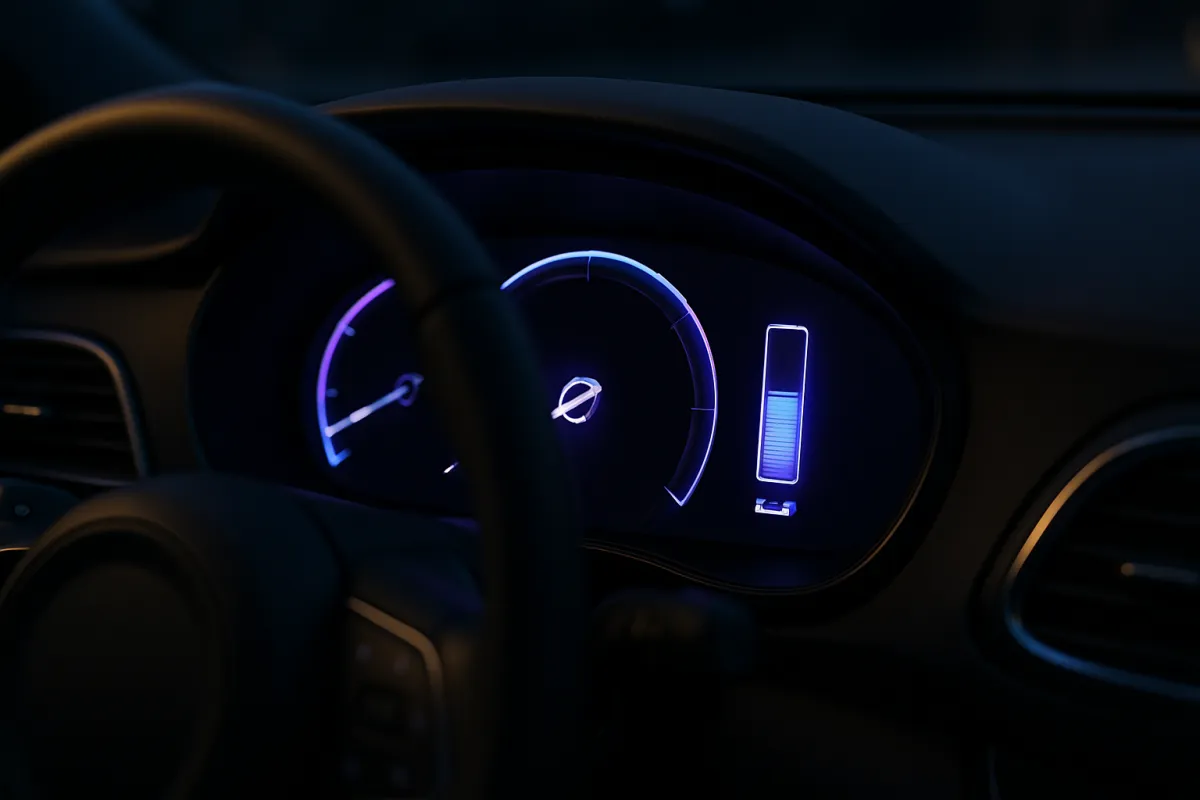
The action: gather more than one piece of evidence. Photograph any usable-capacity or health readout your car shows in its service or battery menu, then charge to full and record the range and kilowatt-hours it reports as a practical demonstration a buyer can repeat. For the strongest proof, pay for an independent battery-health report read through the car’s data port; on a sale worth thousands, the modest cost pays for itself in buyer confidence and a firmer price. As an illustrative guide, many used EVs a few years old report somewhere in the high eighties to mid nineties percent of original capacity, though this varies widely, and our battery-longevity teardown explains what normal decline looks like so you can frame your figure fairly.
The caveat: never overstate the number, because it is the easiest claim in the world for a buyer to check. A single dashboard reading flexes with temperature, driving style, and recent charging, so present your figure as illustrative and invite the buyer to confirm it on a full charge and a test drive. A health claim that holds up builds trust and closes the sale; one that falls apart on the drive costs you the buyer and your credibility. Push the health field in the companion estimator up and down to see how it changes the effective range you can honestly advertise.
Step 3: Choose your selling channel: private, dealer, or instant offer
With a price and proof in hand, decide how you will actually sell, because the channel you pick shapes both the money you get and the effort you spend. There are three broad routes, and each trades money against convenience differently. A private sale, a dealer sale or trade-in, and an instant online offer are not better or worse in the abstract; the right one depends on how quickly you need the money and how much your time is worth to you.

The action: weigh the three honestly against your situation. A private sale typically nets the most, because you keep the margin a dealer would otherwise take, but it costs you the work of listing, messaging, screening buyers, hosting test drives, and handling payment and paperwork safely. A dealer sale or trade-in is faster and far less hassle, often settled in a day, and can simplify taxes if you are buying another car from the same dealer, but you usually accept a lower figure. An instant online offer is the quickest of all, yet as an illustrative rule those tools price conservatively and a used EV’s healthy pack may not be valued as generously as an informed private buyer would value it. Get at least one instant or dealer quote as a floor, then decide whether the private-sale premium is worth your time.
The caveat: do not assume the fast route is the cheap route only for you, and do not assume the private route is pure profit. A dealer or instant offer that is a little lower can still be the smarter choice if you need the money now or dislike dealing with strangers, while a private sale that drags on for weeks has a real, if hidden, cost in your time and patience. Use the instant offer as a benchmark, not a verdict, and pick the channel whose trade-off you are genuinely happy with. The companion estimator shows an illustrative gap between a quick offer and a patient private sale so you can judge the trade with a number in front of you.
Step 4: Sort the warranty and tax-credit paperwork
Before you publish a listing or hand over a set of keys, get the documents in order, because on a used EV the right paperwork is a selling point, not just a formality. Two EV-specific items deserve special attention alongside the usual title and records: the battery and powertrain warranty, and how any electric-vehicle incentive applies to your buyer. Handled well, both make your car more attractive and your sale smoother; handled carelessly, they create doubt exactly when a buyer is deciding whether to trust you.
The action, on warranty: confirm the exact terms using the vehicle identification number, note how much time and mileage remain on the battery and powertrain coverage, and, crucially, whether that coverage transfers to a new owner and under what conditions. In many cases EV battery and powertrain warranties follow the car, which is a genuine advantage you can advertise, and a commonly cited baseline is in the region of eight years or 100,000 miles, whichever comes first, though this varies by manufacturer, model year, and market, so verify the actual figure for your car rather than quoting the general one. Have the details ready to show, because a buyer who sees real transferable coverage remaining will pay more for the reassurance, and our battery-replacement teardown explains why that safety net is worth so much.
The caveat, on tax credits: there is no longer a federal one to talk about. The federal used clean vehicle credit is gone: no federal credit is available for a vehicle acquired after September 30, 2025, as the IRS’s used clean vehicle credit page states, where acquired means a written binding contract plus a payment, and a nominal deposit or a trade-in counts as that payment. So a federal credit is not a selling lever, and any buyer who tells you they are pricing your car around one is working from superseded rules. A state or utility programme may still exist where they live, but that is theirs to check with their own utility and state agency, so do not promise it and do not quote a figure. Sort the ordinary paperwork too, the title, bill of sale, and service records, so nothing stalls the close in Step 7.
Step 5: Write a listing that sells the charging story
Now translate all that preparation into a listing that earns clicks and serious enquiries, and remember that selling an EV is partly about selling a way of living with a car that many buyers have not tried. Beyond the usual details, your listing should tell the charging and running-cost story, because low home-charging cost and light maintenance are exactly what draws people to a used EV, and a seller who spells that out stands apart from one who just lists specs. Photographs and honest specifics do the heavy lifting here.

The action: lead with the facts a buyer needs and the story that makes them want the car. State the model, year, mileage, your documented battery state of health, and the remaining transferable warranty right at the top, since those answer the buyer’s biggest questions before they ask. Then tell the charging story: the connector the car uses for everyday and fast charging, how easy the car is to live with if the buyer can charge at home, and any charging cable or home-charging equipment you are including, which adds real value, as our home-charging teardown makes clear. Add clear, well-lit photos from several angles, including the health readout and the charging port, and a plain, honest description of condition. Price it as you set it in Step 1 and explain the pack briefly so the number makes sense.
The caveat: do not oversell or bury the flaws, because a listing that overpromises just wastes everyone’s time and yours most of all. Mention any known issues plainly, a tire due for replacement or a small scuff, so buyers arrive informed rather than disappointed, and never claim a health figure you cannot back up. Skip the vague hype and let the documented pack, the charging story, and the honest photos do the persuading. A listing that reads as straight and well-prepared attracts straight, serious buyers, which is exactly who you want walking up to the car.
Step 6: Screen buyers and run the test drive
Once enquiries arrive, your job shifts from marketing to filtering, because a smooth sale depends on spending your time on real buyers and staying safe with strangers. Screening protects both your schedule and your safety, and a used EV adds a small twist: the test drive is where your documented battery health either proves itself or does not, so it matters more than a casual spin around the block. Handle this stage calmly and the close in Step 7 becomes routine.
The action: qualify buyers before you meet, then run a proper, safe test drive. On the phone or in messages, gauge whether the buyer is genuine, understands they are buying an EV, and is ready to move, and steer clear of anyone who dodges basic questions or pushes to pay in unusual ways. For the meeting, choose a safe, public place in daylight, bring someone with you, and let the buyer confirm the things you documented: the battery health screen, a full-charge range if practical, and that charging initiates on a charger. Invite them to arrange their own pre-purchase inspection, because a confident seller welcomes verification, and it often seals the deal. Reconcile what they see with your stated figures so the honesty you built in Steps 1 and 2 pays off in trust.
The caveat: never let eagerness to sell override your safety or your terms. Do not hand over the keys for an unaccompanied test drive with a stranger, do not meet at your home alone, and do not let a buyer pressure you into skipping steps or accepting a rushed, informal payment. If a buyer’s story or behavior feels off, it is fine to walk away, because there will be other buyers, and a used EV with a documented pack sells itself given a little patience. Keep your paperwork and payment plan, from Step 4 and Step 7, clear in your mind so no one can hurry you past them.
Step 7: Close the sale safely and transfer ownership
The final step is where a good sale is either completed cleanly or lost to a costly mistake, so treat the close with the same care you gave the pricing. Everything you have done, the honest price, the documented pack, the ready paperwork, comes down to a secure exchange of money for the car and a clean transfer of ownership. Private sellers most often get burned here, on payment and on liability, so slow down and do this properly rather than rushing to be finished.
The action: agree the final figure, insist on a secure and verified form of payment, and confirm the funds have genuinely cleared before you release the car. Prepare a bill of sale that records the vehicle, the price, the date, and both parties, sign over the title as your local process requires, and hand over the extras you promised, the charging cable, the records, and the warranty details from Step 4. Then complete the ownership transfer with your local authority and notify your insurer so registration and liability leave you at the right moment, not before the car is truly gone. Give the buyer the health documentation and any battery report so they drive away as confident as you were honest.
The caveat: be alert to payment scams and never let pressure rush the money. Be wary of overpayment tricks, of buyers who want to pay in odd or untraceable ways, and of anyone urging you to sign over the car before you have confirmed the funds are really in your account, not merely showing as pending. A payment that looks complete but later reverses is the classic way a private seller loses both the car and the money. Meet in a safe place, verify the payment, complete the transfer, and only then celebrate. Run your final price and the car’s health through the companion estimator one last time so the number you close on still makes sense.
What sells a used EV fastest
Not every part of the sale carries equal weight, and knowing the ranking helps you spend your effort where it moves the needle. The chart below is an illustrative, directional ranking of what helps a used electric car sell quickly and for a fair price, not a measured statistic; the point is the order, with documented battery health firmly on top.
What sells a used EV fastest
Illustrative relative weight of each factor in selling a used electric car quickly and for a fair price; directional, not a measured statistic.
Presentation still matters, but it sits below the pack on purpose: great photos on an undocumented, overpriced battery attract browsers, while a documented pack at a fair price attracts buyers.
The ranking carries the whole strategy in one glance. Prove the battery, show the warranty, price fairly against real comparables, tell the charging story, and present the car honestly, in that order. Sellers who invert it, leading with glossy photos and an optimistic price while treating the pack as an afterthought, are the ones whose listings sit unsold or attract only grinders and lowballers.
A worked example: selling one EV end to end
Numbers land harder as a story, so here is one illustrative seller running a single car through all seven steps, with every figure directional rather than a spec for any particular model. Call the car a few years old, with comparable listings clustering around an illustrative 17,000 dollars, a battery reporting a state of health around 90 percent against a model that showed roughly 250 miles when new, and several years of transferable battery warranty remaining. The seller wants a fair price but is not in a desperate hurry.
Working the steps: comparable research and the strong, documented pack support asking near the top of the cluster (Step 1), and the seller photographs the health screen and pulls a full-charge range to prove it (Step 2). An instant online offer comes in noticeably below the private figure, so the seller decides the private-sale premium is worth a couple of weeks of effort (Step 3). The warranty is confirmed transferable by VIN and the title and records are gathered, with the tax credit left as the buyer’s own matter to verify (Step 4). The listing leads with the health figure and warranty, tells the home-charging story, includes the charging cable, and shows clear photos (Step 5). The seller screens enquiries, meets a genuine buyer in a safe public place, and the test drive confirms the health claim (Step 6), then closes with verified, cleared payment and a prompt ownership transfer (Step 7).
The value shows in how the pieces stack. The chart below splits, illustratively, what drives a used EV’s resale value into its main parts; the segments sum to 100 percent of the value story, not of the price, and the pack and its coverage dominate on purpose.
What drives a used EV's resale value
Illustrative split of what shapes the price a used electric car can command; shares shift with model, market, and condition.
The exact shares shift with your model, market, and condition; the shape is the point, and a documented, healthy, covered pack is what lets you sell near the top of your range.
The lesson is not the exact numbers, which will differ for your car, but the order of operations: prove the pack and warranty, price fairly, present honestly, then close safely. Run your own car through the companion estimator to see its effective range and a pricing note before you list.
Common mistakes that cost used-EV sellers money
A handful of recurring errors turn a straightforward used-EV sale into a slow, underpriced one, and naming them is half the defense.
- Overpricing a tired pack. Asking a healthy-pack price for a degraded battery and hoping buyers miss it just filters for people who will discover the truth on a test drive and walk, or grind you down once they do. Price for the pack you actually have and say why.
- Failing to document battery health. Claiming a strong state of health without proof leaves informed buyers skeptical and invites lowball offers. A health screenshot, a full-charge range, or an independent report is what converts a doubter into a buyer.
- Ignoring the warranty as a selling point. Not confirming or advertising remaining, transferable battery and powertrain coverage leaves money on the table, because that safety net is worth real money to the buyer. Check it by VIN and show it.
- Picking the wrong channel for your situation. Rushing to an instant offer when you had time to sell privately, or grinding through a private sale when you needed cash fast, both cost you. Get a quote as a floor, then choose the trade you are genuinely happy with.
- Closing carelessly. Handing over the car before verified payment has truly cleared, meeting alone, or skipping the ownership transfer is where sellers lose the money or stay on the hook for liability. Slow down and close properly.
Each mistake shares a root: treating the EV like a generic used car and skipping the pack. The battery, the warranty, and a safe close are what make a used-EV sale go well, which is exactly why disciplined sellers handle them first and last.
Troubleshooting: low health, no records, and lowball offers
What if my battery health is lower than I hoped? A weaker pack is not a reason to hide the number; it is a reason to price for it. Confirm the real figure with a full charge and, ideally, an independent report, set your price below comparable healthier cars, and say plainly in the listing that the price reflects the pack. Honest, well-priced cars with modest degradation sell; overpriced ones with the same pack sit unsold. Our battery-longevity teardown helps you judge and explain whether the decline is normal for the age.
What if I have no service records? Missing paperwork lowers buyer confidence, but you can rebuild some of it. Order what you can from the manufacturer or service network using the VIN, pull a battery-health report to substitute for a maintenance history on the part that matters most, and be upfront about what you do and do not have. A documented pack goes a long way toward offsetting thin records, because it addresses the buyer’s single biggest concern directly.
What if buyers keep lowballing me? Persistent lowball offers usually signal one of two things: your price is above what your documented pack and comparables support, or your listing has not proven the battery health that would justify the number. Revisit your comparables, make sure the health documentation is front and center, and hold firm on a fair, evidenced price rather than chasing every low offer. A well-documented car at a defensible price attracts serious buyers and repels the rest.
What if the buyer wants their own inspection? Welcome it. A buyer arranging a pre-purchase inspection is a serious buyer, and a confident seller has nothing to fear from verification when the pack and condition are as stated. Facilitate the inspection at a reasonable time and place, keep your documentation handy, and let the independent check confirm your honesty. It often closes the sale faster than resisting would.
The used-EV seller’s checklist
Keep this short list to hand as you sell, and the discipline becomes automatic.
- Price on battery health against comparables: anchor to what similar cars ask, then adjust up or down for your documented state of health and remaining warranty.
- Document the pack: photograph the health readout, record a full-charge range, and get an independent battery report when you want top dollar.
- Choose your channel deliberately: get an instant or dealer quote as a floor, then decide whether the private-sale premium is worth your time.
- Sort the paperwork: title, bill of sale, service records, warranty terms by VIN, and any battery report, all ready before you list.
- Tell the charging story: state the connector, home-charging ease, and included cable or equipment, with clear photos and honest condition notes.
- Screen buyers and run a safe test drive: qualify enquiries, meet in a safe public place with someone along, and let the buyer verify the health figure.
- Close safely: verified, cleared payment before you hand over the car, a complete bill of sale, and a prompt ownership transfer and insurer notification.
Work down the list in order and the biggest risks, an unproven pack and an unsafe close, are handled at the start and the finish, which is exactly where a used-EV seller wants them.
The bottom line
Selling a used electric car well is a matter of proof and order. Price the car on its battery health rather than its mileage, then document that health so your number stands up, because the pack is where the value and the buyer’s doubt both live. Choose the selling channel whose trade between money and effort you are genuinely happy with, ready the warranty and paperwork that reassure a buyer, and write a listing that tells the charging story an EV newcomer wants to hear. Then screen buyers, host a safe test drive, and close on verified payment with a clean ownership transfer.
Do it in that order and a used EV often sells faster and for a fairer price than sellers expect, because a documented, healthy, covered pack answers the buyer’s biggest question before they ask it. Every number here is illustrative and will shift with your specific car, your market, and your timing, so verify the details that apply to you. Size your own sale by feeding the car’s original range, its battery health, and your asking price into the companion estimator, and let honest documentation, not optimistic hope, set the price.
This teardown is educational and independent, written by people who would rather document a battery than dress up a listing. Every price, range, percentage, state-of-health figure, and value share above is illustrative and directional, meant to show the shape of a used-EV sale rather than a specification for any particular vehicle, and your real numbers will shift with the exact car, its battery and warranty, your local market, the season, and how you present it. Warranty transfer rules and electric-vehicle incentive programs change and vary by manufacturer and market, and incentive rules in particular changed during 2025, so confirm the current, official terms that apply to your car and your buyer before relying on them. Nothing here is financial, legal, or professional advice; verify the details that matter to your sale, and take care with payment and ownership transfer, before you hand over the keys.
Frequently asked questions
What is the most important thing when selling a used electric car?
Battery health is the single biggest lever on both your price and how fast the car sells, ahead of the paint, the mileage, or the extras you throw in. The pack is the most expensive part of an electric car, so a buyer's first real question is how much capacity remains, described as state of health or SOH. If you can document a strong figure, you can ask at the top of the comparable range and defend it; if the pack is tired, you will sell faster and fairer by pricing for it openly rather than hoping a buyer misses it. Everything else about selling a used EV, the photos, the listing, the negotiation, sits on top of that one number. Get the health story right and the rest of the sale gets easier.
How do I prove my EV's battery health to a buyer?
Give the buyer more than your word, because a serious used-EV buyer will check anyway. Many EVs show usable capacity or a health readout in the service or battery menu, so photograph that screen; you can also charge the car to full and record the range and usable kilowatt-hours it reports as a practical demonstration. An independent battery-health report read through the car's data port is the strongest proof and is worth the modest cost when you want top dollar. Present the figure honestly and let the buyer verify it on a test drive rather than overstating it, because a claim that falls apart on a full charge costs you trust and the sale. Documented health is what turns a skeptical buyer into a confident one.
Should I sell my used EV privately or to a dealer?
It is a trade between money and effort, and there is no single right answer. A private sale usually nets the most because you capture the margin a dealer would keep, but it takes more of your time to list, field messages, screen buyers, host test drives, and handle the paperwork and payment safely. Selling to a dealer or taking an instant online offer is faster and simpler, often done in a day, but you typically accept a lower figure for that convenience. A used EV adds one wrinkle: not every dealer prices battery health well, so a private buyer who understands EVs may value a healthy pack more fairly than a generic instant-offer tool. Weigh how quickly you need the money against how much you are leaving on the table.
Does the EV tax credit or warranty transfer to the person who buys my car?
The battery and powertrain warranty often follows the car rather than the original owner, which is a genuine selling point, but you should confirm the exact terms rather than assume them. Coverage length, conditions, and whether it transfers vary by manufacturer, model year, and market, so check with the manufacturer using the vehicle identification number and be ready to show the buyer what remains. Tax credits are a separate matter and there is no longer a federal one in play, because no federal credit is available for a vehicle acquired after September 30, 2025, where acquired means a written binding contract plus a payment and a nominal deposit or a trade-in counts as that payment. So do not offer a federal credit as a reason to buy, and do not let a buyer price your car as though one applies. Present the warranty you can document and leave any state or utility programme for the buyer to check with their own utility and state agency.
How much does battery degradation lower my used EV's value?
There is no fixed discount, because it depends on how far the pack has fallen, the remaining warranty, and what comparable cars are asking, but the direction is clear: lower state of health should mean a lower price. As an illustrative way to think about it, a pack at a strong health figure backed by transferable warranty supports a price near the top of the comparable range, while a noticeably degraded one should sit below it, with the gap reflecting the lost range and the raised risk of a future battery cost. The honest move is to price for the pack you actually have and document it, rather than asking a healthy-pack price for a tired one. Buyers who know EVs will find the truth on a test drive, so pricing it in from the start sells the car faster.
What paperwork do I need to sell a used electric car?
You need the same essentials as any car sale plus a few EV-specific items that build buyer confidence. The core paperwork is the title, a bill of sale, your maintenance and service records, and whatever your local process requires to transfer ownership and cancel your registration and insurance at the right moment. On top of that, gather the EV extras: the battery and powertrain warranty details tied to the VIN, any battery-health report or screenshots you have, and the original charging equipment and cables, since a complete set reassures buyers and supports your price. Having it all ready before you list makes the sale smoother and signals that the car was cared for, which is itself worth money.
How do I sell my used EV safely and avoid scams?
Treat the close with the same care you gave the pricing, because the last step is where private sellers get burned. Meet buyers in a safe, public place in daylight, ideally somewhere with cameras, and bring someone with you for test drives. Insist on a secure, verified form of payment and confirm the funds have genuinely cleared before you hand over the keys, title, or signed bill of sale, and be wary of overpayment offers, rushed pressure, or anyone unwilling to meet in person. Complete the ownership transfer and notify your local authority and insurer promptly so liability leaves you cleanly. A calm, documented close protects both the money and you.
Is it a good time to sell a used electric car?
Timing affects your price, though it matters less than battery health and honest presentation. Demand for a specific used EV shifts with fuel prices, new-model releases that can pull down older values, incentive changes that move buyers between new and used, and the season, since interest often varies through the year. Rather than trying to time the market perfectly, focus on what you control: a documented healthy pack, remaining transferable warranty, a fair price against current comparable listings, and a clean, well-photographed car. If you have flexibility on when to sell, watching comparable listings for a few weeks gives you a realistic read on demand for your exact model without gambling on a forecast.