What's in this teardown
- Before you start: what apartment charging actually needs from you
- The six options for charging an EV in an apartment
- Step 1: Audit where your car parks and where you spend time
- Step 2: Calculate the weekly energy you actually need
- Step 3: Test whether a standard outlet covers your week
- Step 4: Ask your building or HOA for outlet or charger access
- Step 5: Map workplace and public charging into a weekly routine
- Step 6: Set up billing, access, and backup
- Step 7: Run the routine for a month and tune it
- Illustrative monthly charging cost by where the energy comes from
- Where a renter’s weekly energy actually comes from
- A worked example: charging one EV from an apartment
- What a building actually weighs when you ask
- Electrical safety: the part with no negotiating room
- What it costs the building, and how the money usually gets split
- Right-to-charge rules and your lease: how to find out what applies to you
- Common mistakes renters make with apartment charging
- Troubleshooting: what if the plan breaks
- The apartment charging checklist
- The bottom line
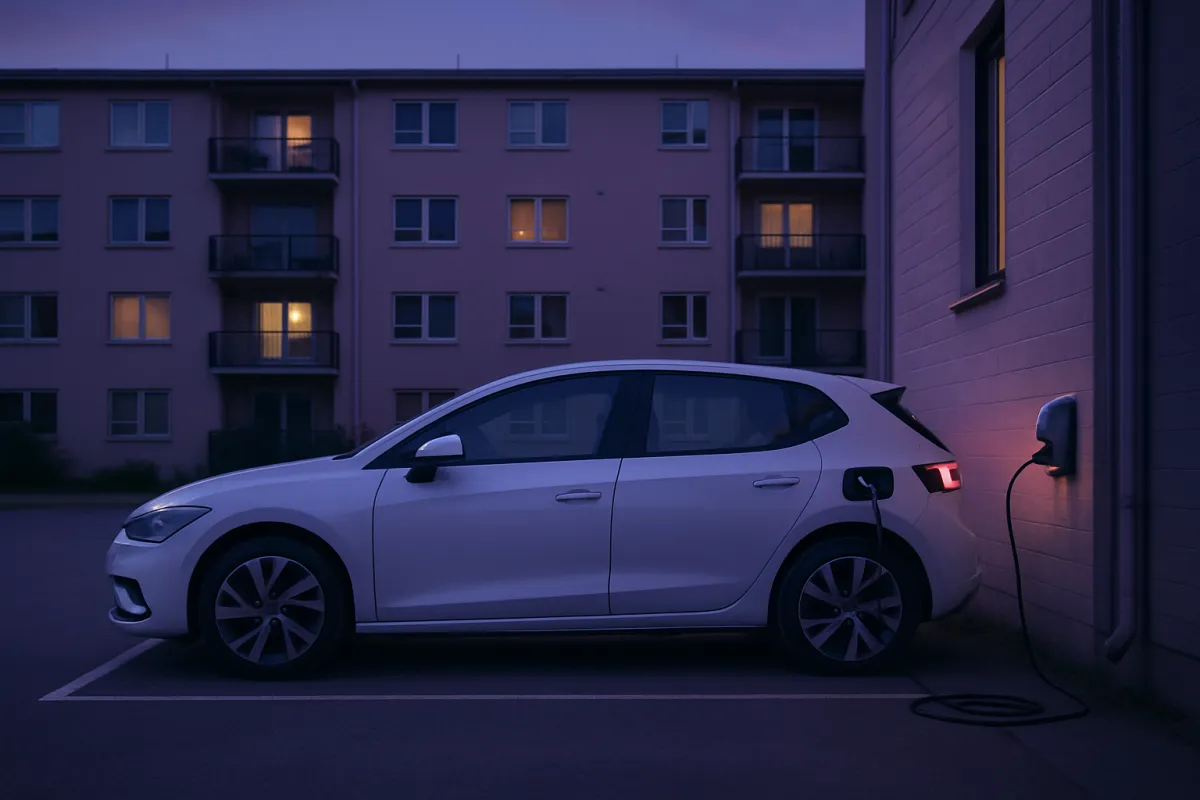
The barrier that keeps most apartment residents out of an electric car is not price, range, or reliability. It is a parking space with no plug, and the quiet assumption baked into almost every piece of EV advice that you own the wall your car parks next to. Our home charging teardown is written for exactly that reader, and it is genuinely the easy case. This one is for the harder one: you rent, the parking is shared or assigned or on the street, and nobody is installing anything on your account this month.
The renter’s version of this problem is solvable, and it is solvable with arithmetic rather than optimism. This teardown works through seven ordered steps, from auditing where your car actually sits to running a routine for a month and tuning it, and it lays out the six options that any apartment resident is choosing among. Along the way it prices what each option costs, using our home charging cost teardown and our public charging cost teardown as the reference points for the two ends of the range. Run your own numbers as you go with our calculator.
Key takeaways
- The question is not "can I install a charger" but "can I replace my weekly kWh from the places my car already parks", and that number is small: an illustrative 200 mile week is about 60 kWh.
- An ordinary 120 volt outlet delivers roughly 1.2 kilowatts, about 4 miles of range per hour, so a 10 hour night adds near 40 miles. That covers a surprising share of real commutes.
- Six options exist: an outlet where you park, a building or shared Level 2 unit, workplace charging, public Level 2 near a place you already sit, DC fast charging as a weekly stop, and borrowed or rented parking with power.
- Buildings say no to vague requests. A request that names the circuit, the metering, the cost split, the electrician, and the liability is a different conversation entirely.
- Extension cords, power strips, and daisy-chained cables are the one hard no here. Any building electrical work needs a licensed electrician and written landlord permission.
Before you start: what apartment charging actually needs from you
This is a planning exercise before it is anything else, and the planning is short. Gather four things and the rest of the steps have answers ready. First, two weeks of real odometer readings, because the single most common failure in apartment EV ownership is solving for a battery size instead of solving for a week of driving. Second, your car’s efficiency figure in kWh per 100 miles, which appears on the vehicle’s own energy screen and turns miles into the energy you must actually source. Third, an honest inventory of where the car sits for more than an hour: home, work, gym, grocery, a relative’s driveway. Fourth, a copy of your lease and, if you are in a condo, the association documents, because the paragraph that governs alterations and parking is the one you will be quoting later.

Time and difficulty split unevenly. Steps one through three are an evening of arithmetic and one overnight test. Step four, the building conversation, runs on the building’s clock and can take anywhere from a week to a full budget cycle, which is why the steps are ordered to give you a working routine before that conversation concludes. Steps five through seven are a couple of hours of setup and then a month of living with it. Nothing in this teardown asks you to touch wiring. The one part that is not a resident’s job, ever, is electrical work, which belongs to a licensed electrician with the building’s written permission.
The six options for charging an EV in an apartment
Before the steps, here is the whole menu, because most residents only know about two of these and rule out ownership on that basis. Option one is a standard 120 volt outlet within reach of where you park, whether that is a garage wall, a carport, or an exterior receptacle. It is slow, it needs permission, and it is by far the cheapest and least dramatic solution when it is available. Option two is a Level 2 unit the building installs, either dedicated to your stall or shared on a rotation, which is the option with the longest lead time and the best outcome. Our Level 2 explainer covers what that hardware actually is.
Option three is workplace charging, which is quietly the strongest option for anyone whose employer offers it, because the car sits still for eight hours anyway and the energy is often free or heavily subsidized. Option four is public Level 2 near somewhere you already spend an hour or more: a gym, a grocery run, a library, a shared office. Our public charger walkthrough covers the mechanics of using one.
Option five is DC fast charging treated as a weekly fuel stop, the most expensive and most car-like of the six. Option six is the one people forget: borrowed or rented parking with power, meaning a relative’s driveway, a friend’s garage on the nights you visit anyway, or a nearby monthly parking space that includes an outlet. Most workable routines combine three of these, not one.
Step 1: Audit where your car parks and where you spend time
Start by mapping reality rather than intentions, because the option list above is meaningless until you know which entries are actually available to you. Spend a week writing down every place your car sits still for an hour or more and how long it stays there. You are looking for dwell time, not distance, since energy transfer is a function of hours plugged in far more than it is of charger speed. A car parked eight hours at a workplace with a modest Level 2 unit will take on more energy than the same car at a fast charger for twenty minutes.
Then walk your own parking area and look specifically at outlets. Exterior receptacles exist on more buildings than residents realize, put there for landscaping equipment, holiday lighting, or maintenance. Note where they are, how far they sit from where you park, and whether the run is a clean line or crosses a walkway. Do not use one yet. You are building the specific request you will make in step four, and “the outlet on the north wall of the carport, about 18 feet from stall 14” is a request a building can evaluate.
Extend the audit outward. Check the parking situation at your workplace, at the two or three places you spend an hour weekly, and at any relative or friend whose driveway you visit regularly. Watch out for the trap of counting a location you rarely go to: a charger two miles away that you would have to make a special trip for is not a charging option, it is an errand. Count only the places your life already takes you.
Step 2: Calculate the weekly energy you actually need
This is the step that makes everything else tractable, and it is the one almost nobody does. Take your weekly miles and multiply by your car’s efficiency in kWh per 100 miles, divided by 100. For an illustrative driver covering 200 miles a week in a car using 30 kWh per 100 miles, that is 200 times 0.30, or 60 kWh a week. That is the entire problem. Not a battery size, not a range figure, just 60 kWh that has to come from somewhere across seven days.
Sixty kilowatt-hours is a small number once you see what can supply it. It is roughly five overnight sessions on an ordinary outlet, or about eight hours on a single Level 2 stall, or two twenty-five minute stops at a fast charger. Framed as a battery, “I need to fill a 75 kWh pack” sounds like a project requiring infrastructure. Framed as 60 kWh a week, it sounds like something several ordinary parking situations can cover between them, which is exactly right.
Add margin honestly. Winter driving in cold climates commonly raises consumption noticeably, so a week that needs 60 kWh in May may need meaningfully more in January, and our range teardown covers where those losses come from. Build in a buffer of perhaps 20 percent rather than planning to the exact figure. The caveat to watch: use your car’s real observed efficiency, not the sticker number, because driving style and climate move it more than most people expect. Put your own numbers into our calculator and carry the weekly kWh figure into every step that follows.
Step 3: Test whether a standard outlet covers your week
Now test the cheapest option against the number you just produced. A standard grounded 120 volt household outlet on a 15 amp circuit delivers an illustrative 1.2 kilowatts to the car once conversion losses are counted, which is about 4 miles of range per hour at 30 kWh per 100 miles. Ten hours plugged in overnight is therefore roughly 12 kWh, or about 40 miles of range. Five such nights is 60 kWh, which is the entire example week. This is why the humble outlet keeps beating people’s expectations.
Run the test properly if you have legitimate access to an outlet, meaning permission and a run the vehicle’s own supplied cable reaches without any extension. Plug in for one full night and read the energy added on the car’s screen the next morning. That measured figure, not a calculated one, is your real per-night number, since circuit condition, temperature, and the car’s own onboard losses all move it. Multiply it by the number of nights a week you can realistically plug in and compare against your weekly kWh.
The watch-out here is the one that matters most in this entire teardown. Do not create the access yourself. No extension cords, no power strips, no cable draped across a walkway or through a window. A charging session is a continuous heavy draw for many hours, which is precisely the duty that ordinary cords and connections are not built for, and it is a genuine fire and trip hazard rather than a rule for its own sake. If the outlet is out of reach, that is a fact to bring to step four, not a problem to solve with hardware.
Step 4: Ask your building or HOA for outlet or charger access
This is the conversation that determines your ceiling, so make it a specific proposal rather than a question. A request that reads “could I charge my car here” gets declined by default because it puts the work of thinking through the problem on the person receiving it. A request that names the outlet or the stall, the electrical draw in amps, the proposed metering, who pays for the energy, who pays for the installation, which licensed electrician would do the work, and what insurance you carry gets evaluated on its merits. You are handing over a decision, not a puzzle.
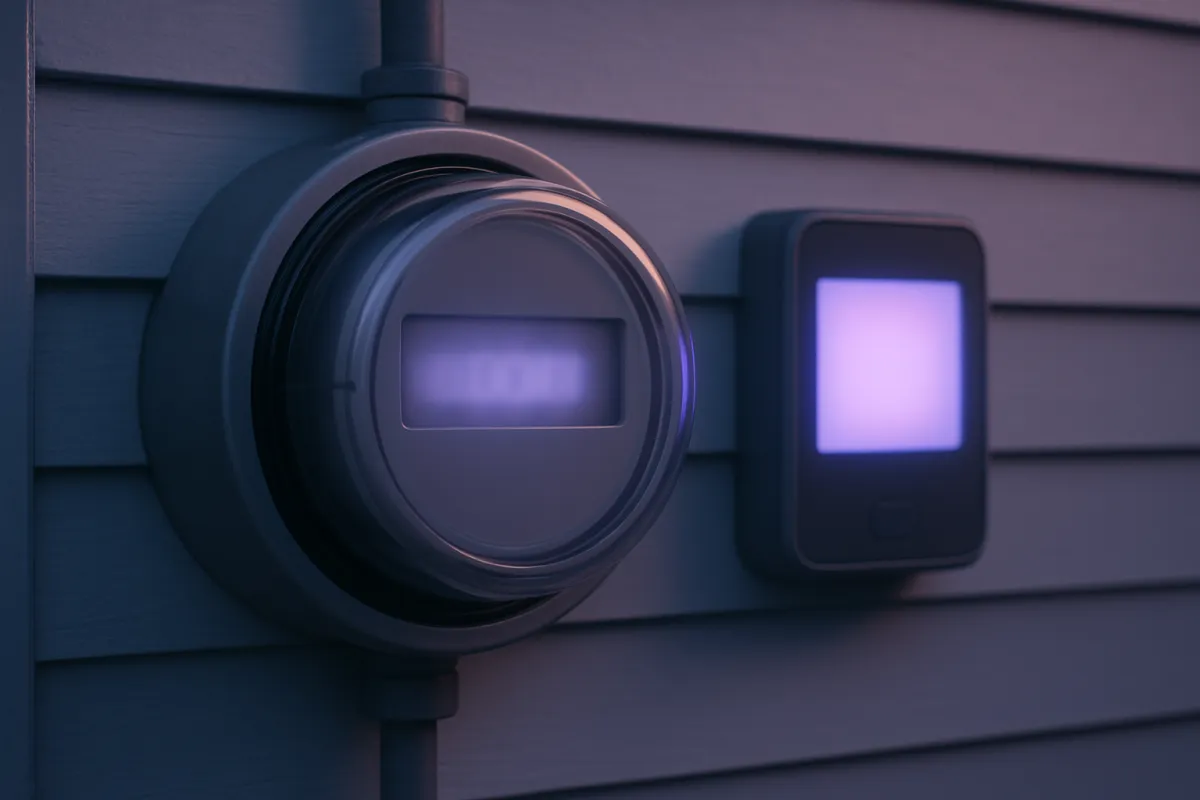
Anticipate the four objections. Capacity: a Level 2 unit is a large continuous load, and the building’s panel may or may not have room, which is answered by a load calculation from a licensed electrician rather than by argument. Metering and cost allocation: nobody wants other residents subsidizing your fuel, so propose a submeter, a metered smart unit that bills the user, or a flat monthly fee that plainly overshoots your actual consumption. Liability: offer to carry the relevant insurance and to have all work permitted and inspected. Fairness and precedent: frame a shared unit rather than a private one wherever possible, because “one stall, several residents, a rotation” is an easier yes than a private amenity.
Two practical notes. Put the request in writing and keep the thread, because building decisions outlive the person who made them. And ask about the modest version explicitly: many buildings that will not fund a Level 2 project will permit a resident-paid outlet on an existing circuit, which our charger install teardown describes as a project in its own right. The caveat with no flexibility in it: never proceed on a verbal yes, and never let anyone but a licensed electrician touch the wiring.
Step 5: Map workplace and public charging into a weekly routine
Whatever step four produces, you need a routine that works now, and the design principle is simple: attach charging to something you already do. A stall at your workplace, a Level 2 unit at the grocery store you visit weekly, a charger at the gym where you spend an hour twice a week. Each of these turns dwell time you were spending anyway into energy, at no additional time cost to you. This is the difference between apartment charging that feels invisible and apartment charging that feels like a chore.
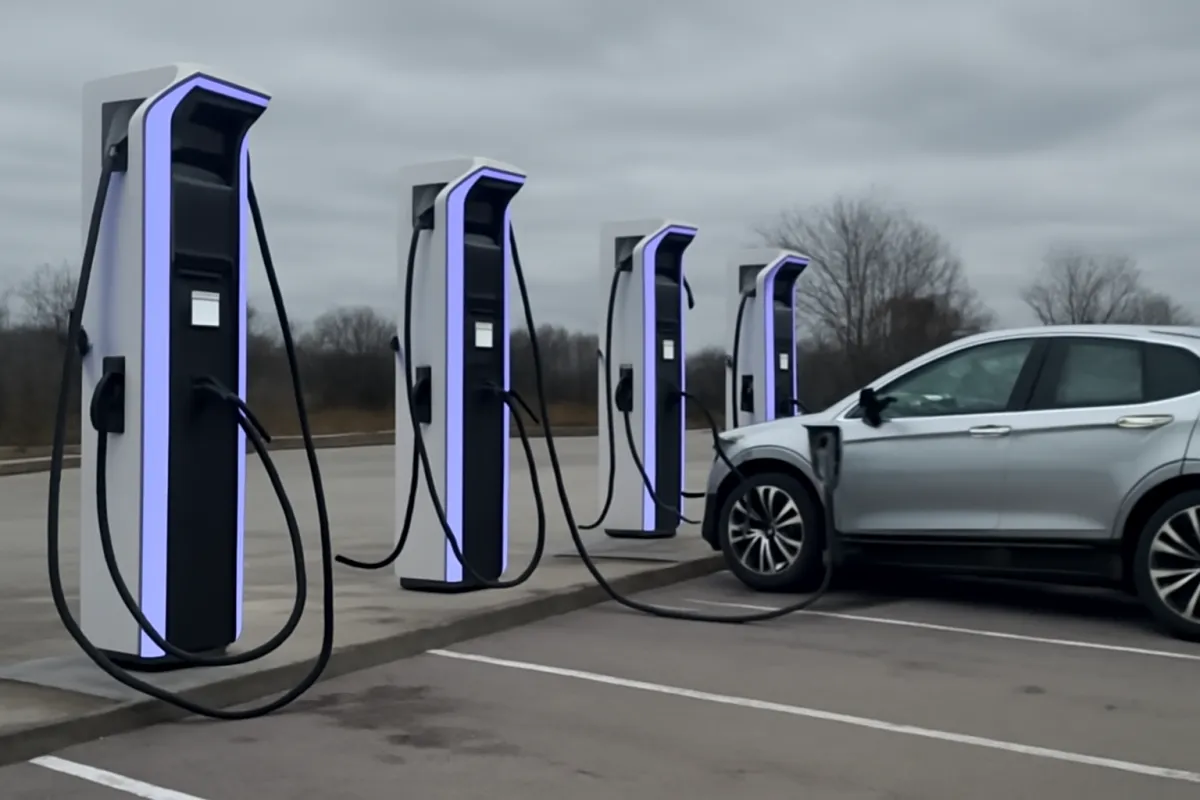
Do the arithmetic per location so you know what each contributes. A workplace Level 2 unit at an illustrative 7 kilowatts over an eight hour shift is around 56 kWh, which on its own nearly covers the whole example week. The same unit over a 90 minute gym visit is closer to 10 kWh, useful but not decisive. Fast charging at an illustrative 100 kilowatts for 25 minutes is roughly 40 kWh, which is why a single weekly stop can carry a large share of a routine when nothing else is available. Our charging levels reference has the full picture of what each level delivers.
Then sequence it. Pick a primary source that covers most weeks, a secondary that fills the gap, and a backstop for the weeks that go sideways. Watch out for two failure modes: building a routine that depends on one specific stall being free, and counting free chargers that may not stay free, a risk our free charging teardown treats honestly. Redundancy is the whole point of having three sources rather than one.
Step 6: Set up billing, access, and backup
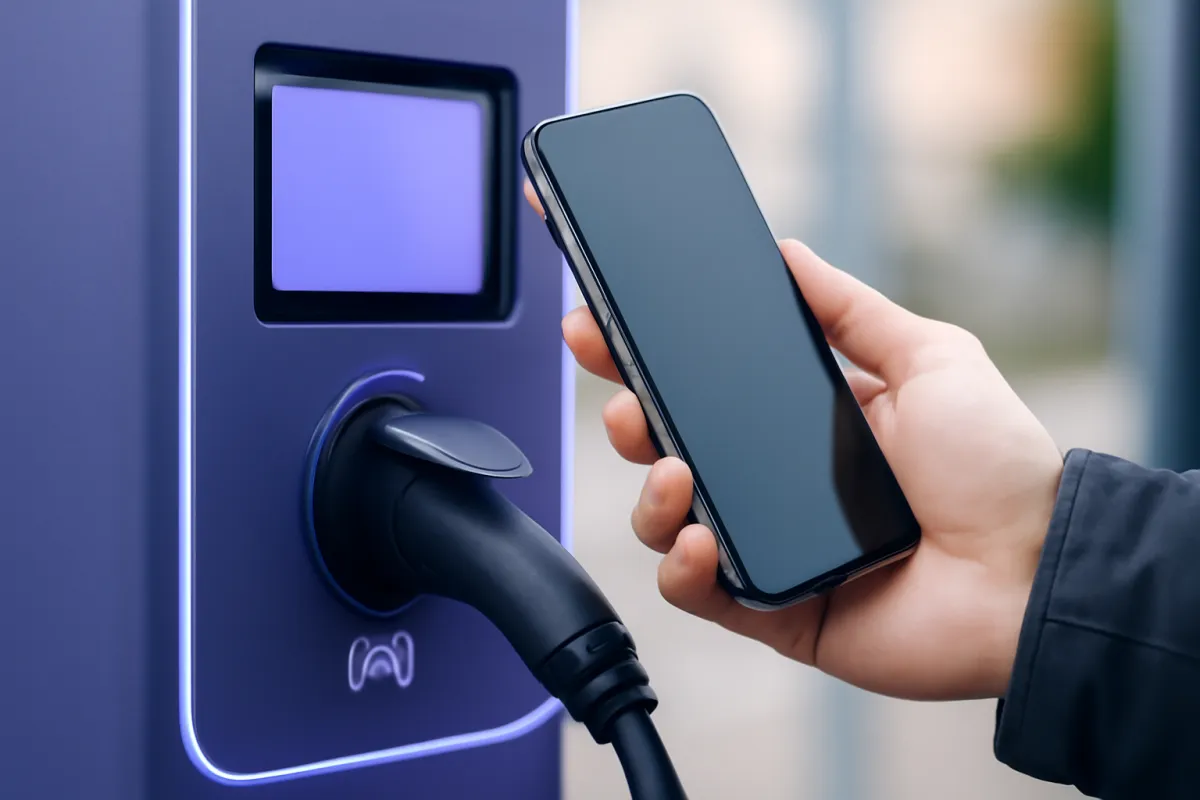
Charging away from a private wall means accounts, and the setup is a one-time hour that removes almost all future friction. Install the payment methods your chosen locations require and complete the account setup at home rather than in a parking lot in the rain, because a first-time signup at a station you have never used is the single most common way a charging stop turns into a forty minute ordeal. Add a payment card, verify it, and run one small session at each of your primary locations before you actually depend on them.
Know your connector and your car’s onboard AC limit before any of this, since both determine which stalls are even useful to you. A car that accepts a maximum of 7.7 kilowatts on AC gains nothing from an 11 kilowatt stall, and a connector mismatch turns an available charger into a decoration. Keep any adapter your regular locations require in the car rather than in the apartment.
For building or shared charging, the billing conversation is different: you want the arrangement in writing, with the rate you pay per kWh or per month, who reads the meter, and how disputes get handled. If the building proposes bundling charging into rent or dues, ask what happens when a second resident buys an EV, because an arrangement that works for one user often fails silently at three. The watch-out: keep a record of your own energy consumption from the car’s own trip data, so that any billing disagreement starts from a number you can point at rather than a memory.
Step 7: Run the routine for a month and tune it
Plans survive contact with a month of real life or they do not, so treat the first month as data collection rather than as the finished state. Track three things: how much energy you actually added each week, where it came from, and how many times you had to make an unplanned charging stop. That third number is the honest measure of whether the routine works, because unplanned stops are the cost that turns people off electric ownership regardless of what the spreadsheet said.
Expect the first month to run high on public charging and to settle down. New owners charge more often and to higher states of charge than they need to, mostly out of unfamiliarity with how much buffer a battery actually carries. As the weekly rhythm becomes visible, most people find they can drop a stop entirely. If your unplanned stops are not falling by week four, the routine has a structural gap rather than a learning curve, and the fix is usually adding a source rather than using an existing one harder.
Tune in this order. First, shift kWh toward your cheapest source, since that is where the money is. Second, shift kWh toward your longest dwell, since that is where the convenience is. Third, and only then, consider whether the building conversation from step four is worth reopening with a month of real data attached, which is a far stronger position than the one you started from. The caveat: leave the buffer alone while tuning, because a routine that works only when nothing goes wrong is not a routine, it is a streak.
Illustrative monthly charging cost by where the energy comes from
The financial spread between the six options is wide enough to change what an electric car costs to run, so it is worth seeing plainly. The chart below prices one illustrative month of 870 miles, which is about 260 kWh at 30 kWh per 100 miles, against four ways of sourcing that energy.
Illustrative monthly cost to cover 260 kWh, by source
An 870 mile month at 30 kWh per 100 miles, priced at illustrative rates of 15, 30, and 45 cents per kWh.
Each bar is 260 kWh times that rate, with bar widths taken from the $117 top of the range. Workplace charging that comes free would sit at zero, which is why an employer stall is the highest-value entry on the whole menu. Rates are illustrative and vary widely by region, network, and time of day.
Read the shape rather than the exact figures. The gap between the cheapest and the most expensive way to buy the same 260 kWh is roughly threefold, which is a meaningful line in a monthly budget but is still small against a car payment, a point our monthly cost teardown puts in context. Even the most expensive row here remains competitive with fuel for many drivers. The renter’s lever is not the rate itself but the mix, which is what the next chart shows.
Where a renter’s weekly energy actually comes from
A workable apartment routine is almost never one source. It is a mix, weighted toward whatever is cheapest and longest-dwelling, with a backstop that rarely gets used. The stackbar below shows the mix in the worked example that follows, with the whole bar representing one week of 60 kWh.
One renter's weekly 60 kWh, by source
Illustrative shares of a 200 mile week for a driver with outlet access three nights and a workplace stall.
Shares sum to 100 percent of a 60 kWh week: about 36 kWh from three overnight outlet sessions, 15 kWh from one workplace shift, and 9 kWh from a public Level 2 stall during an errand. No fast charging appears here because none was needed, which is the mark of a routine that is working.
Two things stand out in that shape. The slow source does the heavy lifting, because hours beat kilowatts when the car is parked anyway. And the expensive source is absent, not because fast charging is bad but because a routine designed around dwell time rarely reaches for it. When a week goes sideways, that missing segment is where the recovery comes from, at a cost of a few dollars rather than a redesign.
A worked example: charging one EV from an apartment
Take a resident of a mid-size building with assigned surface parking, driving an illustrative 200 miles a week in a car observing 30 kWh per 100 miles. Step two gives the target immediately: 60 kWh a week, or about 260 kWh a month across 4.33 weeks. That is the entire problem statement, and it fits in one line.
Step one’s audit finds three things. There is an exterior outlet on the carport wall roughly 15 feet from the assigned stall, which the vehicle’s own cable reaches. The employer has two Level 2 stalls in a lot of forty. And the grocery store visited weekly has a public Level 2 unit that is usually free of cars. Step three’s overnight test on the outlet, once permission is in hand, measures about 12 kWh added in a 10 hour session, which matches the 1.2 kilowatt expectation and works out to roughly 40 miles a night.
Step four produces a modest but real result: the building agrees to the outlet, on the condition that a licensed electrician confirms the circuit, that the resident pays a flat $20 a month toward energy, and that the cable never crosses the walkway. The resident negotiates the flat fee down to metered billing on the electrician’s advice, since 36 kWh a week at an illustrative 15 cents is nearer $23 a month than $20, but metering removes the argument entirely.
Step five assembles the routine from the chart above: three outlet nights a week for 36 kWh, one workplace shift for 15 kWh, and one grocery-trip session for 9 kWh. That is 60 kWh with no special trips. Step six sets up the public network account and tests it once. The month lands near $23 for the outlet energy, nothing for the workplace stall, and roughly $12 for the public sessions at an illustrative 30 cents, so about $35 a month to cover 870 miles. Compare that against the all-fast-charging row’s $117 and the value of the audit becomes obvious. Run your own version through our calculator to see where your week lands.
What a building actually weighs when you ask
Understanding the other side of the table changes how you write the request, and the concerns are more mundane than residents assume. The first is electrical capacity. Multi-family buildings size their service for the loads they were designed around, and a continuous charging load is a new one. Whether there is room is a question for a licensed electrician’s load calculation, and the answer is frequently yes for a single outlet and frequently more complicated for several Level 2 stalls.
The second is cost allocation, which is usually the sticking point rather than capacity. Common-area electricity is paid by everyone, and a resident charging a car on it is a transfer from neighbors, which is precisely the fairness argument a board or manager will raise first. Anything you propose that measures your own consumption and bills it to you dissolves this objection before it is made. Submetered outlets, metered smart chargers, and networked units that handle billing all exist for this reason.
The third is liability and precedent. A cable across a walkway is a claim waiting to happen, an unpermitted circuit is an insurance conversation nobody wants, and a private amenity granted to one resident invites the same request from everyone else. None of these are unreasonable. All of them have answers, and a resident who supplies the answers unprompted is the one who gets a yes. Frame the ask as reducing the building’s risk rather than as an exception being granted to you.
Electrical safety: the part with no negotiating room
Everything else here is a matter of judgment and cost. This section is not. Charging a vehicle pulls a substantial current continuously for many hours, which is the single harshest duty cycle a residential circuit ever sees, and it is unforgiving of the shortcuts that work fine for a lamp or a laptop.
The rules are short. Never use an extension cord, a household power strip, or a multi-outlet adapter for vehicle charging. Never daisy-chain cords to reach further. Never run a cable across a walkway, a driveway lane, or under a door or window that closes on it. Never use an outlet that feels warm, looks discolored, or has a loose fit, and stop immediately if a plug or connector is warm to the touch after a session. Never let anyone but a licensed electrician install, modify, or extend a circuit, and never proceed without the building’s written permission and any permit your jurisdiction requires.
The reason each of these is absolute rather than advisory is that the failure mode is heat inside a wall or a connector, which gives very little warning and does not announce itself until it is a fire. Manufacturers supply a charging cable with the car precisely because that cable is rated for the job; a hardware-store cord is not, regardless of how thick it looks. If the outlet you want is out of reach, the correct answer is always a properly installed receptacle nearer the car, done by a professional, with permission. There is no version of this where the cheap workaround is acceptable.
What it costs the building, and how the money usually gets split
If your building does entertain a charger project, knowing the rough shape of the cost helps you have a useful conversation rather than a hopeful one. The dominant variable is distance: the cost of an installation is driven far more by how far the wiring has to travel from the electrical room to the parking stall, and whether that path involves trenching, boring, or opening finished surfaces, than by the price of the charging unit itself. A stall near the electrical room and a stall across a parking lot can differ by an order of magnitude for identical hardware. Get local quotes; published averages are close to meaningless here.
The units themselves are the smaller line, and networked models that handle access control and billing cost more than simple ones while removing the administrative burden that usually kills these projects. Buildings also weigh ongoing costs: the network subscription, maintenance, and the staff time to handle disputes about who left a car parked in a charging stall.
Cost splits vary and are worth proposing rather than waiting for. Common structures include the resident paying the full installation for a stall assigned to them, the building funding shared infrastructure while residents pay per kWh, a cost-shared model where the building runs the conduit and residents pay for their own units, or a third-party provider installing at their own cost in exchange for the revenue. Check whether your utility or jurisdiction offers programs for multi-family charging, since these change frequently and can shift the economics substantially; confirm current terms with the utility directly rather than relying on any figure you read.
Right-to-charge rules and your lease: how to find out what applies to you
Some jurisdictions have adopted rules that limit how far a landlord or a homeowners association may refuse a resident’s request to install charging, and others have not. Whether anything of the kind covers you depends entirely on where you live, whether you rent or own, and what your specific documents say. This teardown will not tell you that a rule applies to your building, because that is not knowable from here and getting it wrong would put you in a worse position than not asking at all.
What you can do is check in the right order. Start with your own lease or, for a condo, the association’s covenants and rules, looking for the sections on alterations, parking, and utilities. Those documents govern your relationship directly and often settle the question without any statute entering the picture. Then check your state’s current statutes or consult a qualified local attorney about whether any tenant or owner charging provisions exist and whether they reach your situation.
Where such rules do exist, they typically come with conditions rather than granting an unconditional right: the resident commonly bears installation cost, must use licensed installers, may need to carry additional insurance, and may be responsible for removal or for maintaining the equipment. Expect obligations alongside any permission. The practical takeaway is that a well-constructed request usually gets further, faster, than a legal argument does, and that the two work best together rather than in place of each other.
Common mistakes renters make with apartment charging
Most apartment charging failures come from the same short list, and each has a straightforward fix.
- Solving for the battery instead of the week. Planning around filling a 75 kWh pack makes the problem look impossible. Planning around replacing an illustrative 60 kWh a week makes it look ordinary. Do step two first.
- Dismissing the standard outlet without testing it. Level 1 charging sounds too slow to matter until you measure it. At about 4 miles of range per hour, an overnight session covers a great many real commutes.
- Improvising access with cords. Extension cords, power strips, and cables across walkways are the one genuinely dangerous shortcut here, and they will also end your arrangement the first time a neighbor or a manager sees them.
- Asking the building a vague question. “Can I charge here?” gets a no. A written proposal naming the circuit, the metering, the electrician, the cost split, and the insurance gets an evaluation.
- Building a routine with one source. A plan that depends on one specific stall being free fails on the day it is occupied. Three sources with a backstop is the design.
- Defaulting to fast charging out of habit. It is the most expensive way to buy the same energy and, per most manufacturers’ own battery care advice, the pattern worth using sparingly. Our battery life teardown covers why.
Troubleshooting: what if the plan breaks
What if the building says no outright? Then your routine is options three through six, and it still works: workplace charging plus one weekly public session covers the example week comfortably. Reopen the conversation in six months with a month of real usage data and, ideally, a second EV-driving resident alongside you, since two residents asking is a different proposition from one.
What if the outlet you were permitted stops working, or trips repeatedly? Stop using it and report it. A breaker that trips under charging load is a signal about the circuit, not a nuisance to be reset, and repeatedly resetting it is exactly the wrong response. That is an electrician’s diagnosis, requested through the building.
What if your workplace stalls are always occupied? Treat it as a scheduling problem rather than a capacity problem. Arriving 20 minutes earlier, or moving your charging day to the least-competitive day of the week, solves it more often than not. If it does not, ask whether the employer will add a sign-up rota, which costs nothing and usually doubles the effective capacity.
What if winter blows up your numbers? Expect it, since cold weather commonly raises consumption noticeably and slows charging as well. The fix is planned rather than reactive: add a night of outlet charging, or a second workplace session, for the cold months and remove it in spring. What if you move? Redo step one at the new address before you sign, because parking with an outlet in reach is worth negotiating into a lease in a way that is nearly impossible to add afterward. And what if you are considering the car but do not own one yet? Run steps one through three before you buy, since that sequence answers the ownership question far better than a range figure does, as our ownership math lays out.
The apartment charging checklist
The whole exercise, compressed to what you can act on this week.
- Log two weeks of odometer readings and pull your car’s observed kWh per 100 miles from its own energy screen.
- Compute your weekly kWh: weekly miles times efficiency divided by 100. This one number sizes everything.
- Map dwell time, not distance: every place the car sits over an hour, and for how long.
- Inventory outlets within reach of your stall, noting distance and whether the run crosses any walkway.
- Test one legitimate overnight session and read the actual kWh added, then multiply by your realistic nights per week.
- Write the building request as a proposal: the specific outlet or stall, the amperage, the metering, who pays for energy, the licensed electrician, the insurance, and a shared-unit framing where possible.
- Never use an extension cord, a power strip, a daisy chain, or a cable across a walkway, and never let anyone but a licensed electrician touch a circuit.
- Set up and test payment accounts at home before you depend on them, and keep any adapter your routes need in the car.
- Assemble three sources plus a backstop, weighted toward the cheapest and the longest-dwelling.
- Review after one month: unplanned stops, cost per week, and whether the building conversation is worth reopening with data attached.
The bottom line
Charging an electric car from an apartment is a routine you design once, not a piece of infrastructure you have to own. Seven steps get you there: audit where the car actually parks, calculate the weekly kWh you must replace, test whether an ordinary outlet already covers it, ask the building with a specific written proposal rather than a vague question, map workplace and public options into a weekly rhythm, set up billing and access before you need them, and run it for a month before tuning. The six options on the menu are wider than most residents realize, and the strongest routines combine three of them. The one line with no flexibility in it is the safety line: no extension cords, no daisy chains, no cable across a walkway, and no electrical work by anyone other than a licensed electrician with the building’s written permission. Price your own week with our calculator, and if you are still weighing the car itself, our home charging cost teardown and our insurance cost teardown fill in the rest of the running-cost picture.
Written by people who like electric cars, not by your landlord, your electrician, your insurer, or an attorney. Everything above is general education: the charging speeds, energy figures, rates, and monthly costs are illustrative and will move with your vehicle, your climate, your utility, and your building. Nothing here interprets your lease, your association documents, or the statutes of your state, and no part of it authorizes any electrical work. Confirm what your own lease and local rules permit, take building and legal questions to a qualified professional in your jurisdiction, and leave every circuit, outlet, and charger installation to a licensed electrician working with written permission and any required permit and inspection.
Frequently asked questions
Can you own an EV if you live in an apartment with no charger?
Yes, and a large number of owners already do, but it takes a routine rather than a habit. The question is never whether a charger exists at your building; it is whether you can replace the energy your driving uses each week from the places your car already sits. A driver covering an illustrative 200 miles a week needs roughly 60 kWh at a typical 30 kWh per 100 miles, and that can come from an ordinary outlet, a workplace stall, a public Level 2 unit near a place you already spend an hour, or a weekly fast-charging stop. What makes apartment ownership hard is not the absence of a garage; it is skipping the arithmetic and hoping the map sorts it out.
How long does it take to charge an EV from a regular apartment outlet?
A standard 120 volt household outlet delivers an illustrative 1.2 kilowatts once losses are counted, which works out to roughly 4 miles of range per hour on a car using about 30 kWh per 100 miles. A 10 hour overnight session therefore adds around 40 miles, and a full battery from near empty would take days rather than hours. That sounds useless until you notice that most people do not need a full battery; they need yesterday's miles back. If your daily driving sits under about 40 miles and you can plug in overnight, a plain outlet genuinely keeps up.
Will my landlord let me plug into an outlet in the parking area?
It varies enormously, and the answer usually depends on how the request is framed. Buildings say no to vague requests and yes to specific ones that name the outlet, the draw, who pays for the electricity, and who carries the liability. The three things a building typically weighs are whether the circuit can take a continuous load for hours, how the energy gets measured and billed so other residents are not subsidizing you, and what happens if a cable crosses a walkway. Put those answers in the request itself and you are asking a much easier question than most residents do.
What does it cost to charge an EV in an apartment compared with a house?
The energy itself costs the same; what changes is the price you pay for it. Charging from an outlet metered at an illustrative 15 cents per kWh puts an 870 mile month near $39, while covering the same month entirely on public Level 2 at an illustrative 30 cents lands closer to $78, and doing it all on DC fast charging at an illustrative 45 cents runs about $117. Those figures are illustrative and your own rates will differ. The renter's version of the savings lever is not an off-peak schedule; it is the share of your kWh you can move onto the cheapest source you have access to.
Can I run an extension cord from my apartment window to my car?
Treat this as the one hard no in the whole exercise. EV charging draws near the limit of a household circuit continuously for many hours, which is a duty ordinary extension cords and multi-outlet strips were never built for, and daisy-chaining cords compounds the problem by adding resistance and connection points that heat. Cords run across walkways and parking lanes also create a trip hazard and a liability question that will end the arrangement the first time someone complains. If the outlet you want to use is not within reach of the vehicle's own charging cable, the answer is a properly installed outlet, not a longer cord.
Does my state give renters a right to install an EV charger?
Some jurisdictions have adopted rules that limit how far a landlord or homeowners association can refuse a resident's charging request, and others have not, so the honest answer is that it depends entirely on where you live and what your lease or association documents say. Rules of this kind also typically come with conditions attached, such as the resident paying for installation, carrying insurance, or using a licensed electrician. Read your own lease or association covenants first, then check your state's current statutes or ask a qualified local attorney rather than relying on a summary written elsewhere. Do not assume a rule you read about applies to your building.
Is a shared Level 2 charger worth pushing for in a small building?
It often is, because a single Level 2 unit at an illustrative 7 kilowatts adds roughly 25 miles of range per hour, which means one stall can serve several residents on a rotation without anyone waiting up. The practical questions are where the electricity comes from, how it is metered so each user pays their own energy, and whether the panel has capacity for a continuous load of that size. Buildings tend to respond better to a shared unit than to individual stalls because it is one project, one meter, and one set of rules. Whether the economics work depends on installation distance and how many residents actually drive electric.
What happens if I rely only on public fast charging?
It works, and plenty of apartment owners do it, but it is the most expensive and least convenient of the six options. Fast charging typically prices per kWh well above residential electricity, so the same month of driving can cost roughly three times what an outlet would, and the routine adds a recurring errand to your week rather than removing one. Frequent high-power charging is also the pattern manufacturers most often flag in their battery care advice, so it is worth reading your own owner documentation. Use fast charging as the backstop that makes the rest of your routine safe to run, not as the whole plan.