
What's in this teardown
- What the EV tax credit is
- How the clean-vehicle credit works
- Who qualifies: the four gates
- Income limits, explained
- Vehicle price caps
- Assembly and battery sourcing rules
- New EV credit vs used EV credit
- The used EV credit in detail
- How to claim it: point of sale vs tax return
- Claiming at the point of sale
- Claiming on your tax return
- The leasing loophole
- State and local incentives
- Illustrative credit by scenario
- What can disqualify you
- Timing your purchase
- How the credit affects the real price
- Common mistakes
- A worked example: two buyers
- Documents and paperwork to keep
- How the credit fits the total cost
- The bottom line
The EV tax credit is the federal government’s main financial lever for making an electric car cheaper to own, and when it applies it can knock a meaningful sum off the price of a qualifying vehicle. But it is not a coupon you simply grab. The credit, formally the clean-vehicle credit that the IRS administers, comes with a set of gates on both the car and the buyer, and every one of those gates has moved over the years. Understanding how the credit works, who it is actually for, and how to claim it is worth real money, and getting it wrong is worth just as much in the other direction.
This teardown walks through the whole thing: what the credit is, the income limits and vehicle price caps that decide eligibility, the assembly and battery-sourcing requirements that trip up many models, the separate rules for new versus used EVs, how to claim it at the dealership or on your tax return, the leasing route that sidesteps some of the conditions, and where state incentives fit. Every dollar figure here is illustrative and framed as such, because the exact amounts and rules change, and this article is educational, not tax advice. You can also model where an incentive lands in your total price with our project cost calculator.
Key takeaways
- The EV tax credit is the federal clean-vehicle credit, administered by the IRS, commonly cited as up to around $7,500 for a qualifying new EV, but the amount and rules change, so verify current figures.
- Both the buyer and the vehicle must qualify: income limits, a vehicle price cap, and final-assembly plus battery-sourcing requirements all have to line up.
- There is a separate, smaller used-EV credit with its own lower income and price limits, available on qualifying purchases from a dealer.
- You can often claim it at the point of sale as an upfront price cut, or on your tax return, depending on the current rules and the dealer.
- Leasing can sidestep some purchase conditions through a commercial credit the lessor may pass through, and state incentives can stack on top.
What the EV tax credit is
The EV tax credit is a federal incentive designed to lower the effective cost of buying a qualifying electric vehicle. Its formal name is the clean-vehicle credit, and it is administered by the IRS, which sets and updates the rules for who and what qualifies. In its most cited form, it is worth up to around $7,500 for a qualifying new EV, a figure worth treating as illustrative rather than guaranteed, because both the maximum and the conditions attached to it have changed over time.
The important thing to grasp at the outset is that this is a conditional benefit, not a blanket discount on every electric car. A vehicle has to meet certain requirements, and the buyer has to meet certain requirements, and only when both sets line up does the credit apply, sometimes in full and sometimes only in part. That conditional structure is the single most misunderstood feature of the credit, and it is why two people buying two different EVs, or even the same EV in different circumstances, can end up with very different results. For the current maximum and the precise definition of a qualifying vehicle, the IRS is the authority to check.
How the clean-vehicle credit works
Mechanically, the clean-vehicle credit reduces your federal tax liability by the credit amount, which is why it has historically been described as a tax credit rather than a rebate. In its traditional form, you claimed it when you filed your federal return for the year you took delivery, and it offset the tax you owed. More recently, the IRS has also allowed eligible buyers to transfer the credit to a participating dealer at the point of sale, converting it into an upfront reduction in what you pay, which we cover in detail below.

One structural detail matters a great deal and is easy to miss: because it is a credit against tax rather than a cash payment, the traditional version could be limited by how much tax you actually owed, and it has generally been non-refundable, meaning it could reduce your liability but not turn into a refund beyond it. The point-of-sale transfer route changed the practical experience of this for many buyers. The rules on refundability, transfer, and any recapture if you later fall out of eligibility are exactly the kind of detail that changes and that the IRS spells out, so confirm the current treatment rather than assuming the mechanics are the same as a past year.
Who qualifies: the four gates
It helps to picture eligibility as four gates that all have to open. The first is the income gate: your income, measured a specific way and compared against a limit for your filing status, has to be at or below the threshold. The second is the vehicle price gate: the car’s price has to fall under a cap that has historically differed by vehicle type. The third is the sourcing gate: the vehicle has to meet final-assembly and battery-related requirements. The fourth is the transaction gate: the purchase has to be the right kind of qualifying transaction, from the right kind of seller, for the credit you are claiming.
Miss any one of these gates and the credit does not apply, no matter how well you clear the others. A modestly priced, correctly sourced EV bought by a high earner can fail on income alone. A perfectly eligible buyer purchasing a car above the price cap fails on price. This is why a blanket claim like “EVs come with a $7,500 credit” is misleading: the credit is the reward for passing every gate, and plenty of real purchases stop at one of them. The rest of this teardown takes the gates one at a time, and every threshold mentioned is illustrative and worth verifying with the IRS.
Income limits, explained
The income gate is where many otherwise-eligible buyers get caught. The IRS has generally set the credit’s income limits using modified adjusted gross income, a figure derived from your tax return, compared against a threshold that depends on your filing status. Commonly cited illustrative figures for the new-vehicle credit have been in the range of $300,000 for married couples filing jointly, $225,000 for heads of household, and $150,000 for single and other filers, but these are examples to check, not fixed facts, because the numbers can change.
A helpful wrinkle that has applied in some years is the ability to use your income from either the year you take delivery or the prior year, whichever is lower. That flexibility can rescue eligibility in a single high-income year, since one strong year does not automatically disqualify you if the other year sits under the limit. The used-vehicle credit uses its own, lower income thresholds, which we cover separately. Because the exact limits, the definition of the income measure, and the two-year rule are all subject to change, the practical step is to confirm the current thresholds for your filing status with the IRS or a tax professional before you assume you are inside them.
Vehicle price caps
The second gate is the price of the car itself. To keep the credit focused on more mainstream vehicles, the IRS has generally applied a manufacturer’s suggested retail price cap, above which a vehicle does not qualify regardless of the buyer. Illustrative figures often cited have placed the cap higher for vans, SUVs, and pickup trucks, in the neighborhood of $80,000, and lower for other cars, in the neighborhood of $55,000, but these are examples subject to change and worth verifying.
Illustrative federal credit ceiling by path
Illustrative maximums only. Actual amounts and eligibility change; verify with the IRS.
The new-EV maximum is the headline figure; the used credit is smaller, and a car that fails any gate qualifies for nothing. All figures illustrative.
Two practical points follow from the price cap. First, the cap is generally on the vehicle’s price as defined by the rules, which may not be the same as the number on the window sticker after options and fees, so the classification detail matters. Second, because the cap has differed by body style, the exact same manufacturer can have one model that qualifies and another that sits above the line. As with every threshold here, treat the dollar figures as illustrative and confirm the current caps and how a specific vehicle is classified with the IRS.
Assembly and battery sourcing rules
The third gate is the one that quietly disqualifies more new models than buyers expect: the sourcing requirements. Broadly, the credit has tied eligibility to where the vehicle undergoes final assembly and to the origins of the battery’s components and the critical minerals inside it. The policy intent is to reward vehicles built and sourced in ways the law favors, and the effect is that many otherwise-appealing EVs qualify for only part of the maximum, or for none of it, because they meet some sourcing conditions but not others.

The consequence for a shopper is that you cannot judge eligibility from the badge or the price alone. Whether a given vehicle qualifies for the full amount, a partial amount, or nothing has depended on details that shift as manufacturers change where they build cars and source cells, and as the rules themselves tighten or adjust. This is precisely why the honest advice is to verify a specific vehicle identification number or model against the current IRS guidance rather than trusting a general reputation. A model that qualified last year may qualify for a different amount this year, and the reverse is also true.
New EV credit vs used EV credit
There are, in effect, two consumer clean-vehicle credits, and conflating them causes a lot of confusion. The new-vehicle credit is the headline one, commonly cited as up to around $7,500, with the income limits, price cap, and sourcing rules described above. The used-vehicle credit is a separate, smaller benefit, commonly cited as up to around $4,000 or a set percentage of the sale price, whichever is lower, and it comes with its own distinct conditions rather than simply being a scaled-down version of the new credit.
The differences are not cosmetic. The used credit generally uses lower income limits, a lower vehicle price cap, and additional conditions such as a minimum vehicle age and a requirement that the sale be a qualifying first transfer to you from a dealer rather than a private party. So a buyer who does not qualify for the new credit on income might still qualify for the used credit, or vice versa, and a vehicle that would be too expensive for the new-car price cap might sit comfortably under the used-car cap once it has depreciated. Treat both sets of figures as illustrative, and confirm which credit fits your purchase with the IRS or a tax professional.
The used EV credit in detail
The used clean-vehicle credit deserves its own look because it opens the incentive to a different group of buyers. Its appeal is straightforward: a used EV already sidesteps the steepest early depreciation, and a credit on top improves the math further. The commonly cited structure is up to around $4,000, or a percentage of the sale price if that is lower, which means on a lower-priced used EV the credit may be capped by the percentage rather than the flat figure. As always, these numbers are illustrative and change.
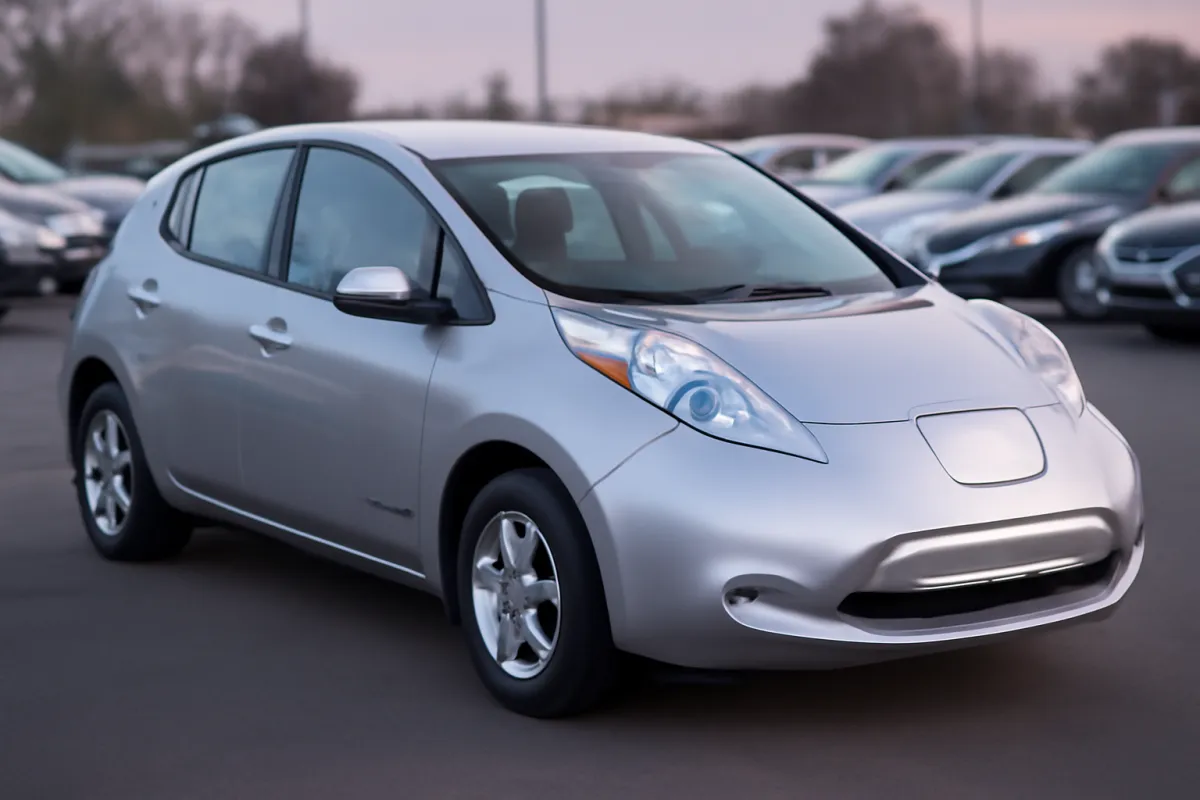
The conditions are where care is needed. The used credit has generally required that you buy from a dealer rather than a private seller, that the vehicle be older than a minimum age, that it fall under a price cap lower than the new-car cap, and that this be the first qualifying transfer of the vehicle under the program. Your income has to sit under thresholds that are lower than the new-credit limits. Each of these can disqualify an otherwise-attractive used purchase, which is why anyone leaning on the used credit should confirm the specific vehicle and their own eligibility against the current IRS rules before signing. Our note on buying a used electric car covers the battery-health checks that matter just as much as the credit.
How to claim it: point of sale vs tax return
There have generally been two ways to actually receive the credit, and knowing the difference shapes how you plan the purchase. The first is claiming it on your federal tax return for the year you took delivery, the traditional route, where the credit reduces the tax you owe when you file. The second, newer route is transferring the credit to a participating dealer at the point of sale, so it becomes an immediate reduction in what you pay for the car rather than a benefit you wait for at tax time.
The two routes are not equivalent in timing or in feel. The point-of-sale transfer puts the money in front of you immediately, which many buyers prefer, while the tax-return route means fronting the full price and recovering the benefit later. There have also been differences in the paperwork and in what happens if it turns out you were not actually eligible, which can matter if your income lands above the limit when you file. Because the availability and mechanics of each route change, and not every dealer participates in the transfer, confirm the current options with the IRS and with the specific dealer before you count on either one.
Claiming at the point of sale
The point-of-sale route has been the more convenient option for many buyers, because it turns an abstract future tax benefit into a concrete discount at the moment of purchase. In practice, when the option is available and both you and the vehicle qualify, you attest to your eligibility, the dealer applies the credit amount to reduce what you pay, and the dealer handles the reporting to the IRS. The effect is that a qualifying new EV can feel meaningfully cheaper on the day rather than months later.
Two cautions come with the convenience. First, the dealer has to be registered and participating, so the option is not universal, and it is worth confirming before you settle on where to buy. Second, transferring the credit upfront based on your attested eligibility does not erase the underlying requirements: if it later emerges that you were over the income limit, for example, there can be consequences at tax time, because the eligibility still has to be real. This is exactly why the responsible approach is to be confident you genuinely qualify, not merely hopeful, and to verify the current attestation and reconciliation rules with the IRS or a tax professional before relying on an upfront transfer.
Claiming on your tax return
The tax-return route is the traditional way the credit worked, and it remains relevant, especially where the point-of-sale option is unavailable or not chosen. Here you buy the vehicle at its full price, keep the documentation the seller provides, and claim the credit on your federal return for the year you took delivery, where it reduces the tax you owe. The benefit arrives when you file rather than at the dealership, so it rewards patience and good record-keeping.
The key limitation to understand on this route is the interaction with your actual tax liability. Because the credit has generally been non-refundable in its traditional form, it could reduce what you owed but not generate a refund beyond your liability, so a buyer with very little tax owed might not capture the full amount. That interaction, along with the exact forms and the information you need from the seller, is the kind of detail that changes from year to year. Anyone planning to claim on their return should confirm the current forms, the refundability treatment, and the documentation requirements with the IRS or a tax professional, and keep every relevant record from the sale.
The leasing loophole
Leasing has earned a reputation as a way around some of the purchase credit’s stricter conditions, and the reason is structural. When you lease, the leasing company owns the vehicle, and it may be able to claim a commercial clean-vehicle credit rather than the consumer credit. That commercial credit has generally not carried the same buyer income limits, vehicle price caps, or sourcing requirements as the consumer purchase credit, which is why a vehicle or a buyer that would fail a purchase gate can still see value through a lease.
How an illustrative credit changes a $45,000 sticker
Illustrative only: a $45,000 new EV with a $7,500 federal credit plus a $2,000 state rebate.
On these illustrative figures a $7,500 credit is about 17% of a $45,000 sticker, and a state rebate can stack on top. Actual amounts and eligibility vary; verify with the IRS.
The catch is that the pass-through is not guaranteed. The leasing company decides whether, and how much of, the credit value to reflect in your lease payment, so the benefit shows up as a lower monthly cost only if the lessor chooses to pass it along. A lease deal that advertises a large incentive may be doing exactly that, while another may keep more of the value. Because the treatment of leased vehicles and commercial credits can change, and because the terms vary by lessor, read the lease carefully and confirm the current rules. Our teardown on how to lease an electric car walks through reading a lease so you can see where any incentive actually lands.
State and local incentives
The federal credit is only one layer. Many states, utilities, and local authorities run their own EV incentives, and these are separate from the IRS credit and can often be combined with it, which is how some buyers reduce the effective price by more than the federal amount alone. Because these programs are set locally rather than federally, they vary enormously in form, size, and availability, and describing any specific amount would be inventing a fact, so it is more useful to understand the categories.
The common categories include direct state rebates or tax credits on the vehicle purchase, reduced or waived registration and other fee treatment, utility rebates that offset the cost of the vehicle or a home charger, and non-cash perks such as access to certain lanes or preferential parking. Some programs target lower-income buyers specifically, and some are funded in limited pools that open and close during the year. The practical step is to check what currently applies where you live, through your state’s own program and your utility, rather than assuming a particular incentive exists. Our teardown on how much an electric car costs shows where all of these layers land in the final price.
Illustrative credit by scenario
Because the gates interact, it helps to see how a few representative situations resolve. The table below is entirely illustrative, using round example figures to show the logic, not to state current law. Every amount and threshold changes, so read it as a way to understand how eligibility works rather than as a lookup for your own purchase.
| Buyer scenario | Illustrative credit | Eligibility note |
|---|---|---|
| New EV under price and income caps, meets sourcing | up to ~$7,500 | Clears all four gates |
| New EV, buyer income over the limit | $0 | Fails the income gate |
| New EV priced above the cap | $0 | Fails the price gate |
| New EV, meets only part of sourcing rules | partial | Qualifies for a reduced amount |
| Qualifying used EV from a dealer | up to ~$4,000 | Separate used credit, lower caps |
| Used EV from a private seller | $0 | Private sale usually excluded |
| Leased EV, lessor passes through | varies | Commercial credit, lessor’s discretion |
The pattern to take from the table is that the same vehicle can produce a full credit, a partial credit, or nothing depending on who is buying and how. That is the credit working as designed, not a flaw. Use the scenarios to locate your own situation, then confirm the actual current figures and rules for your specific vehicle and income with the IRS or a tax professional before relying on any number.
What can disqualify you
It is worth stating the disqualifiers plainly, because they catch people who assumed the credit was automatic. Income over the applicable limit is the most common one, and it can disqualify an otherwise-perfect purchase entirely. A vehicle priced above the cap is the next, and because the cap has depended on body style, this trips up buyers who compared the wrong figure. A vehicle that does not meet the current sourcing rules, or meets them only partway, is a third, and it is the least visible from the showroom floor.
Beyond those, the transaction itself can disqualify you: buying a used EV from a private seller rather than a dealer, or a purchase that is not the qualifying first transfer for the used credit, can fail even when the buyer and vehicle otherwise look fine. Claiming a vehicle you intend to resell quickly, or one bought primarily for a purpose the credit does not cover, can also fall outside the rules. Each of these is the kind of condition the IRS defines precisely and updates, so the safe approach is to check every one against the current guidance rather than assuming your purchase clears them all.
Timing your purchase
Timing matters more with this credit than with most incentives, because the rules, the qualifying vehicle lists, and the amounts have all changed at various points. A model that qualifies for the full amount in one period may qualify for a different amount, or drop off the list, in another as manufacturers adjust sourcing and as the rules tighten. That volatility means the credit available when you start shopping is not guaranteed to be the credit available when you sign, and the reverse can also be true in your favor.
The two-year income rule, where it applies, is another timing lever: because you may be able to use the lower of two years’ income, a buyer near the income limit might find one year works when another does not, which can influence when a purchase makes sense. Delivery timing can matter too, since eligibility has generally attached to when you take delivery rather than when you order. None of this is a reason to rush a major purchase, but it is a reason to confirm the current status of your specific vehicle close to the actual purchase date with the IRS, rather than relying on what was true weeks or months earlier.
How the credit affects the real price
The reason all of this is worth the effort is that a credit changes the real price of the car, and the real price is what should drive the decision. A commonly cited $7,500 credit on an illustrative $45,000 EV is about 17 percent of the sticker, a large enough share to move a vehicle from looking expensive against a gas equivalent to looking competitive. That is the whole point of the incentive: it narrows the upfront price gap that is the main obstacle in the EV value case.
But the credit only helps if it is real for you, which loops back to the gates. A $7,500 figure you do not actually qualify for is worth nothing, and planning a purchase around a credit that fails at the income or sourcing gate leaves a hole in the budget. This is why the honest way to use the credit in a buying decision is to establish the amount you genuinely qualify for first, treat it as a reduction in the effective purchase price, and then run the full ownership math. Our teardown on whether an electric car is worth it shows how the effective price, after any real credit, feeds into the break-even against a comparable gas car, and you can test your own figure in the project cost calculator.
Common mistakes
A handful of errors show up again and again, and each one costs money or causes an unpleasant surprise.
- Assuming every EV gets the full amount. Many models qualify for only part of the maximum, or none, because of the sourcing rules. Check the specific vehicle.
- Ignoring the income limit. A high earner can be disqualified even on a modestly priced, correctly sourced car. Confirm your income against the current threshold.
- Comparing the wrong price cap. The cap has differed by body style, so a car you thought qualified on price may not, and vice versa.
- Confusing the new and used credits. They have different amounts, income limits, price caps, and conditions, and mixing them up leads to wrong expectations.
- Trusting last year’s rules. The amounts, qualifying lists, and mechanics change, so a fact that was true previously may not be current.
Every one of these mistakes traces back to the same root: treating a conditional, changing credit as a fixed discount. The fix is the same in each case, verify the current specifics for your vehicle and your situation with the IRS or a tax professional rather than assuming.
A worked example: two buyers
Consider two buyers looking at the same illustrative $45,000 new EV. The first has a household income comfortably under the applicable limit, is buying a vehicle that sits under the price cap and meets the current sourcing rules, and buys from a participating dealer. This buyer clears all four gates, transfers the credit at the point of sale, and sees the effective price drop by the commonly cited figure of up to around $7,500 on the day. For this buyer, the credit is real, immediate, and a genuine reduction in the money that leaves their account.
The second buyer wants the identical car but has a household income above the limit for their filing status. Every other gate is open: the price is under the cap, the vehicle meets the sourcing rules, the dealer participates. But the income gate is shut, so the purchase credit is zero, and planning the budget around $7,500 would have left a real gap. This buyer’s better route might be leasing, where a commercial credit the lessor can claim may pass through as a lower payment without the same income limit, or simply accepting that the purchase credit does not apply. Same car, same price, opposite outcomes, decided entirely by a single gate, which is the lesson this whole teardown keeps returning to. Both buyers should confirm their specific figures with the IRS or a tax professional.
Documents and paperwork to keep
Whichever route you take, the paperwork is what makes the credit stick, so it is worth handling carefully. At the sale, the seller has generally been required to provide a report or statement with the vehicle and transaction details the IRS needs, and you want a copy of it regardless of whether you claim upfront or at tax time. Keep the purchase agreement, the vehicle identification number, and any eligibility attestation you signed, because these are the records that substantiate the claim if it is ever questioned.
If you claim on your tax return, you will also need the correct form for the year and the information from the seller’s report to complete it, and holding those together avoids a scramble at filing time. If you transferred the credit at the point of sale, keep the documentation of that transfer and be prepared for the reconciliation step when you file, particularly around confirming your income was within the limit. Because the exact forms and required documents change, confirm the current paperwork requirements with the IRS or a tax professional, and treat good record-keeping as part of the cost of claiming the credit correctly.
How the credit fits the total cost
The credit is powerful, but it is one input to the EV decision, not the whole of it. Its job is to reduce the upfront price, which is the single biggest obstacle in the EV value case, because electric cars have generally cost more to buy than comparable gas models. A real credit shrinks that premium, sometimes substantially, and pulls the break-even against a gas car closer. But the running-cost advantages, cheaper home charging and lower maintenance, are what carry the case over the years, and those exist with or without the credit.
The right way to hold it all together is to treat any credit you genuinely qualify for as a reduction in the effective purchase price, then run the full ownership comparison from there, mileage, charging cost, maintenance, insurance, and resale, over the years you will keep the car. That approach keeps the credit in its proper place: a meaningful head start on the price, not the entire reason to buy. Our teardowns on how much an electric car costs and whether an EV is worth it build that fuller picture, and the project cost calculator lets you drop your own effective price, after any credit you confirm applies, straight into the math.
The bottom line
The EV tax credit is real money, commonly cited as up to around $7,500 for a qualifying new EV and up to around $4,000 for a qualifying used one, but it is conditional and changing, not a fixed discount on every electric car. It rewards buyers and vehicles that clear four gates, income, price, sourcing, and the transaction itself, and it disappears entirely if any one of them is shut. Understanding which credit applies, whether you qualify, and how to claim it, at the point of sale or on your return, is what turns the headline figure into an actual reduction in what you pay.
Because every amount and rule here can change, the responsible way to use this teardown is as a map of how the credit works, not a statement of current law. Establish the figure you genuinely qualify for by checking the specific vehicle and your own situation against the IRS’s current guidance, or with a tax professional, and then fold that real number into the full ownership math. Do that, and the credit does exactly what it is meant to: it makes a qualifying electric car meaningfully cheaper, on numbers you can actually rely on.
A note from people who spend more time on this than is strictly reasonable: this teardown is educational and independent, not tax, legal, or financial advice. Every dollar figure, income limit, price cap, and credit amount above is illustrative and used to explain how the rules work, not to state current law, and all of it changes over time. The EV tax credit is administered by the IRS, and eligibility turns on specifics that depend on the exact vehicle, your income, your filing status, and where and how you buy. Before you rely on any credit, confirm the current amounts and eligibility rules with the IRS or a qualified tax professional for your own situation.
Frequently asked questions
What is the EV tax credit?
The EV tax credit is the federal clean-vehicle credit, an incentive that reduces what you effectively pay for a qualifying electric vehicle. The IRS administers it, and it is commonly cited as being worth up to around $7,500 for a qualifying new EV and a smaller amount for a used one, though the exact figures, caps, and rules change over time. It is not automatic: a vehicle and a buyer both have to meet a set of conditions for it to apply. Because the amounts and eligibility rules are updated periodically, confirm the current values with the IRS or a tax professional before you count on any specific number.
Who qualifies for the EV tax credit?
Qualifying depends on both the buyer and the vehicle. On the buyer side, the IRS has generally applied income limits based on your modified adjusted gross income and filing status, so higher earners can be phased out. On the vehicle side, there are typically price caps, plus final-assembly and battery-sourcing requirements that many models meet only in part. The used credit adds its own lower income and price limits. Every one of these gates can change, so treat any specific dollar figure here as illustrative and verify the current eligibility rules with the IRS or a qualified tax professional for your exact situation.
How much is the EV tax credit worth?
For a qualifying new EV, the credit is commonly cited as being up to around $7,500, and for a qualifying used EV up to around $4,000 or a percentage of the sale price, whichever is lower. These are illustrative figures, not a promise: the amount you actually receive depends on the vehicle meeting the sourcing rules and on your own eligibility, and the headline numbers themselves are subject to change. Some vehicles qualify for only part of the maximum. Always confirm the current maximum and the amount for a specific vehicle with the IRS or a tax professional rather than assuming the full figure applies.
Can I get the EV tax credit at the dealership?
In recent years the IRS has allowed eligible buyers to transfer the new or used clean-vehicle credit to a registered dealer at the point of sale, which turns the credit into an upfront price reduction rather than something you wait for at tax time. When this option is available and you and the vehicle qualify, the dealer applies the credit to lower what you pay on the spot. The rules and availability of point-of-sale transfer can change, and not every dealer participates, so confirm both the current process and the specific dealer's participation, and keep the paperwork the IRS requires.
Is there an income limit for the EV tax credit?
Yes, the IRS has generally tied eligibility to income limits based on your modified adjusted gross income and filing status, with separate, lower thresholds for the used-vehicle credit. If your income is above the applicable limit, you can be disqualified even if the vehicle itself qualifies. The rules have in some cases let you use your income from either the year you take delivery or the prior year, whichever is lower, which can help in a high-income year. Because the exact thresholds change and the details matter, verify the current income limits for your filing status with the IRS or a tax professional.
What is the EV leasing loophole?
The so-called leasing loophole refers to the fact that a leased EV is often treated differently from a purchased one, because the leasing company owns the vehicle and may be able to claim a commercial clean-vehicle credit that does not carry the same buyer income limits, price caps, or sourcing requirements as the consumer credit. In practice the leasing company can choose to pass some or all of that value through to you as a lower lease payment, which can make leasing attractive for a vehicle or a buyer that would not qualify for the purchase credit. Whether and how much is passed through is up to the lessor, and the rules can change, so confirm the current treatment and read the lease terms carefully.
Can I claim the EV tax credit on a used electric car?
There is a separate used clean-vehicle credit, commonly cited as up to around $4,000 or a set percentage of the sale price, whichever is lower, for a qualifying used EV bought from a dealer. It carries its own conditions: the vehicle usually must be below a price cap and past a minimum age, the sale must be the first qualifying transfer to you, and the buyer income limits are lower than for the new credit. A private-party sale typically does not qualify. These figures and rules are illustrative and subject to change, so confirm the current used-credit terms with the IRS or a tax professional before relying on them.
Do state incentives stack with the federal EV tax credit?
In many cases yes. State and local incentives are separate from the federal credit and can often be combined with it, which is how some buyers reduce the effective price by more than the federal amount alone. These programs vary widely by location and come in several forms, including state rebates, reduced registration or tax treatment, utility rebates on the vehicle or a home charger, and access perks. Because they are set by states, utilities, and local authorities rather than the IRS, and because funding and rules change frequently, check what currently applies where you live rather than assuming any specific program or amount is available.