What's in this teardown
- Why real range sits below the rated number
- Before you start: know your rated range, trips, and climate
- Step 1: Ease off the accelerator and let regen do the braking
- Step 2: Manage your speed, because aero drag climbs fast
- Step 3: Precondition the cabin while you are still plugged in
- Step 4: Use eco mode and heat the seats before the cabin
- Step 5: Keep tires inflated and shed excess weight and roof load
- Step 6: Charge to the 20 to 80 percent sweet spot for daily driving
- Step 7: Plan for cold weather and size road trips realistically
- A worked example: moving one rated range in real driving
- Where your range actually goes
- Common mistakes that quietly cost you range
- Troubleshooting: winter, road trips, degradation, and towing
- The range-maximizing checklist
- The bottom line
Short answer: To maximize EV range, slow down on the highway, since drag climbs with the square of speed and easing off can recover an illustrative several to low-double-digit percent on that leg. Accelerate gently and let regenerative braking do the slowing, precondition while plugged in and favor seat heaters over cabin heat, keep tires at the door-jamb pressure, drop roof boxes and dead weight, and charge in a roughly 20 to 80 percent band daily.
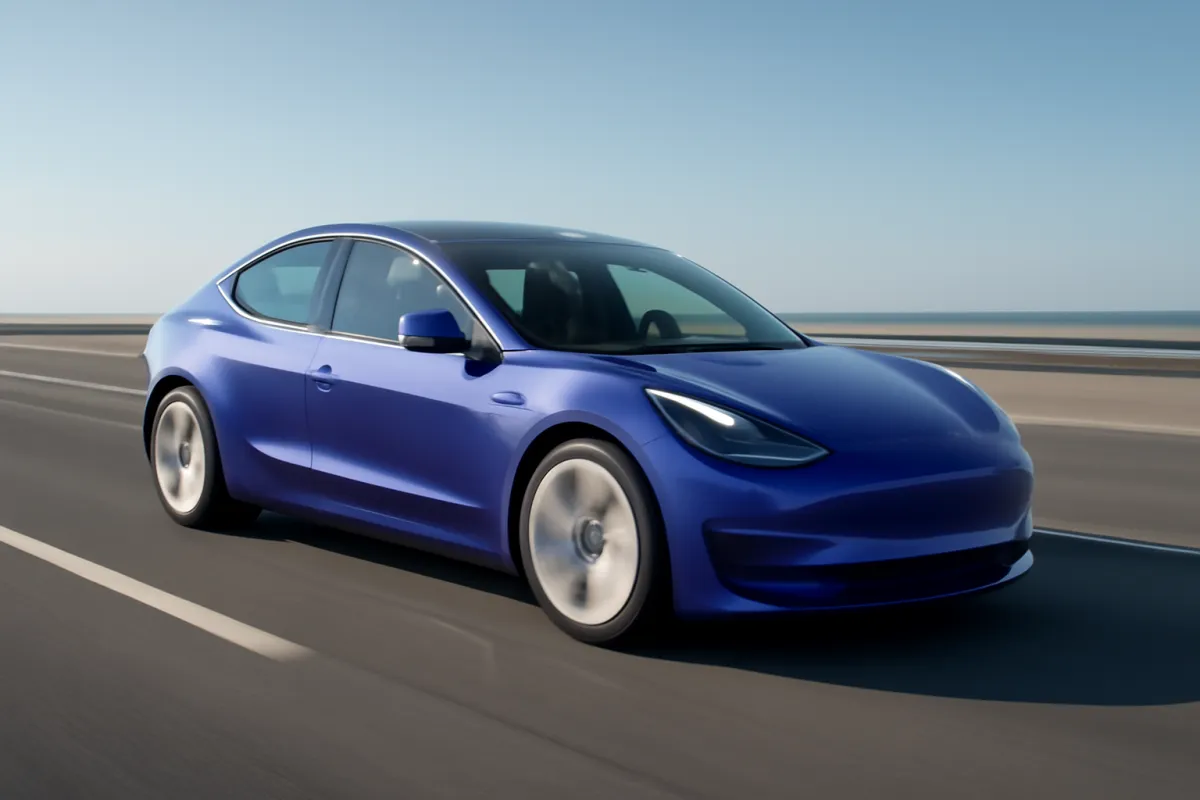
The honest way to get more miles out of an electric car is not a secret device or a hidden menu, it is a short list of driving and charging habits that each recover a slice of range, and stacked together they can move your real-world number by an illustrative double-digit percentage without changing the car at all. The rated range on the window sticker is a ceiling set in gentle laboratory conditions; what you actually see is decided by how fast you drive, how you brake, how you heat the cabin, what your tires are doing, and what the weather is up to. Every one of those is yours to adjust.
This teardown turns that into seven concrete steps you can start using today, each with the action, an illustrative sense of what it buys you, and the caveat that keeps you honest. It covers the smoothness habits that matter most, the speed and climate choices that quietly drain the pack, the tire and weight details people skip, and the charging routine that protects both today’s range and the battery’s long life, a topic our battery-longevity teardown takes further. Every figure here is illustrative and shifts with your specific car, route, and climate, but the habits are universal. Size your own real-world range in about a minute with the companion estimator.
Key takeaways
- Speed is the biggest lever you control: aerodynamic drag climbs with the square of speed, so easing off the top end of a highway cruise can recover an illustrative several to low-double-digit percent of range on that leg.
- Smoothness beats speed of pedal: gentle acceleration and letting regenerative braking recover energy, rather than coasting into the friction brakes, protects range in daily driving.
- In cold weather, precondition while plugged in and lean on seat and wheel heaters; cabin heat is one of the largest electrical loads in the car after the motor itself.
- Keep tires at the door-jamb pressure, drop unused roof boxes, and shed dead weight; these are illustrative single-digit to low-double-digit swings that cost you nothing to fix.
- Charge to a middle band, commonly cited as roughly 20 to 80 percent, for daily use and top to full only before trips, which serves both range planning and long-term battery health.
Why real range sits below the rated number
Before the steps, it helps to know why the gap exists, because that explains why the habits work. The rated range is a standardized figure produced under controlled, moderate conditions so that different cars can be compared on one scale. It is a useful yardstick and a poor promise. Real driving adds three things the test downplays: sustained high speed, real climate loads, and the terrain and weight of an actual trip. Each pulls energy out of the pack that the laboratory number never spent.
The useful mental model is that your battery holds a fixed budget of energy, and every mile spends some of it. Anything that raises the cost per mile, faster air, a cold cabin, soft tires, a roof box, a hill, shortens the range that budget buys. The seven steps below are simply the highest-leverage ways to lower your cost per mile. That same cost-per-mile lens drives the money side of ownership too, which our cost-per-mile teardown prices out in cents. Range and running cost are the same physics wearing two hats.
The habits, ranked by leverage
- Highest: sustained highway speed and cold-weather cabin heat.
- Middle: smooth acceleration with regen, and shedding roof and weight loads.
- Steady baseline: correct tire pressure and a sane state-of-charge window.
Before you start: know your rated range, trips, and climate
Three numbers turn this teardown from general advice into a plan for your car. Gather them first, because every step downstream leans on them.
First, your EV’s rated range, the figure on the window sticker or in the manual. Treat it as the ceiling, not the expectation, and note whether your car shows a separate real-time efficiency readout, usually in miles per kWh or kWh per 100 miles, because that live number is how you will measure your own progress. Second, your typical trips: the daily commute in miles, and separately the longest regular drive you make, since a 20-mile-a-day driver and a 200-mile-road-trip driver need different habits emphasized. Third, your climate, honestly stated, because a mild coastal winter and a hard continental one place very different demands on the pack and the cabin heater.
Two more inputs sharpen the plan. Log about two weeks of real driving to learn your car’s actual efficiency in your conditions, since that lived figure beats any sticker. And note how you charge today, home overnight versus public sessions, because the charging step below assumes you can control the state-of-charge window, which our home-charging teardown covers in detail.
Realistic effort and difficulty: none of this requires tools or a garage. The habits are free, take a few weeks to become automatic, and the only thing you spend is attention. Difficulty is low; the payoff is a real-world range you can plan around with confidence. Feed your rated range, typical speed, and climate into the companion estimator to see roughly where your real number lands before you change a thing.
Step 1: Ease off the accelerator and let regen do the braking
Start with the habit that costs nothing and pays every mile: drive smoothly. Hard acceleration draws a large burst of energy to overcome inertia quickly, and while an EV recovers some of that on the way back down, the round trip is never free. The fix is not crawling away from every light, it is a relaxed, progressive squeeze on the accelerator that gets you to your cruising speed without the surge. On its own, smoother acceleration is an illustrative several percent of range in stop-and-go and suburban driving, and it makes the ride calmer as a bonus.
The other half of smoothness is braking, and here EVs have a tool gas cars lack. Regenerative braking turns the motor into a generator when you lift off, sending energy back into the pack instead of scrubbing it off as heat in the friction brakes. Many EVs offer a strong regen or one-pedal mode where lifting fully off the accelerator slows the car briskly and recovers the most energy. Using it well means looking far ahead and lifting early, letting the car coast and regenerate down to a stop rather than holding speed and then stabbing the brake.
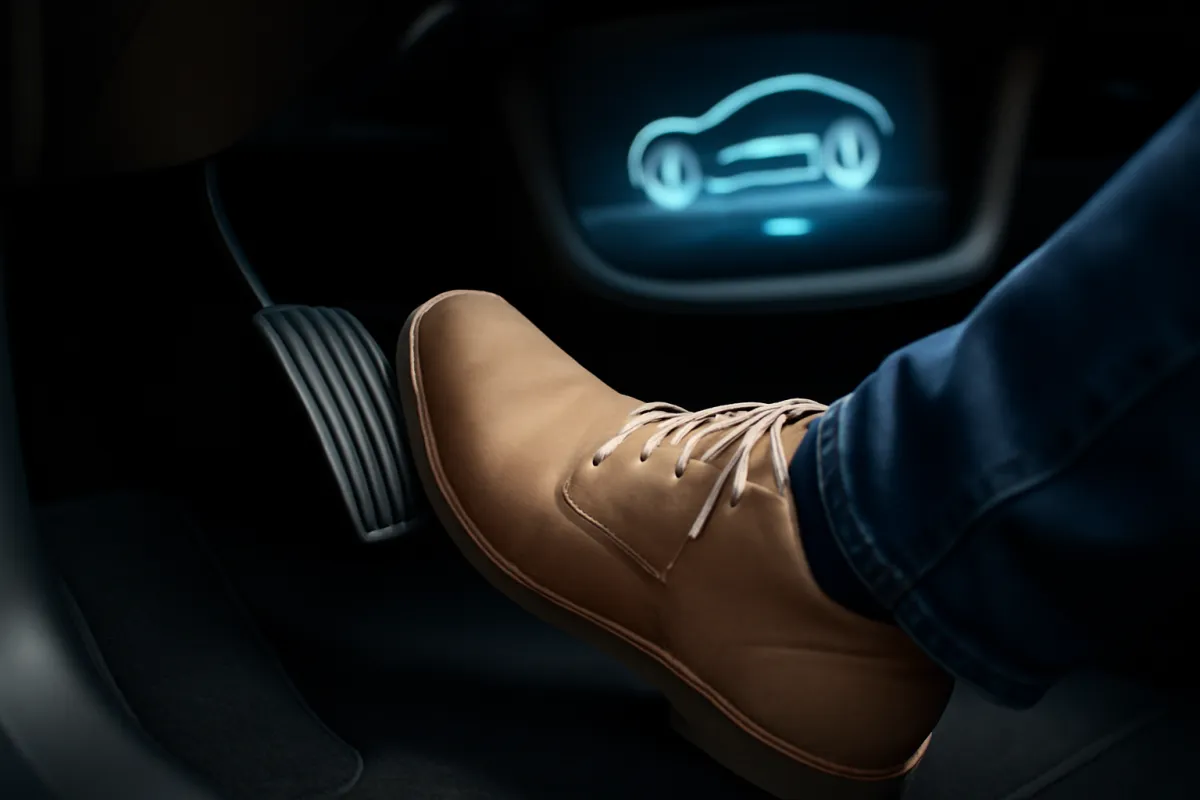
The caveat: regen recovers only a fraction of the energy, it is not a perpetual machine, so the bigger win is not needing to brake hard in the first place. Anticipating stops so you rarely touch the friction brakes is worth more than any regen setting. And in cold weather regen may be limited until the battery warms, so early on a winter morning the car may coast more and recover less, which is normal and eases as the pack warms up.
Step 2: Manage your speed, because aero drag climbs fast
If Step 1 is the everyday habit, speed is the highway habit, and it is usually the single largest lever you hold. The reason is physics: the power needed to push a car through the air rises with the square of its speed, so drag does not grow gently as you accelerate, it grows steeply. Below roughly 60 miles per hour, rolling resistance and other losses share the load; above it, aerodynamic drag increasingly dominates, and every extra 5 miles per hour costs disproportionately more energy than the last. That is why the same EV that sails past its rated range on back roads can fall well short of it on a fast interstate.
The action is simple and does not turn you into an obstacle: pick a cruising speed a notch below the fastest flow and hold it steady. Trimming a highway cruise by even 5 to 10 miles per hour can recover an illustrative several to low-double-digit percent of range on that leg, which on a long drive is the difference between one charging stop and two. Cruise control or a steady foot helps, because constant speed avoids the small accelerations that each pay the drag tax again.
The caveat is safety and flow: the goal is smooth, predictable driving with traffic, not creeping in the fast lane where you become a hazard. Sit in the right lanes, match the general pace, and simply decline to chase the very top of it. The range you are saving is real, but never at the cost of driving unpredictably around other people. On a genuinely time-critical trip you may choose speed over range, and that is a fair trade to make knowingly rather than by default. Watch the estimate move as you change the speed setting in the companion estimator.
Step 3: Precondition the cabin while you are still plugged in
Preconditioning is the habit that turns the biggest cold-weather loss into a near-free one. When you heat or cool the cabin while the car is still plugged in, that energy comes from the wall, not the battery, so the pack starts the drive full and does not immediately spend range warming a cold interior. Many EVs let you schedule a departure time or trigger preconditioning from an app, so the cabin is comfortable and the pack is gently warmed by the time you unplug. Done right, you drive away with the largest climate load already paid for by grid electricity.
The action: on cold or hot mornings, set a departure time or start preconditioning ten to thirty minutes before you leave, while the car is on the charger. On many models this also warms the battery slightly, which improves both available power and regen right when you need them, and can speed up any fast charge later in the trip. The comfort is identical to letting the car heat itself on the road; the difference is which energy source pays for it.
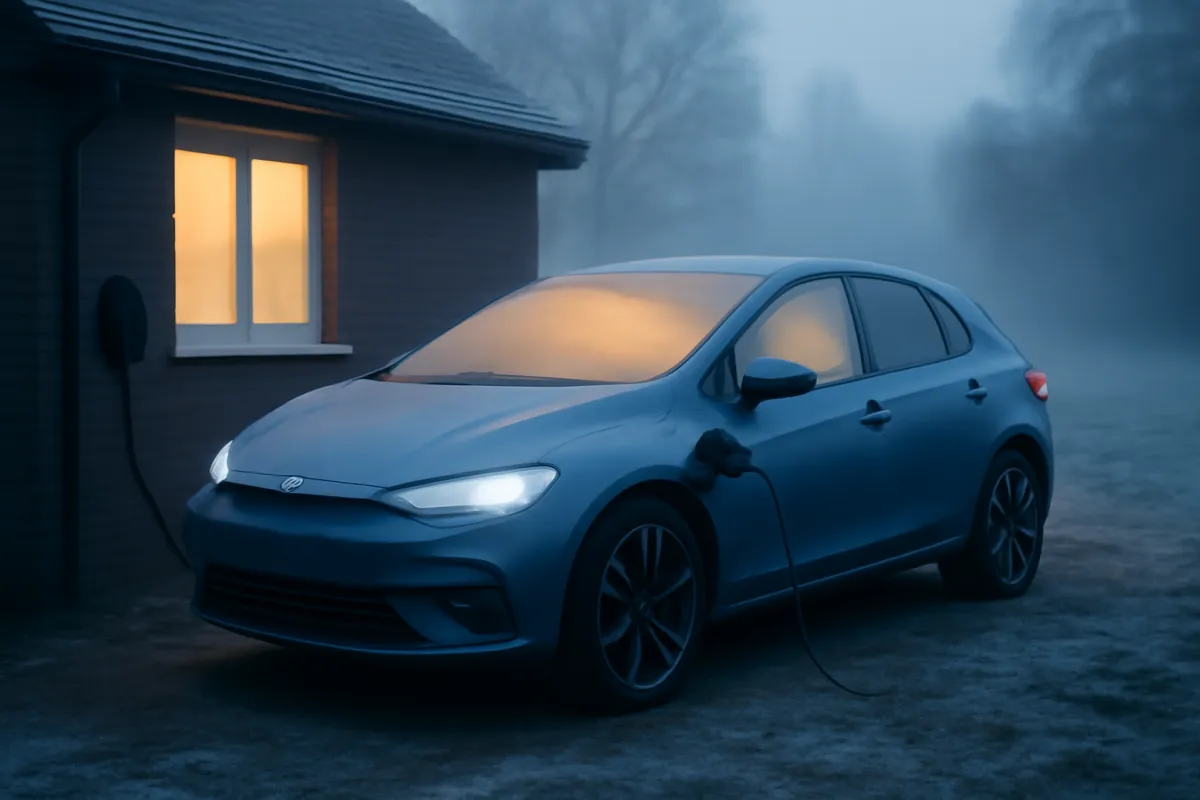
The caveat: the saving only holds if you are actually plugged in. Preconditioning off the battery while unplugged still warms the cabin but spends range to do it, so it is a comfort choice, not a range one, in that case. And the benefit is largest in genuine cold or heat; on a mild day the cabin load is small and preconditioning buys little. Reserve the effort for the days the weather is actually working against you.
Step 4: Use eco mode and heat the seats before the cabin
Two settings do quiet, continuous work once you are moving. The first is eco or efficiency mode, which most EVs offer. It typically softens the accelerator response and may cap peak power and trim climate output, nudging you toward the smooth driving of Step 1 without conscious effort. It does not make the car slower in any way that matters for normal driving; it makes wasteful inputs harder to give by accident. Leaving it on for daily commuting is an easy, set-and-forget efficiency gain.
The second, and larger, is how you stay warm. Cabin heat is one of the biggest electrical draws in the car after the motor, because it must warm a large volume of air and everything the air touches. Seat heaters and a heated steering wheel warm you directly with a small fraction of that energy. The action in cold weather is to precondition to a livable temperature (Step 3), then hold warmth mostly with the seat and wheel heaters and a modest cabin setting rather than a high one. You feel just as warm; the pack spends far less doing it.
The caveat: comfort and safety come first, and defogging is not optional. Never trade a clear, safe windscreen for range, so run whatever cabin heat or defrost you need to keep glass clear and yourself alert. Cars with a heat pump handle cabin heating more efficiently than those with resistive heaters, so the size of this lever varies by model, but on any EV the direct heaters are the frugal way to stay warm. In summer the same logic applies gently to cooling: shade the car, precondition on the charger, and use a moderate setting rather than a blast. These climate habits also show up on the running-cost side that our cost-per-mile teardown breaks down.
Step 5: Keep tires inflated and shed excess weight and roof load
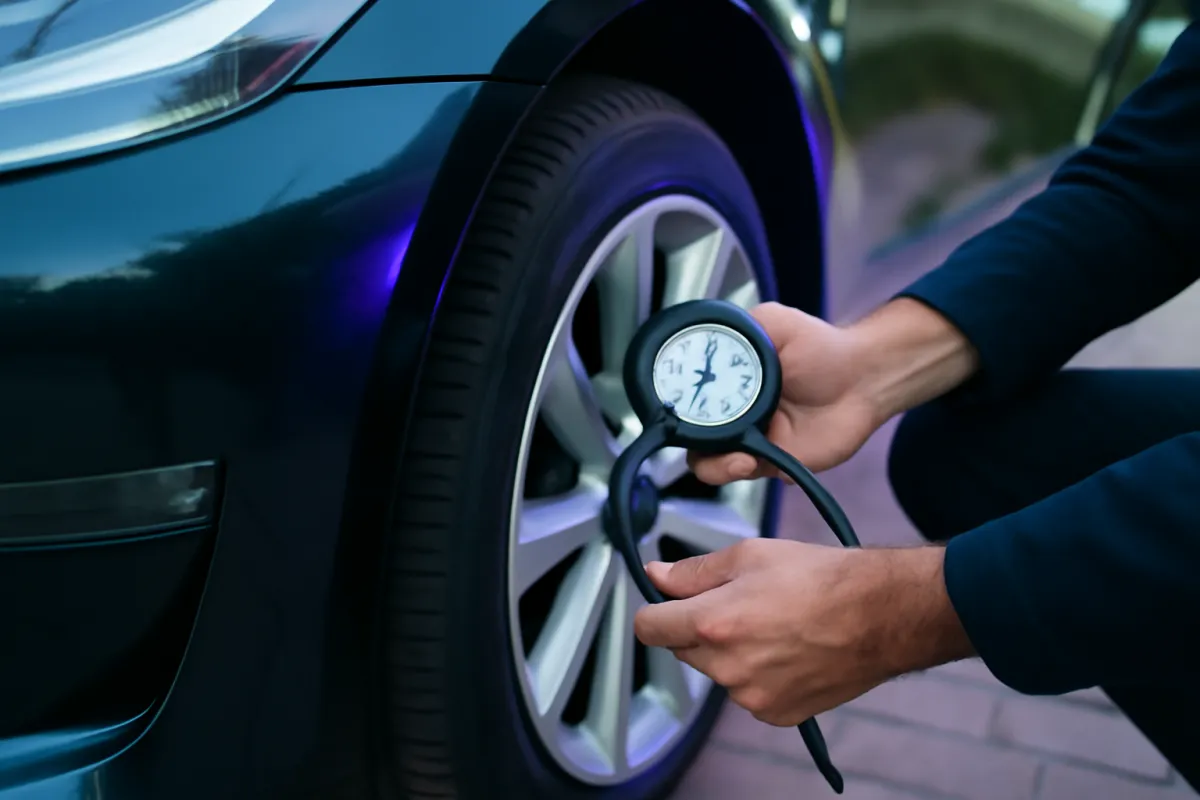
This step is pure housekeeping, and it is the one people most often skip. Underinflated tires increase rolling resistance, which means the motor works harder for every mile even at a steady speed. A few PSI low across all four tires quietly taxes range and, as a side effect, wears the tires faster and unevenly, a cost our maintenance teardown folds into the ownership picture. The action is monthly and free: check pressures when the tires are cold and set them to the figure on the driver’s door jamb, not the higher maximum printed on the tire sidewall, which is a ceiling rather than a target.
Weight and aerodynamics are the other half. Every extra pound is more mass the car accelerates and hauls up hills, so the trunk full of gear you forgot about is a small permanent range tax. Far worse at speed is anything on the roof: a box, a bike rack, even empty crossbars disrupt the car’s carefully shaped airflow exactly where drag already dominates. The action is to clear dead weight from the cabin and trunk, and to remove roof loads and unused racks the moment the trip that needed them ends, rather than leaving them on for months.
The caveat: do not overinflate tires chasing range, since pressures above the door-jamb figure can hurt grip, ride, and even wear, trading a sliver of efficiency for safety and comfort you should not give up. And some loads are simply necessary; the point is not to travel empty, it is to stop carrying and mounting things you are not using. A roof box on the two weekends a year you camp is fine; the same box left on for the other fifty is quietly costing you range every commute.
Step 6: Charge to the 20 to 80 percent sweet spot for daily driving
This step protects range in two ways at once: it keeps a sensible buffer for real driving and it supports the battery’s long-term health, so the pack that holds your range today still holds most of it years from now. The widely cited habit for everyday use is to keep the battery in a middle band, roughly 20 to 80 percent, charging to full mainly before a long trip when you actually need the top slice. Sitting at a very high state of charge for long stretches, and regularly running down to near empty, are the conditions generally associated with faster battery aging, so a middle window is easier on the pack.
The action is a one-time setup on most cars: set a charge limit, commonly around 80 percent, for daily charging, and raise it to 100 percent only the night before a trip that needs the range. Charging overnight at home to that limit means you wake up with plenty of buffer for normal days without parking the car at a stressful full charge. The habit costs nothing and, on most EVs, is a single setting you rarely touch again. Our charging-time teardown shows how that overnight window comfortably refills a daily band.
The caveat: an 80 percent daily limit is a guideline, not a rule that should ever leave you stranded. If your commute genuinely needs more, charge more; the goal is a healthy habit, not range anxiety. Charging to 100 percent occasionally for a road trip is completely fine and exactly what the top of the battery is for. Some manufacturers give model-specific guidance, including different advice for certain battery chemistries that prefer regular full charges, so follow your own car’s manual where it speaks, and treat the 20 to 80 band as the sensible default when it does not. The longevity side of this sits in our battery-lifespan teardown.
Step 7: Plan for cold weather and size road trips realistically
The final step is planning rather than technique, because some range loss you cannot drive away, you can only prepare for. Cold weather is the big one: the battery delivers less usable energy when cold and accepts regen more slowly until it warms, and the cabin heater draws real power, so winter range can fall by an illustrative fifth or more for a while, more if the car sits outside overnight. The earlier steps soften this a lot, preconditioning on the charger especially, but the honest move is to plan a winter buffer and not trust the rated number on a freezing morning.
Road trips need the same realism. On a fast highway in the cold, your real range can sit well below the sticker, so plan charging stops around your lived efficiency, not the ideal figure, and leave margin for detours, headwinds, and a heater running. The action is to think in terms of comfortable legs between charges rather than maximum theoretical ones, arriving at each charger with a sensible reserve rather than coasting in on fumes. A little conservatism removes almost all of what people call range anxiety.
Illustrative range swing by driving habit
Approximate percentage of range each habit can recover on a relevant trip; illustrative and directional, not model-specific.
Each bar is an illustrative swing on a trip where that habit applies, not an amount you add up blindly; the point is the ranking, with speed and cold-weather climate as the heaviest levers you control.
The caveat: these are separate levers, not a total you sum to a huge number. Speed helps most on the highway, cold-weather habits help most in winter, and tire pressure helps a little all the time; they overlap and interact rather than stacking cleanly. Still, adopting the whole set moves your real-world range meaningfully and, just as valuable, makes it predictable. See how your rated range, speed, and climate combine in the companion estimator.
A worked example: moving one rated range in real driving
Numbers land harder as a story, so here is one illustrative driver working through all seven steps, with every figure directional rather than a spec for any particular car. Call her rated range 300 miles. On a fast winter highway before she changes anything, sustained high speed and a blasting cabin heater might pull her real range down toward roughly 210 miles, about 70 percent of the sticker, which is a completely ordinary gap and the reason she felt her car was underdelivering.
Now she applies the steps. She preconditions on the charger and switches to seat heat over cabin heat, clawing back a meaningful cold-weather slice. She trims her cruise from the fastest flow down a notch and drives it steadily, recovering the largest single piece on the highway. She has already set an 80 percent daily charge limit, tops to 100 percent the night before the trip, checks her tire pressures, and pulls the empty roof rack she had left on since summer. Individually these are modest; together they lift that same winter drive from about 210 miles back toward an illustrative 250 to 260, most of the way back to the rated figure, on the identical route in the identical weather.
The lesson is not the exact numbers, which will differ for your car, but the shape. The biggest recoveries came from speed and cold-weather climate habits, the middle from smoothness and shedding the roof load, and the tire check added a steady sliver on top. She did not modify the car; she stopped paying range taxes she had been paying by default. Run your own rated range, typical speed, and climate through the companion estimator to see roughly where your before-and-after lands.
Where your range actually goes
It helps to see the losses as one picture, because that shows which steps to prioritize. On a typical mixed drive that falls short of the rated number, the shortfall is not one villain, it is three, and their shares shift with conditions. The bar below splits an illustrative real-world range loss into its main causes; the segments sum to 100 percent of the loss, not of the range.
Where range is lost: speed, climate, and terrain
Illustrative split of a typical real-world range shortfall on a fast, cool, mixed drive; shares shift with your conditions.
On a slow, mild-weather drive the speed and climate slices shrink and the car approaches its rated range; on a fast winter highway they swell, which is exactly when the habits pay the most.
The chart carries the strategy in one glance. When conditions are gentle, the losses are small and the car nearly meets its rating; when they are harsh, speed and climate balloon, which is precisely when Steps 2 through 4 return the most. Match the effort to the day: on a mild back-road drive you barely need to think about range, while on a cold, fast highway the habits are worth real attention. This mirrors the running-cost swings our cost-per-mile teardown prices, since the same energy that becomes miles becomes cents.
Common mistakes that quietly cost you range
A handful of recurring habits give back range for no benefit, and naming them is half the fix.
- Speeding on the highway by default. The steep top of the drag curve is where EVs lose the most range, so chasing the fastest flow, rather than sitting a notch below it, is the single most expensive habit for long-distance efficiency.
- Blasting cabin heat instead of preconditioning and using seat heat. Cabin heat is a large, continuous draw. Warming a cold cabin from the battery on the road, when you could have preconditioned on the charger and leaned on seat heaters, spends winter range you did not have to.
- Ignoring tire pressure. Soft tires tax every single mile through higher rolling resistance and wear faster too. Skipping the monthly cold-pressure check is a small, permanent loss that a one-minute habit erases.
- Charging to 100 percent every night. Topping to full daily and letting the car sit there is associated with faster battery aging and buys range your daily miles never use. A middle band for daily driving, full only before trips, serves both range and longevity.
- Trusting the rated range on a road trip, with no cold-weather buffer. Planning legs off the sticker figure, especially in winter, is how drivers end up anxious or stranded. Plan around your lived efficiency with margin instead.
Each mistake is a default setting or an unquestioned habit, which is exactly why they persist: nothing forces you to notice them until you plan a trip around a number the car cannot deliver.
Troubleshooting: winter, road trips, degradation, and towing
What if my range drops sharply in winter? That is expected, not a fault. The battery is cold and the cabin heater is drawing power, so a fifth or more of range can vanish for a while, illustratively. Precondition on the charger, use seat heat over cabin heat, park inside if you can, and plan a winter buffer. The range returns as the weather warms; the car is behaving normally.
What if I get range anxiety on longer trips? The cure is planning, not a bigger battery. Map charging stops around your real, lived efficiency rather than the rated figure, aim to arrive at each charger with a comfortable reserve rather than near empty, and drive the legs at a steady, moderate speed. Once a trip is planned with margin, the anxiety mostly disappears, because the numbers stop being a gamble. Our charging-time teardown helps you size those stops.
What if my range is shrinking over the years, not just on cold days? Distinguish two different things. Day-to-day range swings are about conditions and habits and reverse when conditions improve. A slow, permanent decline over many years is battery degradation, a normal and gradual process most packs handle well, and one that a sane charging window helps limit. If you suspect real degradation rather than a cold snap, our battery-lifespan teardown covers what is typical and what is not.
What if I need to tow? Expect a large hit, illustratively a third to a half of range or more, because you are adding weight and a big aerodynamic wall. Towing is not off-limits, it just demands real planning: much shorter legs between charges, charging stops that physically fit a car with a trailer, and a slower pace, since drag punishes a towing EV even harder. Treat the rated range as irrelevant the moment the trailer is connected, and plan from your towing efficiency instead.
The range-maximizing checklist
Keep this short list somewhere you will see it, and the habits become automatic.
- Drive smoothly: ease onto the accelerator, look far ahead, and let regen or one-pedal mode recover energy instead of braking hard.
- Hold a sensible highway speed: sit a notch below the fastest flow and keep it steady, since drag climbs fast above about 60 miles per hour.
- Precondition on the charger: heat or cool the cabin from the wall before you unplug, so the pack starts full and warm.
- Prefer seat heat to cabin heat: stay warm with the direct heaters and a modest cabin setting, but never trade a clear, safe windscreen for range.
- Leave eco mode on for commuting: let it smooth your inputs without thinking about it.
- Check tires monthly, cold, to the door-jamb pressure: and drop unused roof boxes, racks, and dead weight.
- Set a daily charge limit around 80 percent: top to 100 percent only before a trip, and follow your car’s own manual where it differs.
- Plan trips off your lived efficiency, with a buffer: especially in winter and always when towing.
Work down the list once and most of it becomes a setting you leave alone; the rest is a lighter foot and a monthly minute with a tire gauge.
The bottom line
Maximizing EV range is not about one trick, it is about refusing to pay the range taxes that pile up by default. Speed is the biggest lever, since aerodynamic drag climbs steeply, so easing off the top of a highway cruise returns the most on a long drive. Cold-weather habits are next: precondition on the charger and lean on seat heat rather than blasting the cabin. Then smoothness with regen, correct tire pressure, shedding roof and weight loads, and a sane 20 to 80 percent daily charging window round out the set, protecting both today’s miles and the battery’s long life.
None of it changes the car, and all of it is free. Applied together, these seven steps move an illustrative double-digit percentage of real-world range and, just as valuably, make that range predictable enough to plan around without anxiety. Learn your car’s real efficiency over a few weeks, adopt the habits that fit your speed and climate, and treat the rated number as a ceiling you approach rather than a promise you are owed. Size your own before-and-after with the companion estimator, and let your lived numbers, not the sticker, guide the next trip.
This teardown is educational and independent, written by people who would rather test a habit than repeat a myth. Every range, efficiency, percentage, and state-of-charge figure above is illustrative and directional, meant to show the shape of the effect rather than a specification for any particular vehicle, and your real numbers will shift with your exact car, its battery and drivetrain, your speed, your climate, terrain, load, tire condition, and the age of the pack. Charging and battery-care guidance is general; follow your own manufacturer’s manual where it gives model-specific advice, since some batteries and chemistries carry different recommendations. Nothing here is professional or safety advice, and range should never be maximized at the expense of safe driving, a clear windscreen, or attention to the road.
Frequently asked questions
How can I maximize my EV's range?
The biggest levers are speed and smoothness, not gadgets. Ease off the accelerator, let regenerative braking recover energy instead of coasting into the friction brakes, and hold a steady highway pace because aerodynamic drag climbs steeply above roughly 60 miles per hour. After that, precondition the cabin while the car is still plugged in, lean on seat and wheel heaters rather than blasting cabin heat, keep your tires at the door-jamb pressure, and drop any roof box you are not using. None of these change the car, they change how you drive it, and together they can move real-world range by an illustrative double-digit percentage.
Does driving slower really increase EV range?
Yes, and it is usually the single largest habit you control. The energy needed to push a car through the air rises with the square of speed, so drag grows disproportionately as the needle climbs, and above about 60 miles per hour that aerodynamic cost dominates. Trimming a highway cruise by even 5 to 10 miles per hour can recover an illustrative several to low-double-digit percent of range on that leg. You are not crawling, you are simply refusing to pay the steep top end of the drag curve, which is where an EV quietly spends range it does not have to.
Why does my EV lose range in winter?
Cold hits an EV on two fronts at once. The battery delivers less usable energy when it is cold and cannot accept regeneration as readily until it warms, and the car spends real electricity heating the cabin and, on many models, warming the pack itself, energy that never reaches the wheels. In deep cold, real-world range can fall by an illustrative fifth or more for a while, more if the car sits outside soaking up the chill. The fixes are preconditioning while plugged in, using seat heat over cabin heat, and simply planning a winter buffer rather than trusting the rated number.
Is it better to use the heater or seat heaters in an EV?
For range, seat and steering-wheel heaters win by a wide margin. Cabin heat has to warm a large volume of air and the surfaces around it, which takes meaningful electricity, while a seat heater warms you directly with a small fraction of that draw. The comfortable approach in cold weather is to precondition the cabin to a livable temperature while still plugged in, then hold warmth on the road mostly with the seat and wheel heaters and a modest cabin setting. You stay warm either way; the difference is how many miles the choice costs you, and the direct heaters cost far fewer.
Should I charge my EV to 100 percent?
For everyday driving, most guidance points to keeping the battery in a middle band, commonly cited as roughly 20 to 80 percent, and charging to full mainly before a long trip when you actually need the top slice. Sitting at a very high state of charge for long periods, and running the pack down to empty, are the conditions generally associated with faster calendar and cycle aging. Charging to 100 percent occasionally for a road trip is fine and expected. The habit to avoid is topping to full every night and letting the car sit there when your daily miles never use it, which our battery-longevity teardown covers in more depth.
Do tire pressure and roof racks affect EV range?
Both matter more than people expect. Underinflated tires increase rolling resistance, so the motor works harder for every mile, and a few PSI low across four tires quietly taxes range and wears the tires faster. Roof boxes and roof racks are worse at speed because they wreck the car's careful aerodynamics right where drag already dominates, and an empty crossbar left on for months is pure loss. Set your tires to the pressure on the driver's door jamb when they are cold, and take roof loads off the moment the trip that needed them is over. Both are illustrative single-digit to low-double-digit percent swings.
How much range do I lose towing with an EV?
Towing is the heaviest tax on EV range there is, because you are adding weight and, usually, a large aerodynamic wall behind the car. Real-world range while towing a substantial trailer commonly falls by an illustrative third to a half, and can be worse with a tall, boxy load at highway speed. That does not make an EV unable to tow, it makes trip planning essential: expect far shorter legs between charges, map charging stops that fit a vehicle with a trailer attached, and slow down, since drag punishes a towing EV even harder than an unladen one. Treat the rated range as irrelevant the moment a trailer is connected.
Will my EV reach its rated range in real driving?
Sometimes, in gentle conditions, and often not on a fast highway or in hard weather. The rated range is a standardized laboratory-style figure meant for comparing cars, not a promise for every drive, so treat it as the ceiling rather than the expectation. Steady moderate-speed driving in mild weather can approach or occasionally beat it; sustained high-speed highway travel, cold, heavy loads, or hilly terrain pull the real number below it. The practical move is to learn your own car's real efficiency over a few weeks, then plan around that lived number with a sensible buffer, which is exactly what the companion estimator here is built to help you do.