What's in this teardown
- What “best for commuting” actually means
- How far most commutes actually are
- Efficiency: the number that actually drives your cost
- Range versus efficiency: the trade a commuter should actually make
- Illustrative monthly commuting cost by vehicle efficiency
- Why fast charging speed matters less than you think for a commute
- Home charging: the part that makes the whole case work
- Size and body style: matching the car to the trip, not the image
- New versus used for a commuter EV
- Where a monthly commuting budget actually goes
- A worked example: two commuters, two cars
- A short shortlist framework
- Seasonal buffer: sizing range for the worst commute of the year, not the average one
- Workplace charging as a second option, not a requirement
- Depreciation and what a short commute means for resale
- Gentle charging and what it means for long-term battery health
- Leasing a commuter EV: when the math shifts in your favor
- Trim levels and options worth questioning for a pure commuter
- Heat and commuting in hot climates
- A second worked example: new versus used commuter EV
- What changes if the car also does weekend duty
- Common mistakes when choosing a commuter EV
- The bottom line
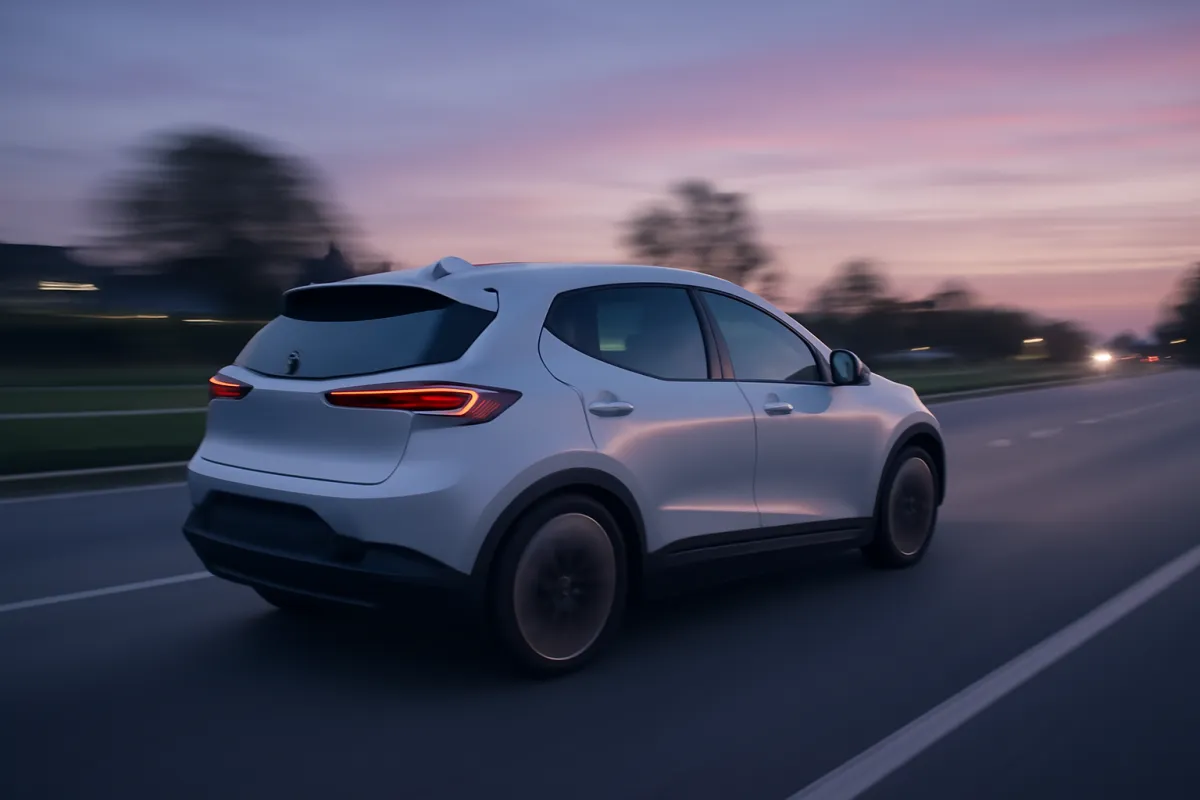
Short answer: The best electric car for commuting is usually not the one with the longest range or the flashiest spec sheet, it is the one that is efficient enough to cost little per mile, affordable enough to buy comfortably, and comfortable enough for the specific daily trip you actually drive. For most commutes under 30 miles each way, a smaller, efficient EV covers the need many times over on a single charge, which means price and efficiency, not maximum range, should usually decide the shortlist.
Buying guides for electric cars default to range as the headline number, the way gas-car reviews once defaulted to horsepower, and for a genuine long-distance driver that focus makes sense. For the much larger group of people whose EV spends five days a week doing the same short, predictable trip, chasing the biggest range number on the lot is often paying for a capability that never gets used, the way buying a pickup truck’s towing capacity for a car that will never tow anything is paying for a number rather than a need.
This teardown reframes the question around what actually decides whether an EV fits a daily commute well: efficiency and what it does to your real cost per mile, how little range most commutes genuinely require, what home charging changes about the whole equation, how seasonal weather should size your buffer, and where a used EV or a smaller trim can be the smarter buy than a bigger one. It sits beside our best electric SUV teardown, which covers family-sized needs, and our cost per mile teardown, which prices the daily arithmetic this teardown is built on. The companion beside this article and our calculator will run your own commute distance and rates as you read.
Key takeaways
- Most commutes are short enough, typically well under 30 miles each way, that nearly any current EV covers a full week of driving many times over on a single charge.
- Efficiency, how much energy a car uses per mile, matters more than headline range for a commuter, since it directly sets your cost per mile and how often you need to plug in.
- Fast-charging speed, a major selling point for road trips, barely matters for a commuter who charges overnight at home while the car is already parked.
- A smaller, more affordable EV, new or used, frequently serves a commute better than a larger, longer-range one, because the extra range and weight of a bigger battery go largely unused on short daily trips.
- The honest shortlist criteria for a commuter EV are price, efficiency, and comfort for your specific trip, in roughly that order, not the biggest range figure on the window sticker.
What “best for commuting” actually means
A commuter EV is not a separate category of vehicle on any manufacturer’s lineup chart, it is an ordinary EV being evaluated against a specific, narrow use case: the same short trip, repeated on a predictable schedule, usually with access to charging at home or work overnight or during the day. That narrow use case changes which specs matter.
A road-trip buyer cares most about maximum range and DC fast-charging speed, since both directly shorten a long trip. A commuter cares most about efficiency, since it sets the cost of every mile driven, and about whether the car’s range comfortably exceeds the daily trip with a sensible buffer, not about whether it can cross a state without stopping. Those are different questions, and a shortlist built for one does not automatically serve the other well, which is exactly why a generic “best EVs” ranking, built mostly around range and performance, can steer a commuter toward a car that costs more to buy and more to run than a smaller model would have.
How far most commutes actually are
The starting fact that reframes this whole decision is how short a typical commute actually is. Commute distances vary by region and by individual circumstance, but a one-way commute of roughly 10 to 25 miles covers the large majority of American drivers, putting a round trip plus a modest allowance for errands well under 60 miles on a typical day.
Set that against what current EVs offer. Even a modest-range EV, one advertised at a relatively low figure compared with the longest-range models on the market, typically still offers well over 150 miles of range when new, meaning a 60-mile daily round trip uses a small fraction of a full charge, leaving most of the battery sitting unused on an ordinary weekday. The practical consequence is that for most commuters, nearly the entire advertised range of nearly any current EV is unused buffer on an ordinary day, which is exactly why maximizing that number should not automatically top the shortlist criteria, no matter how prominently it is printed on the window sticker.
Efficiency: the number that actually drives your cost
Efficiency, usually expressed as miles per kilowatt-hour or the inverse, kilowatt-hours per 100 miles, measures how much energy a car uses to travel a given distance. It is the EV equivalent of miles per gallon, and it is the single number that most directly sets what your commute actually costs to run, because your electricity bill scales with energy used, not with how big the battery is or how far the car can theoretically go.
A more efficient car costs less per mile at the same electricity rate, full stop. Weight, aerodynamics, motor design, and tire choice all affect efficiency, which is part of why a smaller, lighter EV often beats a larger SUV on cost per mile even when the SUV has a bigger battery and a longer advertised range. For a commuter specifically, where the same trip repeats five days a week for years, a meaningful efficiency gap compounds into a real difference in total cost of ownership that a one-time sticker price comparison misses entirely.
Range versus efficiency: the trade a commuter should actually make
Range and efficiency are related but distinct, and conflating them leads buyers toward the wrong car for a commute. Range is simply battery size multiplied by efficiency: a bigger battery or a more efficient car, or both, produces more range. A commuter buyer chasing a big range number is often really paying for a bigger battery, which adds cost and weight without necessarily improving the thing that matters for daily driving, which is the cost of each mile.
The more useful frame for a commuter is asking how much range you genuinely need as a daily buffer, then prioritizing efficiency and price within whatever models clear that bar, rather than maximizing range itself. A car with modest range but strong efficiency can cost less to buy, cost less to run, and still comfortably cover a commute many times over, while a car with enormous range but mediocre efficiency costs more both upfront and per mile for a buffer that mostly goes unused.
Illustrative monthly commuting cost by vehicle efficiency
The chart below sketches how monthly commuting electricity cost scales with a car’s efficiency, holding commute distance and electricity rate constant, to make the efficiency effect concrete. Figures are illustrative, built from round assumptions to show the pattern rather than to quote any specific vehicle.
Illustrative monthly commuting cost by vehicle efficiency
A 25-mile round-trip commute, 21 workdays a month, at a $0.15/kWh home rate, across four illustrative efficiency levels. Illustrative only, built to show the pattern; your own rate and commute change every figure.
Read the shape, not the digits. On the same commute and the same electricity rate, the least efficient car on this illustrative chart costs nearly twice what the most efficient one does, every single month, indefinitely.
The lesson compounds over ownership. A $15 or $20 monthly gap looks small in isolation, but multiplied across years of the same commute it becomes a meaningful number, and it is a cost that a sticker-price comparison at the dealership never shows you. Put your own commute distance and electricity rate into the companion beside this article to see your own version of this math.
Why fast charging speed matters less than you think for a commute
DC fast charging, the headline spec in most EV marketing, is built for road trips: adding a large amount of range quickly so you can get back on the highway. A commuter who charges overnight at home almost never needs that speed, because the car has eight or more parked hours to refill a commute’s worth of energy, which even slow Level 1 charging usually accomplishes comfortably.
This does not mean fast charging is worthless to a commuter, since nearly every driver takes an occasional road trip or hits an unplanned long day beyond the usual route. It means fast charging speed should rank well below efficiency and price on a commuter’s shortlist criteria, rather than at the top where marketing tends to place it. A commuter paying a premium specifically for class-leading fast-charging speed is often paying for a capability their actual weekly routine rarely calls on.
Home charging: the part that makes the whole case work
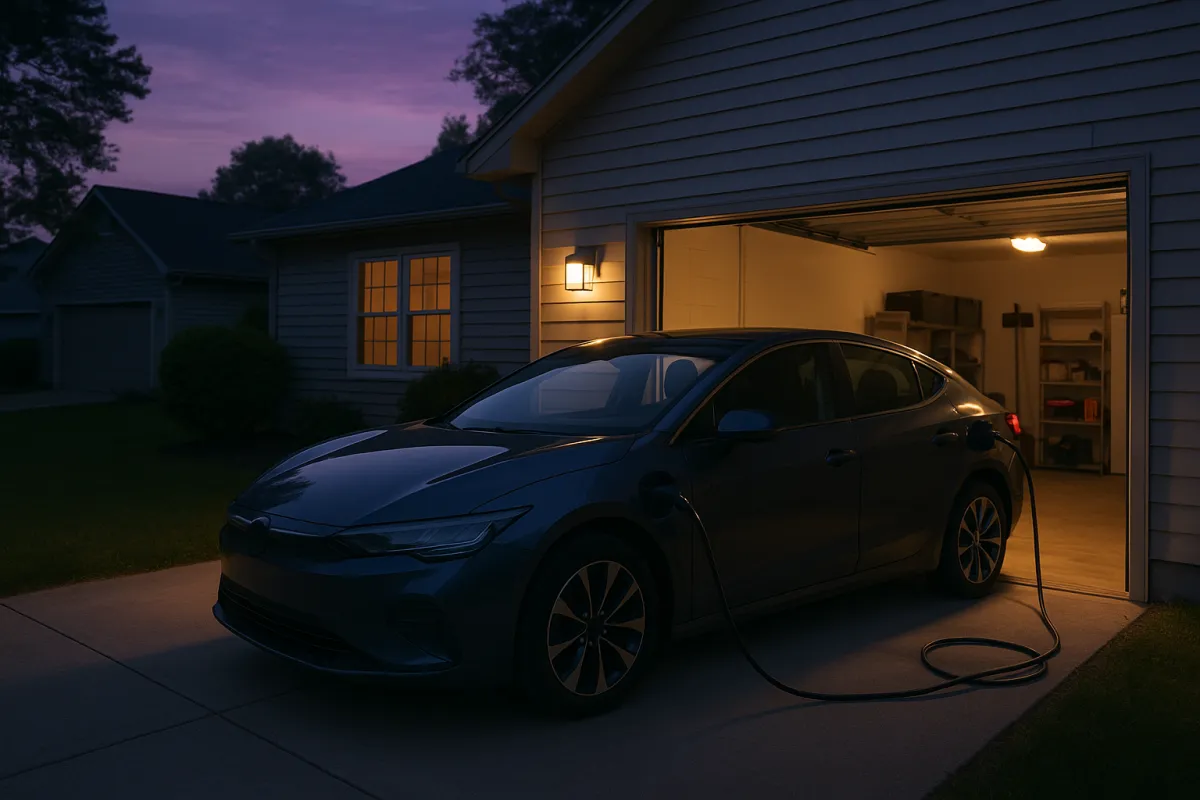
A commuter EV’s real advantage over a gas car is not just the lower per-mile cost, it is that refueling happens automatically overnight instead of requiring a separate stop. That advantage only fully materializes with home charging access, which is why confirming your home charging situation matters as much as choosing the car itself.
For most commuters, a standard wall outlet, Level 1 charging, adds enough range overnight to cover a short daily trip without any additional equipment. A dedicated Level 2 home charger, our install guide and installation cost teardown cover the specifics, charges considerably faster and becomes worth the investment for a longer commute, multiple daily trips, or less overnight parked time. A driver without reliable home charging access, covered in our apartment charging teardown, needs to weight workplace or public charging access more heavily in the vehicle decision itself, since the car’s efficiency then has to work harder against a higher effective cost per mile from public charging.
Size and body style: matching the car to the trip, not the image
Commuter buyers often default to whatever body style feels familiar from their last gas car, which can mean paying for SUV capability a solo daily commute never uses. A compact hatchback or sedan is typically more efficient than a similarly priced crossover or SUV, simply because it is lighter and more aerodynamic, both of which directly lower cost per mile and reduce tire wear over the same commute.
This is not an argument that every commuter needs the smallest car available, since cargo needs, passenger counts, and comfort preferences are all legitimate factors. It is an argument for being deliberate about the trade: a larger, heavier EV costs more to buy and more to run per mile, and that cost is worth paying when the extra space and capability are genuinely used, and worth questioning when the car’s actual job is one person driving the same short trip five days a week. Our best electric SUV teardown covers the opposite end of that trade for buyers who do need the space.
New versus used for a commuter EV
A commute’s modest daily mileage is precisely the situation where a used EV often makes more financial sense than a new one. Because the daily trip rarely challenges even a somewhat degraded battery’s remaining range, a used EV selling at a meaningful discount to new can still comfortably serve a commute for years, while the buyer avoids the steepest part of a new EV’s depreciation curve.
The check that matters is the battery’s measured state of health relative to your actual commute distance, not the car’s original advertised range when new. A used EV that has lost a real but modest share of its original range can still clear a 25-mile round-trip commute with room to spare, even if it would no longer suit a buyer who needed the original maximum range for long trips. Our used EV buying teardown and battery health teardown walk through exactly what to check before buying, and our under-$10K used EV teardown covers the budget end of this specifically.
Where a monthly commuting budget actually goes
Beyond the electricity itself, a commuter EV’s monthly cost includes a few other recurring pieces worth seeing together rather than in isolation. The chart below sketches an illustrative split for a typical commuter EV’s monthly running cost, separate from the loan or lease payment itself.
Illustrative monthly running cost for a commuter EV
A schematic split of recurring costs beyond the loan or lease payment, for a typical commuter driving pattern. Illustrative only, framed for shape; your own split depends on your commute, rates, and insurance.
Charging is usually the smallest recurring line for a commuter, not the largest. Insurance and tires, covered in our own teardowns, often add up to more over a year than the electricity itself, which is exactly why a shortlist built only around the cost of electricity misses a meaningful share of the real monthly number.
That shape is worth knowing before shopping, since a buyer focused entirely on minimizing the charging cost can miss that insurance, our EV insurance teardown explains why EV premiums run higher, and tire wear, our EV tire teardown covers the mechanism, often matter just as much to the total monthly number.
A worked example: two commuters, two cars
Numbers make the comparison concrete. Consider two commuters, each driving a 25-mile round trip, 21 workdays a month, charging at home on a $0.15 per kilowatt-hour rate. The first drives a larger, less efficient EV rated at roughly 2.2 miles per kilowatt-hour. The second drives a smaller, more efficient EV rated at roughly 3.7 miles per kilowatt-hour.
On the larger car, the monthly commute uses about 238 kilowatt-hours, costing roughly $36. On the smaller, more efficient car, the same 525 monthly commuting miles use about 142 kilowatt-hours, costing roughly $21. The efficient car saves around $15 a month on electricity alone, before counting the typically lower insurance and lower purchase price that often come with a smaller vehicle. Neither car comes close to needing a full charge for this commute; both finish the week with most of their battery unused, and both would still clear the same commute comfortably even with a winter range reduction layered on top.
Extend that $15 monthly gap across five years of the same commute and it adds up to roughly $900, entirely from the efficiency difference between two cars that both did the same job equally well on paper. That is before counting the purchase-price gap that typically comes with choosing the smaller, more efficient model in the first place, which is usually the larger number of the two. Put your own commute distance, efficiency, and electricity rate into the companion beside this article to see your own version.

A short shortlist framework
Rather than naming specific models, which change model year to model year and go stale quickly, a durable framework is more useful. Start with your actual round-trip commute distance plus a reasonable errand allowance, and set a minimum range comfortably above that, with extra buffer for winter if you live somewhere cold, since our cold weather range teardown shows real losses in freezing conditions.
From the list of models clearing that minimum range bar, sort by efficiency and price rather than by maximum range, since every car on the shortlist already covers your commute comfortably. Confirm your home or workplace charging access fits the car’s charging speed, and check insurance quotes before buying rather than after, since the gap between models can be larger than the price difference between them. This process reliably points toward smaller, more efficient, often less expensive EVs than a range-first search would surface, which is the whole point.
Seasonal buffer: sizing range for the worst commute of the year, not the average one
A commuter’s range math should be built around winter, not around the mild afternoon you test-drove the car on. Cold temperatures meaningfully reduce usable range, both from the battery chemistry itself and from cabin heating draw, and a commute that comfortably fits a summer charge can feel noticeably tighter on a freezing January morning. Our cold weather range teardown prices the typical loss directly.
The practical fix is not necessarily buying a bigger battery, it is sizing your range minimum against your coldest realistic commute rather than your average one, and leaning on preconditioning, covered in our preconditioning teardown, to reduce how much of that buffer gets eaten by cabin heating on the coldest mornings. A driver in a mild climate can plan much closer to average-case range than a driver somewhere with real winters, and that regional difference belongs in the shortlist decision, not just in the glovebox for emergencies.
Workplace charging as a second option, not a requirement
Some commuters have access to charging at their workplace, whether as a free perk, a paid arrangement, or shared equipment, and where available it changes the calculation in a commuter’s favor by adding a second opportunity to top up beyond home charging. Our workplace charging teardown covers the different pricing models employers use and how to make the case for installation where none exists yet.
The important framing for choosing a car is treating workplace charging as a bonus rather than a requirement, since employer policies change, parking assignments shift, and equipment availability is rarely guaranteed for years. A commuter EV chosen to comfortably cover the round trip on home charging alone remains fully functional even if workplace charging disappears, while a choice that assumes workplace charging as load-bearing can leave a driver short if that access ever goes away.
Depreciation and what a short commute means for resale
A commuter driving modest daily mileage accumulates fewer total miles per year than an average driver, which matters for resale because odometer reading is one of the factors used-car buyers and dealers weigh alongside age and battery health. A lower-mileage used EV, all else equal, tends to command a stronger resale price than a higher-mileage one of the same age, our depreciation teardown covers the broader pattern.
This cuts a specific way for a commuter buyer: a car bought specifically for a short, predictable trip is also likely to age gently on the odometer, which is a quiet point in favor of buying a slightly smaller, less expensive EV rather than overspending on a bigger battery that a short commute will never meaningfully draw down anyway. The resale value protects itself through low mileage regardless of which trim you chose, so the purchase-price savings from a smaller battery are less likely to be offset by a resale penalty later.
Gentle charging and what it means for long-term battery health
A short daily commute is, from the battery’s perspective, a gentle use case. It typically means a smaller daily charge, often not a full charge to 100 percent, moderate charging speed on a home Level 1 or Level 2 setup rather than repeated DC fast charging, and plenty of time parked and resting between sessions. Our battery life teardown covers the habits that slow degradation, and a commuter’s typical pattern happens to match several of them by default.
This is not a reason to stop thinking about battery health altogether, since climate, storage habits, and charging to very high or very low states of charge still matter regardless of commute length. It is a reason a commuter-focused buyer can reasonably expect a pack to age gracefully over a typical ownership period without needing to adopt an unusually disciplined charging routine, since the daily use case is already easy on the battery by its nature.
Leasing a commuter EV: when the math shifts in your favor
Our lease versus buy teardown works through the general decision, but one factor shifts specifically in a commuter’s favor: lease mileage caps, commonly set somewhere in the 10,000 to 15,000 mile per year range, are far less likely to be a binding constraint for a driver whose annual mileage is dominated by a short, predictable commute rather than by unpredictable long trips.
That removes one of the more common reasons buyers choose a loan over a lease, the fear of exceeding the mileage allowance and paying a per-mile penalty at turn-in. For a commuter confident their annual mileage will sit comfortably under a lease’s cap, the decision can lean more heavily on the other factors in that teardown, monthly payment, flexibility, and whether you value eventually owning the car outright, rather than on mileage anxiety specifically.
Trim levels and options worth questioning for a pure commuter
Automakers frequently gate a larger battery, faster charging hardware, or a higher-output motor behind a pricier trim, and a pure commuter buyer is often paying for capability that trip never calls on. Before upgrading a trim specifically for a bigger battery or faster charging, it is worth asking honestly whether the base configuration’s range already clears your commute with comfortable buffer, in which case the upgrade is paying for occasional road-trip convenience rather than daily usability.
Where an upgrade genuinely earns its cost for a commuter is less about range and more about efficiency-adjacent or comfort features used every single day: a heat pump, which our heat pump teardown explains improves cold-weather efficiency and cabin comfort together, or seat heating, which can reduce reliance on cabin heating draw on a cold commute. Weighing upgrades by how often they are actually used on the daily trip, rather than by how impressive they sound on a spec sheet, keeps a commuter purchase from quietly becoming a road-trip purchase you rarely use for road trips.
Heat and commuting in hot climates
The seasonal buffer discussion above focuses on cold weather, but heat affects a commuter EV too, through a different mechanism. High ambient temperatures increase cabin cooling draw and, in sustained extreme heat, can affect battery efficiency and long-term degradation, our hot weather range teardown covers both effects directly. A commuter in a hot climate should size their range buffer with summer afternoons in mind the same way a cold-climate commuter sizes it around winter mornings, rather than assuming only cold weather is a planning factor.
The practical response overlaps with the cold-weather one: preconditioning the cabin while still plugged in, rather than running air conditioning hard immediately after unplugging, reduces the draw on the battery itself during the first stretch of the commute. Parking in shade when available and being mindful of charging habits during extreme heat, covered in our battery life teardown, both help protect long-term range in a hot climate the way gentle charging habits do generally.
A second worked example: new versus used commuter EV
Consider a buyer choosing between a new compact EV at $38,000 and a comparable three-year-old used version of a similar model at $21,000, with a measured battery state of health in the high 80s percent and a confirmed 25-mile round-trip commute. The used car’s reduced range still clears the commute with a wide comfortable margin, since even a meaningfully degraded pack on a small-battery commuter EV typically still covers well over 100 miles, several times the daily need.
The new car carries a full manufacturer warranty and the latest efficiency and safety features, while the used car carries a lower purchase price, likely already past the steepest first-year depreciation, and whatever remains of its transferable battery coverage, our battery warranty teardown covers how to check that. For a buyer whose primary use case is genuinely the short commute this teardown has focused on, the used car’s discount buys real savings against a range cushion the commute was never going to need in full regardless of which car was chosen. A buyer planning frequent longer trips beyond the commute weighs that trade differently, which is exactly why the honest first question is always how the car actually gets used, not which one looks better on paper.
What changes if the car also does weekend duty
Few commuter EVs live a pure, single-purpose life, and it is worth honestly accounting for how the car gets used beyond the weekday trip before finalizing a shortlist built purely around minimum commuting range. A car that also handles occasional weekend trips, visits to family a few hours away, or weekend errands well beyond the weekday pattern benefits from a larger buffer than the bare commuting minimum this teardown has focused on.
The reasonable approach is not abandoning the efficiency-and-price-first framework, it is being honest about how often the longer trips actually happen. A driver who takes one or two multi-hour trips a year is usually still better served planning around the commute and accepting occasional public charging on the rare longer trip, our road trip planning teardown covers that scenario directly, than paying every single day, through a bigger loan payment and higher running costs, for range that serves only a couple of days a year.
Common mistakes when choosing a commuter EV
A handful of mistakes show up repeatedly. Buying the longest-range model available out of general anxiety about running out of charge, without checking the actual commute distance against it, usually means overpaying for a buffer that goes unused nearly every day. Prioritizing DC fast-charging speed as a top decision factor, when the car will mostly charge overnight at home, pays for a capability rarely exercised.
Choosing a larger body style out of habit from a previous gas car, without weighing the efficiency and cost penalty against actual cargo and passenger needs, raises the cost per mile for no real benefit on a solo commute. And comparing only sticker prices between models, without running insurance quotes and efficiency-driven running costs side by side, misses a meaningful share of the real difference in total cost between two cars that looked similar on the lot. A shortlist built purely on the number printed on the window sticker, rather than on the full running-cost picture this teardown has worked through, is the single most common reason a commuter ends up paying more than they needed to for a car doing the same job.
The bottom line
The best electric car for commuting is rarely the one with the biggest range number, because most commutes are short enough that nearly any current EV covers the trip many times over on a single charge. Efficiency, not range, is the number that actually sets your cost per mile, and fast-charging speed, the spec road-trip buyers chase, barely matters when the car charges overnight at home while already parked.
Build your shortlist by setting a range minimum comfortably above your actual commute, with real buffer for your local winter and summer extremes, then choosing within that list for efficiency and price rather than maximum capability, and give a used EV a real look, since a commute’s modest daily mileage is exactly the situation where a used battery still comfortably does the job. Put your own commute distance, efficiency, and electricity rate into the companion above and our calculator, and the shortlist stops being about chasing a spec and starts being about your actual trip, the one you will actually be driving every single weekday for years.
This teardown is educational and independent. No specific vehicle’s price, range, or efficiency rating is stated here as fact, and every cost figure above is illustrative, built from round assumptions to show the pattern rather than to quote current model specifications or electricity rates. Efficiency, range, and pricing change by model year and trim; confirm current specifications with the manufacturer and your own electricity rate with your utility before comparing specific cars.
Frequently asked questions
Do I need a long-range EV just to commute?
For most commutes, no. A typical one-way commute in the United States runs well under 30 miles, meaning a round trip plus errands rarely exceeds 60 to 70 miles on a normal day, which almost any current EV covers many times over on a single charge even accounting for cold weather losses. Paying extra for maximum range mainly buys comfort for occasional long trips and a wider buffer between charges, not a requirement for the daily drive itself. Our cold weather range teardown shows how much of that buffer winter actually eats into.
Is a smaller, cheaper EV actually efficient enough for commuting?
Often more efficient than a larger one, not less. Smaller and lighter EVs generally use less energy per mile than larger SUVs and trucks, which directly lowers your electricity cost per mile and effectively extends how many commuting days you get from the same home charging session. A compact or smaller EV with a modest advertised range frequently delivers more real-world commuting days per dollar than a bigger EV with a flashier range number, because efficiency, not just battery size, decides how far a given amount of energy actually takes you.
Should I prioritize fast charging speed for a commuter EV?
Usually not as much as marketing suggests. A commuter who charges at home overnight rarely touches DC fast charging during the week at all, since the car simply refills while parked. Fast charging speed matters far more for occasional road trips than for daily commuting, so a commuter-focused buyer is generally better served prioritizing efficiency, price, and a comfortable daily range over a few extra minutes saved at a fast charger they may use only a handful of times a year.
What is a realistic home charging setup for a commuter EV?
For most commuters, a standard home outlet, Level 1 charging, replenishes more range overnight than a typical commute uses, since even slow charging adds meaningful range across eight or more parked hours. A Level 2 home charger, requiring a dedicated circuit and typically a few hundred dollars in installation beyond the unit itself, charges considerably faster and is worth it mainly for drivers with longer commutes, multiple daily trips, or less overnight parked time. Our home charger install teardown and installation cost teardown cover both paths in detail.
Are used EVs a good option for commuting?
Often the best option for a commuter specifically, since a commute's modest daily mileage is exactly the use case where a used EV with somewhat reduced range or an aging battery still comfortably covers the need, while costing meaningfully less upfront than a new one. The main check is the battery's measured state of health relative to your actual commute distance, not its original advertised range when new. Our used EV buying teardown and battery health teardown cover exactly what to check before buying.
How much does commuting in an EV actually cost per month?
It depends on your commute distance, your car's efficiency, and your home electricity rate, with no single figure applying to every driver, but the honest shape is that it is usually a fraction of an equivalent gas commute's fuel cost, since home electricity is typically cheaper per mile than gasoline even before accounting for an EV's lower per-mile energy use. Our cost per mile teardown and home charging cost teardown both run the specific arithmetic, and the companion beside this article will run it on your own commute.
Does a longer commute change which EV makes the most sense?
Yes, meaningfully. A short commute under roughly 20 miles each way makes nearly any current EV comfortable on range, which shifts the deciding factors toward price and efficiency. A long commute, especially one in the 40 to 60 mile range each way or more, narrows the field toward EVs with genuinely larger usable range or faster home charging, since the daily buffer between charges shrinks and winter range loss becomes a real planning factor rather than a rounding error.
Is it worth buying a bigger battery than my commute actually needs?
It depends on how you use the car beyond commuting. A bigger battery than your daily need provides comfortable buffer for occasional longer trips, bad weather, and fewer charging sessions overall, but it also raises the purchase price and, modestly, the energy used per mile due to the extra weight. A buyer who only ever drives the daily commute and rarely takes the car on long trips gets little practical benefit from a battery far beyond their actual need, while a buyer who occasionally road-trips in the same car may find the extra buffer genuinely worth the added cost.