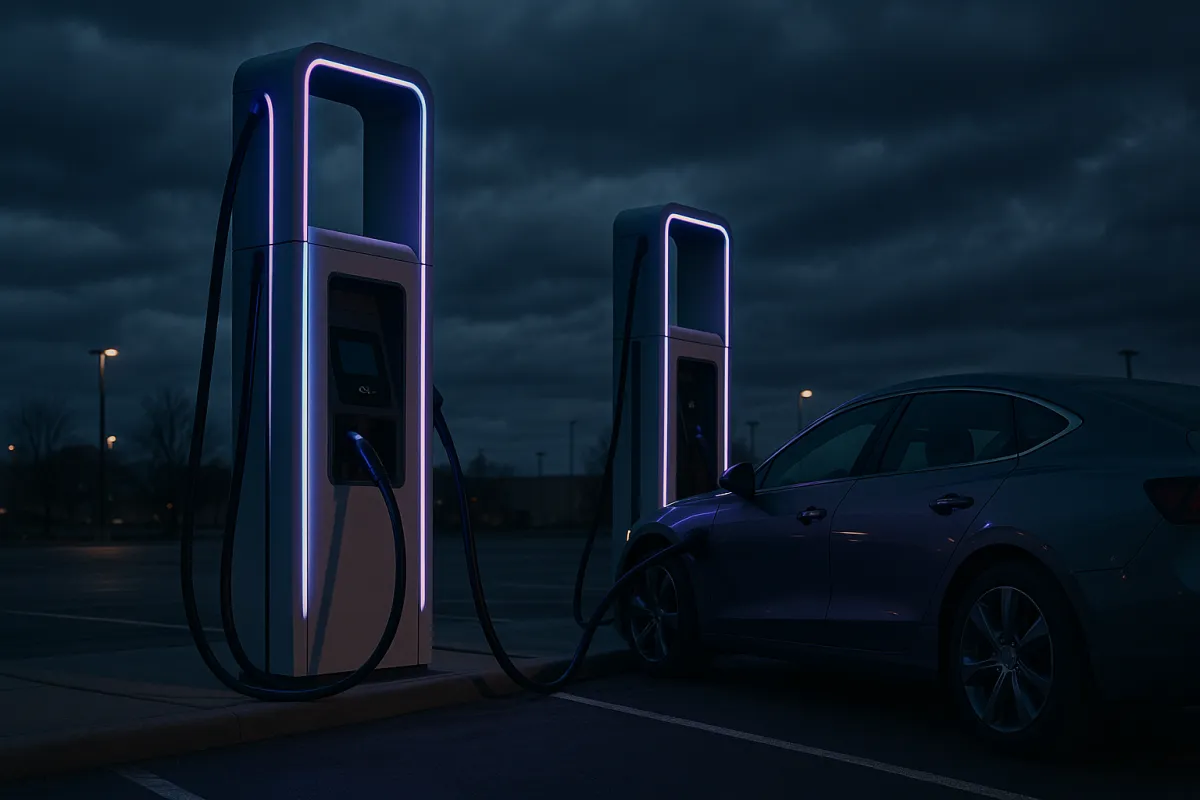
What's in this teardown
- Why this question keeps coming up
- The short mechanical answer
- Layer one: sealed connectors and weather ratings
- Layer two: the connection only carries current when it is safe to
- Layer three: ground fault protection
- What manufacturers actually test for
- How the handshake actually works, step by step
- Comparing to fueling a gas car in bad weather
- What electrical codes generally require
- Apartment and street parking in wet weather
- A worked scenario: a week of mixed weather
- What actually happens if moisture reaches a connector
- Charging in snow: a different kind of problem
- The genuinely real cold-weather effect: charging speed
- Public chargers in the rain: canopies, screens, and payment
- Weather exposure by installation type: a sense of scale
- Lightning and severe storms: the one real caveat
- Home installation: what actually matters for weather resilience
- Signs your equipment is not safe to use, in any weather
- What to do if you are genuinely unsure in the moment
- A seasonal checklist for charging through winter
- Common mistakes and misconceptions
- Why the worry persists anyway
- The bottom line
Short answer: Yes, it is safe to charge an electric car in the rain or snow under normal conditions. Charging connectors are sealed once engaged, the pins only carry current after the vehicle and charger confirm a safe connection, and ground fault protection cuts power automatically if anything leaks. The real precautions are about damage, not weather: a cracked cord or housing is unsafe in any conditions, and a frozen or snow-packed connector is a mechanical annoyance rather than an electrical danger.
The instinct makes sense before you think it through: water and electricity have been a warning pair since childhood, and plugging a car into a wall-mounted box while rain is coming down sideways feels like it should be a problem. It is a fair question to ask, and it deserves a real answer rather than a reflexive one, because the honest answer is that charging in the rain is one of the most thoroughly engineered-around conditions in the entire system.
This teardown walks through why that is true: how a charging connector is actually built, what ground fault protection does and why it is required on these circuits, what genuinely changes about charging in snow versus rain, and the handful of real precautions that have nothing to do with weather and everything to do with damage. Our home charger installation guide covers getting the installation right in the first place, and our public charger walkthrough covers the rest of a normal charging session. Model your own charging routine alongside the rest of your running costs in our cost calculator.
Key takeaways
- Charging connectors are sealed once engaged, and the pins only carry current after the vehicle and charger confirm a safe connection, so there is no exposed live conductor for rain to reach during normal use.
- Ground fault protection, required on EV charging circuits, cuts power automatically if it detects current leaking anywhere it should not, which is the real safety layer behind this entire question.
- Snow introduces mechanical annoyances, a frozen handle or a packed connector, not electrical danger; clear visible ice and snow before plugging in and the rest of the session is routine.
- The genuine precaution is damage, not weather: a cracked housing, exposed wire, or a connector that was run over removes the protection the design relies on, in any conditions.
- Cold slows charging speed through battery chemistry, which is a real and separate effect from rain safety, and the two should not be confused even though they often show up together in winter.
Why this question keeps coming up
Almost everyone learns the same childhood rule long before they learn any electrical engineering: keep electricity away from water. It is good, simple advice for a world of exposed outlets, hair dryers near bathtubs, and downed power lines, and it has kept people safe for generations. The trouble is that the rule is a simplification built for those specific scenarios, not a universal law, and an EV charging connector is engineered specifically to not be one of those exposed scenarios in the first place.
Standing at a charging station in the rain, cable in hand, triggers that old rule reflexively, even though the actual engineering underneath the connector has already solved the problem the rule was written to prevent. This teardown is about closing that gap between the reflexive worry and the actual mechanism.
The short mechanical answer
A charging connector, whether it is the plug on your home Level 2 unit or the handle at a public DC fast charger, is a sealed assembly. The pins that carry current are recessed inside a housing designed to keep moisture, dust, and debris away from the electrical contacts, both while the connector is sitting unused on its holster and while it is engaged with the vehicle’s charging port. Once the connector locks into the vehicle’s inlet, that seal becomes continuous between the two halves, so the current-carrying path during an active charging session is enclosed rather than exposed.
That alone would make most owners feel better, but it is only the first of three independent layers this system relies on, and understanding all three is what actually answers the question properly rather than just asserting it.
Layer one: sealed connectors and weather ratings
Charging equipment intended for outdoor installation or outdoor public use is built and rated to standards that specifically cover exposure to rain, splashing water, dust, and temperature extremes. That rating is not a marketing claim, it is a design requirement, because the equipment has to survive being mounted on an exterior wall or standing in a parking lot through every season a region experiences.
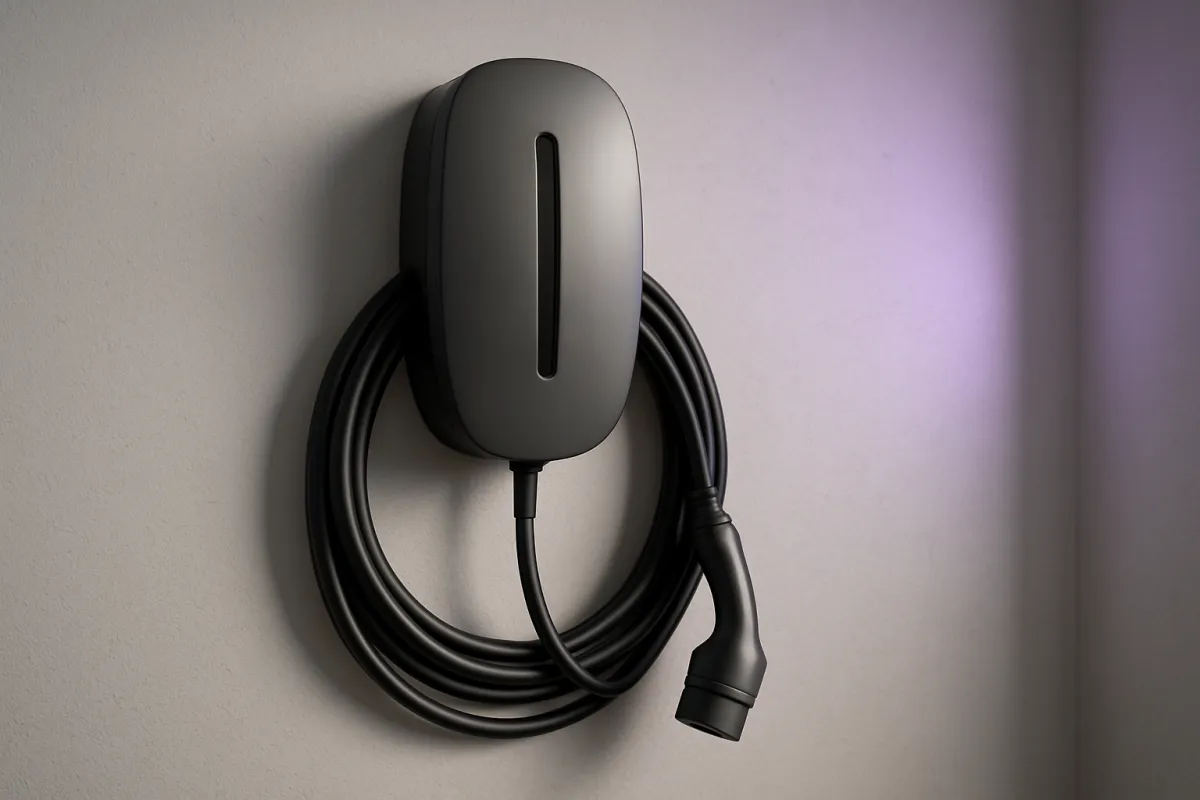
This is true whether the unit is mounted indoors in a garage, under a carport eave, or fully exposed on an outdoor wall or pedestal, because manufacturers cannot assume where every customer will install it. The practical result is that the connector in your hand on a rainy evening was designed by people whose entire job was making sure this exact moment is a non-event.
Layer two: the connection only carries current when it is safe to
The second layer is a behavior rather than a physical seal, and it is arguably the more important one. A charging connector does not simply dump current the instant metal touches metal the way an old-fashioned plug does. The vehicle and the charging equipment perform a brief electronic handshake once the connector is seated: confirming the connection is complete, the vehicle is ready to accept power, and no fault condition is present, before any meaningful current flows through the pins.
This is why you can plug in or unplug an EV without the spark or arc you might picture from a traditional high-current connection: the system de-energizes the pins before you break the physical connection and only energizes them after it is fully made. It is the same category of design logic that lets you unplug a charger mid-session without incident, and it is a deliberate safety feature rather than a side effect.
Layer three: ground fault protection
The third and most directly relevant layer to the rain question is ground fault protection, a circuit-level safeguard required on EV charging installations specifically because they carry meaningful current for extended periods. A ground fault device continuously compares the current flowing out through the circuit against the current returning, and if it ever detects a mismatch, current escaping somewhere other than its intended path, it cuts power automatically, in a fraction of a second.
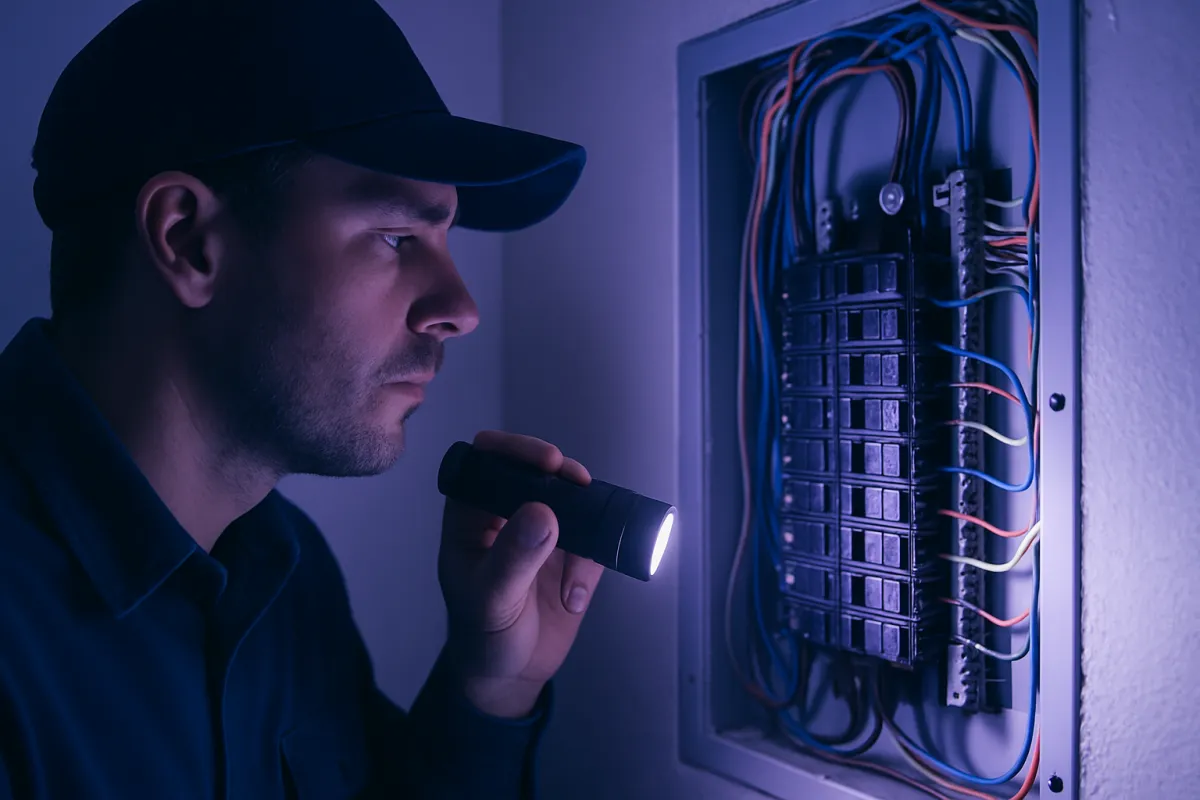
This is the layer that exists specifically to catch the scenario the old “water and electricity” warning is actually worried about: a path to ground forming somewhere it should not. Rather than relying solely on keeping water out, as layer one does, the system also assumes a fault could theoretically occur and is built to shut itself off immediately if one does. Two independent layers, a physical seal and an automatic electrical cutoff, is why this question has such a confident answer rather than a hedged one.
What manufacturers actually test for
None of the three layers above is theoretical or assumed. Charging equipment intended for outdoor use is put through specific environmental testing before it reaches a wall or a parking lot: water spray and immersion tests that simulate rain and splashing from multiple angles, temperature cycling that spans well below freezing to well above a hot summer day, and repeated connect-and-disconnect cycles to confirm the seals and the electronic handshake keep working after years of ordinary use rather than only on day one. This is a routine part of bringing charging hardware to market, not a special feature reserved for premium equipment.
The reason this matters for the rain question specifically is that a product tested this way has already encountered far more water, in far more deliberate and extreme ways, than any storm you are likely to charge through. An engineer spraying a connector with a hose in a lab for a certification test is a harder scenario than a driveway in a rainstorm, which is part of why the confident answer to this question is not a guess, it is the result of the exact testing this section describes.
How the handshake actually works, step by step
It is worth walking through the connection sequence in a little more detail, because seeing the individual steps makes it obvious why water on the outside of the housing is not a meaningful variable. First, you physically insert the connector into the vehicle’s port, and a latch mechanism confirms and often locks the physical connection. Second, the vehicle and the charging equipment exchange a set of low-voltage signals confirming each other’s presence and readiness, a conversation that happens over dedicated signal pins separate from the main power pins. Third, once that exchange confirms everything is in order, including the status the ground fault circuitry is reporting, the system energizes the power pins and charging begins. Fourth, throughout the session, the system continues monitoring that signal, and if it is ever interrupted or a fault is detected, power cuts automatically rather than continuing blindly.
Unplugging reverses the sequence in the same careful order: the system de-energizes the power pins first, then the physical latch releases, so that by the time metal is actually exposed to the air, no meaningful current is flowing through it. None of these four steps involve a moment where exposed, energized metal is sitting in the rain waiting for something to go wrong, which is the scenario the original childhood warning is built around and the scenario this entire design avoids by sequencing the connection and disconnection carefully.
Comparing to fueling a gas car in bad weather
A useful sanity check is to compare this to the routine most drivers already trust without thinking twice about it: fueling a gasoline car in the rain. Standing at a gas pump in a downpour, handling a nozzle connected to a tank of flammable liquid, surrounded by electrical equipment, is a scenario most people have done dozens of times without a second thought, because the equipment is designed for exactly that condition and everyone has simply absorbed that it works.
EV charging asks for the same basic trust in a different, less familiar system. The engineering reasoning is directly analogous: pumps and nozzles are built and tested for outdoor, all-weather use, just as charging connectors are, and the unfamiliarity of the newer technology is doing more work in the hesitation than any genuine difference in how thoroughly each system was engineered for rain. If anything, the EV side has an extra layer, the electronic handshake described above, that a gas pump’s simpler mechanical nozzle does not need, because a gas pump is not managing a live electrical circuit the way a charger is.
What electrical codes generally require
Electrical codes in most regions that regulate EV charging installations require dedicated circuit protection appropriate to a continuous, high-current load, and ground fault protection specifically is a standard requirement for this category of circuit in many jurisdictions, precisely because of scenarios like outdoor use in wet conditions. The exact code language and requirements vary by region and change over time, so this is a mechanism to understand rather than a specific code section to cite, and a licensed electrician pulling the correct permit for your installation is the person whose job it is to apply the current, local version of it correctly.
What this means practically is that a properly permitted, inspected installation has already had someone with legal accountability confirm the protective layer this article keeps returning to is actually present and correctly sized. This is one of the clearest, most concrete reasons to use a licensed professional for a home charger installation rather than treating it as a simple plug-and-go appliance purchase, a point this site’s installation guide covers from the cost and process side.
Apartment and street parking in wet weather
Charging without a private driveway or garage adds its own wrinkles, though not electrical ones. A public or shared charging station used from street parking is, by definition, built for that kind of exposed, outdoor use already, so the equipment itself needs no special weather consideration beyond what any outdoor public charger is designed for. The practical difference is convenience and routine: without a covered spot, you are more exposed while handling the connector, and a quick session is more pleasant to manage with a phone and payment method already set up in advance, a habit this site’s apartment charging teardown covers in detail for reasons beyond just staying dry.
Shared charging equipment in an apartment complex or workplace lot sees more daily connect-and-disconnect cycles than a single home unit, which is exactly the kind of repeated-use scenario the testing described earlier is built to withstand. A well-maintained shared charger is not inherently less weather-safe than a private one; it simply gets more wear, which is its own reason to report visible damage promptly rather than assuming someone else will.
A worked scenario: a week of mixed weather
Numbers land better as a story than as an abstraction, so follow one illustrative week through this mechanism. Monday through Wednesday are clear, and a home Level 2 session each night adds the expected range overnight without incident. Thursday brings steady rain, and the session proceeds exactly as it did on the dry nights, same connector, same handshake, same ground fault protection, with water simply beading on the housing rather than affecting anything inside it. Friday turns cold and brings a light snow, and the driver wipes a dusting of snow from the port and connector before plugging in, a thirty-second habit that avoids the one real snow-specific annoyance this teardown describes.
Saturday, a road trip requires a public DC fast-charging stop in freezing rain. The session takes a little longer to ramp to full power than it would on a mild day, not because of the rain, but because the cold battery is accepting energy more cautiously, the genuinely real cold-weather effect this teardown separates out from the rain question. Sunday is back to a routine overnight home session. Across the whole week, the only variable that actually changed the charging experience was temperature, through battery chemistry, never the presence of rain or snow through any electrical pathway.
What actually happens if moisture reaches a connector
It is worth being precise about the failure mode here rather than leaving it vague. If moisture somehow reached the current-carrying contacts inside a connector, the most likely outcome is not a dramatic spark but a detected fault: the ground fault protection trips, power stops, and the session simply fails to start or stops partway through. The system is designed to fail safe, cutting power rather than allowing a hazardous condition to continue, which is a very different outcome from the mental image the original childhood warning conjures.
This is also why an occasional failed charging attempt in truly severe weather, heavy wind-driven rain forcing water past a connector that was not seated perfectly, for instance, is an inconvenience rather than a danger. The protective systems are doing exactly what they are supposed to do.
Charging in snow: a different kind of problem
Snow raises a genuinely different set of issues from rain, and they are worth separating clearly because the electrical answer does not change but the practical experience does. Electrically, a snow-covered connector behaves the same as a rain-soaked one: sealed housing, handshake-gated current, ground fault backup. The problems snow actually causes are mechanical.
A charging handle left out in freezing conditions can develop ice around the latch mechanism, making it difficult to release from the vehicle after a session. A connector packed with snow may not seat fully into the port, which the system will simply detect as an incomplete connection and refuse to start charging, rather than an incomplete connection that silently fails. A charging port cover on the vehicle itself can freeze shut in sufficiently cold, wet conditions. None of these is a safety hazard. All of them are solved by the same simple habit: brush or wipe visible snow and ice away from both the connector and the vehicle’s port before you attempt to plug in, and give a frozen latch a gentle assist rather than forcing it.
The genuinely real cold-weather effect: charging speed
Here is where it is worth being careful not to blur two separate topics that tend to arrive together. Cold temperature does slow charging, and this is real, well documented, and has nothing to do with rain or moisture at all. A cold lithium-ion battery accepts energy more slowly to protect its own chemistry, which can meaningfully lengthen a DC fast-charging session on a freezing day, most noticeably on a winter road trip stop. Home Level 2 charging overnight is affected much less, since it is already slow enough that cold rarely becomes the limiting factor.
This effect is a function of the battery’s internal temperature, not the weather outside the car or whether it happens to be raining or snowing while you plug in. A battery that has been preconditioned, warmed on the way to a fast charger, charges close to its normal speed even in genuinely cold weather, which is a mechanism worth understanding on its own terms. It is covered in more depth in this site’s charging-time and cold-weather range teardowns, and it is the real seasonal effect to plan around, distinct from any question of safety.
Public chargers in the rain: canopies, screens, and payment
Public charging stations vary in how exposed they are, and that variation affects convenience more than safety. Some stations are built under a canopy specifically to keep the driver dry while handling the connector; many, especially older or roadside installations, are fully exposed to the weather. Either way, the electrical protections described above do not change based on whether there happens to be a roof overhead.
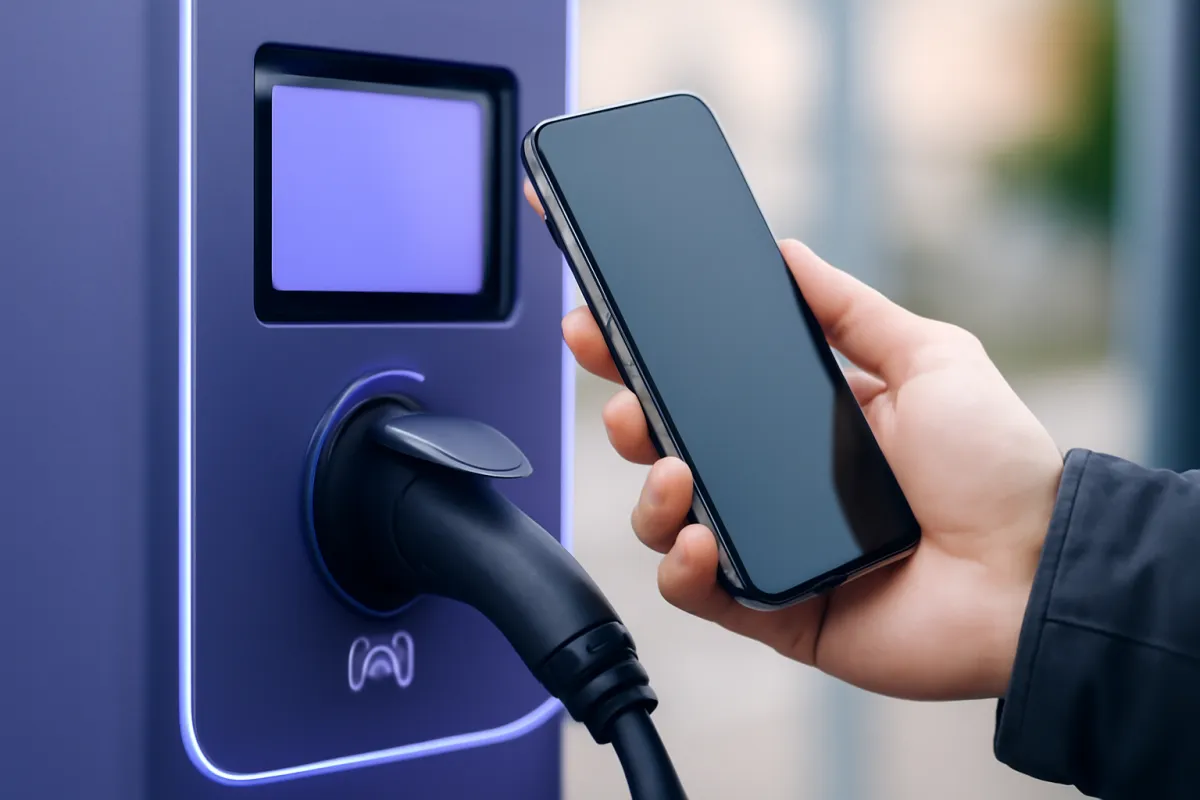
What does genuinely get more annoying in the rain is the human part of the process: a touchscreen that is harder to read with water on it, a phone that is awkward to use one-handed under an umbrella, or a payment card that is fumbled in cold, wet fingers. None of that is a safety issue, it is simply a worse user experience, and setting up your account and payment method in advance at home, something our apartment charging teardown recommends for a different reason, pays off doubly on a wet evening when you would rather not be standing at a kiosk any longer than necessary.
Weather exposure by installation type: a sense of scale
All of the installation types below carry the same electrical protections described in this teardown; none of them is unsafe. What differs is purely how much physical weather, rain, wind, direct sun, falling leaves, exposure the equipment’s housing has to tolerate over its lifetime, which is a durability and convenience question rather than a safety one. The illustrative scale below sets a fully enclosed indoor garage unit at a baseline of 1.0 and scales upward with physical exposure only.
Illustrative weather-exposure scale, by installation type
A relative illustrative scale of physical exposure only, baseline 1.0 for a fully enclosed indoor unit. Not a safety rating; every type listed is electrically protected the same way.
Read this as a durability-planning scale, not a risk scale: a fully exposed public station simply weathers more over its life than a garage unit, which is why outdoor-rated equipment is tested the way the earlier section describes, not because any of these rows is unsafe to use.
Lightning and severe storms: the one real caveat
There is exactly one weather scenario in this entire topic that deserves genuine caution, and it has nothing specifically to do with EV charging. Standing outside during active, nearby lightning carries its own well-known general risk, the same risk that applies to fueling a gasoline car, standing under a tree, or doing anything else outdoors during a severe electrical storm. If lightning is close enough to be a real concern, the sensible move is to wait indoors until it passes, for the same reason it always has been, not because the charger itself becomes more dangerous.
Outside of that specific, close-proximity lightning scenario, an ordinary thunderstorm’s rain is handled by the same sealed-connector and ground-fault protections as any other rain.
Illustrative sources of a weather-related charging delay, by share
A typical breakdown of what actually interrupts a session in bad weather, shown to illustrate proportion rather than as a measured statistic.
Read this for structure, not precision: the two largest slices are mechanical and procedural annoyances, not safety events, and the protective systems working as designed account for most of the rest.
Home installation: what actually matters for weather resilience
If you are installing or evaluating a home charger, the weather-relevant questions are less about the charger’s own marketing and more about the installation quality behind it. A qualified electrician should confirm the circuit has the correct ground fault protection for an EV charging load, that any outdoor-rated enclosure is genuinely rated for your climate and properly sealed at its mounting points and cable entry, and that conduit runs are sealed against water intrusion rather than left as an open path for it. Our home charger installation guide walks through the full installation process, and the weather-resilience questions above are worth raising explicitly with whoever does the work rather than assuming they were covered.
A unit mounted indoors in a garage avoids most direct weather exposure by default, which is one reason garage installations are common, but it is not a requirement for safety, only a convenience some owners prefer. A correctly installed outdoor unit is not a compromise.
Signs your equipment is not safe to use, in any weather
This is the section that actually matters more than the weather question itself, because damage, not rain, is the real variable that changes the answer. Stop using a charging cable or connector and have it inspected or replaced if you notice any of the following: a visibly cracked or broken housing on the plug or the wall unit, exposed or frayed wire anywhere along the cable, a connector that feels loose or does not seat firmly and click into place, a burning smell during or after a session, or a breaker that trips repeatedly rather than occasionally.
None of those signs is specific to wet weather, they are signs the equipment has a problem that applies regardless of conditions, but a developing fault is more likely to reveal itself as a trip or a failure during rain simply because the ground fault protection is doing exactly what it is supposed to do: catching the fault before it becomes something worse. Treat a repeated trip during rain as useful information about the equipment, not as proof that rain itself is the problem.
What to do if you are genuinely unsure in the moment
Even with all of the above, it is reasonable to want a simple rule for the actual moment you are standing at a connector wondering whether to proceed, so here is one. Look at the equipment before you touch it: is the housing intact, with no visible cracks, and is the cable free of exposed wire or obvious wear. If it looks physically sound, plug in as you normally would; the weather itself is not the variable that matters. If the system refuses to start or trips shortly after beginning, do not keep forcing repeated attempts; unplug, check the connector and port for snow, ice, or obvious damage, and try again once. If it fails a second time, treat that as a genuine equipment signal rather than bad luck with the weather, and have it looked at before relying on it again.
This single habit, a quick visual check before plugging in and a willingness to stop after a second failed attempt rather than the tenth, covers nearly every scenario this teardown describes without requiring you to remember any of the underlying engineering in the moment.
A seasonal checklist for charging through winter
- Clear visible snow and ice from both the vehicle’s charging port and the connector before plugging in, rather than forcing a connection through packed snow.
- Give a frozen handle or port cover a gentle assist rather than forcing it, and keep a plastic scraper in the car for this specifically during a cold, wet season.
- Precondition before a fast-charging stop on a cold day to recover most of the winter charging-speed penalty, a step this site’s charging-time teardown covers in more detail.
- Inspect your cable periodically for cracks or wear, since a winter season of coiling and uncoiling a cold, stiffer cable is exactly when existing damage tends to show up.
- Confirm your installation has proper ground fault protection once, at install time, rather than wondering about it every time it rains.
- Treat a repeated trip or failed connection as an equipment signal, worth a call to an electrician, rather than something to simply keep retrying.
Common mistakes and misconceptions
- Avoiding charging in the rain out of habit. This is the single most common unnecessary precaution in this entire topic, and it is based on a childhood rule written for a different scenario than a sealed, fault-protected EV connector.
- Confusing cold-weather charging speed with rain safety. They are unrelated effects that happen to show up in the same season; slower winter charging is a battery chemistry question, not a safety question.
- Forcing a snow-packed connector into the port. The system will usually just refuse an incomplete connection rather than start a dangerous one, but forcing it risks damaging the connector itself.
- Ignoring a visibly damaged cord because “it still works.” A damaged housing or exposed wire removes the protection this entire article relies on, in any weather, and is the one genuine precaution worth taking seriously.
- Assuming a canopy over a public charger is a safety feature rather than a convenience. It keeps the driver dry; it does not change the electrical protections underneath an exposed station.
- Treating a single ground fault trip as proof the charger is broken. An occasional trip during genuinely severe, wind-driven rain is often the system working correctly; a repeated pattern is the thing worth investigating.
Why the worry persists anyway
It is worth closing with a word on why this question keeps getting asked even by owners who have charged through dozens of rainy nights without incident. Part of it is the mismatch between how invisible the engineering is and how visible the water is: you can see rain hitting the connector, but you cannot see the sealed housing, the handshake sequence, or the ground fault circuit doing their jobs, so the reassurance has to be taken on explanation rather than observed directly in the moment. Part of it is that the consequences people imagine, a serious electric shock, are frightening enough that even a very low, well-engineered-against probability does not feel low when you are standing in the rain picturing it.
Neither of those is a flaw in your reasoning, they are just the ordinary gap between how safety engineering actually works and how exposed, visible risk feels to a person standing in it. The way most owners close that gap is simply by doing it a few times without incident, at which point the habit replaces the worry, which is exactly what tends to happen with this particular question once someone reads through the mechanism rather than only the headline instinct.
The bottom line
Charging an EV in the rain or snow is safe under normal conditions, and it is safe by design rather than by luck. The connector is sealed once engaged, current only flows after the vehicle and charger confirm a safe connection, and ground fault protection cuts power automatically if anything ever leaks where it should not. Snow adds a mechanical annoyance, a frozen latch or a packed connector, not an electrical one, and clearing it before plugging in resolves most of it. The genuine precaution has nothing to do with weather: a cracked housing, exposed wire, or damaged connector removes the protection this whole system relies on, in sunshine or in a downpour alike.
So plug in through the rain the way you always would, keep an eye on your equipment for actual physical damage rather than the weather, precondition before a cold fast-charging stop to recover the real winter speed penalty, and save your caution for the one scenario that genuinely deserves it: close, active lightning, which is a reason to step inside for a few minutes, not a reason to rethink how your car charges, your route, or your entire winter.
This teardown explains the general engineering principles behind EV charging equipment and is not a substitute for your specific charger’s manufacturer instructions, your vehicle’s owner’s manual, or a qualified electrician’s assessment of your own installation. If you ever notice damage, an unusual smell, or repeated faults during charging, stop using the equipment and have it inspected before continuing, and in an active severe storm with nearby lightning, prioritize your own safety over finishing a charging session.
Frequently asked questions
Is it safe to charge an electric car in the rain?
Yes. Every home and public charging connector sold for outdoor use is designed and rated to handle rain, and the connection between the plug and the vehicle's inlet is sealed once it clicks into place, so there is no exposed live conductor for water to reach during normal charging. Ground fault protection, required on EV charging circuits, also shuts power off automatically if it ever detects current leaking somewhere it should not be. Charging in the rain is one of the most ordinary things an EV does; it is designed around exactly this condition, not despite it.
Is it safe to charge an EV in the snow?
Electrically, yes, for the same reasons rain is not a concern: the connector is sealed once engaged, and the circuit has ground fault protection behind it. The practical issues with snow are mechanical rather than electrical: a frozen or ice-jammed handle, a connector packed with snow that will not seat properly, or a charging port cover frozen shut. None of those is a safety hazard so much as an annoyance, and clearing visible snow and ice from the connector and port before plugging in resolves most of it.
Can you get shocked touching a charging cable in the rain?
Under normal operation with undamaged equipment, this is not a documented hazard. The cable and connector housings are sealed, and the pins only carry current once the connector is fully seated and the vehicle and charger have completed a handshake confirming a safe connection, which is a deliberate design feature rather than an accident of engineering. The real risk is not rain, it is damage: a cracked housing, exposed wire, or a connector that has been run over or crushed removes the protection the design relies on, which is why a visibly damaged cord should never be used in any weather.
Does charging in the rain or cold slow down charging speed?
Rain itself has no effect on charging speed; water on the outside of a sealed connector does not change how fast energy moves through it. Cold temperature does slow charging, particularly on DC fast charging, because a cold battery accepts energy more slowly to protect its chemistry. That is a separate, genuinely real effect covered in more detail elsewhere on this site, and it is worth not confusing with the rain question, since the two often arrive together in winter but have completely different causes.
What if water gets inside the charging port or connector?
The connector and port are sealed against normal rain and splashing during use, but if a connector is damaged, a port cover is broken, or the vehicle has been submerged, standing water reaching internal contacts is a different situation entirely. If you suspect water has gotten past the seal, for example after a flood or a damaged port cover, do not attempt to charge the vehicle until it has been inspected. The built-in protections assume an intact, undamaged system, and that assumption stops applying once something is physically broken.
Is it safe to charge at a public station during a thunderstorm?
The charging equipment itself is not meaningfully more dangerous in a thunderstorm than in ordinary rain, since the same sealed-connector and ground-fault protections apply. The real consideration during a severe electrical storm is the same one that applies to any outdoor activity, including fueling a gas car: being outside, near tall equipment, during active lightning carries its own general risk unrelated to the charger specifically. If a storm includes lightning close enough to be a concern, that is a reason to wait it out indoors, not a specific EV charging hazard.
How do I know if my home charger or cable is not safe to use in wet weather?
Look for visible damage before every session you are unsure about: cracks in the plastic housing, exposed or frayed wire, a connector that feels loose or does not seat firmly, a burning smell, or a breaker that has tripped repeatedly. Any of those is a reason to stop using the equipment and have it inspected or replaced rather than charging through it. A unit with no visible damage, installed correctly with proper ground fault protection, does not need special weather precautions beyond that routine check.
Do I need a special weatherproof charger for an EV?
Any charger sold and installed for outdoor use already meets the weather rating that condition requires, so you generally do not need to seek out a special product beyond a correctly rated, properly installed unit. What matters more than the unit's own rating is the installation: a qualified electrician confirming the circuit has the right ground fault protection and that any outdoor enclosure or conduit is properly sealed is what actually determines whether the setup is safe through a wet season, not a marketing label on the charger itself.