What's in this teardown
- Why an EV service schedule looks nothing like a gas one
- How to read this schedule, and why the manual wins
- A safety note before you open anything
- The EV maintenance schedule at a glance
- Every drive and every month: the checks that cost nothing
- Tires: the largest recurring item on an EV
- Tire rotation: the interval that matters most
- Alignment and suspension under the extra mass
- Brakes: why the pads last and the calipers seize
- The practical brake routine for an electric car
- Brake fluid: a time interval, not a mileage one
- Cabin air filter: the once a year item people forget
- Battery coolant and thermal management service
- Reduction gear fluid: when it is specified at all
- The 12 volt battery: the failure that strands you
- Wiper blades, washer fluid and the small consumables
- Software updates are real maintenance now
- Charging equipment inspection: cable, plug and outlet
- The seasonal checklist: winter and summer
- What a shop should actually inspect once a year
- Where the maintenance money actually goes
- A worked example: one year on the schedule
- What an electric car does not need
- Common mistakes on an EV maintenance schedule
- How to build your own schedule in an afternoon
- The bottom line
An electric car does not free you from a service schedule, it hands you a different one, and the difference trips people up in both directions. Some owners assume that no engine means no maintenance and drive for years without rotating a tire or touching brake fluid, which is how a car with barely worn pads ends up with a seized caliper and a set of tires scrapped at half their potential life. Others carry over a combustion mindset and pay for services their car does not have. What follows is the actual shape of an electric car maintenance schedule: what genuinely needs doing, roughly when, and why the ordering is different from anything you did on a gas car.
This teardown is the practical companion to our teardown on whether electric cars are cheaper to maintain, which argues the cost comparison against a gas car. This one does not rehash that argument. It builds the calendar instead, item by item, from the checks that cost nothing to the long-interval fluid work, with illustrative costs so you can see where a maintenance year actually goes. Every interval below is framed as commonly specified rather than universal, because manufacturers set these and they vary substantially. Your owner’s manual and maintenance schedule are the authority, and nothing here overrides them. You can price the running costs alongside it in our cost calculator.
Key takeaways
- Tires are the single largest recurring item on an EV, because extra mass and instant torque wear them faster, and rotation on a short interval is the cheapest lever you have on the whole budget.
- Brake fluid runs on a time interval, commonly every two to three years, not on mileage or pad wear, because it absorbs moisture whether you brake or not.
- Regenerative braking makes pads last far longer, which creates the opposite problem: calipers and slide pins can seize from underuse, especially in salted climates, so periodic firm braking and annual caliper service matter.
- The 12 volt battery is a genuine and frequently overlooked failure point, commonly replaced every three to five years, and it can immobilise a car whose main pack is nearly full.
- High-voltage systems are not owner-serviceable: the orange cabling is a lethal hazard, and anything touching the pack, the coolant loop or the drive unit belongs to a qualified EV technician.
Why an EV service schedule looks nothing like a gas one
A combustion car’s maintenance calendar is organised around one repeating event. The oil change comes due every few thousand miles, and because the car is already on the lift, it drags the rest of the schedule along with it: filters, belts, plugs, fluid checks, inspections. Delete the engine and that metronome disappears, and with it the natural rhythm that told you when to book anything at all. Electric owners often discover that nothing is prompting them, so nothing gets done.
The replacement rhythm is set by two different clocks running at once. One is mileage, and it governs almost nothing except tires and their rotation. The other is time, and it governs most of what is left: brake fluid ages by the calendar, the 12 volt battery ages by the calendar, cabin filters load up by season more than by distance, and coolant degrades slowly whether the car moves or not. Once you see that most EV maintenance is time-based rather than distance-based, the schedule stops feeling arbitrary. A low-mileage EV still needs almost everything on this list.
How to read this schedule, and why the manual wins
Every interval in this teardown is a typical figure, offered so you can recognise the shape of the schedule and budget for it. None of them is a universal fact, and treating them as one is the main way articles like this cause harm. Manufacturers set service intervals from their own testing, and they vary substantially between models, between model years of the same model, and between markets, because climate, road salt, and local fluid specifications all feed into the decision. Two electric cars in the same driveway can carry genuinely different brake fluid intervals.
So the working method is simple. Read the maintenance schedule in your owner’s manual or the separate service booklet, write its intervals into a calendar, and use anything you read elsewhere only as a sanity check on what you find there. Where a shop recommends something the manual does not list, ask which document that recommendation comes from. Where the manual specifies something that sounds excessive, follow it anyway during the warranty period, because a documented service history is often what keeps coverage intact if a dispute arises later.
A safety note before you open anything
This matters more on an electric car than on any vehicle you have owned before, so it goes near the top rather than buried in a footer. An EV’s traction system runs at voltages that are lethal on contact, and the cabling that carries them is conventionally sheathed in bright orange precisely so that nobody mistakes it for anything else. Do not cut, probe, disconnect, unclip or lean on orange cabling. Do not remove pack covers or service disconnects. Do not attempt to test a high-voltage circuit with a general-purpose meter.
The dividing line is clean and worth memorising. Low-voltage items are ordinary car work: tires, wiper blades, cabin filters on most models, washer fluid, checking tread and pressures, cleaning charge ports, inspecting a charging cable. Anything involving the battery pack, the power electronics, the drive unit, or the coolant loop that serves them belongs to a technician trained and equipped for high-voltage work. That is not a liability disclaimer dressed up as advice, it is the actual boundary. After any collision, however minor, have the high-voltage system inspected before the car is driven regularly again.
The EV maintenance schedule at a glance
Before working through each item, it helps to see the intervals side by side, because their spread is the thing that surprises people. Some jobs come around twice a year and some are five years apart, and the long-interval items are exactly the ones an owner forgets exists. The chart below plots commonly specified intervals in months, drawn to scale against the longest one, so the widths are proportional rather than decorative. Read them as typical starting points, not as specifications for your vehicle.
Commonly specified EV service intervals
Typical intervals in months, scaled against the longest item shown. Manufacturers set the real figures and they vary substantially by model.
Only rotation runs on a short cycle. Everything else is annual or longer, which is why an EV schedule needs a calendar reminder rather than a prompt from the car. Coolant intervals in particular range from a few years to sealed for life depending on the vehicle.
The practical consequence of that spread is that an EV owner needs a written schedule in a way a gas owner never did. On a combustion car the frequent item pulls the infrequent ones into view. On an electric car the frequent item is a tire rotation you can book at any tire shop without ever discussing brake fluid, so the two-year and four-year items can pass unnoticed. Put them in a calendar the week you take delivery, with a reminder set a month before each is due.
Every drive and every month: the checks that cost nothing
The cheapest maintenance on any car is the part you do yourself in under five minutes, and on an EV the list is short enough to actually keep up. Every few weeks, walk around the car and look at the tires: sidewall damage, uneven wear across the tread, anything embedded in the rubber. Check pressures monthly with your own gauge rather than trusting the dashboard warning, which typically only triggers once pressure is already well down. Correct pressure is on the door jamb placard, not on the tire sidewall, and on an EV it does double duty by protecting both tread life and range.
Alongside that, glance at the washer fluid level, wipe the charge port and its cap free of grit before plugging in, and look at the charging cable and connector for scoring, discolouration or a plug that feels loose in the socket. Listen for new noises over bumps, since suspension components take a beating on a heavy car. None of this costs anything, and it catches most of the problems that otherwise turn into bills.
Tires: the largest recurring item on an EV
If you take one budgeting fact from this teardown, take this one: on an electric car, tires are usually the largest recurring maintenance expense, larger than every fluid, filter and inspection put together. Two properties of an EV drive that. The battery pack adds substantial mass, and mass loads the contact patch every time the car corners, brakes or accelerates. Instant torque adds the second half, because an electric motor delivers its full pull from a standstill with no build-up, which makes it easy to scrub tread in ordinary driving without ever feeling like you are driving hard.
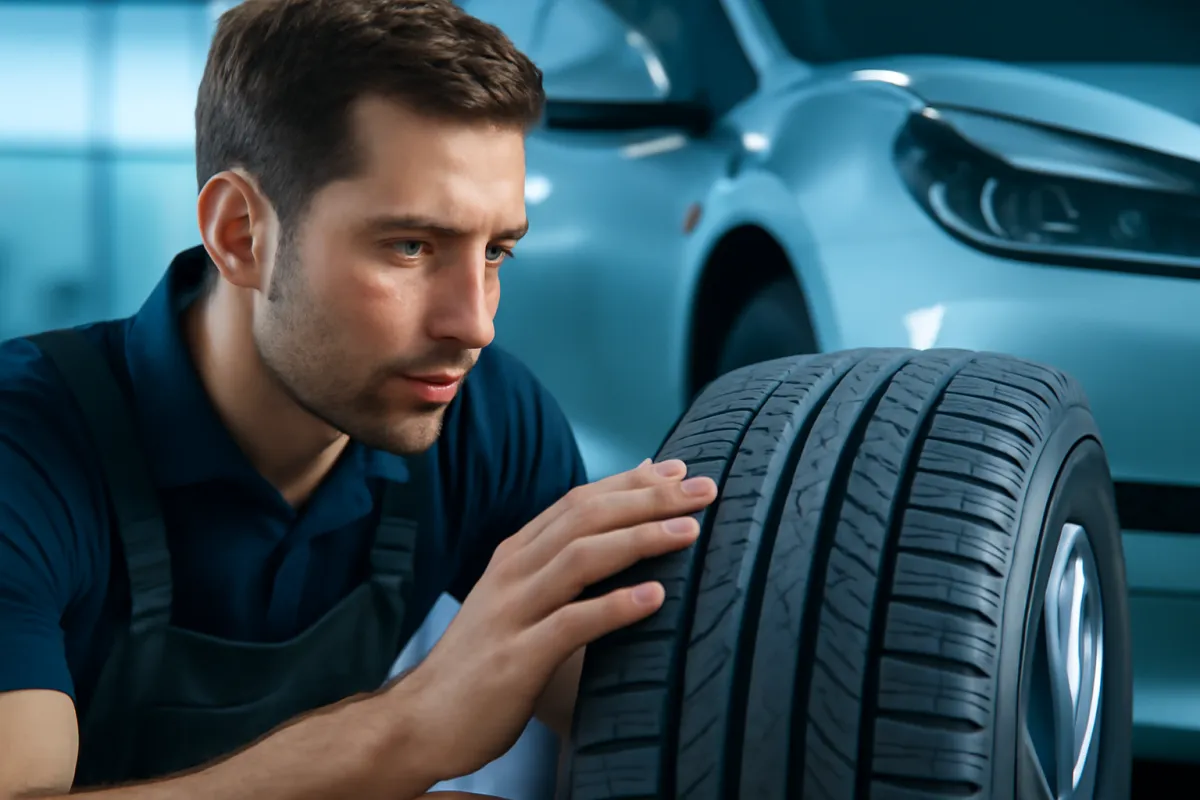
The result is that tire mileage on an EV frequently falls short of what the same driver got from a combustion car, and replacement sets can cost more, because many electric models specify load-rated tires and some use noise-damping foam liners or low rolling resistance compounds. Illustratively, a set might run in the several hundred to well over a thousand dollar range depending on the vehicle. Budget for tires as a scheduled item rather than a surprise, and price them for your specific car before you assume EV running costs are trivial.
Tire rotation: the interval that matters most
Rotation is commonly specified somewhere around every 5,000 to 7,500 miles, or roughly twice a year for an average driver, and it is the highest-return item on the entire schedule. The reason is that wear is never even. Front and rear axles carry different loads and do different jobs, and on a car with strong instant torque the driven axle scrubs harder. Left in place, a tire develops a wear pattern it cannot recover from, and the set reaches its wear bars long before its tread compound is genuinely spent.
Rotating moves each tire through positions so the wear averages out across the set, which stretches the whole set’s life rather than just one tire’s. Because a set is your biggest maintenance line, a rotation costing a few tens of dollars can be worth several hundred over the life of the tires. Some vehicles specify directional or staggered fitments that limit which rotation patterns are possible, so check the manual before assuming the standard cross pattern applies. Have tread depth measured at the same visit and note it, since a falling depth over several visits tells you when replacement is coming.
Alignment and suspension under the extra mass
Alignment is not usually a fixed-interval service, but on a heavy vehicle it earns a check roughly once a year and immediately whenever tire wear looks uneven, the steering pulls, or the car has taken a serious pothole or kerb strike. Misalignment on an EV is expensive in a way it is not on a light car, because it eats the most expensive consumable you have. A slightly out-of-spec toe setting can scrub the edge off a set of tires in a fraction of their expected life, and nothing on the dashboard will tell you.
Suspension components deserve the same attention for the same reason. Bushings, dampers, springs and top mounts on a heavier car work harder over every bump, so the honest expectation is that these are inspection items at every annual service and eventual wear items rather than lifetime parts. Listen for knocks over broken surfaces and watch for a car that feels floaty or that no longer settles after a bump. None of this is unique to electric cars, but the mass makes it arrive sooner.
Brakes: why the pads last and the calipers seize
This is the section of an EV schedule that most contradicts combustion instincts, so it is worth being precise. When you lift off the accelerator or brake gently in an electric car, the motor runs as a generator and the resistance it creates slows the car while returning some energy to the pack, a process our teardown on how regenerative braking works covers in detail. Because regeneration handles most routine slowing, the friction brakes get used far less, and pads and rotors on an EV can last dramatically longer than on a comparable gas car.
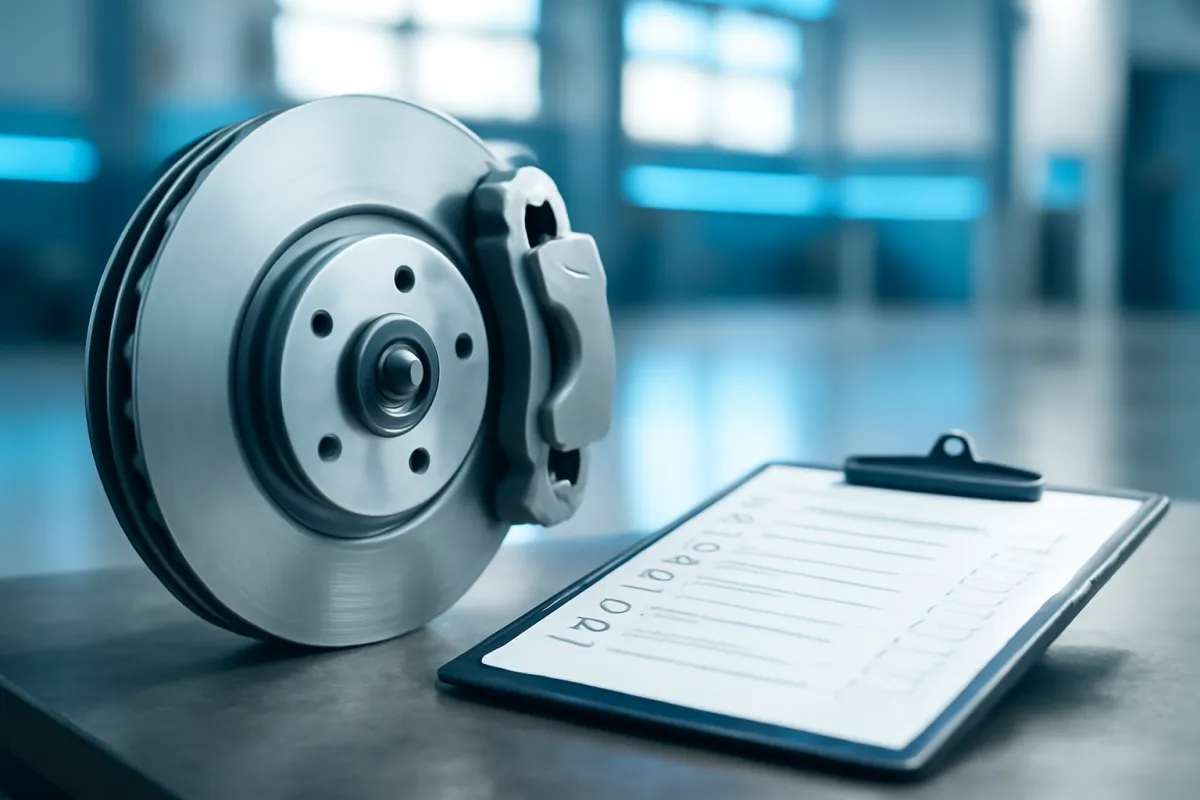
The catch is mechanical rather than economic. Parts that never move corrode in place. Caliper slide pins depend on regular travel and fresh grease, piston seals depend on movement, and rotor faces that are never scrubbed by firm braking build surface rust that can pit the metal over a season. In wet climates and anywhere roads are salted through winter, this is the realistic failure mode of an EV brake system: not worn out, seized. The response is deliberate use plus inspection, not neglect.
The practical brake routine for an electric car
Two habits cover most of it. First, on a clear and safe stretch of road with nobody behind you, brake firmly from moderate speed a few times, often enough that the friction surfaces get used rather than only the motor. Once every week or two is a reasonable habit in wet or salted conditions, less often in a dry climate. This scrubs light surface rust off the rotor faces and keeps the pads bedded, and it costs nothing but attention. It is also worth doing after the car has sat unused for a stretch or has been washed and left overnight.
Second, book a brake inspection roughly annually, and ask specifically for caliper service: pins cleaned and relubricated, guides checked for free movement, pads checked that they are not sticking in their carriers, and rotors inspected for pitting and corrosion rather than only for thickness. On many EVs this becomes the main brake job, done several times before pads are ever replaced. If you live where winter roads are salted, treat it as non-optional and consider having it done before and after winter.
Brake fluid: a time interval, not a mileage one
Brake fluid is the item on an EV schedule most often missed, because every visual cue says the brakes are fine. Glycol-based brake fluid is hygroscopic: it absorbs moisture out of the air through seals, hoses and the reservoir over time. Water in the fluid lowers its boiling point, which reduces braking performance under sustained heavy use, and it promotes corrosion in the calipers, cylinders and lines from the inside. Crucially, none of that depends on how hard or how often you brake. The fluid ages on the calendar whether the car is driven or parked.
That is why manufacturers commonly specify a brake fluid change every two to three years regardless of mileage or pad condition, and why an EV owner can reach that interval with pads that look nearly new. The service itself is ordinary and inexpensive, typically a bleed and fluid replacement that any competent shop can perform, illustratively in the low hundreds of dollars or less. Confirm the interval and the fluid specification in your manual, put the date in a calendar, and do not let apparently untouched pads talk you out of it.
Cabin air filter: the once a year item people forget
The cabin air filter cleans the air entering the passenger compartment through the climate system, and it is commonly specified about once a year, or somewhere in the region of every 12,000 to 15,000 miles, with shorter intervals recommended for dusty environments or heavy pollen seasons. It has nothing to do with the drivetrain, which is exactly why it gets forgotten on a car with no engine service to attach it to. A loaded filter restricts airflow, which weakens both heating and cooling, and a damp neglected one can produce a musty smell that no amount of recirculation fixes.
There is an EV-specific angle worth noting. Cabin heating and cooling draw from the traction battery, so a restricted filter makes the climate system work harder for the same result, which costs a little range in the conditions where range is already tightest. Our teardown on EV range in cold weather covers why winter climate load matters so much. On many vehicles the filter sits behind the glovebox and is a genuinely simple owner job, but some models place it awkwardly, so check before committing an afternoon.
Battery coolant and thermal management service
Most modern electric cars actively manage the temperature of the traction pack, and on the majority that means a liquid loop circulating coolant through the pack, the power electronics and often the motor. The purpose is to hold the cells in the temperature band where they accept fast charge, deliver full power and age slowly, which is why thermal management is one of the more consequential systems on the car for long-term battery health. Our teardown on how long EV batteries last explains why temperature is such a strong driver of degradation.
Service intervals here vary more than anything else on the schedule. Some manufacturers specify a coolant inspection at a moderate interval and a first replacement measured in years or in tens of thousands of miles, others treat portions of the loop as filled for life, and a few call for the pump and lines to be checked at each major service. Because the loop is bound up with the high-voltage system on most vehicles, this is not a driveway job. Look up what your vehicle specifies, and if the manual is ambiguous, ask a franchised service department to read the schedule for your exact configuration.
Reduction gear fluid: when it is specified at all
An electric car does not have a multi-speed transmission in the combustion sense, but it does have a reduction gear that steps motor speed down to something the wheels can use, and that gearset runs in oil. This is the fluid that causes the most confusion, because two true statements sit next to each other: EVs have no transmission service in the traditional sense, and many EVs do specify a gear oil change eventually. Both are correct depending on the vehicle.
The pattern that holds across most models is that reduction gear fluid, where a change is specified at all, sits on a very long interval, often expressed in a high mileage figure rather than a short calendar one, and on some vehicles the unit is treated as sealed for the life of the car. It is a job for a shop rather than a driveway, because it involves the drive unit. The practical instruction is unglamorous: find out whether your vehicle specifies it, note the interval if it does, and otherwise leave it alone. Never assume a combustion transmission service interval applies.
The 12 volt battery: the failure that strands you
The most common way a modern electric car leaves someone stuck at the side of the road has nothing to do with the traction battery. Almost every EV still carries a small conventional 12 volt battery, and it does critical work: powering the computers, the contactors that connect the high-voltage pack, the door locks and the systems that bring the car to life. When it fails, the car may be unable to wake the main pack at all, so a vehicle with plenty of charge can sit there completely inert. Owners find this deeply counterintuitive the first time.
Replacement is commonly specified or expected every three to five years, and the warning signs are worth learning: sluggish or glitchy electronics, several unrelated fault messages arriving at once, a car that hesitates to power up after sitting a few days, or accessories behaving oddly. Have it load-tested at annual service and replace it proactively rather than waiting. On some models it is an easily accessible owner job and on others it sits under trim or in the frunk, and a few require a procedure so the car registers the new battery, so check before starting.
Wiper blades, washer fluid and the small consumables
The small stuff still applies, and on an EV it makes up a larger share of a shrunken list. Wiper blades are commonly replaced every six to twelve months, sooner if they streak, chatter or leave a smear that catches low sun. Washer fluid needs topping and, in cold regions, needs to be the winter-rated kind before the first freeze, because a frozen reservoir is both useless and capable of cracking components. Keep an eye on exterior lighting and replace failed bulbs or report failed LED units, which are increasingly sealed assemblies rather than serviceable parts.
Two items are more EV-specific than they look. The 12 volt battery terminals deserve a visual check for corrosion at annual service, since a poor connection produces the same confusing symptoms as a failing battery. And the charge port itself is a consumable interface: keep the cap closed, keep grit out, and inspect the pins occasionally for discolouration or damage. A worn or contaminated port is a genuine failure point on a car you plug in daily.
Software updates are real maintenance now
On a modern electric car, software is not a convenience layer sitting above the mechanicals, it is part of how the mechanicals behave. Updates commonly adjust battery management and charging behaviour, the blending between regenerative and friction braking, thermal management strategy, and driver assistance calibration. That means an update can change how fast your car charges, how it treats the pack at high and low states of charge, and how much work the friction brakes do. Declining updates indefinitely is a maintenance decision, not a neutral one.
The practical rule is to install manufacturer updates rather than deferring them forever, on a stable connection, with the car parked somewhere you can leave it for the duration and with enough charge to complete the process. Read the release notes if the manufacturer provides them, because occasionally an update changes behaviour you had come to rely on. If your car is not connected to wifi at home, connect it, since a car that never updates gradually falls behind on both fixes and improvements. Our teardown on extending EV battery life covers the charging habits these updates often interact with.
Charging equipment inspection: cable, plug and outlet
Your charging equipment is part of the vehicle’s maintenance schedule even though it never appears in the manual’s service table, because it is the highest-current electrical connection most households have. Inspect the portable cable and any wall unit periodically: look for cuts, kinks or crushing in the cable, cracked or discoloured housings, bent or pitted pins in the connector, and a plug that feels loose or wobbly in the socket. Feel the plug and the outlet after a charging session has been running a while. Warm is normal, hot is not, and a hot outlet is a reason to stop and get an electrician involved.
For a hardwired home unit, an occasional visual check of the enclosure, the cable strain relief and the holster is worth the minute it takes, along with confirming the breaker has not been tripping intermittently. Keep the connector off the ground when not in use so grit and water do not accumulate in it. If you charge on a standard household outlet regularly, that outlet is working harder than it was designed for, and it deserves particular attention.
The seasonal checklist: winter and summer
Twice a year, run a short seasonal pass, because most of the failures that catch owners out are seasonal. Before winter: check tread depth honestly, since a heavy car with marginal tread is genuinely worse in snow, and consider winter tires if you get real winter; switch to freeze-rated washer fluid; have the 12 volt battery load-tested, because cold is what exposes a marginal one; check that the cabin filter is not loaded, since you are about to rely on the heater; and confirm that the charging cable stays flexible and undamaged in cold, which is when jackets crack.
Before summer: check tire pressures again, since ambient temperature swings move them; inspect wiper blades that have spent months scraping ice; and confirm the climate system cools properly before the first hot week rather than during it. In both directions, remember that cabin conditioning draws from the pack, so a car that heats or cools inefficiently costs range as well as comfort. Book brake caliper service at the end of a salted winter rather than waiting for the annual date to come around.
What a shop should actually inspect once a year
If you take one paid visit a year, this is a reasonable list to ask for, framed as inspection rather than as automatic replacement. Tires rotated and tread depths recorded, pressures set. Brakes inspected with the wheels off, including pad thickness, rotor condition and corrosion, caliper slide pins cleaned and relubricated, and the parking brake mechanism checked. Brake fluid tested or replaced if it is at its interval. Suspension, steering components and driveshaft boots inspected. The 12 volt battery load-tested. Cabin filter inspected and replaced when due.
On top of that, ask for the items that only exist on an electric car: coolant level and condition in the thermal management loop, a visual inspection of high-voltage cabling and connectors for damage or chafing, a check of the charge port for damage or heat marks, and a scan for stored fault codes plus a battery health readout if the vehicle produces one. If you are buying used rather than servicing your own, our teardown on checking EV battery health covers what those readouts do and do not tell you. Keep the paperwork, since documented service protects warranty positions and resale value alike.
Where the maintenance money actually goes
Costs make the schedule concrete, so here is an illustrative year. Take a driver covering about 12,000 miles annually, replacing an $800 set of tires roughly every 35,000 miles, paying $30 for a rotation twice a year, and amortising the longer-interval items across their intervals. That produces roughly $274 of tire wear, $60 of rotations, about $105 a year for brake fluid and coolant work spread across their cycles, about $50 a year for a $200 12 volt battery replaced every four years, and roughly $45 for cabin filters, wiper blades and washer fluid. The total lands near $530 for the year.
Where an illustrative $534 EV maintenance year goes
Shares of an illustrative annual routine total at 12,000 miles, with long-interval items amortised. Shares rounded to sum to 100.
Tires and rotation take about $334 of the year. Brake fluid and coolant work amortise to roughly $105, the 12 volt battery to about $50 (the third segment), and cabin filters, wipers and washer fluid to about $45 (the fourth). Every figure is illustrative and moves with your mileage, tire choice and local labour rates.
The shape of that chart is the real finding, more than any of the individual numbers. Close to two thirds of an EV maintenance year is tires, which means the levers that matter are the tire ones: rotate on schedule, keep pressures right, fix alignment early, and drive smoothly enough that instant torque is not quietly scrubbing tread at every light. Everything else combined is a minority of the bill. Run your own mileage and rates through our cost calculator alongside these figures to see how the total moves.
A worked example: one year on the schedule
Put the calendar and the costs together for a single illustrative year. In January the owner books the annual service: tires rotated and depths recorded, brakes inspected and calipers cleaned and relubricated after the salted months, 12 volt battery load-tested, cabin filter replaced, suspension and steering inspected, fault codes scanned. That visit covers the rotation ($30), the cabin filter and a set of wiper blades (about $45 across the year with washer fluid), and the inspection labour, with brake fluid not due until next year.
In April a software update installs overnight, changing charging behaviour slightly. In July the second rotation comes due at a tire shop ($30), tread depth measured again and noted, and pressures corrected for summer heat. In October the seasonal pass runs: freeze-rated washer fluid, another 12 volt check, tread assessed before winter. No tires were replaced this year, but the set is two thirds worn, so the $274 of annualised tire cost is real even though no invoice showed it. Add the amortised fluid and 12 volt lines and the year sits near $530, most of it invisible until the set finally gets replaced.
What an electric car does not need
The savings do not come from doing the same jobs more cheaply, they come from a list of jobs that simply do not exist. No engine oil and no oil filter, so the most frequent service on a combustion calendar is gone entirely. No spark plugs, coils or ignition components. No timing belt or chain, a high-mileage job that is expensive when scheduled and catastrophic when neglected. No exhaust system, catalytic converter, muffler, oxygen sensors or emissions equipment to corrode, clog or trigger warnings. No fuel pump, injectors, fuel filter or fuel lines.
Add to that the absence of a conventional multi-speed transmission, with its fluid service, torque converter and clutch wear, and you have removed several of the most expensive scheduled and unscheduled repairs a combustion car accumulates as it ages. Our teardown on whether EVs are cheaper to maintain prices that gap properly, and our cost per mile teardown folds it into total running cost. The important framing here is that these deletions are the reason the remaining schedule is short, and following that short schedule is what keeps the savings real rather than deferred into a repair bill.
Common mistakes on an EV maintenance schedule
The mistakes cluster into a few recognisable patterns. Assuming that no engine means no schedule, and therefore doing nothing until a warning appears, which is how tires get scrapped early and calipers seize. Skipping brake fluid because the pads look new, which confuses a mileage-driven wear item with a time-driven chemical one. Treating the 12 volt battery as irrelevant on a car with a large pack, which is how an otherwise healthy vehicle ends up inert on a driveway. Deferring software updates indefinitely, which is a decision about how the car manages its own battery.
Two more are worth naming. Applying combustion intervals by reflex, which leads to paying for services an EV does not have while missing the ones it does. And accepting an interval from an internet article, including this one, without checking it against the vehicle’s own maintenance schedule. Every number here is a typical figure meant to give you the shape of the calendar. The document that governs your car is in the glovebox or in the manufacturer’s app, and it is the only one that counts.
How to build your own schedule in an afternoon
Turning this into something you will actually follow takes about an hour. Open the maintenance schedule in your owner’s manual or service booklet and write down every listed item with its interval, separating them into mileage-based and time-based columns. Add the items the manual may not list but that still belong on the calendar: charging equipment inspection, the seasonal pass, tread depth checks, and software updates. You should end up with a page that fits on a page, which is the point.
Then put each one into a calendar with a reminder set a month ahead, and record what was done and when in a single running note or in the same app, including the odometer reading. That record does three jobs: it tells you what is coming, it proves service history when a warranty question or a resale conversation arrives, and it lets you see wear trends like falling tread depth across several visits. When the car changes hands, that document is worth real money to a buyer who has been told to be careful. Keep the receipts with it.
The bottom line
An electric car maintenance schedule is short, but it is not optional, and its rhythm is set by the calendar more than the odometer. Tires and their rotation dominate the budget and reward attention more than anything else on the list. Brake fluid runs on time rather than wear and gets missed precisely because the brakes look untouched. Calipers need deliberate use and annual service because regeneration keeps them idle. The 12 volt battery is the small part that can immobilise the whole car. Coolant, gear fluid, filters, wipers, software and charging equipment fill in the rest.
Treat every interval in this teardown as a typical figure that tells you what to look for, then get the real ones from the maintenance schedule for your specific vehicle, because manufacturers set them and they vary substantially. Keep high-voltage work with technicians equipped for it and keep the low-voltage work as cheap and frequent as it deserves to be. Do that and the maintenance savings an electric car promises stay genuine rather than deferred, which is the outcome our maintenance cost teardown is describing when it says the number favours the EV.
AmpLoft publishes this as independent educational writing about how electric vehicles are typically serviced, not as a service manual, a repair procedure, or a substitute for a qualified technician’s judgement. Every interval named above, including the rotation, brake fluid, cabin filter, coolant, reduction gear and 12 volt battery figures, is a commonly seen typical value chosen to illustrate the shape of a schedule, and none of it is a specification for any particular vehicle: manufacturers set service intervals for each model and market and they differ substantially, so the owner’s manual and maintenance schedule for your own car govern and this article does not. The $800 tire set, 35,000 mile tire life, $30 rotation, $200 12 volt battery and the resulting $534 annual total are internally consistent placeholders for this article alone, not survey results, market averages or quotes, and real costs move with vehicle, region, labour rate and time. High-voltage systems carry lethal voltages; the orange cabling, the battery pack, the power electronics, the drive unit and the coolant loop that serves them are not owner-serviceable, and work on any of them belongs to a technician trained and equipped for high-voltage service. Have the high-voltage system professionally inspected after any collision.
Frequently asked questions
What is the maintenance schedule for an electric car?
There is no single schedule that applies to every electric car, because intervals are set by each manufacturer and vary substantially between models. The recurring shape is consistent though: tires rotated on a short interval and replaced when worn, brake fluid changed on a time basis rather than a mileage one, a cabin air filter about once a year, brake inspection and caliper service annually, a 12 volt battery replaced every few years, and battery coolant or thermal-management service at a long interval on the models that specify it. Software updates, wiper blades and charging-equipment inspection fill in the rest. Treat any interval you read anywhere, including here, as a typical starting point and confirm it against the owner's manual and maintenance schedule for your specific vehicle, which is the authority.
How often should you rotate the tires on an electric car?
Rotation is commonly specified somewhere in the range of every 5,000 to 7,500 miles, or roughly every six months for an average driver, and on an EV that interval is worth taking seriously rather than treating as optional. Electric cars carry more mass than comparable combustion cars and deliver full torque instantly, and both of those accelerate tread wear, so uneven wear compounds faster if the tires stay in one position. Because tires are usually the single largest recurring maintenance cost on an EV, rotation is the cheapest lever you have on the whole budget. Confirm the interval your manufacturer specifies, since some models and some tire types call for shorter intervals than others.
Do electric cars need brake fluid changes?
Yes, and this is one of the intervals owners most often miss because the brakes themselves look almost new. Brake fluid is hygroscopic, meaning it absorbs moisture from the air over time, and moisture lowers its boiling point and can promote corrosion inside the hydraulic system, so the change interval is set on time rather than on mileage or pad wear. Manufacturers commonly specify a change every two to three years regardless of how little the friction brakes have been used. On an EV, where regenerative braking means the pads may barely wear for years, the fluid can quietly reach the end of its service life long before anything visible suggests it. Check the interval printed in your maintenance schedule and follow it on the calendar.
Why do EV brake calipers seize if the brakes last longer?
Regenerative braking does most of the routine slowing on an electric car, which is why pads and rotors can last far longer than on a combustion car, but parts that rarely move can corrode in place. Caliper slide pins and piston seals depend on regular movement and fresh lubrication, and rotors that never get scrubbed by firm braking can build surface rust, particularly in wet climates and anywhere roads are salted through winter. The correct response is not neglect but deliberate use: brake firmly on a clear, safe stretch of road from time to time to clean the rotor faces, and have the calipers inspected, cleaned and relubricated on the schedule your manufacturer sets. Long-lasting brakes still need looking at, they just need replacing less often.
How often does an EV 12 volt battery need replacing?
The small 12 volt accessory battery is commonly replaced every three to five years, and it is one of the most frequently overlooked items on an EV schedule because owners think of their car as having only one battery. In practice the 12 volt system powers the computers, the contactors and the door locks, and it is what wakes the high-voltage pack, so a 12 volt failure can immobilise a car with a nearly full traction battery. Warning signs include sluggish electronics, odd unrelated fault messages, and a car that will not power up after sitting. Have it load-tested during annual service and replace it proactively rather than waiting for the failure, since the failure tends to arrive without much notice.
Do electric cars need coolant changes?
Many do, and this is one of the few genuinely fluid-related services left on an EV. Most modern electric cars circulate coolant through the battery pack, the power electronics and sometimes the motor to hold temperatures in the range where the pack charges quickly and ages slowly, and that coolant loop needs periodic inspection and, on many models, eventual replacement at a long interval. Some vehicles specify a first service measured in years and tens of thousands of miles, others treat parts of the loop as sealed. The intervals vary substantially, so the only reliable answer for your car is the one printed in its maintenance schedule. Battery coolant work is not a driveway job on most vehicles because the loop is bound up with the high-voltage system.
How much does electric car maintenance cost per year?
Illustratively, a routine year on an EV maintenance schedule can land somewhere around $530 at roughly 12,000 miles a year, with tires and rotation accounting for close to two thirds of that figure. In that illustration a set of tires at $800 lasting about 35,000 miles annualises to roughly $274, two rotations at $30 each add $60, brake fluid and coolant work amortised across their intervals add about $105, a 12 volt battery at $200 every four years adds about $50, and cabin filters, wiper blades and washer fluid add roughly $45. Every one of those figures is an illustrative placeholder rather than a quote: labour rates, tire prices and the intervals themselves vary widely by vehicle and region. Price your own list against local quotes rather than relying on an average.
What maintenance does an electric car not need?
An EV never needs engine oil or an oil filter, spark plugs or ignition components, a timing belt or chain, an exhaust system or catalytic converter, emissions equipment, a fuel pump, injectors or fuel filter, or the fluid service and clutch wear that come with a conventional multi-speed transmission. That deleted list is where the maintenance savings genuinely come from, and it is a category difference rather than a discount on the same work. What remains is a shorter schedule centred on tires, a few fluids, filters, the 12 volt battery and software. It is meaningfully less work than a combustion car needs, but it is not nothing, and skipping it causes real problems.